
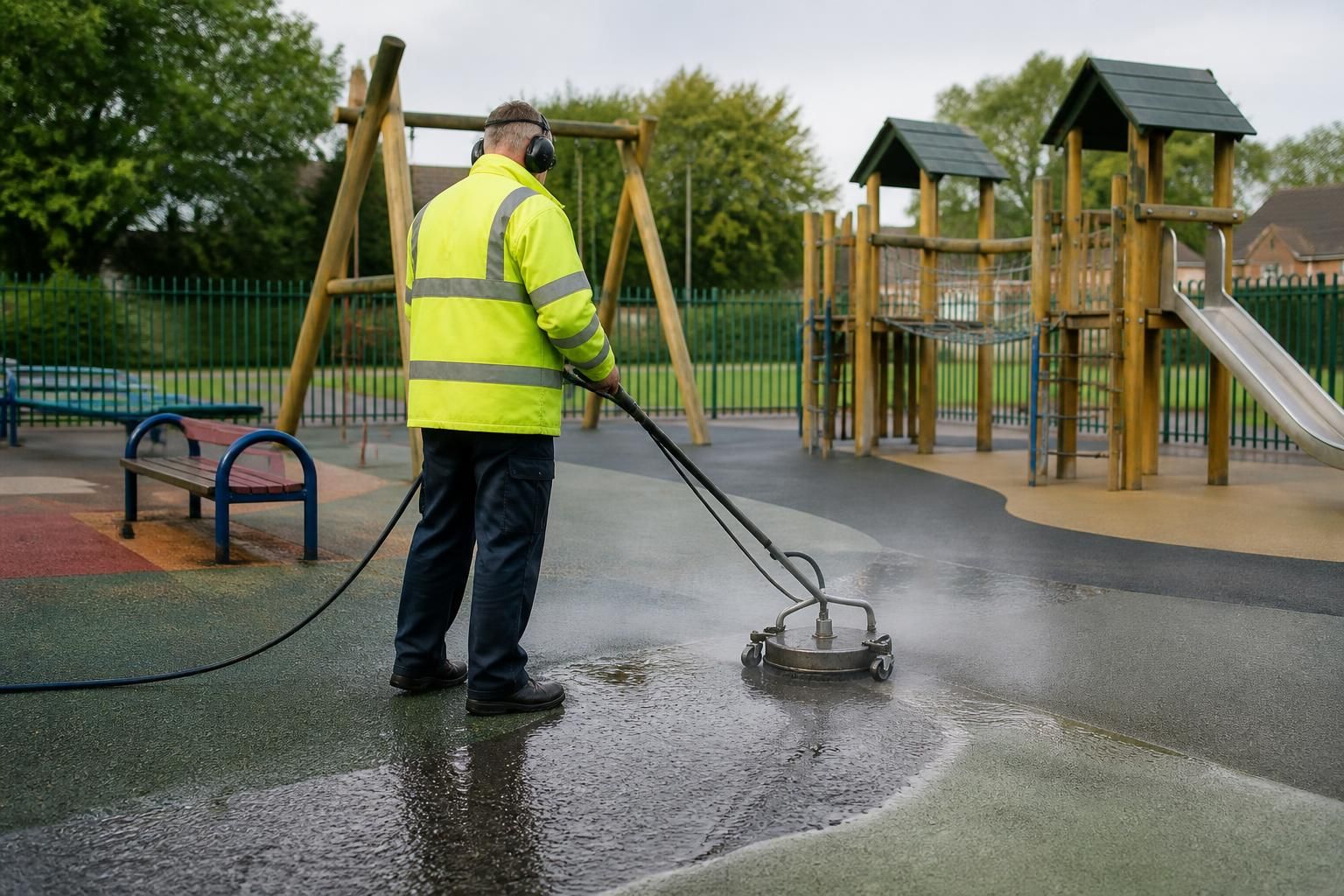
What are the benefits of using eco-friendly solutions for playground surface cleaning?
Eco-friendly solutions for playground surface cleaning help reduce harmful chemical residues, runoff and environmental impact while supporting a safer area for children, staff and nearby wildlife. When selected for the surface material and applied correctly, they can remove dirt, algae, organic matter and other contaminants without compromising effective cleaning.
Eco-friendly solutions for playground surface cleaning reduce the risk of harmful residues, contaminated runoff and unnecessary environmental damage while still removing dirt, algae, moss, food deposits and other contaminants. Their main benefits are improved protection for children and site users, lower impact on drainage systems and surrounding habitats, and a cleaning process that is more compatible with responsible maintenance and environmental requirements.
Safer surfaces for children and staff
Playground surfaces are used by children who may touch the ground and then their face or mouth. Choosing a suitable, lower-impact cleaning product can reduce exposure to harsh chemical residues, particularly when the surface is rinsed correctly and allowed to dry before the area is reopened. This is especially relevant on wet-pour rubber, rubber tiles, artificial grass, tarmac and other impact-absorbing surfaces where residues can remain in textured or porous areas.
Eco-friendly does not mean that a product is automatically harmless. The solution must be appropriate for the material, used at the correct dilution and removed effectively. Professional cleaning should always include a review of the product information, surface condition, manufacturer guidance and any risks to children, staff, pets or nearby wildlife.
Less pollution from runoff
During playground cleaning, water can flow towards gullies, soil, planting beds, watercourses or neighbouring land. A carefully selected biodegradable or lower-impact cleaning solution can reduce the pollutant load entering these areas. This helps limit the potential impact on aquatic life, plants and soil compared with unnecessarily aggressive chemicals.
Runoff management remains essential, even when an eco-friendly product is used. Cleaning teams should identify drainage routes, prevent contaminated water from entering unsuitable areas where practical, use recovery or containment measures when required, and follow the site’s drainage and waste-water arrangements. A product described as biodegradable should not be treated as permission to discharge wash water without control.
Effective removal of organic contamination
Many playground cleaning problems are caused by organic matter, including algae, moss, leaf deposits, bird fouling and general biological growth. Suitable steam cleaning, low-pressure washing and environmentally considerate detergents can break down or remove this contamination without relying on unnecessarily strong chemicals. Removing these deposits improves the appearance of the play area and can help reduce slippery patches and unpleasant odours.
The most effective approach depends on the surface. Steam may be useful where controlled heat can lift contamination with limited chemical use. Low-pressure cleaning is often preferable to aggressive pressure on rubber and other resilient surfaces. Some areas may require a compatible pre-treatment, mechanical agitation or a controlled biocidal treatment. The method should be selected after checking the material, drainage, contamination and condition of the surface.
Protection of playground materials
Harsh or unsuitable chemicals can cause fading, surface deterioration, staining, brittleness or damage to protective coatings. Eco-friendly products that are compatible with the material can help avoid unnecessary wear, particularly when combined with controlled pressure and suitable rinsing. Preserving the surface helps maintain its texture, drainage performance and impact-attenuation properties.
Cleaning products should never be selected solely because they are labelled green, natural or environmentally friendly. The product must be tested or confirmed as suitable for the specific surface. A small inconspicuous area can be assessed first, especially where the material is aged, repaired, coloured, porous or showing signs of previous chemical damage.
Reduced chemical use and improved site management
Using steam, water pressure, brushing and other mechanical methods where appropriate can reduce the quantity of detergent required. This may simplify chemical storage, handling and disposal arrangements and reduce the risk of accidental spills. It can also make the cleaning specification clearer by distinguishing between routine soil removal, algae treatment, graffiti removal and specialist contamination.
Cleaning operatives should still use the required personal protective equipment, follow the product safety data and keep the playground closed until the surface is safe and suitably dry. Eco-friendly cleaning is a controlled process, not a substitute for risk assessment, staff training or proper site segregation.
Support for environmental and safety responsibilities
Responsible product selection can support a site operator’s environmental policy, sustainable procurement requirements and waste-management procedures. It can also provide useful evidence for maintenance records, particularly where the cleaning specification requires consideration of chemical use, runoff, drainage and protection of nearby planting or water.
Environmental credentials do not replace the need to comply with applicable playground safety requirements. After cleaning, the surface should be checked for damage, loose material, exposed edges, blocked drainage, remaining contamination and changes to slip or impact performance. Any defect identified during the work should be recorded and referred to the responsible site manager before reopening.
How to use eco-friendly solutions effectively
- Inspect the surface, surrounding equipment, drainage and nearby planting before work starts.
- Identify the contamination and select the least aggressive effective method.
- Confirm that the product and cleaning method are compatible with the playground surface.
- Use the correct dilution and application time rather than assuming that more product will give a better result.
- Control runoff and prevent contaminated water from reaching unsuitable drains, soil or watercourses.
- Rinse or recover residues as required and dispose of waste water responsibly.
- Inspect the area after cleaning and keep it closed until it is safe, dry and free from residual product.
In practice, the environmental benefit comes from the complete cleaning system: an appropriate product, controlled application, efficient equipment, responsible runoff management and a final safety inspection. Professional advice is particularly important where a playground combines several materials or where algae, staining, drainage problems or surface deterioration have been present for some time.
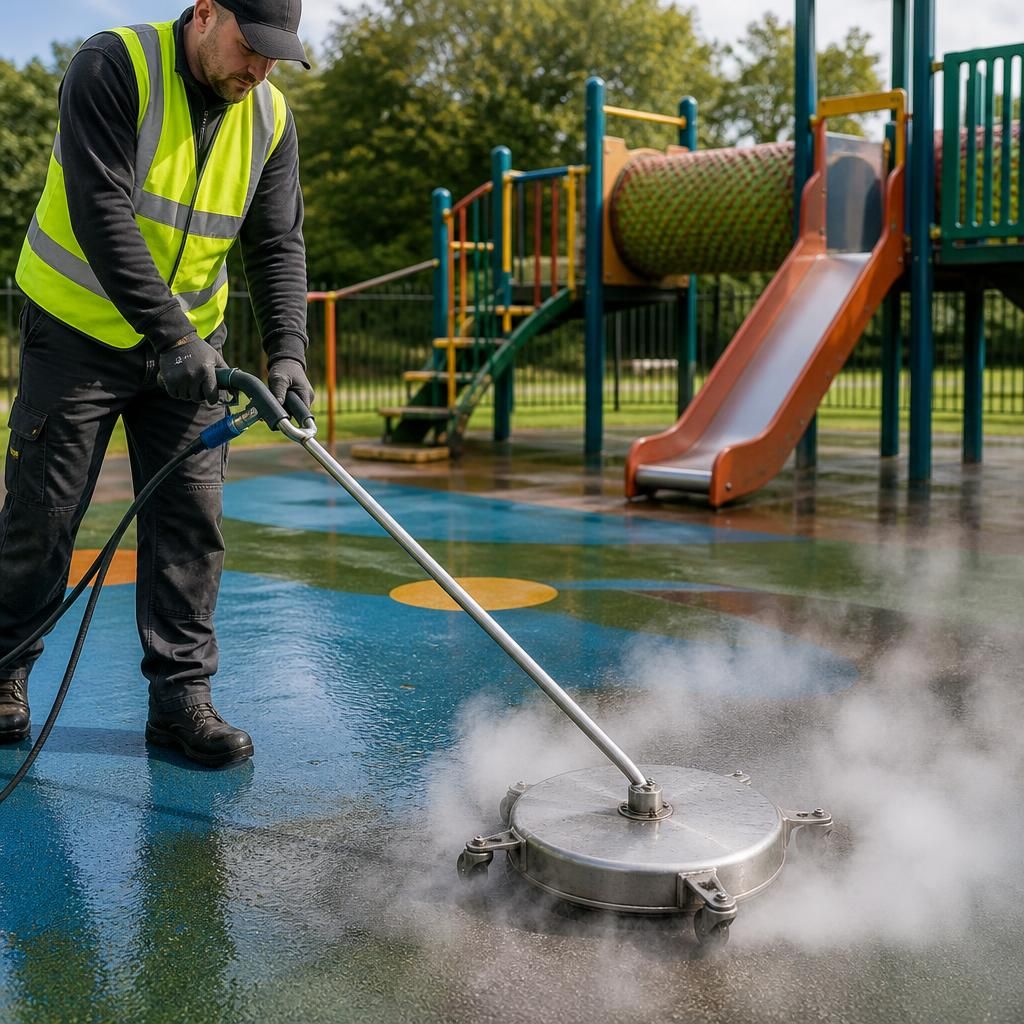
Eco-friendly playground cleaning solutions are selected to remove contamination while reducing harmful residues and polluted runoff. When the product is compatible with the surface and used at the correct dilution, it can help protect children, staff, planting and nearby drainage systems.
Environmental cleaning still requires careful control. The surface should be inspected first, contaminated water should be kept away from unsuitable drains and watercourses, and the area should be rinsed or recovered as required. After cleaning, the playground must remain closed until it is dry, free from residue and checked for damage or changes to slip performance.