
How often should playground surfaces be cleaned to maintain safety and hygiene?
Playground surfaces should be visually checked before use, with litter, spills, animal fouling and other contamination removed immediately. Schedule routine professional cleaning according to usage, weather, surrounding conditions and surface type, increasing the frequency for high-traffic play areas or where dirt, algae, moss and organic matter accumulate.
Playground surfaces should be visually checked before opening each day, with litter, spillages, animal fouling, sharp objects and other visible contamination removed immediately. Routine professional cleaning should then be scheduled according to use, weather, surrounding conditions, surface material and the rate at which dirt, algae, moss or organic matter accumulates. High-use playgrounds and sites exposed to heavy vegetation, pollution or persistent damp may require cleaning more frequently than quieter, sheltered areas.
A practical cleaning routine includes:
- Before each use: inspect the play area for glass, litter, faeces, vomit, food waste, standing water, slippery deposits and damaged or displaced surfacing. Isolate affected areas until they have been made safe.
- Immediately when contamination occurs: remove animal fouling, bodily fluids, spillages and other biological contamination using suitable procedures and protective equipment. Do not simply wash contamination across the play surface.
- Regularly during the operating season: remove leaves, soil, mud, weeds and other debris before they become embedded or encourage moss and algae. Inspect drainage points, edges and areas beneath equipment, where contamination commonly collects.
- At planned maintenance intervals: arrange a deeper clean when the surface shows ingrained dirt, staining, algae, moss, chewing gum, pollution deposits or reduced drainage. The timing should be based on inspection records and site conditions rather than an arbitrary calendar date.
- After severe weather or nearby works: inspect and clean the area after flooding, storms, heavy leaf fall, construction activity or other events that may deposit silt, debris or pollutants.
There is no single cleaning frequency suitable for every playground. A small, lightly used site may remain hygienic with regular inspections, prompt spot cleaning and periodic deep cleaning. A busy public playground, school, holiday park or housing development may need more frequent professional attention, particularly where the surfacing stays shaded or damp. Cleaning should also be reviewed when the site experiences a change in visitor numbers, nearby building work, drainage problems or repeated fouling.
Surface type affects the cleaning interval and method. Wet-pour rubber, rubber tiles, bonded rubber and synthetic grass can retain fine dirt and organic matter in their texture. Loose-fill surfaces such as wood fibre, bark or engineered sand require careful raking, removal of contaminated material and checks for compaction or displacement, rather than aggressive pressure washing. Concrete, tarmac and paving can generally tolerate more robust cleaning, although joints, edges and drainage channels still need protection. Always follow the surfacing manufacturer’s instructions before using pressure, steam, detergents or disinfectants.
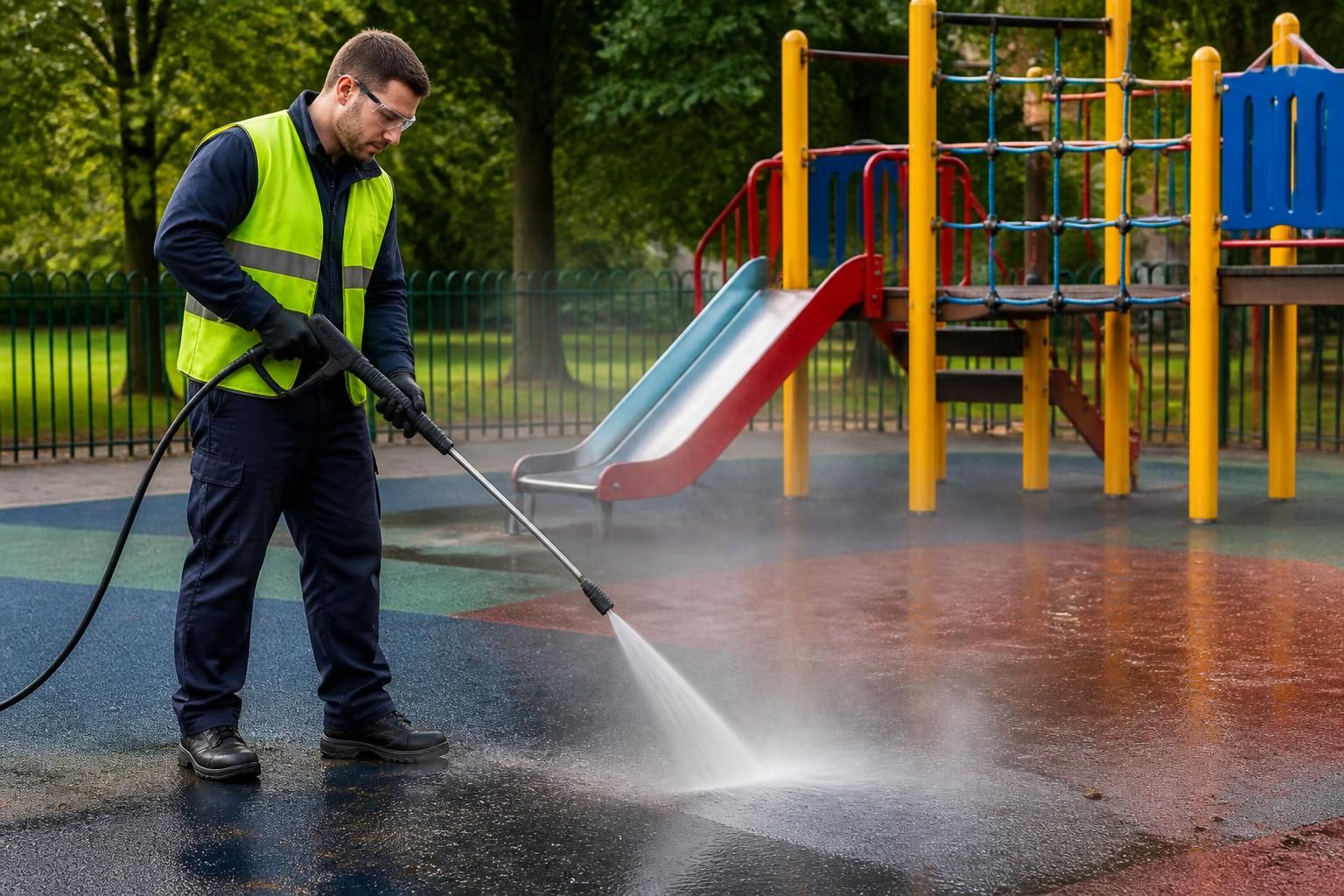
Professional cleaning is particularly appropriate where ordinary brushing and litter removal no longer restore the surface. Low-pressure washing, controlled steam cleaning or other suitable methods can remove deposits while reducing the risk of damaging the surface or disturbing impact-attenuating properties. Excessive pressure, harsh chemicals and over-wetting may strip coatings, loosen rubber, displace loose-fill material or force contaminated water into drainage systems.
The playground should remain closed until cleaning residues, standing water and loose debris have been removed and the surface is suitably dry. Check that access routes, drainage channels, equipment legs and impact areas are clear before reopening. Where disinfectant or detergent has been used, follow the product instructions for dilution, contact time, rinsing and re-entry. Products and procedures should be selected with regard to children, wildlife, surrounding planting and the risk of polluted run-off.
Cleaning records help determine whether the schedule is adequate. Record routine inspections, contamination incidents, areas cleaned, products or methods used, defects found and any decision to restrict access. Repeated problems in the same location may indicate a drainage, shade, design or maintenance issue that cleaning alone will not resolve. The cleaning plan should sit alongside the operator’s wider inspection and risk-assessment arrangements and should be updated when conditions change.
In practical terms, inspect every day before use, deal with isolated contamination immediately, remove loose debris frequently and arrange a professional deep clean whenever inspection findings show that surface hygiene, appearance, drainage or slip resistance is deteriorating. The most reliable schedule is a documented, risk-based programme tailored to the playground’s material, usage and environment.
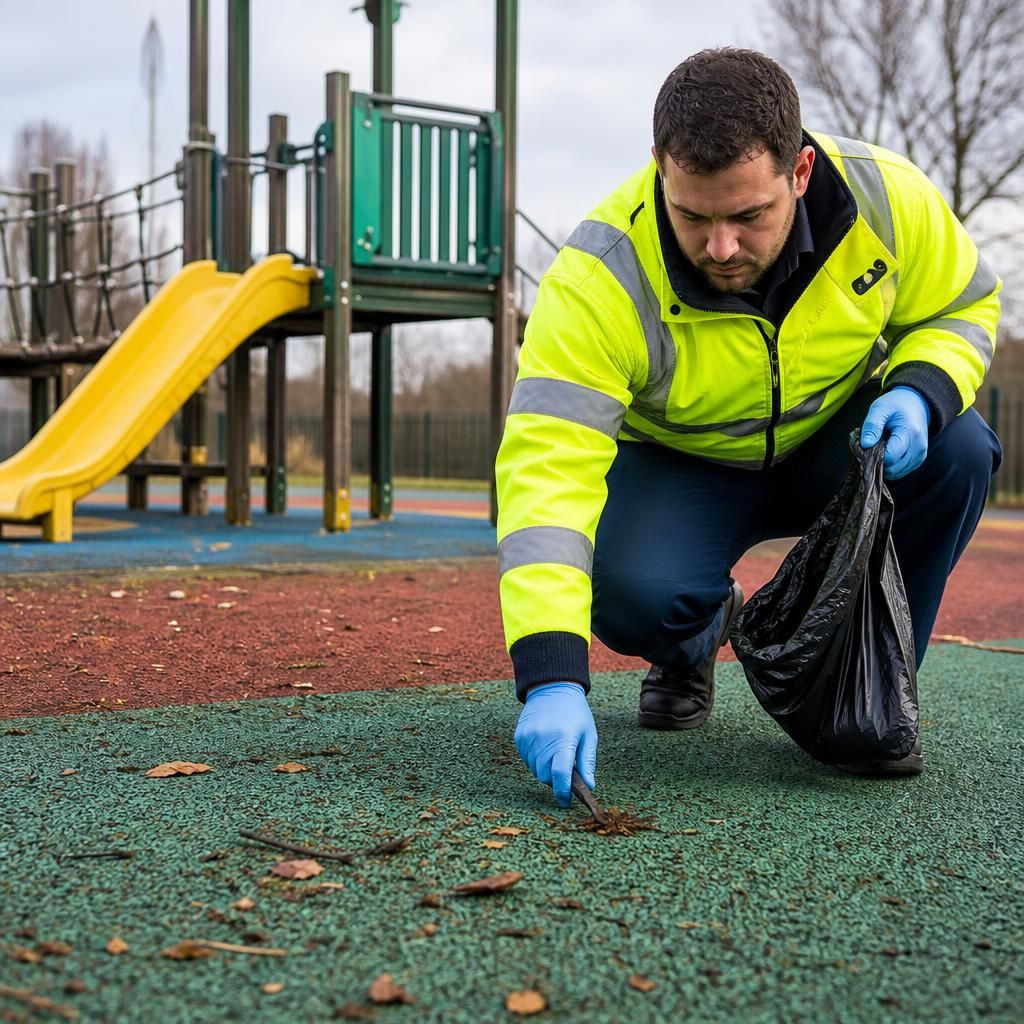
The most important playground cleaning action is a visual inspection before the area opens each day. Remove litter, leaves, glass, animal fouling, spillages and other visible contamination immediately, and keep the affected area closed until it has been cleaned safely. This daily check should be supported by regular professional cleaning, with the frequency increased where the surface is heavily used, shaded, damp or repeatedly affected by algae, moss, mud or pollution.
Keep inspection and cleaning records so the schedule reflects actual site conditions. A recurring problem in one area may indicate poor drainage, excessive shade or damaged surfacing, which requires maintenance as well as cleaning.
Arrange a Professional Playground Surface Cleaning Assessment
Arrange a professional playground surface cleaning assessment to review your current inspection findings, surface condition, usage levels and site-specific contamination risks. We can help establish a practical cleaning schedule and recommend suitable methods for maintaining a safe, hygienic play area.