
How can we ensure playground surface cleaning complies with safety and environmental regulations?
Ensure playground surface cleaning complies by following the site’s risk assessment, using methods and products suitable for the surface, controlling contaminated run-off, and keeping records of the work. Cleaning should support relevant UK playground safety requirements, including BS EN 1176 and BS EN 1177 where applicable, alongside COSHH controls and environmental regulations governing wastewater and chemical disposal.
Compliant playground surface cleaning combines effective removal of dirt, algae, chewing gum, staining and biological contamination with controls that protect children, staff, the surfacing and the wider environment. The work should be planned from a site-specific risk assessment and method statement, using a cleaning method and product approved for the surface, preventing uncontrolled run-off, and recording the inspection and cleaning outcome.
Cleaning is one part of playground safety management. It does not, by itself, demonstrate that equipment or impact-absorbing surfacing meets its required performance. Where applicable, the site should continue to be managed in line with the relevant parts of BS EN 1176 for playground equipment and BS EN 1177 for impact-attenuating playground surfacing. The site owner or duty holder remains responsible for arranging suitable inspections, maintenance and independent safety checks where required.
Before work starts, the cleaning plan should consider:
- the type, age and condition of the surface, such as wet-pour rubber, rubber tiles, artificial grass, sand, bark, resin-bound surfacing, concrete or tarmac;
- the manufacturer’s cleaning and chemical-use instructions, including restrictions on pressure, temperature and detergents;
- drainage routes, nearby watercourses, planting, soft landscaping and areas where dirty water could collect;
- the presence of children, staff, members of the public, pets, play equipment and other site users;
- slips, trips, fragile edges, loose-fill displacement, damaged surfacing and defects that could become more apparent after cleaning; and
- weather conditions, access requirements and any history of contamination, vandalism or hazardous substances.
The assessment should identify hazards and set out controls before equipment is brought onto the site. A written method statement should explain the sequence of work, exclusion zones, equipment settings, chemical handling, run-off management, emergency arrangements and the checks required before the area is reopened. Cleaning operatives should be competent in the equipment they use and briefed on the specific site risks.
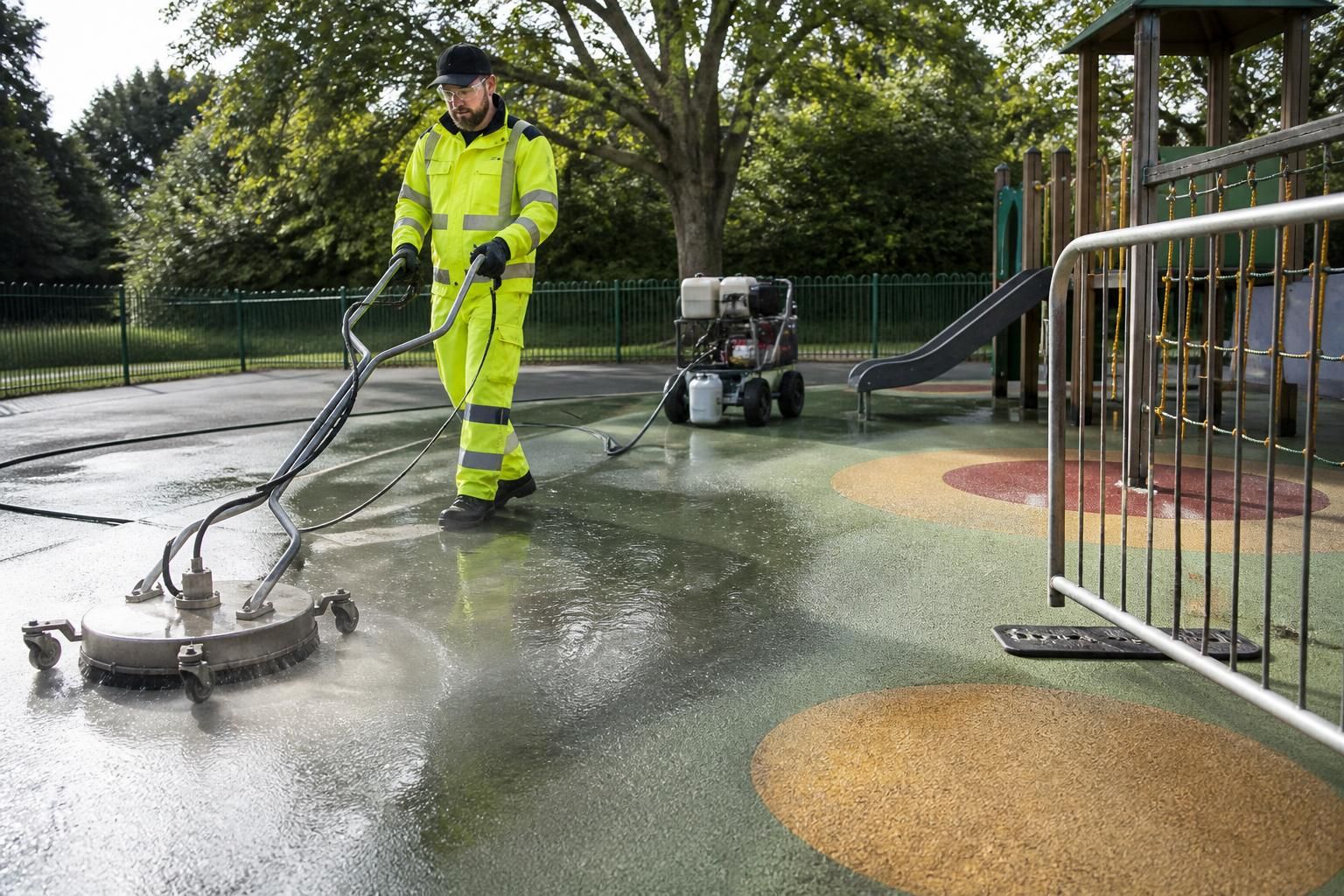
Public protection is essential. The play area should be closed and clearly segregated during cleaning, with barriers or other suitable controls preventing access to wet surfaces, hoses, cables, machinery and chemicals. Warning signs alone may not be sufficient where children can enter easily. Access should remain restricted until the surface is clean, dry where necessary, free from residues and safe to use. Any damaged surfacing, exposed edges, loose components or drainage problems found during the work should be reported rather than concealed by cleaning.
Pressure washing should be controlled carefully. Excessive pressure or heat can loosen rubber granules, damage joints, strip coatings, drive water beneath surfacing or displace loose-fill materials. Operators should use the lowest effective settings and avoid directing water at vulnerable seams, drainage channels, equipment fixings and surface defects. Steam cleaning may reduce the need for chemical products, but it still requires controls for heat, condensate, visibility, slip risk and potential damage to heat-sensitive materials.
Cleaning products must be selected for the surface and the contamination. COSHH controls should cover the product label, safety data sheet, dilution, application method, storage, ventilation, required personal protective equipment and first-aid arrangements. Products should not be mixed unless the manufacturer specifically permits this. Disinfectants, algae treatments and other biocides should be used only where justified, in accordance with their label and approval requirements, and at the correct dilution. A stronger solution is not automatically more effective and can increase risks to children, vegetation, equipment and drainage systems.
Environmental compliance depends largely on controlling the wastewater generated by cleaning. Dirty water, detergent, algae residue and chemical solution should not be allowed to flow into surface-water drains, watercourses, planted areas or neighbouring land unless the discharge is demonstrably permitted. Before cleaning, the team should identify the drainage system and agree how water will be contained, collected, filtered, treated or removed. Suitable controls may include drain covers, bunding, wet vacuums, temporary dams, collection tanks and controlled disposal through an authorised route.
Foul-water or trade-effluent discharges may require permission from the relevant sewerage undertaker, while discharges to surface water or land can fall under environmental legislation and may require approval from the environmental regulator. Requirements vary according to the site, the substance and the proposed discharge route. Where there is any uncertainty, the responsible person should obtain advice before work begins rather than assume that a nearby drain is suitable. Collected wastewater and contaminated materials should be handled and disposed of by an authorised waste contractor where required, with transfer or disposal records retained.
Products should be stored securely, labelled and kept away from children, food areas and drainage points. Empty containers, absorbent materials, used filters and contaminated debris should be managed according to their classification and the product’s safety information. Spill kits and an agreed response procedure should be available, and any spill should be contained promptly and reported through the site’s environmental procedure.
Different surfacing materials need different compliance controls:
- Wet-pour rubber and rubber tiles: use compatible products and moderate settings to avoid damage, lifting or granule loss. Check seams, edges, impact areas and drainage after cleaning.
- Artificial grass: avoid excessive agitation that can disturb the pile or infill. Remove debris and organic matter carefully, and prevent contaminated water from pooling beneath the surface.
- Sand, bark and other loose-fill surfacing: avoid washing the material away or compacting it. Cleaning may need to focus on raking, screening, litter removal and local replacement rather than conventional pressure washing.
- Tarmac, concrete and resin-bound surfaces: select a method that removes contamination without damaging the binder, coating or jointing. Control slurry and sediment so that it cannot enter drainage systems.
After cleaning, the responsible person should inspect the area before reopening it. The inspection should confirm that residues, standing water, loose debris, displaced loose-fill and trip hazards have been dealt with. It should also check that access gates, drainage points and equipment bases remain clear. Where the cleaning process may affect impact-attenuating surfacing, a competent person should determine whether further assessment or testing is necessary. A visual sign-off is not a substitute for formal post-installation or operational inspections required by the site’s management arrangements.
Keep records that show what was done and how compliance was managed. Useful information includes the site and areas treated, date and weather conditions, surface type, products and dilutions, equipment and settings, wastewater controls, waste-disposal details, operative and supervisor names, defects identified, photographs where appropriate, and the date the area was released for use. Retain incident, spill and complaint records as well as any permissions, safety data sheets and disposal documentation.
For sites managed by a local authority, school, housing provider, contractor or facilities team, the cleaning plan should also follow the client’s own policies, inspection regime and procurement requirements. A pre-start review with the duty holder helps confirm who will close the playground, who authorises chemical use, how wastewater will be dealt with and who accepts the area back into service. This documented approach makes the cleaning safer to deliver, easier to audit and less likely to compromise the playground’s surfacing or environmental controls.
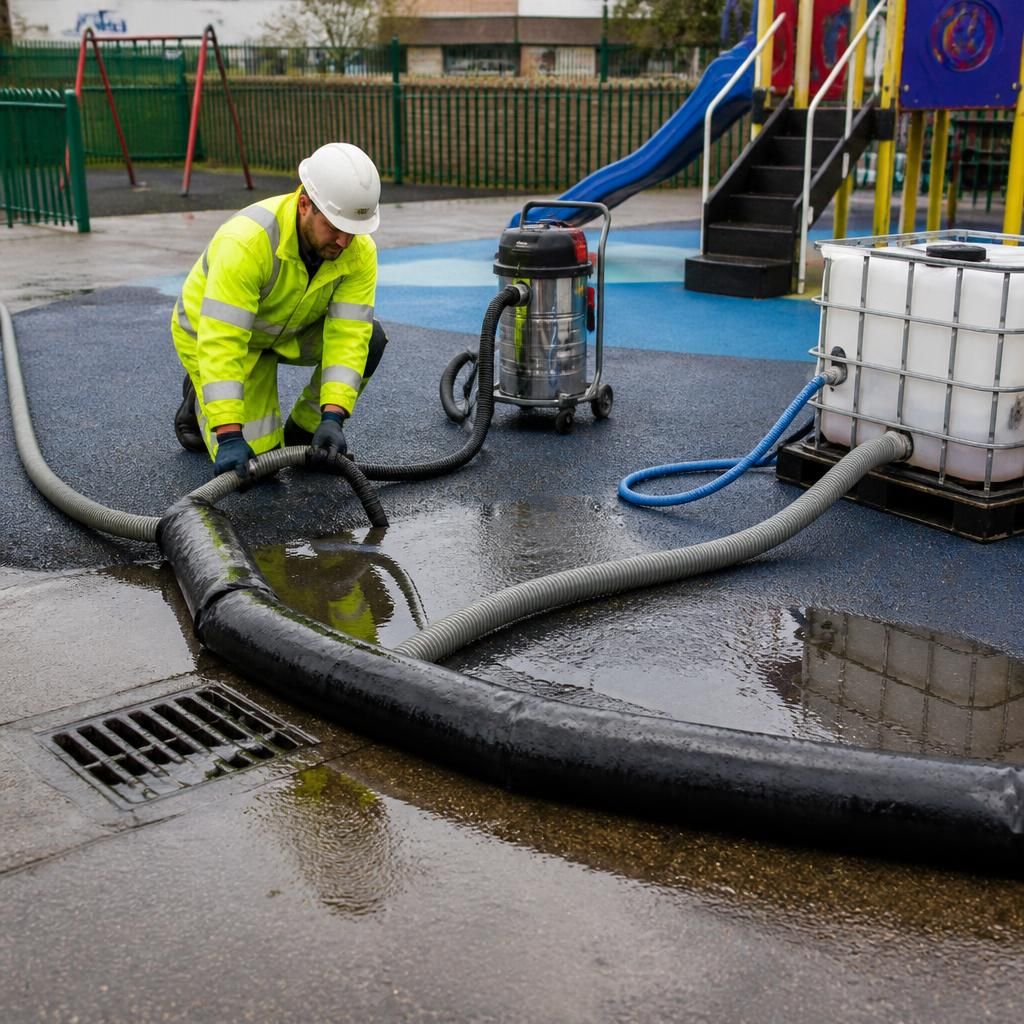
Controlling wastewater is a central part of compliant playground surface cleaning. Dirty water, detergents, algae residue and biocides must not enter surface-water drains, watercourses, planted areas or neighbouring land unless the discharge is specifically permitted.
Before work begins, identify the drainage route and agree how wastewater will be contained, collected and disposed of. Drain covers, temporary bunds, wet vacuums and collection tanks can help prevent uncontrolled discharge. Any collected water, contaminated debris and used absorbents should be handled through an authorised disposal route, with the relevant records retained.