
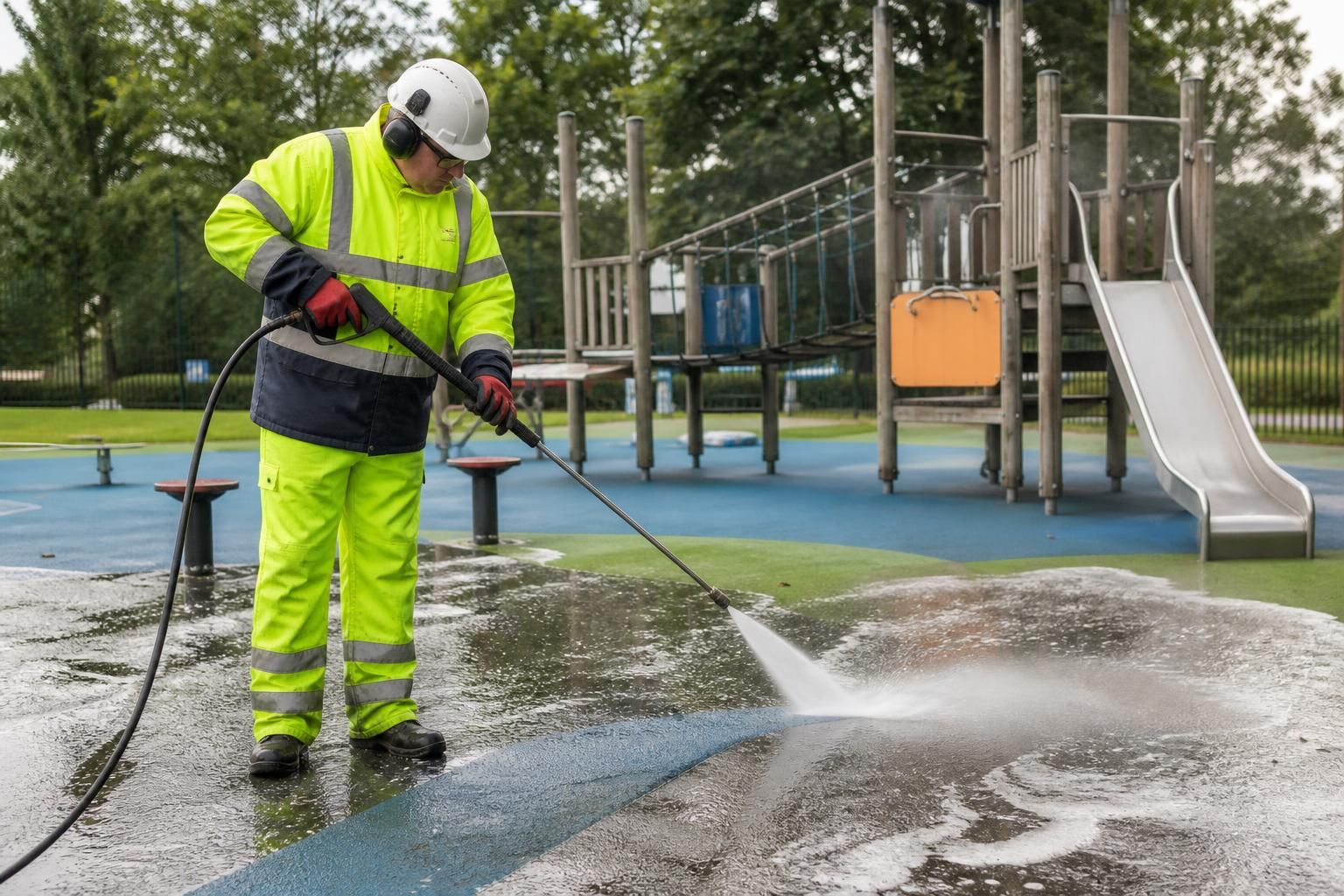
How can playground surface cleaning schedules contribute to long-term maintenance and safety?
A planned playground surface cleaning schedule helps control dirt, algae, organic matter and other contamination before they create slip risks, hygiene concerns or premature surface wear. Regular inspections and appropriately timed professional cleaning also protect drainage, maintain impact-absorbing performance and identify damage early, supporting safer play areas and more predictable long-term maintenance.
A planned playground surface cleaning schedule supports long-term safety by controlling contamination, preserving drainage and impact-absorbing performance, and identifying defects before they become more serious. Rather than relying on occasional deep cleans, a schedule combines routine visual checks, prompt removal of spillages and organic debris, periodic professional cleaning, and documented inspections suited to the site’s surface, usage and surrounding environment.
How scheduled cleaning improves safety
Dirt, leaves, mud, algae, moss, bird fouling and other organic matter can build up on wet-pour rubber, rubber tiles, artificial grass, tarmac and concrete areas. Some contamination creates slippery conditions, while loose debris can conceal trip hazards, damaged joints, cracks or exposed edges. Regular cleaning removes these hazards and gives site teams a clearer view of the surface condition.
Cleaning also helps prevent contamination from being spread across the play area. This is particularly important where children may touch the surface and then touch equipment, food or their face. Removing fouling and other biological material promptly supports good hygiene, although cleaning should form part of a wider inspection and site-management process rather than being treated as a substitute for repairs or routine housekeeping.
How a schedule protects the surface and surrounding infrastructure
Accumulated soil and organic matter can retain moisture and encourage moss or algae growth. Persistent dampness may contribute to staining, biological growth and deterioration of some surface materials. Debris can also obstruct surface pores, channels, gullies and drainage points, slowing the removal of rainwater. Poor drainage increases the time that surfaces remain wet and may contribute to slippery conditions, frost-related damage or loss of performance.
Regular cleaning helps keep drainage routes clear and allows problems such as standing water, blocked channels, surface settlement and damaged edging to be reported early. Early intervention is usually easier to plan and less disruptive than dealing with widespread contamination or a failed surface after prolonged neglect. Cleaning methods must still be appropriate: excessive pressure, aggressive chemicals or poorly controlled water can damage joints, coatings, rubber granules or adjacent landscaping.
What an effective maintenance schedule includes
- Routine housekeeping: Remove leaves, litter, mud, stones and other loose debris as part of normal site duties. Deal with spillages and animal fouling as soon as they are found, using suitable hygiene procedures and protective equipment.
- Visual inspections: Check for algae, moss, staining, standing water, blocked drainage, loose sections, cracks, lifting edges, worn areas and changes in surface texture. Inspect after severe weather, flooding, nearby construction work or unusual contamination.
- Planned professional cleaning: Arrange a deeper clean when routine sweeping or spot treatment no longer controls contamination. The method should be selected according to the material, condition, drainage arrangement and manufacturer’s guidance.
- Post-cleaning checks: Confirm that the area is free from residue, excess water and dislodged material before reopening it. Check that drains and channels remain clear and that no cleaning process has affected the surface or equipment bases.
- Documented records: Record inspection findings, cleaning dates, products or methods used, areas treated, defects identified, actions required and the date the play area was returned to service.
Setting the right frequency
There is no single cleaning interval that is suitable for every playground. The schedule should reflect usage, the type and age of the surface, shade, tree cover, moisture levels, drainage, nearby roads or building work, exposure to bird fouling and the requirements of the site operator. A busy school, public park or managed residential development may need more frequent attention than a lightly used, open and well-drained site.
Seasonal conditions should also influence the programme. Leaf fall can increase organic build-up, while prolonged wet weather can accelerate moss and algae growth. Winter conditions may leave grit, mud and de-icing residues on the surface. Spring cleaning can remove accumulated organic matter, but it should not replace checks carried out throughout the year. A site should be inspected whenever contamination or a change in condition could affect safe use.
After the initial professional clean, inspection findings can be used to refine the schedule. If growth returns quickly, the cause may involve shade, persistent dampness, blocked drainage or surrounding vegetation rather than an inadequate cleaning method alone. Addressing that underlying issue can reduce repeat contamination and protect the surface more effectively than simply increasing cleaning frequency.
Choosing suitable cleaning methods
The cleaning approach should match the playground surface. Controlled pressure washing may be suitable for robust materials and larger areas when pressure, water volume and the cleaning head are carefully managed. Steam cleaning can help treat certain contamination with reduced chemical use, but it still requires control of heat, runoff and drying. Softer rubber surfaces, bonded systems and artificial grass may require lower-impact methods to avoid loosening granules, damaging fibres or affecting the bond between materials.
Cleaning products should be selected for compatibility with the surface and the surrounding environment. Residues must not be left where children can contact them, and runoff should be managed so that contaminated water does not enter planted areas, watercourses or drainage systems without appropriate controls. The area should be isolated during work, with suitable signage and barriers, and only reopened when the surface is clean, stable and sufficiently dry.
Using inspections to guide repairs
A cleaning schedule is also a practical condition-monitoring tool. Once dirt and biological growth have been removed, defects are easier to identify. Findings may include worn impact-absorbing areas, exposed joints, damaged edging, displaced surfacing, ponding, failed seals or roots affecting the surrounding ground. These issues should be assessed and repaired by a suitably competent person, particularly where they could affect fall protection, trip safety or the stability of play equipment.
Cleaning should not be used to conceal deterioration or postpone necessary repairs. Where a surface is damaged or its performance is uncertain, the affected area may need to remain closed until it has been assessed. Coordinating cleaning with inspection and repair work reduces repeat disruption and creates a clearer maintenance history for the site owner or facilities team.
Reviewing and improving the programme
Keep the schedule under review rather than treating it as a fixed calendar task. Compare inspection records with weather conditions, usage patterns, recurring contamination and previous cleaning results. Adjust the timing or method when the site is redeveloped, nearby vegetation changes, drainage is altered or the surface begins to show different wear characteristics. A documented, risk-based programme provides evidence that the playground is being actively maintained and helps contractors, facilities teams and responsible site operators work from the same information.
For larger commercial, education, residential or public-sector sites, a planned service can combine routine condition reporting with professional surface cleaning. This approach helps keep playground areas usable, limits avoidable deterioration and ensures that emerging safety concerns are identified before they develop into more disruptive maintenance problems.
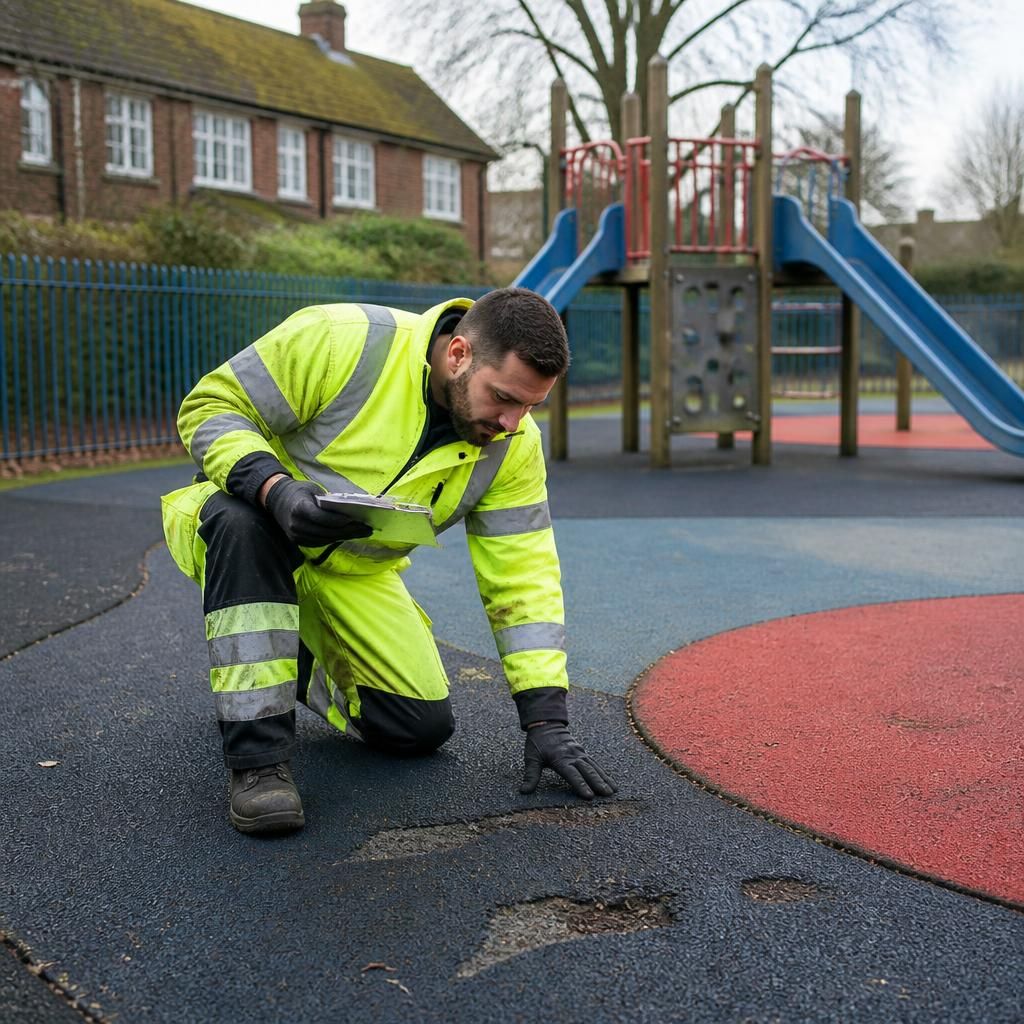
A playground surface cleaning schedule is also a condition-monitoring process: it creates regular opportunities to remove contamination, inspect the exposed surface and record defects before they develop into more disruptive safety or maintenance issues.
After cleaning, inspect for worn impact-absorbing areas, loose or displaced sections, damaged edges, blocked drainage, standing water, cracks and changes in surface texture. Record the location, condition, cleaning method and any follow-up action required. If a defect could affect fall protection, create a trip hazard or indicate unstable surfacing, isolate the affected area and arrange assessment by a suitably competent person before reopening it.
Review the schedule when inspection records show recurring algae, persistent dampness, heavy leaf build-up or faster-than-expected wear. This helps distinguish between contamination that requires more frequent cleaning and underlying issues, such as poor drainage or overhanging vegetation, that need corrective maintenance.