
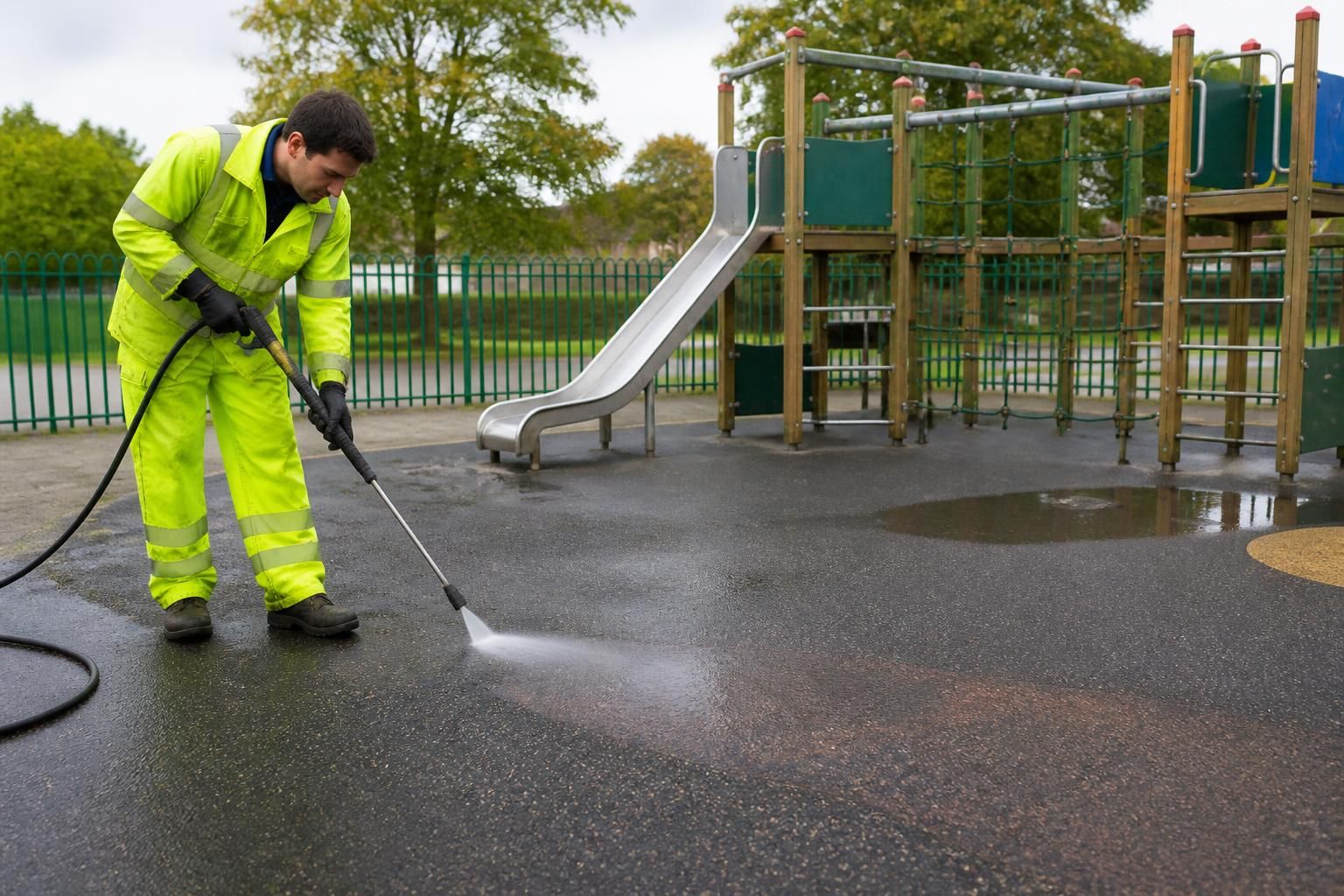
What measures are in place to ensure playground surfaces remain slip-resistant and safe for children?
We keep playground surfaces slip-resistant and safe through thorough cleaning, prompt removal of moss, algae, mud and other contaminants, and routine inspections for wear, pooling water, damage or raised edges. Where necessary, we recommend suitable repairs or maintenance to help preserve drainage, surface grip and compliance with relevant safety requirements.
Playground surfaces remain slip-resistant and safe when they are kept free from contaminants, inspected for defects, allowed to drain and dry properly, and repaired when their condition begins to affect grip or impact protection. Our maintenance approach combines controlled cleaning with visual checks and practical recommendations for repairs, drainage and ongoing care.
Controlling moss, algae and organic contamination
Moss, algae, mud, leaf matter, food residue and other organic debris can create a slippery film on playground surfaces, particularly in shaded or poorly ventilated areas. We remove these contaminants using methods suited to the surface, taking care not to dislodge bonded rubber, damage wet-pour edging or disturb loose-fill materials. Cleaning is followed by a check for remaining residue, especially around equipment supports, kerbs, gates, benches and areas where water collects.
Where biological growth is established, the cleaning process may need to include an appropriate treatment. Any treatment must be selected and applied carefully so that it does not leave a hazardous residue, affect coloured surfacing or create a risk to children, animals or surrounding planting. The playground should remain out of use until the area has been rinsed or otherwise made safe and has dried sufficiently.
Using the correct cleaning method for each surface
There is no single pressure-washing setting that is suitable for every playground. Before work begins, we consider the surface construction, age, condition, drainage and manufacturer’s recommendations. Wet-pour rubber, rubber tiles, artificial grass, tarmac, concrete and loose-fill surfaces all respond differently to water pressure, heat, agitation and cleaning products.
- Wet-pour and rubber surfaces are cleaned with controlled pressure and suitable tools to avoid lifting joints, exposing the base or removing the texture that provides grip.
- Artificial grass is treated to remove surface contamination while protecting the fibres, seams and underlying shock pad. Brushing or agitation is used only where appropriate for the installation.
- Tarmac and concrete may require more intensive removal of embedded dirt, but cracks, worn areas and uneven edges are checked before and after cleaning.
- Loose-fill materials such as bark, wood fibre or sand need raking, levelling and topping-up as well as surface cleaning. Water-based cleaning alone cannot correct displacement or insufficient depth.
We also control overspray and run-off so that dirty water, treatment products and loosened debris do not move into play areas, drainage channels or adjacent paths. Where the site is next to a watercourse or sensitive planting, run-off controls and suitable disposal arrangements are particularly important.
Checking for hazards that cleaning cannot resolve
Cleaning improves surface condition, but it cannot correct structural damage. During maintenance, we look for cracks, holes, worn or exposed bases, raised edges, open joints, loose tiles, damaged seams, depressions, trip points and areas where the impact-attenuating surface may no longer perform as intended. We also look for contamination or damage around posts, access gates and the edges of safety surfacing, where defects can be overlooked.
Any concern that could affect a child’s slip, trip or fall risk is recorded and brought to the customer’s attention. Depending on the finding, the appropriate action may be further cleaning, re-levelling, sealing, patch repair, replacement of a damaged section, improvement of drainage or assessment by a suitably competent playground specialist. We do not treat a surface as safe simply because it looks clean.
Managing standing water and drainage
Standing water reduces traction and can encourage moss and algae to return. It may also reveal blocked drainage, settlement beneath the surface, damaged channels or inadequate falls. We check low points and transitions after cleaning where possible, including the areas beneath and around play equipment. Drainage inlets should be kept clear of leaves, silt and other debris, while surrounding ground should not be allowed to wash material back across the play surface.
Where pooling persists, we identify it as a maintenance or repair issue rather than attempting to remove it temporarily with repeated cleaning. The corrective work may involve clearing an outlet, restoring a channel, improving levels or referring the surface for specialist repair. A dry, well-drained surface is easier to keep clean and is less likely to develop recurring biological growth.
Maintaining grip during changing weather
Wet weather, frost, fallen leaves and rapid temperature changes can alter how a playground surface performs. Seasonal checks focus on shaded areas, tree cover, wet-pour seams, drainage points and locations where debris accumulates. In colder conditions, ice must be managed without using products that could damage the surface or create a further slip hazard. Any de-icing approach should be compatible with the surfacing and equipment and follow the site’s risk assessment.
After cleaning, the playground is kept clear until the surface and any affected equipment or access routes are suitably dry. The required drying time depends on the weather, shade, drainage and type of material. Reopening a wet area too soon can transfer dirt back onto the surface and expose children to unnecessary slip risks.
Combining cleaning with inspection and records
Routine cleaning is most effective when it forms part of a documented maintenance plan. Service records can note the areas cleaned, contamination found, drainage concerns, visible defects, treatments used and recommendations for follow-up work. This helps identify recurring problems, such as algae returning in one shaded corner or water repeatedly collecting beside a particular edge.
Cleaning and visual checks do not replace formal safety inspections or specialist assessment where these are required. The operator or site manager remains responsible for arranging inspections at the appropriate level and frequency, based on the equipment, surfacing, usage and site risk. We can provide maintenance observations to support those arrangements and clearly distinguish routine cleaning findings from defects requiring specialist attention.
Our objective is to leave the surface clean, free from avoidable slip hazards and suitable for continued inspection, while identifying conditions that need repair or further assessment. Regular maintenance, prompt removal of contamination and timely action on drainage or surface defects provide the most reliable way to preserve grip and help keep the playground safe for children.
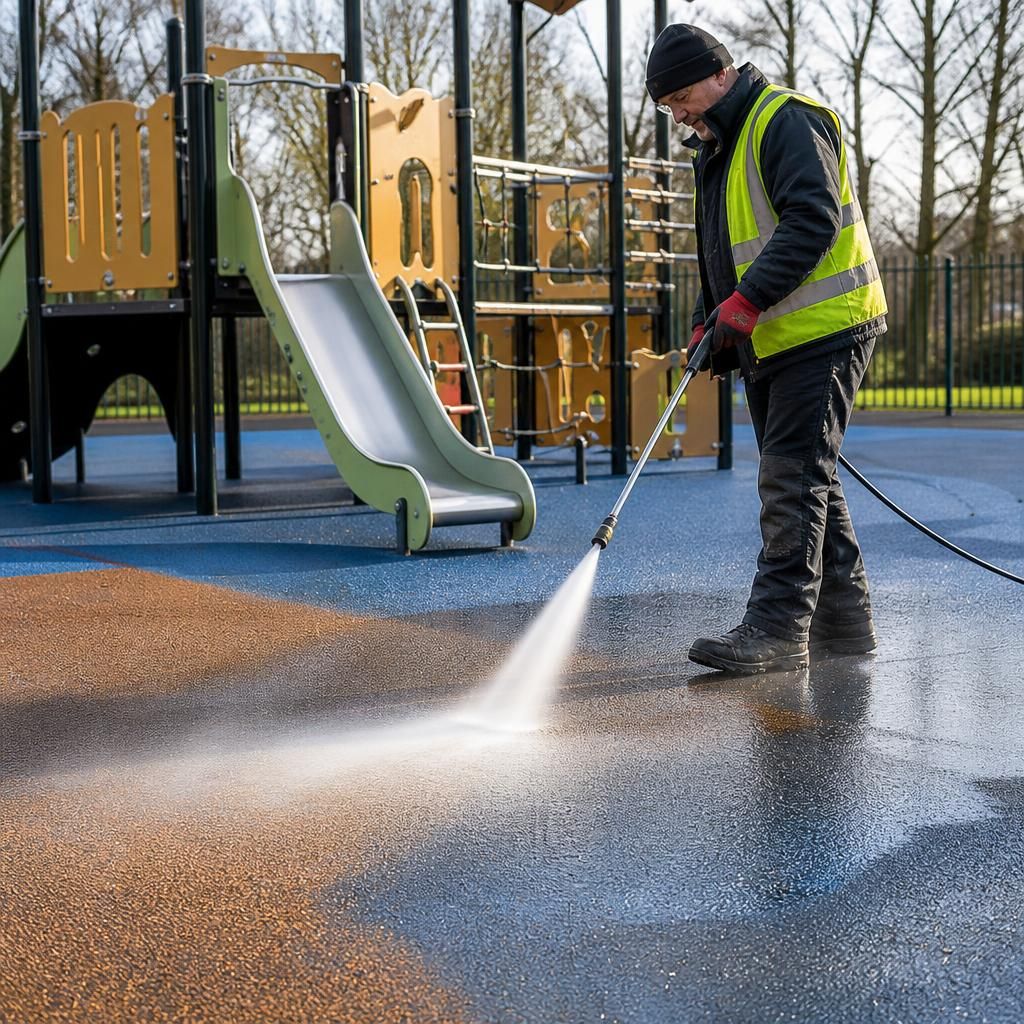
Keeping playground surfaces slip-resistant depends on removing contamination without damaging the material that provides grip. We select the cleaning method according to the surface type, condition and drainage, then check that moss, algae, mud, leaves and cleaning residue have been removed.
Wet-pour rubber, rubber tiles, artificial grass, tarmac and concrete each require different pressure, tools and treatments. Loose-fill surfaces also need raking, levelling or topping-up because cleaning alone cannot restore an even, protective depth. After cleaning, the area remains closed until the surface is sufficiently dry, while pooling water, raised edges, open joints or worn sections are recorded for repair or further assessment.