
What materials are suitable for playground surface maintenance?
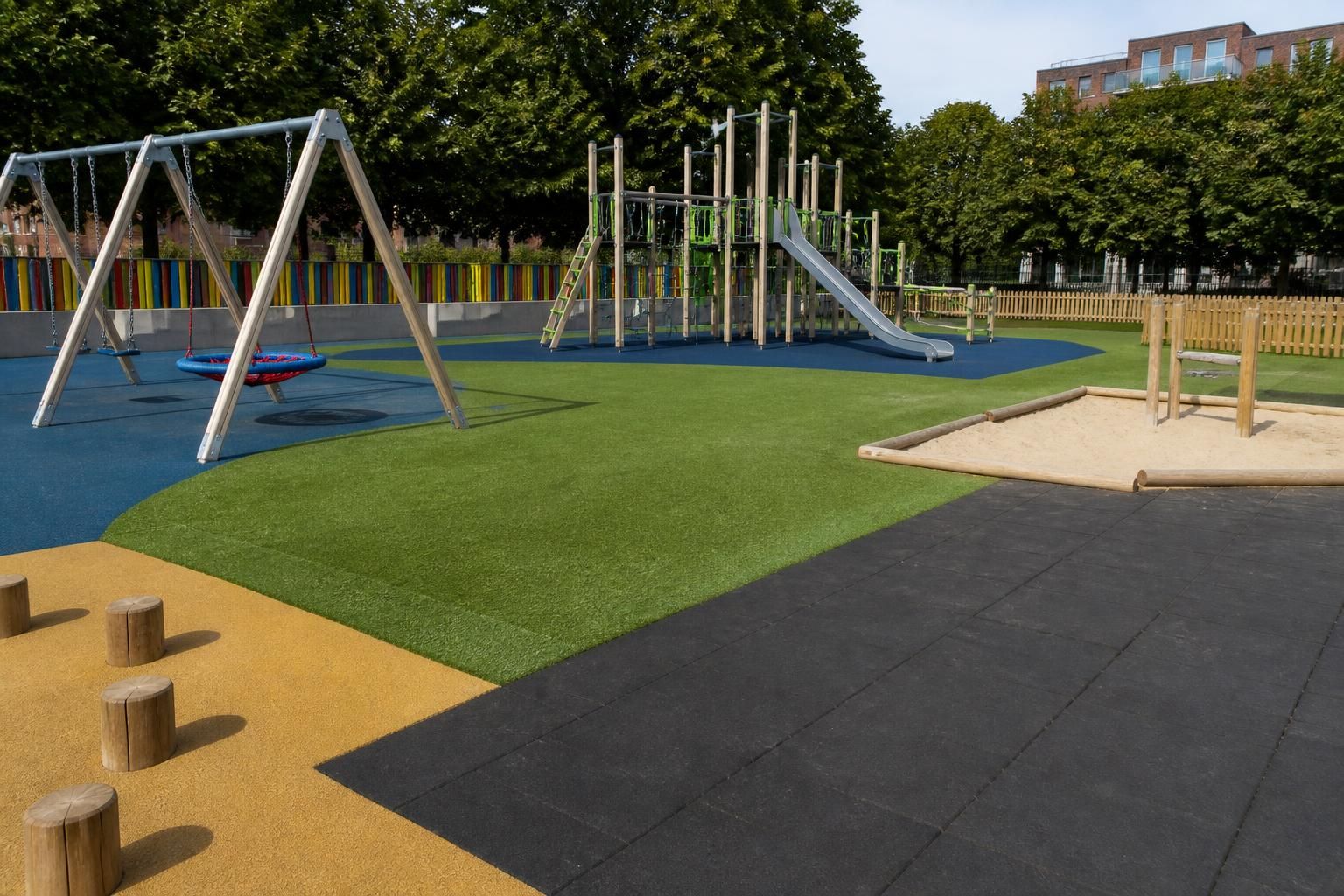
Suitable playground surfaces include wet-pour rubber, rubber tiles, synthetic grass with an impact-absorbing underlay, engineered wood fibre, and play-grade sand, provided they meet the required safety and drainage standards. Maintenance methods and cleaning products must be matched to the material so dirt, algae and spills are removed without damaging the surface or reducing its slip resistance.
The most suitable playground surfacing materials are wet-pour rubber, rubber safety tiles, synthetic grass installed over an impact-absorbing underlay, engineered wood fibre and play-grade sand. Each can provide a safe, accessible and durable play surface when it is correctly installed, adequately drained and maintained with methods that suit its construction. Cleaning products, pressure levels and repair materials should always be selected according to the surface manufacturer’s instructions.
Playground surfacing has to do more than look clean. It should help reduce the severity of injury from falls, remain slip-resistant in wet conditions, allow water to drain, and retain its performance under frequent use. Before any cleaning or maintenance work, the surface should be assessed for damage, compaction, exposed edging, standing water, moss, algae, loose material and changes in level.
Wet-pour rubber
Wet-pour rubber is a resilient, seamless surface made from rubber granules bound together on site. It is widely used below climbing equipment, swings and slides because it can provide consistent impact absorption when installed to the correct depth and specification. Its seamless finish also makes it relatively straightforward to sweep, wash and inspect.
- Remove leaves, litter, soil and other loose debris regularly so they do not become embedded in the surface.
- Use controlled low-pressure washing with a suitable, surface-safe detergent to remove ingrained dirt, algae and organic staining.
- Avoid aggressive pressure washing, harsh solvents and strong corrosive chemicals, which can dislodge granules, weaken the binder or affect colour.
- Inspect seams, edges, high-wear areas and locations beneath swings and slide exits for cracking, lifting or surface loss.
- Use compatible rubber granules and binder for repairs. Patch materials should match the existing system in composition, colour and performance.
Wet-pour rubber can become slippery when contaminated with algae, moss, mud or spillages. Cleaning should therefore address the cause of the contamination, not simply improve its appearance. Any treatment should be rinsed away thoroughly without directing dirty water into play equipment, planting beds or drainage channels where it could create another hazard.
Rubber safety tiles
Rubber tiles are manufactured sections that provide impact absorption and can be replaced individually if damaged. They are suitable where access to the sub-base, localised repairs or future alterations is important. Their joints need particular attention because dirt and moisture can collect between tiles.
- Sweep or vacuum loose debris from the tile surface and joints.
- Wash with a diluted neutral or manufacturer-approved detergent, using a soft brush or controlled water pressure.
- Check for movement, curling, gaps, broken corners and failed adhesive or retaining systems.
- Keep joints and surrounding drainage routes clear to prevent water remaining beneath the tiles.
- Replace damaged tiles with compatible products rather than filling gaps with unrelated rubber or hard-setting materials.
Tiles can be more vulnerable than seamless surfacing to trip points caused by settlement or movement. Cleaning cannot correct these defects, so uneven areas should be recorded for repair and checked after remedial work.
Synthetic grass with an impact-absorbing underlay
Synthetic grass can provide a durable, accessible finish when it is installed over an appropriate shock pad or other tested impact-absorbing layer. It is not the grass pile alone that provides the required fall protection. The underlay, sub-base, infill and drainage system all contribute to the surface’s performance.
- Brush the pile to redistribute it and lift flattened areas, particularly along busy routes and beneath equipment.
- Remove leaves, litter, mud and organic debris before they work into the pile or block drainage.
- Use a suitable low-foaming detergent where washing is required, followed by thorough rinsing.
- Inspect seams, perimeter restraints, exposed underlay, infill levels and areas affected by vehicle or equipment access.
- Avoid high-pressure water that could disturb infill, damage seams or drive contamination into the underlay.
Persistent algae or moss may indicate poor drainage, shading or a build-up of organic matter. The cleaning plan should deal with these conditions while avoiding treatments that bleach the fibres, damage the backing or leave a slippery residue.
Engineered wood fibre
Engineered wood fibre is a loose-fill surface designed specifically for playground use. It can provide impact attenuation when installed at the required depth, but it naturally moves under footfall and can be displaced from high-use areas. It is therefore more maintenance-intensive than many bonded surfaces.
- Rake the material back into depressions and redistribute it beneath swings, at slide exits and around climbing equipment.
- Remove litter, branches, stones, animal fouling and other contamination promptly.
- Top up with compatible play-grade engineered wood fibre when the depth has reduced through displacement, compaction or decomposition.
- Keep the surface loose and free-draining rather than allowing it to become compacted or waterlogged.
- Inspect the containment edging and transitions to paths so displaced material does not create trip hazards.
Routine pressure washing is not suitable for engineered wood fibre. Water jets can displace the material, expose the sub-base and increase compaction. Contamination that cannot be removed by raking and manual collection may require partial replacement rather than chemical treatment.
Play-grade sand
Clean, washed play-grade sand can be suitable in designated sand play areas and may provide some cushioning where it is installed and maintained correctly. Ordinary building sand, reclaimed aggregate and untested decorative sand are not suitable substitutes because they may contain sharp particles, contaminants or materials that do not provide the required performance.
- Rake the sand to redistribute it and identify buried litter, stones or damaged objects.
- Remove contamination and fouling promptly, replacing affected material where it cannot be hygienically cleaned.
- Prevent the sand from spreading onto hard paths, where it can become a slip hazard.
- Check for compaction, depleted areas, standing water and failed or damaged containment.
- Top up only with compatible, clean play-grade sand and assess whether the underlying drainage remains effective.
Sand should not be treated with strong disinfectants or cleaning chemicals that may remain in the play area. Where hygiene is a concern, physical removal and replacement of contaminated material is often more appropriate than attempting to wash it in place.
Materials that need particular care
Hard surfaces such as concrete, tarmac and paving may be suitable for circulation routes, seating areas or access paths, but they are not normally appropriate as the primary impact-absorbing surface beneath play equipment unless they form part of a tested surfacing system. They can also become hazardous when covered with mud, algae, loose sand or cleaning residue. Their maintenance should include sweeping, controlled washing, drainage clearance and prompt treatment of contamination, while ensuring that hard transitions do not create trip edges.
Perimeter kerbs, wet-pour repairs, tile adhesives, jointing compounds and drainage covers should be compatible with the adjacent play surface. A hard repair that protrudes above a resilient surface can create an injury risk, while an unsuitable sealant may crack, soften or become slippery.
Choosing cleaning and repair materials
Use pH-neutral or manufacturer-approved detergents wherever possible, and test any unfamiliar product on a small inconspicuous area first. The cleaning method should remove contamination without stripping coatings, loosening rubber granules, flattening synthetic grass, washing out loose-fill material or leaving a film that reduces grip.
After maintenance, inspect the surface when it is clean and, where practical, when it is dry. Record defects, areas requiring replenishment and any recurring drainage or contamination issues. If impact attenuation, surface depth or structural integrity may have been compromised, the area should be taken out of use until it has been assessed and repaired by a suitably competent provider. Cleaning improves hygiene and appearance, but it cannot restore a surface that has lost its tested safety performance.
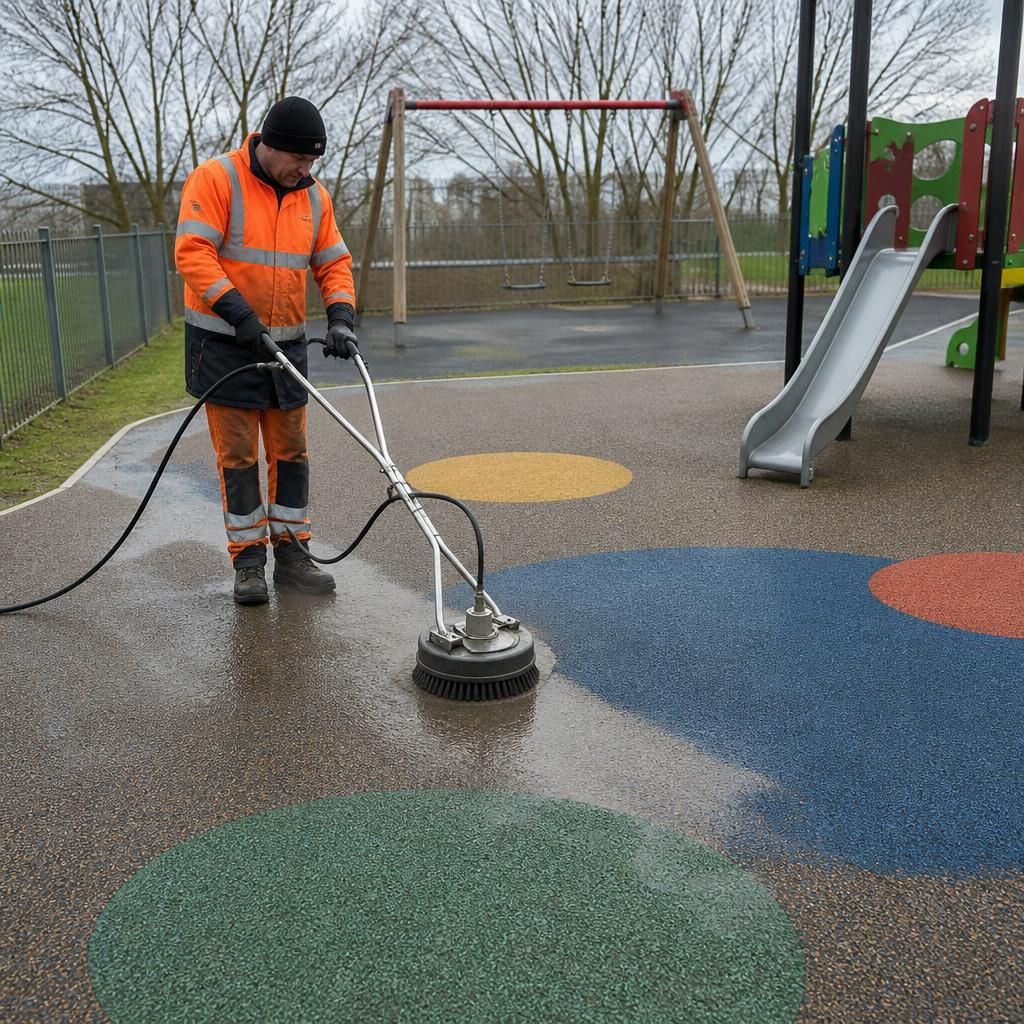
The most important maintenance principle is to match the cleaning method to the playground surface. Wet-pour rubber and rubber tiles usually require controlled low-pressure washing with a suitable neutral detergent, while synthetic grass needs careful brushing, low-foaming cleaning and thorough rinsing without disturbing its infill or underlay.
Loose-fill materials, including engineered wood fibre and play-grade sand, should not be pressure washed. Rake them, remove contamination and replenish or replace material where necessary. After cleaning, check drainage, slip resistance, surface depth and any damaged areas before the play area is reopened.
Arrange professional playground surface maintenance
Arrange professional playground surface maintenance with Encanto Exterior Cleaning to help keep rubber, synthetic grass and loose-fill surfaces clean, well drained and safe for use. Contact our team to discuss a maintenance programme suited to your playground’s surfacing materials and site requirements.