
What are the recommended frequency and procedures for playground inspections and maintenance?
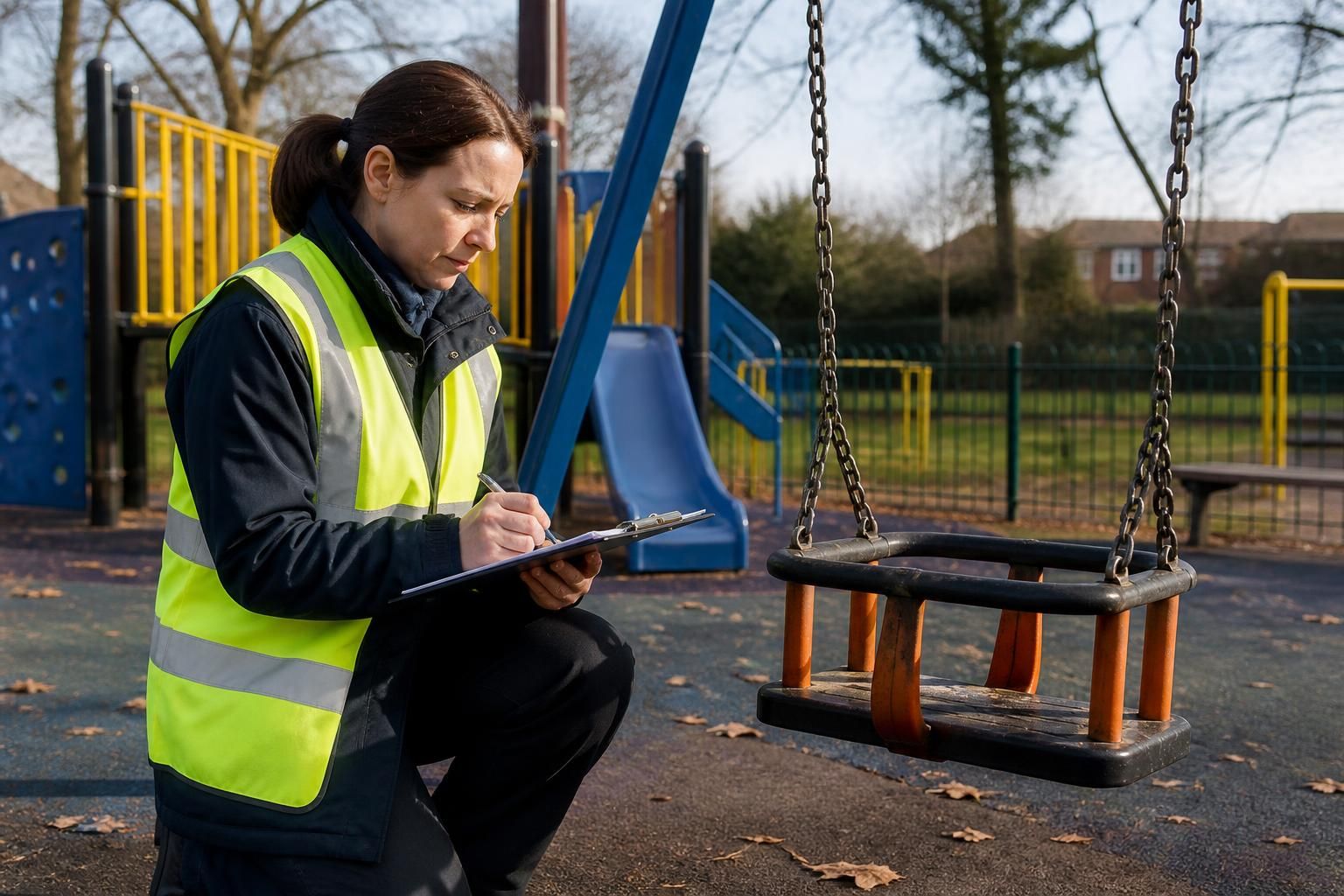
Playgrounds should receive a visual safety check before opening each day, a more detailed operational inspection at regular intervals, and a recorded annual inspection by a competent person. Procedures should cover equipment, fixings, surfacing, drainage, cleanliness and graffiti, with defects made safe promptly, repairs documented and the inspection schedule adjusted for usage, weather and site conditions.
Playgrounds should receive a visual safety check before opening each day, a more detailed operational inspection at planned intervals, and a recorded annual inspection by a competent person. The exact frequency should reflect the site’s usage, equipment, age, location, surfacing, weather exposure and history of defects. Every inspection should be documented, and hazards should be controlled or repaired without delay.
Recommended inspection schedule
- Routine visual inspection: Complete this before the playground is opened and repeat it during the day where the site is heavily used, vandalism is a concern or weather conditions have changed. Look for broken components, sharp edges, exposed foundations, displaced surfacing, trip hazards, contamination, litter, glass, animal fouling, graffiti and signs of fire damage.
- Operational inspection: Carry this out at planned intervals based on the manufacturer’s instructions and the site risk assessment. It should examine the operation, stability and condition of equipment in greater detail, including moving parts, joints, fixings, chains, ropes, seats, bearings, handrails and protective components. Higher-use sites may require more frequent operational checks.
- Annual main inspection: Arrange a comprehensive recorded inspection by a competent person who can assess the condition, structural integrity, foundations, impact-attenuating surfacing, drainage, entrapment risks and compliance with the relevant requirements. This should include areas that are not readily visible during routine checks.
- Additional inspections: Inspect the playground after severe weather, flooding, building work, vandalism, accidental impact, a reported incident or any repair that could affect safety. Reinspect equipment before it is returned to service.
What the inspection should cover
- Equipment condition: Check frames, platforms, barriers, guards, steps, ladders, slides, swings, tunnels, bridges and other components for cracks, corrosion, rot, deformation, excessive wear or movement.
- Fixings and connections: Check that bolts, screws, rivets, clamps and other connections are secure, correctly fitted and not missing. Pay particular attention to joints and areas subject to repeated movement.
- Moving parts: Examine chains, bearings, hinges, springs, seats and suspension points for wear, entanglement risks, trapping points and restricted or uncontrolled movement. Lubricate or replace components only in accordance with the manufacturer’s instructions.
- Surfacing: Check that wet-pour rubber, rubber tiles, engineered wood fibre, sand, bark or other safety surfacing remains level, suitably deep and free from gaps, hard spots, exposed foundations and trip hazards. Inspect impact zones around equipment and restore displaced loose-fill material where necessary.
- Ground and drainage: Look for erosion, standing water, subsidence, root growth, damaged edging and blocked drainage. Poor drainage can accelerate surface deterioration and create slippery conditions.
- Cleanliness: Remove litter, broken glass, animal fouling, leaves, moss, algae and other contamination using methods suitable for the surfacing and equipment. Cleaning should not damage protective coatings or leave residues that increase slip risk.
- Graffiti and vandalism: Record and remove graffiti promptly using a controlled method that will not discolour, abrade or weaken the affected material. Inspect for deliberate damage, missing parts and unauthorised alterations at the same time.
- Site boundaries and furniture: Check gates, fences, seating, bins, signage, lighting and access routes. These features can create hazards even when the play equipment itself is sound.
Recommended inspection procedure
- Review previous inspection records, outstanding repairs, manufacturer guidance, complaints and incident reports before starting.
- Walk the entire site, including entrance routes, perimeter areas and spaces beneath and around equipment. Do not rely solely on checking the apparatus.
- Assess each item for immediate hazards, deterioration and correct operation. Where appropriate, apply normal user loads or operational tests without putting anyone at risk.
- Check safety surfacing and surrounding ground by sight and touch where this can be done safely. Investigate areas that are hard, uneven, wet, loose or visibly displaced.
- Classify defects according to their risk. An immediate hazard should result in the equipment or affected area being isolated, taken out of use or made safe straight away. Less urgent defects should still be assigned an owner and completion date.
- Use suitable barriers and clear warning notices where an area is closed. Do not leave damaged equipment accessible while waiting for parts or a contractor.
- Record the findings, photographs where useful, actions taken, repairs required and the person responsible. Close out each action and retain evidence of completion.
Managing defects and repairs
Minor defects should not be ignored simply because equipment remains usable. Loose fixings, worn surfaces and small areas of corrosion can develop into significant failures, particularly on busy sites or where water enters joints. Repairs should use compatible replacement parts and follow the manufacturer’s instructions. Improvised modifications can introduce new entrapment, impact or structural risks.
After a repair, carry out a handover inspection before reopening the equipment. Confirm that fixings are secure, surfaces are reinstated, protective finishes are intact and the repair has not created sharp edges, gaps or changes to the original design. Where a defect affects structural safety or the suitability of the impact-attenuating surface, obtain an appropriate competent assessment rather than relying on a visual check alone.
Inspection records and review
Inspection records should identify the date, time, weather and site conditions, inspector, equipment or area checked, defects found, risk classification, temporary controls, repair details and close-out date. Keep annual inspection reports with maintenance records so that recurring problems can be identified.
Review the schedule whenever usage changes, new equipment is installed, the site experiences repeated vandalism, drainage problems occur or inspection findings show accelerated wear. The maintenance plan should also reflect current manufacturer instructions and relevant UK guidance, including applicable BS EN 1176 and BS EN 1177 requirements. A documented, risk-based programme is more reliable than applying the same frequency to every playground.
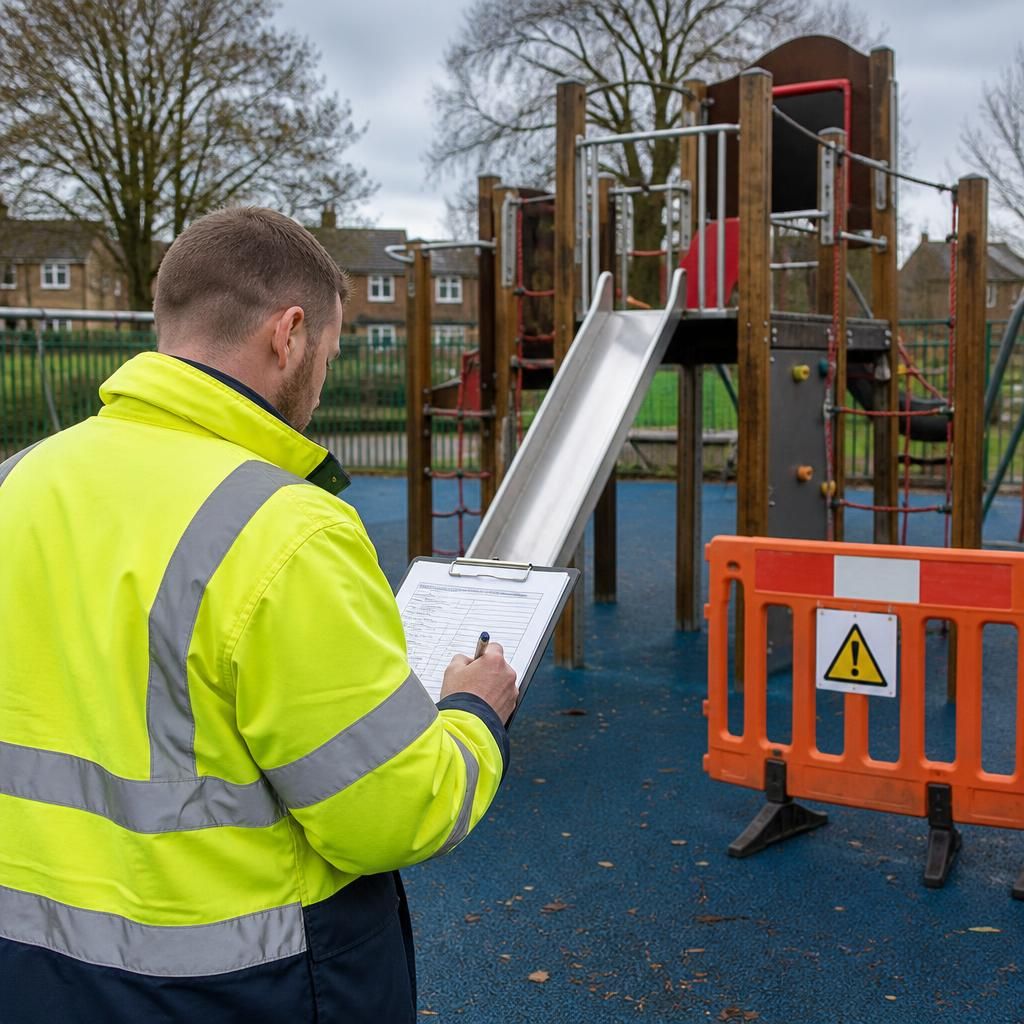
Every playground inspection should end with a documented decision about any defect found. If equipment, surfacing or surrounding ground presents an immediate hazard, isolate the affected area or remove the item from use straight away rather than waiting for the next scheduled maintenance visit.
Inspection records should identify the area checked, defect, risk level, temporary control, required repair, responsible person and close-out date. After repairs, complete a handover inspection before reopening the equipment. Confirm that replacement parts and fixings are secure, safety surfacing has been reinstated correctly, and the repair has not introduced sharp edges, gaps, trapping points or other changes to the original design.