
What are the key components of a comprehensive playground maintenance plan?
A comprehensive playground maintenance plan combines scheduled safety inspections, routine cleaning, surface and equipment checks, prompt repairs, risk assessments, and accurate maintenance records. It should also define responsibilities, inspection procedures, compliance requirements and preventive measures to keep the play area safe, hygienic and suitable for continued use.
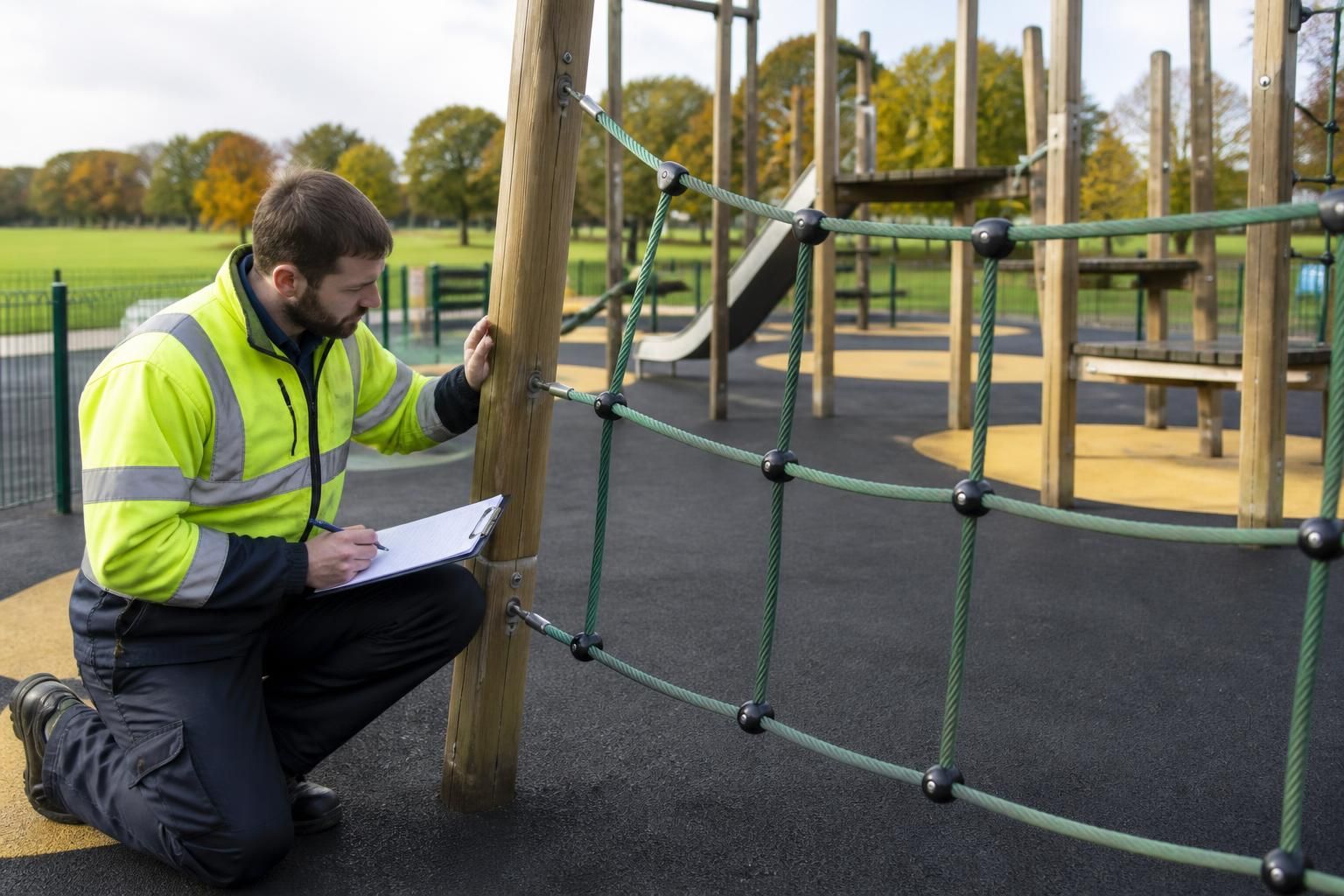
A comprehensive playground maintenance plan is a documented system for inspecting, cleaning, servicing, repairing and reviewing every part of a play area. It should cover the equipment, impact-absorbing surfaces, surrounding hardstanding, access routes, drainage, fencing, gates, seating, signage and other associated features. The plan must assign responsibilities, set inspection procedures and frequencies, define response times for defects, and retain clear records so that safety and compliance can be demonstrated.
Asset register and maintenance responsibilities
The plan should begin with an accurate asset register. This records each item of play equipment, its location, construction materials, surfacing type, age where known, manufacturer guidance and any relevant installation or inspection information. Associated features such as bins, benches, lighting, fencing, gates and drainage should also be included because hazards can arise outside the play equipment itself.
Responsibilities should be unambiguous. The site owner or operator normally coordinates the overall plan, while trained staff or appointed contractors carry out inspections, cleaning, repairs and specialist assessments. The plan should identify who can close equipment or areas, who authorises repairs, who records completed work and who reviews outstanding risks.
Planned inspection programme
Inspections should be organised according to the level of risk and the way the site is used. A practical programme usually includes:
- Routine visual checks: frequent checks for obvious contamination, broken components, sharp edges, vandalism, standing water, displaced surfacing and other immediate hazards.
- Operational inspections: more detailed checks of wear, stability, fixings, moving parts, entrapment points, impact areas, drainage and the condition of surfaces.
- Periodic technical inspections: structured assessments by a suitably competent person, taking account of equipment condition, structural integrity, installation issues and the effectiveness of previous repairs.
- Additional inspections: checks after severe weather, significant vandalism, unusual incidents, construction work nearby or any reported accident or defect.
Inspection frequency should reflect usage, age, location, exposure, vandalism risk and the manufacturer’s recommendations. A busy public playground may require more frequent operational checks than a lightly used private facility. The procedure should state what is examined, how defects are classified and what action is required.
Cleaning and hygiene controls
Cleaning should be planned rather than treated as an occasional cosmetic task. It should address equipment, handrails, platforms, seats, signs, fencing, gates and surrounding hard surfaces. Dirt, bird fouling, algae, moss, chewing gum, litter, food residue, oils and graffiti can create hygiene, slip or presentation issues.
The cleaning method must suit the material and construction. Pressure washing can be effective on suitable hard surfaces, but excessive pressure may damage coatings, seals, timber, joints or surfacing systems. Steam cleaning may be appropriate for some sensitive areas or where controlled treatment is needed. Cleaning operatives should protect drainage systems, prevent contaminated wash water entering unsuitable areas and use products in accordance with their instructions and site controls.
Cleaning records should note the area treated, method used, any products applied, defects identified and whether the play area was safely reopened. Where faecal contamination, bodily fluids, hazardous substances or extensive mould growth are found, the area should be isolated and dealt with using an appropriate specialist procedure.
Equipment condition and functional checks
Equipment inspections should assess more than general appearance. They should include:
- loose, missing, worn or corroded fixings;
- cracks, splits, sharp edges, protrusions and damaged welds;
- unstable posts, foundations, anchors and support structures;
- ropes, chains, nets, seats, handgrips and other wear components;
- moving parts, bearings, hinges, springs and braking or protective features;
- openings and gaps that could create head, neck, finger, limb or clothing entrapment risks;
- changes to fall heights, clearances, access points or protective barriers; and
- evidence of unauthorised alterations, attempted repairs or vandalism.
Manufacturer instructions should be followed for lubrication, replacement parts, torque settings and specialist servicing. Substituting unsuitable components or making undocumented modifications can affect the safety design and may invalidate inspection evidence.
Surfacing, drainage and surrounding areas
Impact-absorbing surfacing requires its own maintenance schedule. Checks should identify displacement, thinning, exposed foundations, worn areas, trip edges, damaged tiles, loose fill, compaction, contamination and poor transitions between different surfaces. Loose-fill materials may need redistribution or topping up, while bonded or wet-pour systems may require local repairs by a suitably experienced contractor.
Surfaces should be kept free from litter, glass, stones, mud, algae and other contamination. Drainage channels, gullies and falls should be checked so that water does not remain on play or access areas. Nearby trees, roots, soil erosion, kerbs and hardstanding should also be reviewed because they can introduce trip hazards or affect the performance of the safety surface.
Slip resistance can be reduced by algae, grease, organic deposits, excessive wear or unsuitable cleaning residues. Cleaning and surface treatment should therefore be selected according to the material, contamination and expected use, with adequate drying time and controls to prevent access while work is in progress.
Defect assessment and repairs
The plan should use a consistent system for assessing defects. An immediate danger requires prompt isolation or closure of the affected equipment or area. Less urgent deterioration should still be recorded, assigned to a responsible person and given a target completion date. Minor issues should not be allowed to accumulate until they become safety-critical.
Temporary measures, such as barriers or warning signs, should not be treated as permanent repairs. Completed work should be checked to confirm that the original hazard has been removed and that the repair has not created a new issue. Replacement parts should be compatible and appropriately specified, and structural or specialist repairs should be completed by competent personnel.
Risk assessments and compliance evidence
A site-specific risk assessment should consider foreseeable risks arising from equipment design, surfacing, weather, contamination, vandalism, access, nearby traffic, water, trees and how children use the facility. It should explain the control measures in place and be reviewed when the site, equipment or operating conditions change.
For UK playgrounds, the maintenance approach should take account of relevant manufacturer instructions, applicable legislation and recognised playground safety standards, including the BS EN 1176 equipment and surfacing requirements where relevant. A maintenance plan does not replace a formal inspection by a competent person, and records should distinguish routine maintenance from independent technical inspection.
Records, reporting and review
Useful records include inspection sheets, photographs, cleaning schedules, defect reports, repair invoices, product information, accident or incident reports, risk assessments and completion sign-offs. Each entry should show the date, area or asset, findings, action taken, person responsible and any follow-up required.
Records should be easy to retrieve and retained in line with the operator’s document-control arrangements. Regular reviews can identify recurring problems, such as repeated algae growth, drainage failure, vandalism or premature wear. The plan can then be adjusted through improved cleaning methods, environmental controls, component replacement, layout changes or revised inspection frequencies.
Site controls during maintenance
Maintenance work should include arrangements for segregating the public, storing equipment and chemicals safely, controlling wash water, managing noise and preventing access to wet or recently treated surfaces. Work should be coordinated with site users and other contractors, particularly where access equipment, hoses, machinery or temporary barriers are required.
In practice, the strongest plans combine regular inspections with disciplined cleaning, rapid defect control, competent repairs and reliable documentation. This provides a clear process for keeping the playground safe and usable while giving the operator evidence that maintenance decisions have been made consistently and reviewed when conditions change.
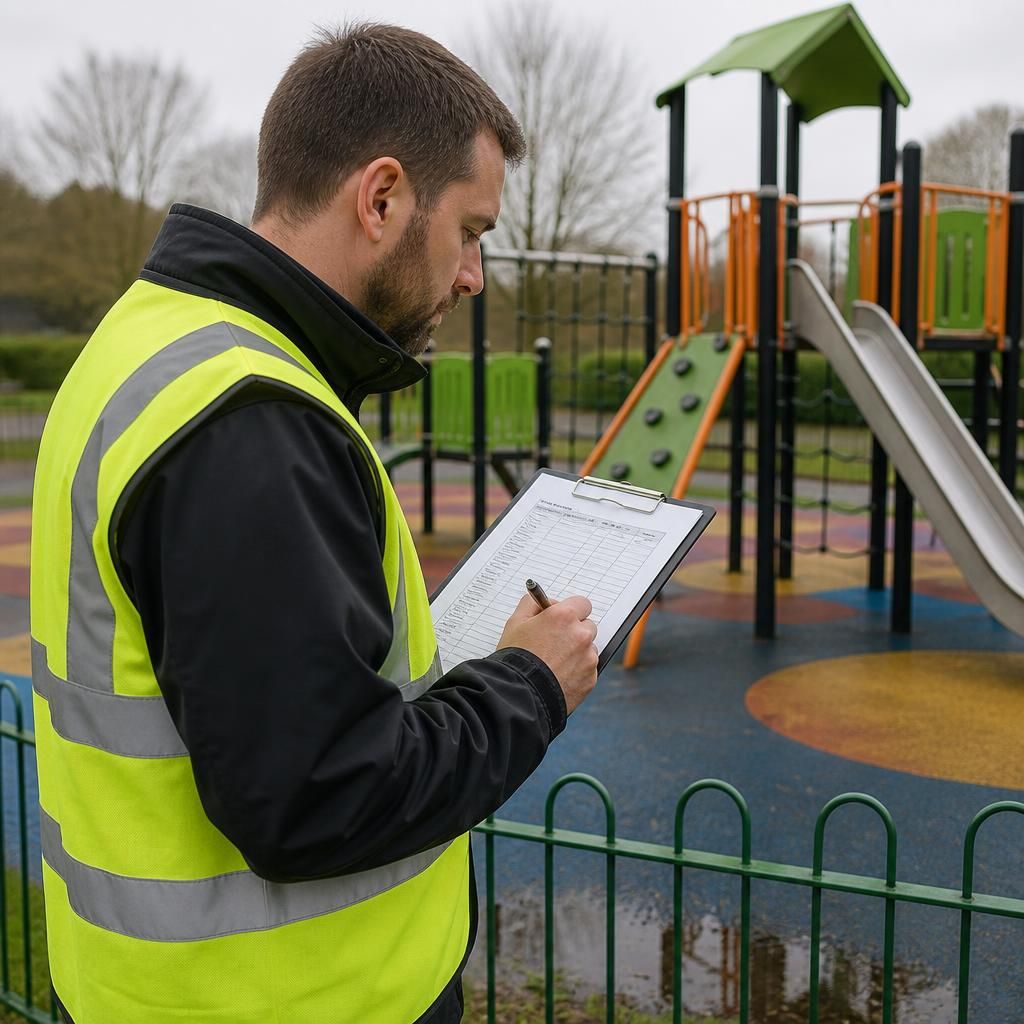
Maintenance records are a key component of a comprehensive playground maintenance plan because they show what was inspected, which defects were found and how each issue was resolved. Records should cover equipment, safety surfacing, drainage, fencing, gates, signs and surrounding hardstanding rather than focusing only on play units.
Each entry should identify the date, location or asset, inspection findings, risk classification, action taken, responsible person and any follow-up required. Photographs, cleaning logs, repair details and completion checks can provide useful supporting evidence. Reviewing these records regularly also helps identify recurring problems, such as algae, standing water, vandalism or repeated component wear, so inspection frequencies and preventive measures can be adjusted.