
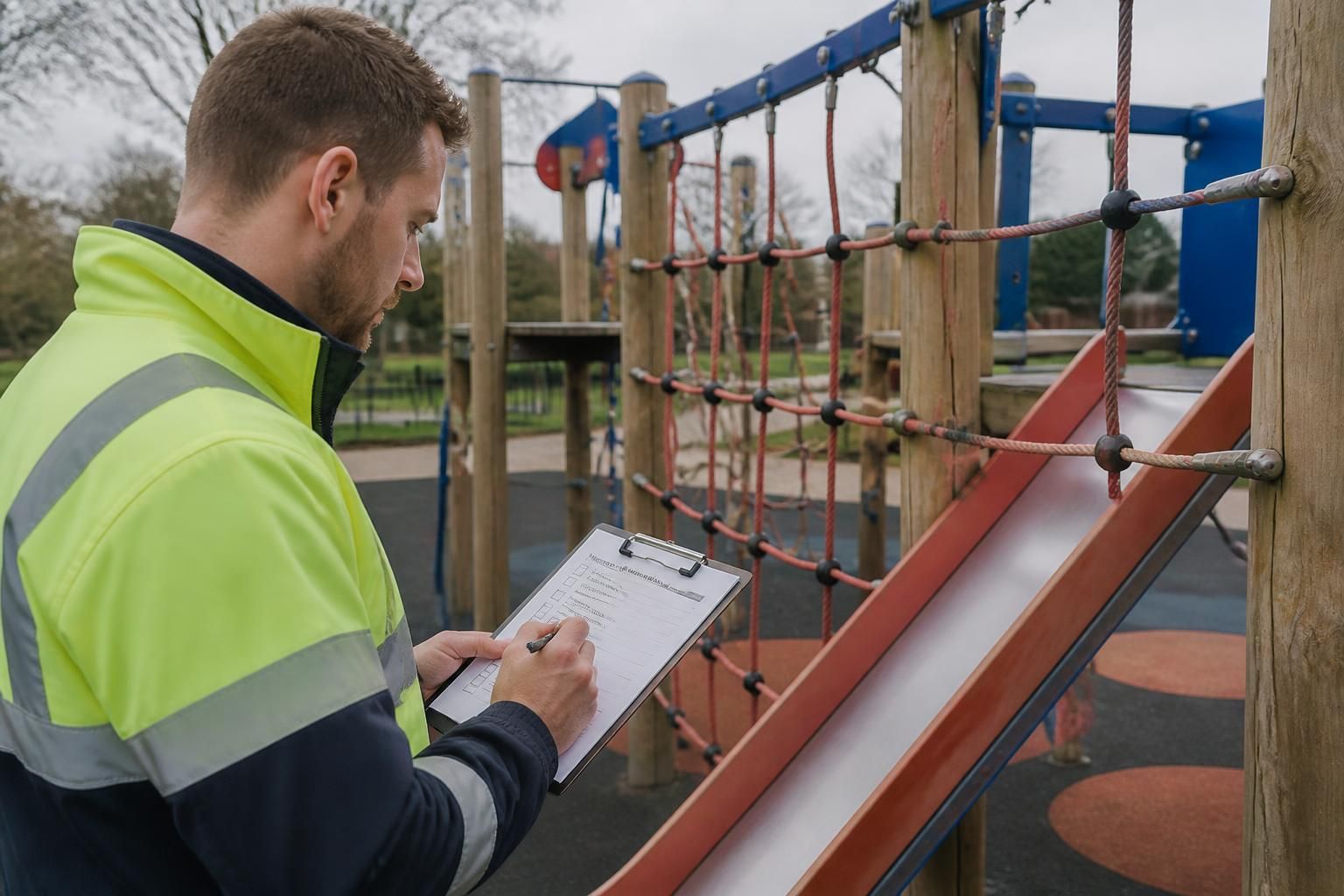
How often should playground equipment be inspected for safety?
Playground equipment should receive a visual safety check before use each day, with more frequent checks where usage or risk requires it. A documented operational inspection is typically carried out regularly, while a detailed annual inspection by a competent person should assess structural condition, foundations, fastenings, surfaces and compliance with the relevant safety standards.
Playground equipment should receive a visual safety check before use each day, or more often where usage, vandalism, weather or site conditions create additional risk. A documented operational inspection should then be completed at a defined frequency based on the playground’s risk assessment, manufacturer’s instructions and level of use. A detailed annual inspection by a competent person is also normally required to assess structural condition, foundations, fastenings, moving parts, impact-absorbing surfaces and compliance with the relevant safety requirements.
The inspection schedule should normally include the following levels of checking:
- Routine visual checks: completed before the playground opens or before use each day. These checks identify obvious hazards such as broken components, sharp edges, exposed foundations, loose fixings, damaged surfacing, contamination, standing water, vandalism and obstructions.
- Operational inspections: completed at regular planned intervals, often weekly or monthly depending on usage, design, age, location and previous defects. These checks are more detailed and include testing the operation and stability of equipment, checking moving parts and examining wear that may not be obvious during a brief visual check.
- Annual main inspection: completed by a competent person with suitable knowledge and experience. This is a comprehensive assessment of the equipment, supporting structures, foundations, surfacing, drainage, corrosion, decay, fixings, entrapment risks and overall condition.
The correct interval is not identical for every playground. A heavily used public facility, a school playground, a holiday park and a low-use private site will have different inspection needs. Equipment exposed to coastal conditions, persistent damp, heavy rainfall, freezing temperatures or aggressive use may also require more frequent checks. The inspection plan should reflect these conditions rather than relying on an annual visit alone.
What should be checked during a routine visual inspection?
A routine check should be practical and consistent, with findings recorded even when no defect is found. The person carrying out the check should look for:
- broken, missing, loose or displaced components;
- sharp points, protruding bolts, exposed threads and damaged edges;
- cracks, splits, rot, corrosion or distortion in timber, metal, plastic and composite components;
- loose posts, movement at joints or signs that foundations have become exposed;
- damaged seats, platforms, handrails, barriers, steps, ladders and guardrails;
- worn, trapped, stretched or damaged ropes, chains, cables and nets;
- unusual movement, noise or resistance in swings, carousels, seesaws, gates and other moving equipment;
- debris, glass, animal fouling, mud, ice, algae, standing water or other contamination;
- trip hazards, erosion, displaced edging and changes in the level of the surrounding ground;
- damage to wet-pour rubber, rubber tiles, engineered wood fibre, sand or other impact-absorbing surfacing; and
- evidence of unauthorised alterations, graffiti, burning, vandalism or attempted theft.
Cleaning supports the inspection process because dirt, algae, graffiti and surface contamination can conceal defects or create slip hazards. However, cleaning is not a substitute for a technical inspection. A clean surface may still have poor impact performance, failed drainage, loose edging or damage beneath the visible layer.
When should an additional inspection be carried out?
An additional inspection is advisable after circumstances that could have affected safety. This includes severe wind, flooding, snow, frost, fallen branches, nearby construction work, suspected vandalism, fire, a reported accident or a complaint about the equipment. Newly installed, repaired or relocated equipment should also be checked before it is returned to service. The same applies after substantial cleaning, resurfacing or other work where components may have been removed or disturbed.
Any item presenting an immediate risk should be taken out of use without waiting for the next scheduled inspection. Suitable action may include isolating the equipment, restricting access to the affected area, removing loose components and arranging repair by a suitably qualified contractor. The equipment should only be reopened after the defect has been corrected and the repair has been checked.
What is included in an annual main inspection?
The annual inspection should go beyond a general visual check. It should examine the condition and performance of the playground as a whole, including:
- the structural integrity of posts, frames, decks, platforms, supports and connections;
- the condition of foundations and whether any have become exposed, unstable or undermined;
- the security and condition of bolts, welds, anchors, fixings and protective caps;
- wear in moving mechanisms, bearings, chains, ropes, springs and suspension points;
- corrosion, timber decay, splitting, UV damage and deterioration caused by weather;
- clearances, fall zones, access routes and potential finger, limb, head or clothing entrapment points;
- the condition, depth, coverage and drainage of impact-absorbing surfacing; and
- whether previous repairs, modifications or replacement parts remain suitable and secure.
For UK sites, the inspection and maintenance approach should take account of the relevant parts of the BS EN 1176 series for playground equipment and surfacing, including the guidance on inspection, maintenance and operation. Impact-absorbing surfaces are also assessed with reference to BS EN 1177 where applicable. These standards should be considered alongside the manufacturer’s instructions, the site’s risk assessment and any requirements set by the operator, local authority, insurer or client.
Who should carry out the inspections?
Routine checks may be completed by a trained site employee or other responsible person who understands the equipment, the inspection checklist and the action required when a defect is found. Operational and annual inspections require a greater level of technical knowledge. The person should be able to identify structural deterioration, installation defects, unsafe clearances, surfacing problems and defects that could worsen over time.
Evidence of competence may include relevant training, practical experience, familiarity with playground standards and an understanding of the equipment manufacturer’s requirements. The operator should retain records of this competence and ensure that the person inspecting the site is sufficiently independent and properly equipped for the task.
What records should be kept?
Inspection records should identify the playground, equipment checked, date and time of the inspection, name of the inspector, findings, photographs where useful, risk rating, corrective action and completion date. Records should show whether an item was left in service, restricted or taken out of use. Repair invoices, replacement details, cleaning reports and annual inspection reports should be retained with the maintenance file.
Review the inspection frequency whenever the playground changes, equipment is added, usage increases, repeated defects are found or an incident occurs. A documented, risk-based programme combining routine checks, operational inspections, annual technical assessment and prompt follow-up provides a more reliable level of safety than relying on a single yearly inspection.
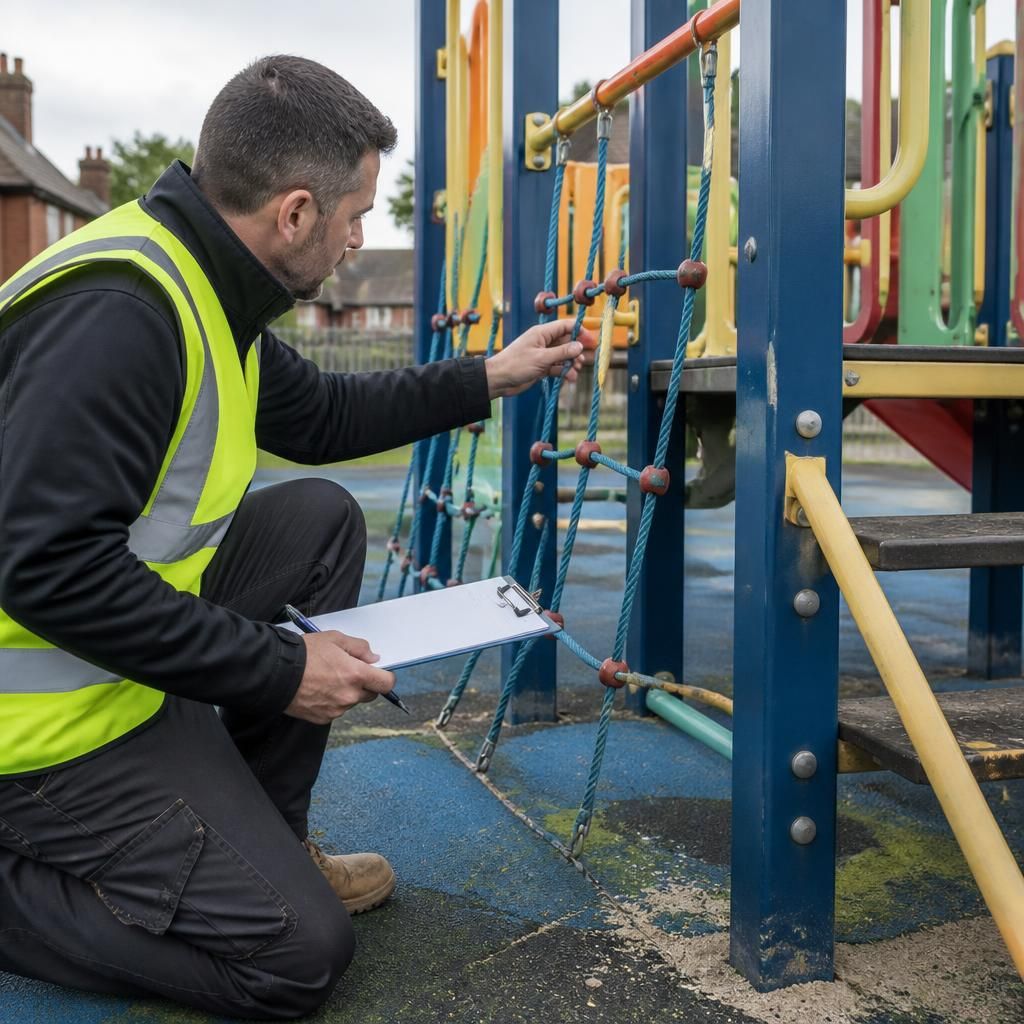
Playground equipment should be checked visually before use each day, with more detailed inspections scheduled according to usage, age, design, location and site conditions. High-use areas or equipment exposed to vandalism, severe weather, damp or heavy wear may need operational checks more often than low-use sites.
A competent person should complete a detailed main inspection at least annually, covering structural condition, fixings, foundations, moving parts, entrapment risks and impact-absorbing surfacing. Additional checks are needed after storms, flooding, vandalism, repairs, resurfacing or any reported incident. Any equipment presenting an immediate hazard should be isolated until the defect has been repaired and the repair verified.