
How does your playground maintenance ensure compliance with current health and safety standards?
Professional playground maintenance supports compliance by combining documented risk assessments, routine visual and operational inspections, thorough periodic checks, prompt repairs and accurate maintenance records. Work is carried out with reference to relevant UK requirements and BS EN 1176 guidance, helping identify unsafe equipment, damaged surfaces, access hazards and hygiene issues before the play area is returned to use.
Professional playground maintenance supports health and safety compliance through documented risk assessments, scheduled inspections, competent repairs, effective cleaning and accurate records. Work is carried out with reference to relevant UK legal duties, manufacturer instructions and the BS EN 1176 series for playground equipment, together with BS EN 1177 where impact-absorbing surfacing is involved. This process helps identify hazards before they cause injury and provides evidence that the play area is being managed responsibly.
Risk assessment and planned maintenance
Each play area should be assessed in context rather than treated as a collection of individual items. The assessment considers the equipment, surfacing, age range, layout, access routes, surrounding structures, drainage, environmental conditions and foreseeable patterns of use. Maintenance priorities are then set according to the severity and likelihood of each hazard.
A planned maintenance schedule can include routine cleaning, visual checks, operational inspections, detailed technical inspections, surface maintenance and periodic repairs. It should also explain who is responsible for each task, what findings must be reported and when equipment must be taken out of service.
Inspection of equipment and surrounding areas
Inspections look for defects that may create entrapment, entanglement, impact, trapping, sharp-edge or falling hazards. Typical checks include:
- loose, missing, cracked or corroded components;
- unstable posts, foundations, fixings, platforms, steps, handrails and barriers;
- damaged ropes, chains, seats, handles, bearings and moving parts;
- splintered timber, exposed metal, sharp edges and protruding fasteners;
- inadequate clearances or changes to the intended layout;
- vandalism, deliberate damage and unauthorised alterations; and
- obstructions, broken glass, animal fouling, litter and other contamination.
The inspection also covers gates, fencing, signs, bins, benches, lighting, drainage and access routes. These features can create risks even when the play equipment itself is in good condition.
Safety surfacing and slip prevention
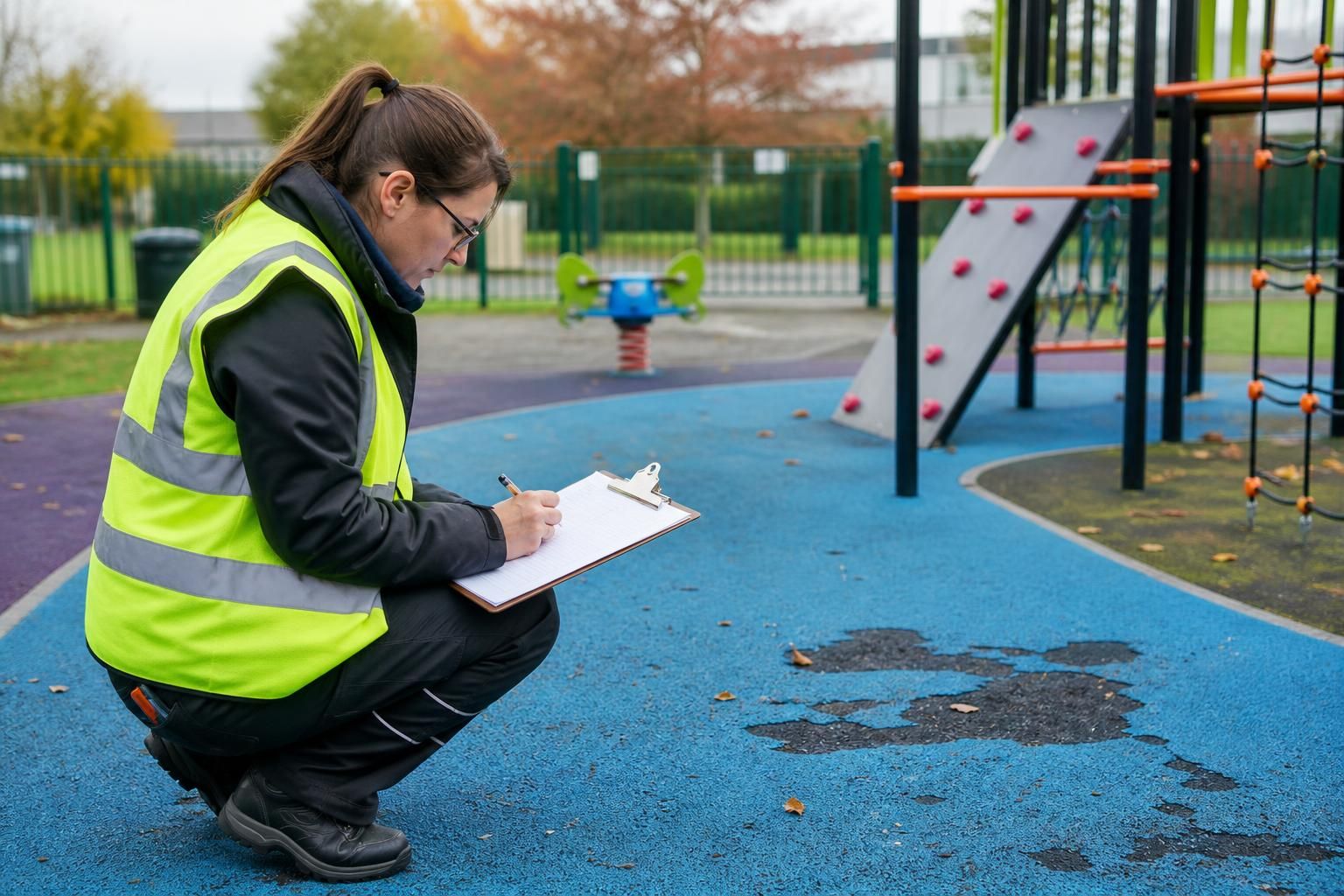
Playground surfacing is maintained as part of the safety system, not simply as a cosmetic finish. Loose-fill materials may need levelling, raking, topping up and removal of compacted or contaminated areas. Wet-pour rubber, tiles and other bound surfaces are checked for lifting, cracking, open joints, worn patches and trip edges. Grass, soil and other natural surfaces are assessed for erosion, exposed roots, mud and uneven areas.
Cleaning removes algae, moss, mud, oil, litter and other contaminants that can reduce slip resistance. Cleaning methods are selected to avoid damaging the surface, displacing loose-fill material or leaving a slippery residue. Where impact attenuation is relevant, a qualified inspection should determine whether the surface remains suitable for its intended fall height; visual cleanliness alone cannot confirm this.
Cleaning and hygiene controls
Regular cleaning reduces hazards associated with broken glass, sharps, bodily fluids, animal fouling, food waste and other contamination. The work method should identify the correct equipment, cleaning products, personal protective equipment and disposal arrangements. Particular care is required where contamination could expose users or maintenance staff to infection or harmful substances.
Contaminated areas are isolated until they have been cleaned and assessed as safe. Pressure washing or other cleaning methods must be controlled so that contaminated water, debris or cleaning chemicals are not spread into adjacent play areas, drainage systems or public access routes.
Prompt action when defects are found
Findings are categorised according to the risk they present. An immediate danger, such as a failed structural component, exposed sharp edge or seriously damaged impact surface, normally requires the equipment or affected area to be isolated without delay. Lower-risk defects are recorded, assigned for repair and monitored within the agreed maintenance programme.
Temporary measures such as barriers, warning signs or removing a component from use should not replace a permanent repair. Repairs should follow the manufacturer’s instructions and retain the equipment’s original safety characteristics. Unauthorised modifications can introduce new hazards and may affect the supplier’s guidance or warranty.
Inspection records and evidence of control
Maintenance records provide an auditable history of how risks have been managed. A useful record normally identifies:
- the date, location and type of inspection or maintenance visit;
- the equipment, surface or facility examined;
- defects and contamination found, including their risk level;
- photographs or other supporting evidence where appropriate;
- actions taken, including isolation, cleaning, repair or replacement;
- the person completing the work and any further action required; and
- the date on which outstanding issues were closed or reviewed.
Records should be retained in line with the site’s management procedures and made available to the responsible person. They do not make an unsafe area compliant by themselves, but they demonstrate that inspections, decisions and corrective actions have been managed systematically.
Competence and coordination
Playground maintenance should be completed by people with suitable training, experience and access to the correct equipment. More complex work, including structural assessment, specialist surfacing assessment or repairs affecting the design of equipment, may require appropriately qualified technical personnel. Maintenance teams also need suitable training for chemical handling, work at height, pressure-washing equipment, manual handling and public-area controls where those risks apply.
The maintenance programme should be coordinated with the site operator, facilities team, school, local authority or other duty holder. Changes in use, reported incidents, severe weather, nearby construction and vandalism should trigger a review rather than waiting for the next scheduled visit.
Relevant UK requirements
Compliance is based on applying the requirements relevant to the site and its activities. This can include the Health and Safety at Work etc. Act, the Management of Health and Safety at Work Regulations, the Workplace (Health, Safety and Welfare) Regulations where applicable, COSHH controls for cleaning substances, and RIDDOR reporting duties where a reportable incident occurs. BS EN 1176 and BS EN 1177 are important technical standards for playground equipment and impact-absorbing surfacing, but they should be applied alongside the site’s risk assessment, manufacturer information and current professional guidance.
The duty to provide and maintain a safe play area remains with the person or organisation responsible for the premises. A competent maintenance service supports that duty by identifying hazards, carrying out agreed work and supplying clear evidence of what has been inspected and completed. No maintenance programme can remove every risk from active play, but a structured, documented process helps keep foreseeable risks under control and ensures the area is only returned to use when it has been assessed as suitable.
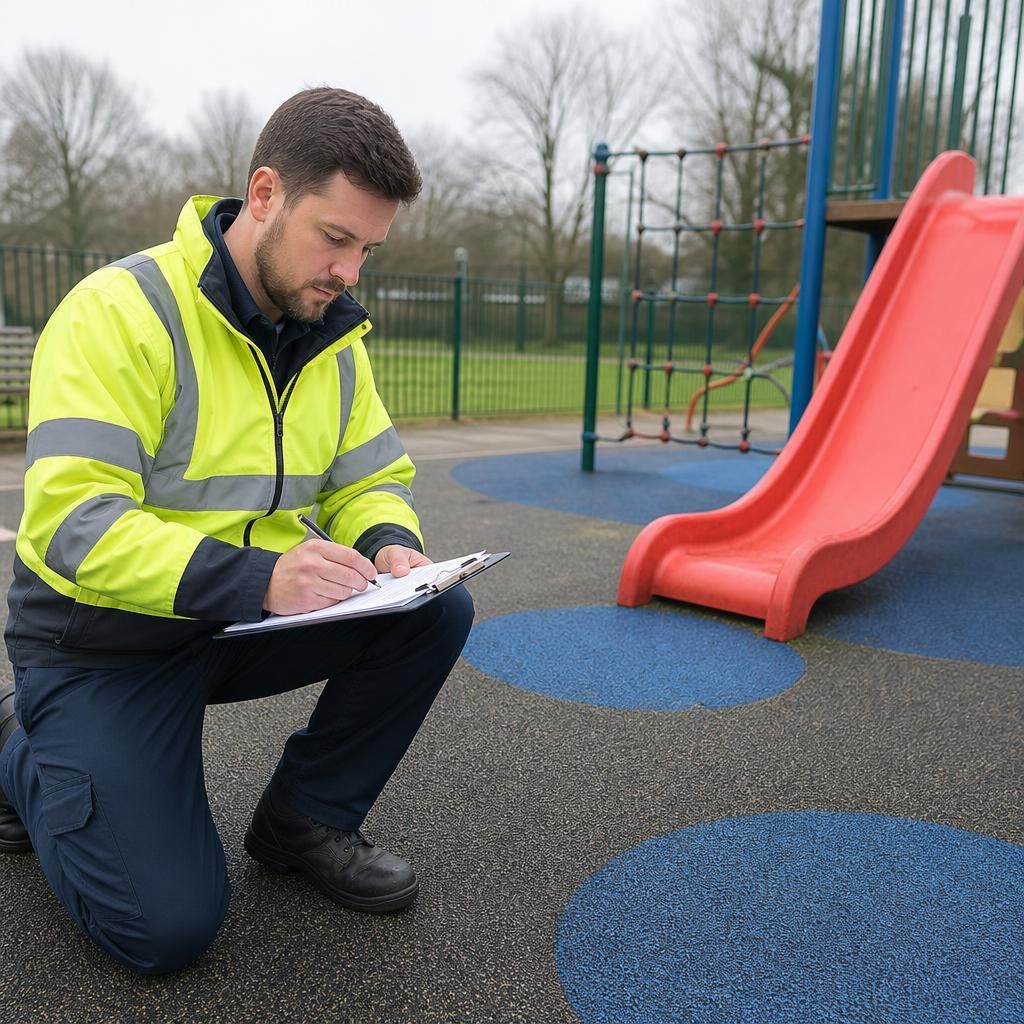
Playground maintenance supports health and safety compliance by using a documented process to identify hazards, control immediate risks and confirm that corrective work has been completed. Inspections cover equipment, impact-absorbing surfacing, access routes, fencing, drainage and contamination, with findings assessed against the site risk assessment, manufacturer instructions and relevant BS EN 1176 and BS EN 1177 guidance.
Where a serious defect is found, the affected equipment or area is isolated until it has been repaired, cleaned or otherwise made safe. Maintenance records should then show the inspection date, defect, action taken, responsible person and closure date. This gives the site’s duty holder clear evidence that risks have been actively managed rather than relying on visual appearance alone.
Arrange Your Playground Maintenance Assessment
Arrange your playground maintenance assessment to review equipment, safety surfacing, access routes and current maintenance records against the site’s risk controls. We can identify outstanding hazards and agree the appropriate inspection, cleaning and repair actions.