
How does regular playground maintenance contribute to long-term cost savings?
Regular playground maintenance identifies wear, damage and contamination early, allowing minor issues to be repaired before they develop into costly failures or full equipment replacements. It also extends the usable life of equipment and safety surfaces, reduces disruption and helps prevent accidents, supporting more predictable maintenance budgets for schools, councils and commercial operators.
Regular playground maintenance contributes to long-term cost savings by identifying deterioration early, extending the serviceable life of equipment and safety surfaces, and reducing the likelihood of major repairs, replacement work, closures or claims. A planned programme is generally more economical than relying on reactive repairs after a component has failed or a hazard has caused an incident.
Early intervention prevents minor defects becoming major failures
Outdoor play equipment is exposed to rain, frost, sunlight, dirt, organic growth, repeated use and occasional vandalism. These conditions can gradually affect timber, metal, plastic, fasteners, joints and moving parts. Small defects such as surface corrosion, loose fixings, cracked coatings, damaged seals, splintering, standing water or early movement in a structure may initially be straightforward to address. If they are missed, they can lead to structural damage, unsafe operation or the replacement of larger assemblies.
Routine inspections and maintenance allow defects to be recorded, assessed and prioritised. Tightening or replacing a fixing, treating localised corrosion, clearing a blocked drain or repairing a small area of surfacing is usually less disruptive and less expensive than replacing an entire item after progressive damage.
Extending the life of equipment and surfacing
Cleaning is an important part of preservation, not simply an appearance-related task. Dirt, algae, moss, bird fouling and other contamination can retain moisture and make deterioration harder to identify. Organic growth can also make surfaces slippery, while accumulated debris may obstruct drainage and contribute to wear around heavily used areas.
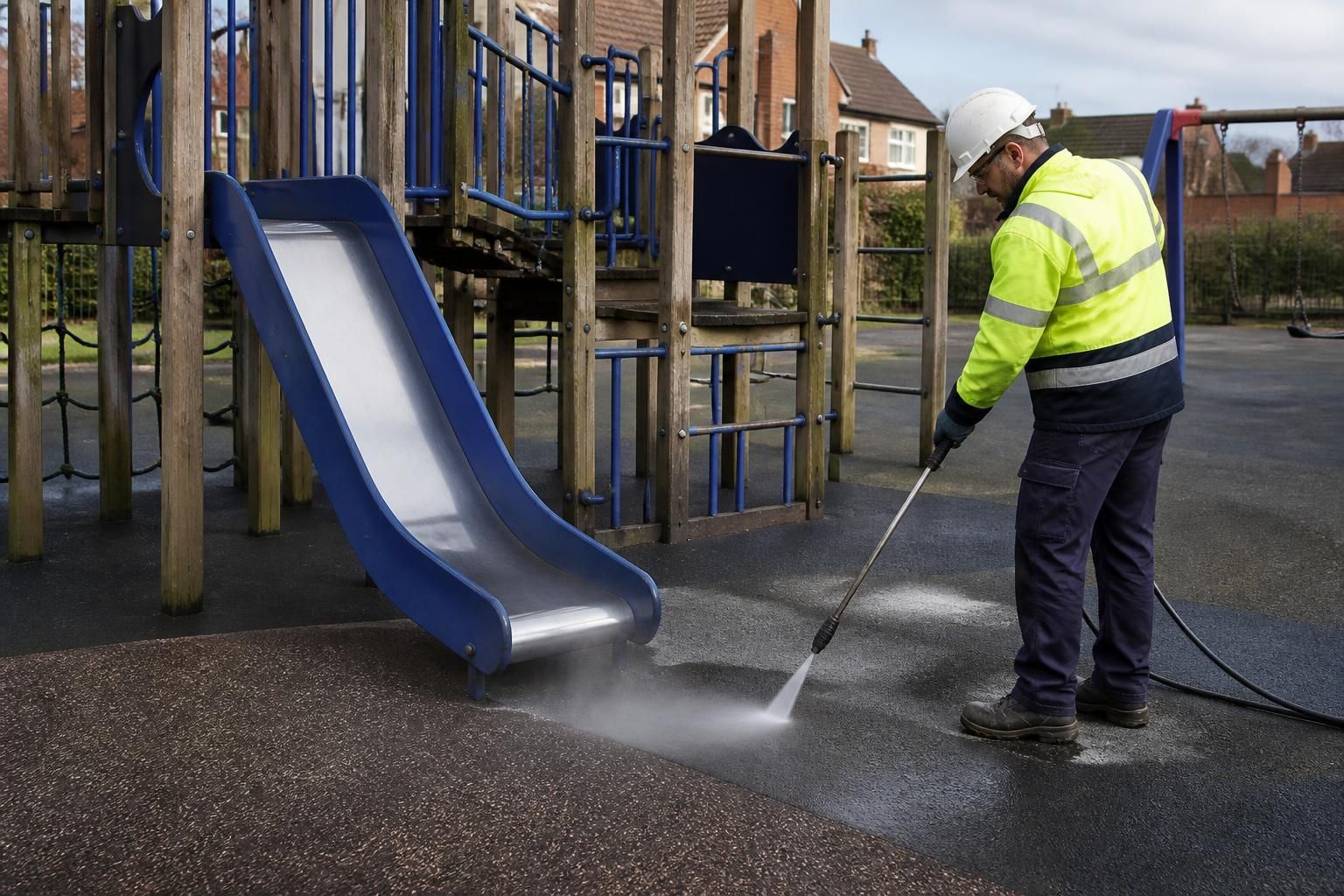
Appropriate cleaning removes contamination before it causes persistent damage and makes inspections more effective. The method should match the material and condition of the surface. Excessive pressure can damage coatings, soft materials, rubber surfacing or joints, so controlled pressure washing, steam cleaning or manual methods should be selected according to the manufacturer’s guidance and site conditions. Prompt treatment of graffiti can also reduce staining and avoid more aggressive remedial cleaning later.
Safety surfacing benefits from the same planned approach. Loose-fill materials may need raking, levelling and removal of contamination, while bonded rubber or wet-pour surfaces should be checked for lifting, cracking, worn areas and failed edges. Maintaining impact-attenuating surfaces helps preserve their protective function and reduces the chance of premature replacement.
Reducing reactive repair and replacement costs
Reactive maintenance often involves more than the cost of a replacement part. It may require urgent attendance, specialist access equipment, additional inspection, temporary barriers, disposal and reinstatement. A serious defect can also result in an entire play area or individual item being taken out of use while remedial work is arranged.
A planned programme makes it easier to group compatible tasks, arrange suitable access and order parts before work becomes urgent. Repairs can be scheduled during quieter periods or planned closures, limiting disruption for schools, councils, property managers and other operators. Maintenance records also help distinguish isolated defects from recurring problems, allowing the underlying cause to be addressed instead of repeatedly treating the same symptom.
Protecting against avoidable safety and liability costs
Good maintenance supports the operator’s duty to provide a reasonably safe environment. It does not remove every risk, and it cannot replace competent safety inspections, but it helps ensure that known defects, contamination and deterioration are dealt with promptly. Keeping inspection findings, cleaning records, repair details and follow-up actions provides evidence that the site is being managed systematically.
Preventing hazards such as slippery surfaces, protruding fixings, damaged edges, unstable components and inadequate impact protection can reduce the likelihood of accidents. The financial consequences of an incident may include emergency remedial work, investigation, legal costs, compensation, reputational damage and prolonged closure. Preventive maintenance is therefore part of responsible risk control as well as asset care.
Improving budget predictability
Unplanned failures make expenditure difficult to forecast. A maintenance plan creates a clearer picture of the condition of the equipment, surfacing and surrounding hardstanding, allowing costs to be prioritised over a suitable period. Condition records can support decisions about whether an item needs cleaning, adjustment, component replacement, local repair or full renewal.
This information is particularly useful when managing several sites. Resources can be directed towards areas with the greatest safety or deterioration risk, while routine work can be coordinated across locations. A planned approach also supports more accurate procurement and reduces the likelihood of paying for urgent work when suitable contractors or parts are difficult to secure.
Maintaining drainage and surrounding areas
Water management has a direct effect on the life of playground surfaces and equipment. Blocked gullies, poor falls, compacted ground and damaged edges can leave water standing beneath or beside play areas. Persistent moisture accelerates deterioration, encourages organic growth and may wash loose-fill surfacing away from critical fall zones.
Regular maintenance should therefore include checks of gullies, channels, thresholds, edging, surrounding paving and access routes. Removing leaves, silt and other debris helps drainage work as intended. Where ponding continues, the cause should be investigated rather than repeatedly removing the water without correcting the underlying defect.
Using maintenance records to prioritise spending
Useful records should identify the asset or area inspected, the condition observed, the action required, the person responsible and the date of completion. Photographs can help track changes in corrosion, cracking, wear, staining or surfacing loss. Follow-up checks are important where a temporary control has been applied, such as isolating damaged equipment until a permanent repair is completed.
These records help operators make evidence-based decisions. They can show whether cleaning is protecting a surface effectively, whether a component is reaching the end of its useful life, and whether repeated repairs are no longer economical. This supports planned renewal rather than emergency replacement and helps demonstrate that maintenance spending is being used where it has the greatest effect.
What a cost-effective programme should include
- Routine visual checks for contamination, damage, wear, loose parts and obvious hazards.
- More detailed inspections by a suitably competent person, with defects graded according to risk and urgency.
- Planned cleaning of equipment, surfacing, drainage features and surrounding hardstanding using suitable methods.
- Prompt removal of moss, algae, bird fouling, litter, graffiti and other contamination that may affect safety or material condition.
- Checking and maintaining fixings, moving components, protective coatings, edges and impact-attenuating surfaces.
- Clear isolation procedures where an item or area cannot safely remain in use.
- Accurate records, completion checks and periodic review of recurring defects.
The greatest savings come from combining cleaning with inspection, minor repairs, drainage checks and planned asset management. Cleaning on its own will not correct structural defects or worn equipment, while inspections are less effective if contamination prevents defects from being seen. A coordinated programme gives operators better control over condition, safety, disruption and expenditure throughout the life of the playground.
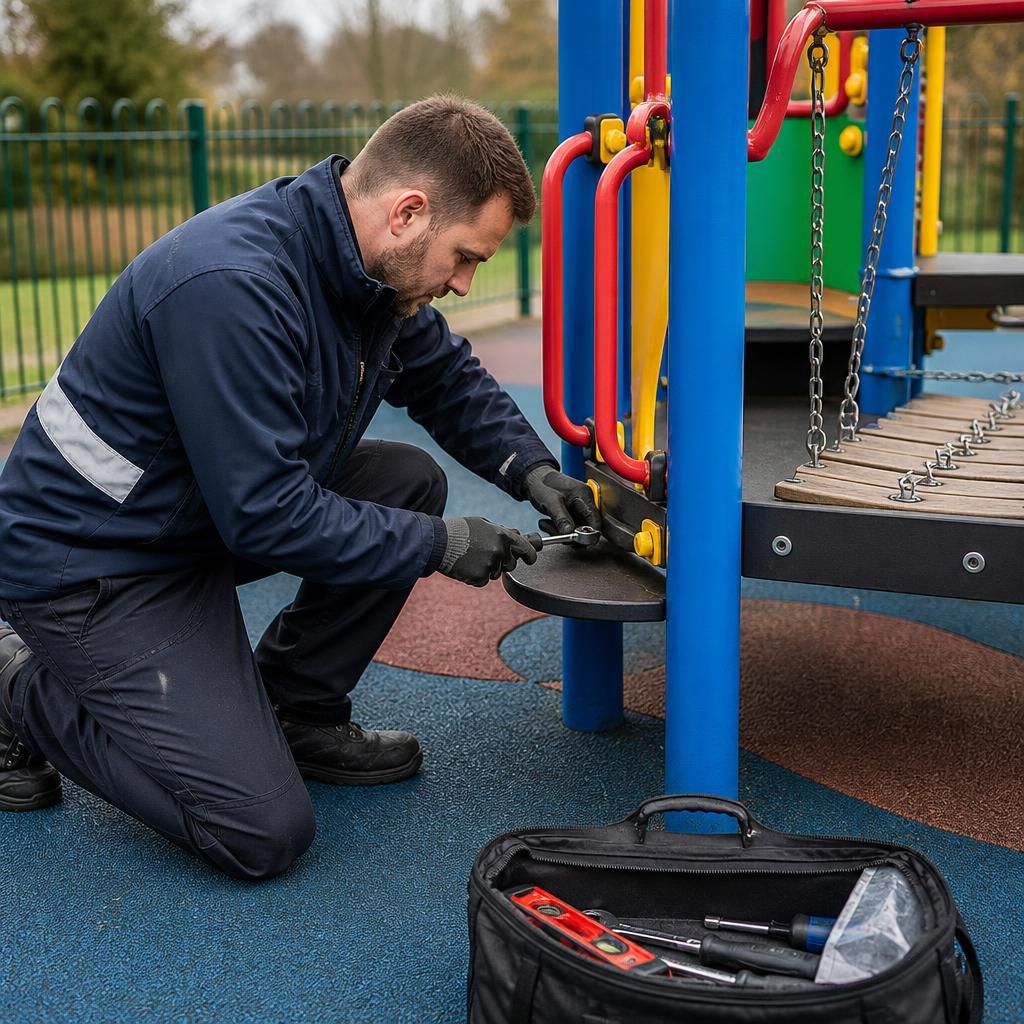
Regular playground maintenance saves money by identifying minor defects before they develop into major repairs, equipment failures or full replacements. Cleaning, inspection and small remedial work carried out together can extend the useful life of play equipment and safety surfacing while reducing unplanned closures.
For example, removing contamination allows early corrosion, cracking, loose fixings and damaged edges to be identified. A local repair, replacement fixing or drainage clearance is usually less disruptive than dealing with progressive structural damage. Maintaining impact-attenuating surfaces and surrounding drainage also helps prevent premature wear caused by standing water, erosion or displaced material.
Accurate maintenance records support cost-effective decisions. They show which defects are recurring, which assets are approaching the end of their serviceable life and where planned renewal is more economical than repeated reactive repairs. This enables schools, councils and commercial operators to schedule work, procure suitable parts and manage budgets without waiting for a hazardous failure.
Arrange a Playground Maintenance Assessment
Arrange a playground maintenance assessment with Encanto Exterior Cleaning to identify wear, contamination, drainage issues and safety-surface defects before they lead to costly repairs or replacement. We can help you plan suitable cleaning, inspection and remedial work for your site.