
How often should playground surfaces be cleaned and inspected?
Playground surfaces should receive a visual safety check each day they are in use, with litter, glass, animal fouling, spills and other hazards removed immediately. Schedule routine cleaning and detailed inspections at intervals based on usage, weather, surface type and the manufacturer’s guidance, and carry out additional checks after storms, vandalism or contamination.
Playground surfaces should be checked visually every day they are in use, cleaned whenever hazards or contamination are found, and inspected in greater detail at planned intervals based on usage, surface type, weather, risk and the manufacturer’s instructions. Cleaning and inspection are separate activities: cleaning removes hazards and contamination, while inspection identifies damage, wear, drainage problems and changes that could make the play area unsafe.
A suitable maintenance programme combines daily checks, routine cleaning, operational inspections and a documented annual inspection. Busy playgrounds, sites exposed to vandalism or heavy weather, and areas with loose-fill surfaces may require more frequent attention than lightly used or sheltered sites. There is no single cleaning interval that is appropriate for every playground.
Daily visual checks
Carry out a visual check before the playground opens, or at the start of each day it is available for use. The check should cover the entire accessible area, including the surface beneath and around equipment, entrances, seating areas, bins and drainage points. Remove or isolate hazards immediately rather than waiting for a scheduled clean.
- Glass, sharp objects, stones, litter and discarded items
- Animal fouling, vomit, food waste, oils and other biological or chemical contamination
- Wet, icy, slippery or flooded areas
- Loose, displaced, compacted or eroded surface material
- Exposed concrete, foundations, edging, roots or other trip hazards
- Graffiti, vandalism and damage to equipment or surfacing
- Blocked drains, standing water and signs of poor drainage
- Debris or vegetation that could conceal defects
Where a hazard cannot be removed safely and immediately, the affected equipment or area should be taken out of use until it has been made safe. Staff should record the issue, action taken and any follow-up required.
Routine cleaning intervals
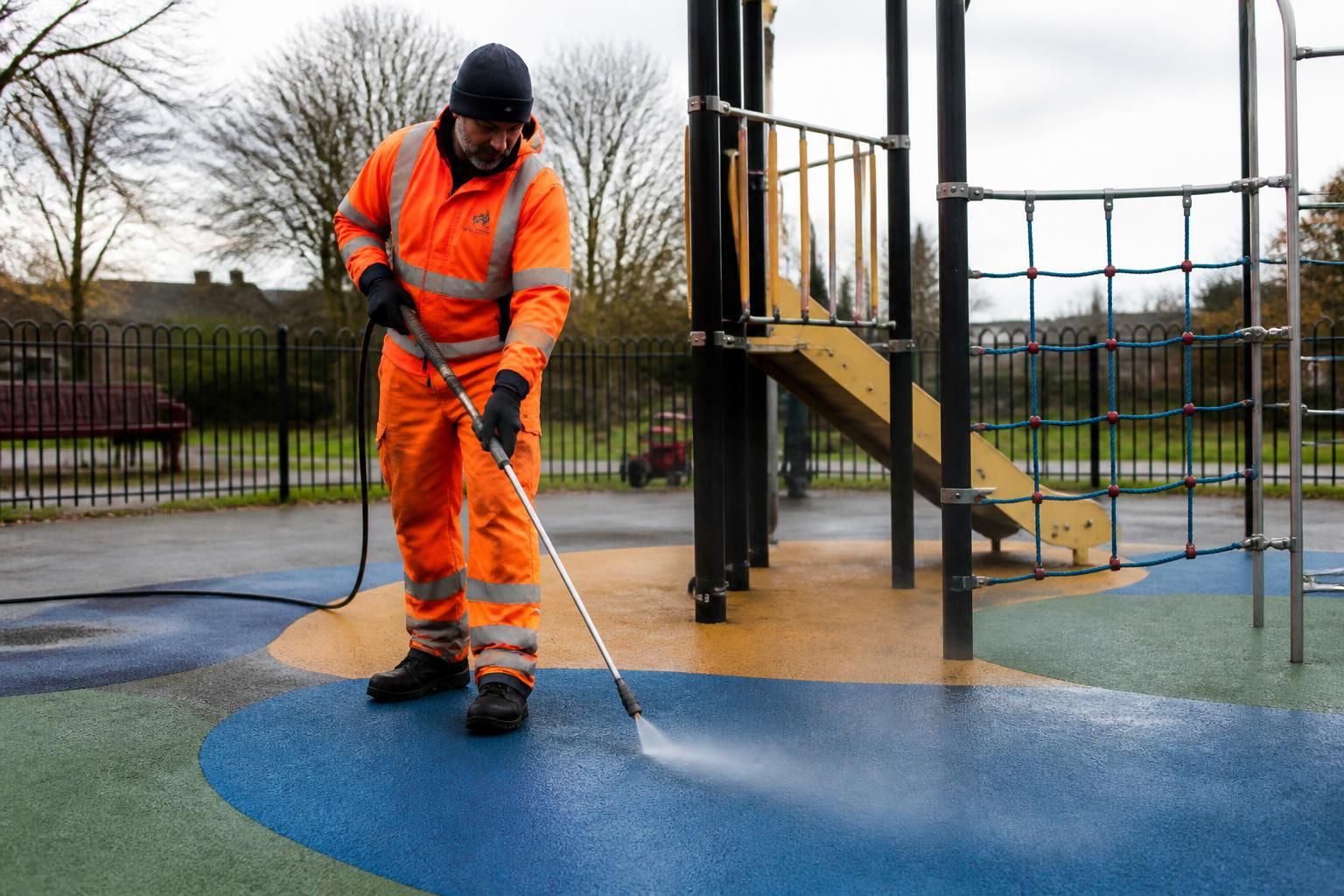
Routine cleaning should be scheduled according to the site’s risk assessment and observed condition. A playground with high footfall, nearby trees, frequent food use or a history of fouling will generally need more frequent cleaning than a low-use site. Cleaning may need to be increased during autumn leaf fall, wet weather, periods of heavy use and after local events.
Routine cleaning should remove general dirt, organic matter, litter and surface staining without damaging the surfacing. It should not replace the daily visual check, because contamination or damage can occur soon after a scheduled clean. Conversely, a surface that appears clean may still have defects such as reduced impact absorption, displacement or subsidence that require inspection.
Operational inspections
Carry out a more detailed operational inspection at an interval determined by the level of use, the manufacturer’s guidance and the findings of previous checks. This inspection should examine the condition and function of equipment, surfacing and surrounding features. It may include checking for loose fixings, worn components, damaged edges, entrapment risks, excessive wear, trip hazards and changes to the impact-attenuating properties of the surface.
Loose-fill materials need particular attention because they can move away from high-use areas, become compacted or collect debris. Check the depth and distribution of the material in impact zones, under swings and at slide exits, following the surfacing manufacturer’s requirements. Top up, redistribute or replace material where necessary, and investigate any underlying drainage or ground movement problems.
Wet-pour rubber, rubber tiles, synthetic grass, engineered wood fibre, bark, sand and other surfaces have different inspection requirements. Look for cracking, lifting, open joints, shrinkage, worn patches, contamination, moss, weed growth, compaction and water retention. Cleaning methods and equipment should be compatible with the material; excessive pressure, unsuitable chemicals or aggressive mechanical action can damage the surface or reduce its performance.
Annual and specialist inspections
A detailed annual inspection should be completed by a competent person in line with the relevant UK guidance, the equipment and surfacing manufacturer’s instructions, and the site’s risk assessment. This is more comprehensive than a routine visual check and should assess the overall condition, stability, wear and safety of the playground.
Specialist assessment may also be needed after significant vandalism, flooding, fire, construction activity, subsidence, severe storms or changes to the surrounding ground. Impact-attenuation testing may be appropriate where the surface is visibly deteriorated, has been repaired or altered, or where there is concern that it no longer provides the required protection. The need and frequency of such testing should be determined by a competent inspector and the applicable requirements for the site.
When additional cleaning or inspection is required
Do not wait for the next planned visit when a playground has been exposed to an unusual event or a specific hazard. Arrange an additional check and clean after:
- Storms, flooding, freezing conditions or prolonged heavy rain
- Vandalism, deliberate contamination or broken glass
- Construction, landscaping or maintenance work nearby
- Large public events or an unexpected increase in use
- Reports of injury, a near miss or a surface-related complaint
- Discovery of animal fouling, bodily fluids, fuel, oil or other hazardous substances
- Repairs, resurfacing, drainage work or changes to playground equipment
Contaminated areas should be isolated until they have been cleaned using a suitable procedure. Staff should use appropriate personal protective equipment, dispose of contaminated material correctly and follow the product manufacturer’s instructions for any cleaning or disinfecting agent. Disinfecting every surface indiscriminately is not a substitute for removing dirt and debris, and unsuitable chemicals can affect rubber, coatings or sealed surfaces.
Keep a maintenance record
Inspection and cleaning records should show the date, person completing the work, areas checked, defects or contamination found, actions taken and any outstanding repair. Photographs can help track recurring erosion, staining, moss growth or surface movement. Records make it easier to identify patterns and adjust the schedule instead of relying on a fixed interval that no longer reflects actual site conditions.
Each playground should have a clear response procedure. Minor litter or loose debris may be removed during the daily check, while damaged surfacing, persistent standing water, exposed foundations or suspected loss of impact protection should be referred for competent assessment. The area should remain closed where continued use could expose children to an immediate risk.
In practice, the most reliable approach is daily visual checking, prompt spot cleaning, planned routine cleaning, regular operational inspections and a documented annual review. The exact timetable should be reviewed whenever usage, weather exposure, surfacing, equipment or site conditions change. This approach helps maintain hygiene and appearance while also identifying defects that cleaning alone cannot resolve.
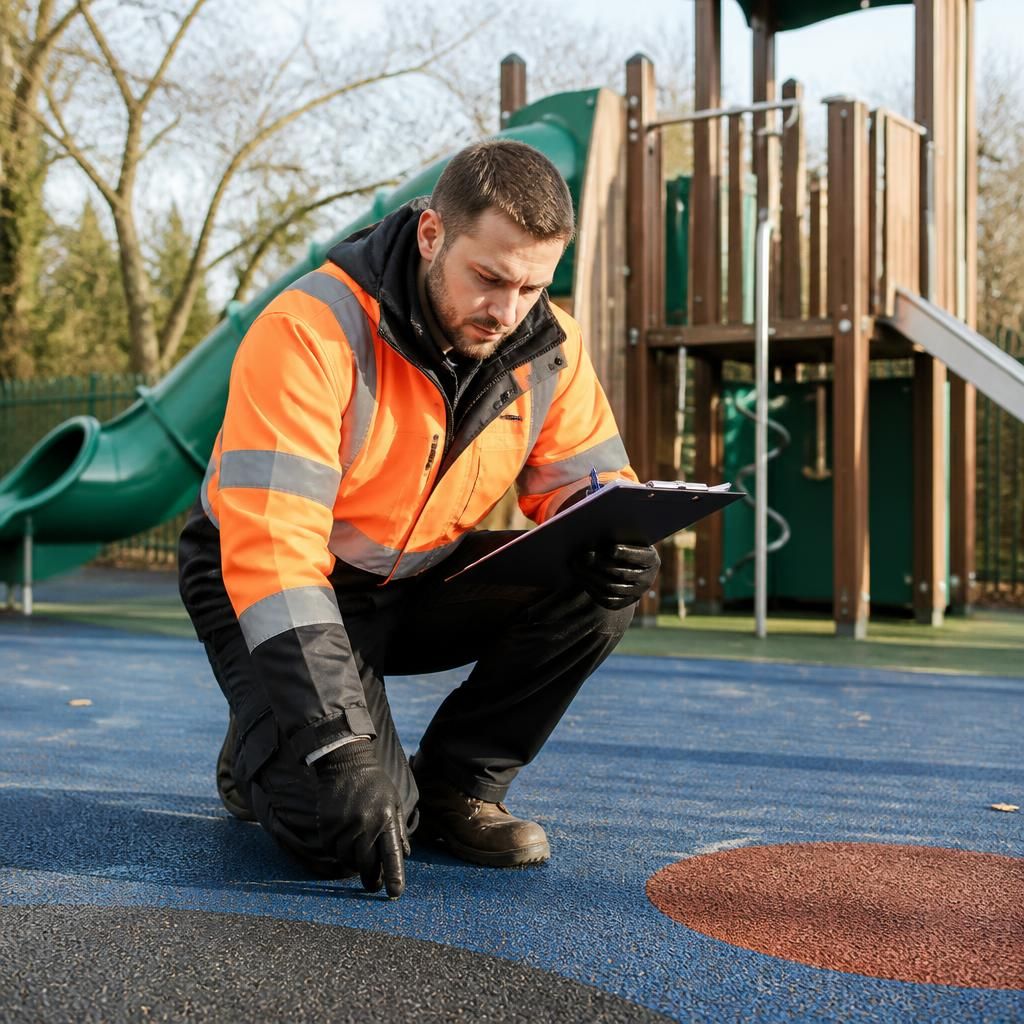
Playground surfaces should be visually checked every day they are open, with litter, glass, animal fouling, spills and other hazards removed immediately. This daily check does not replace planned cleaning or detailed inspections, because damage, compaction, erosion and drainage problems may not be apparent during a quick visual review.
Schedule routine cleaning and operational inspections according to usage, weather, surface type, contamination risk and the manufacturer’s guidance. Increase checks after storms, flooding, vandalism, large events or reports of injury, and arrange a documented annual inspection by a competent person. Keep records of findings and corrective action so the maintenance frequency can be adjusted when site conditions change.
Schedule Your Playground Cleaning and Inspection
Contact Encanto Exterior Cleaning to arrange a suitable playground cleaning and inspection schedule based on your site’s usage, surface type and risk profile. We can help identify hazards, plan routine maintenance and provide specialist cleaning when required.