
How can regular playground maintenance contribute to long-term cost savings?
Regular playground maintenance reduces long-term costs by identifying surface damage, drainage problems and equipment defects before they require major repairs or replacement. Routine cleaning and inspections also extend the service life of play surfaces, help prevent avoidable closures and support ongoing safety compliance.
Regular playground maintenance reduces long-term costs by preventing minor defects from becoming major repairs, extending the service life of surfaces and equipment, and reducing avoidable closures. A planned programme of cleaning, inspection and remedial work is generally more economical than reacting to damage after it has created a safety risk or affected the wider play area.
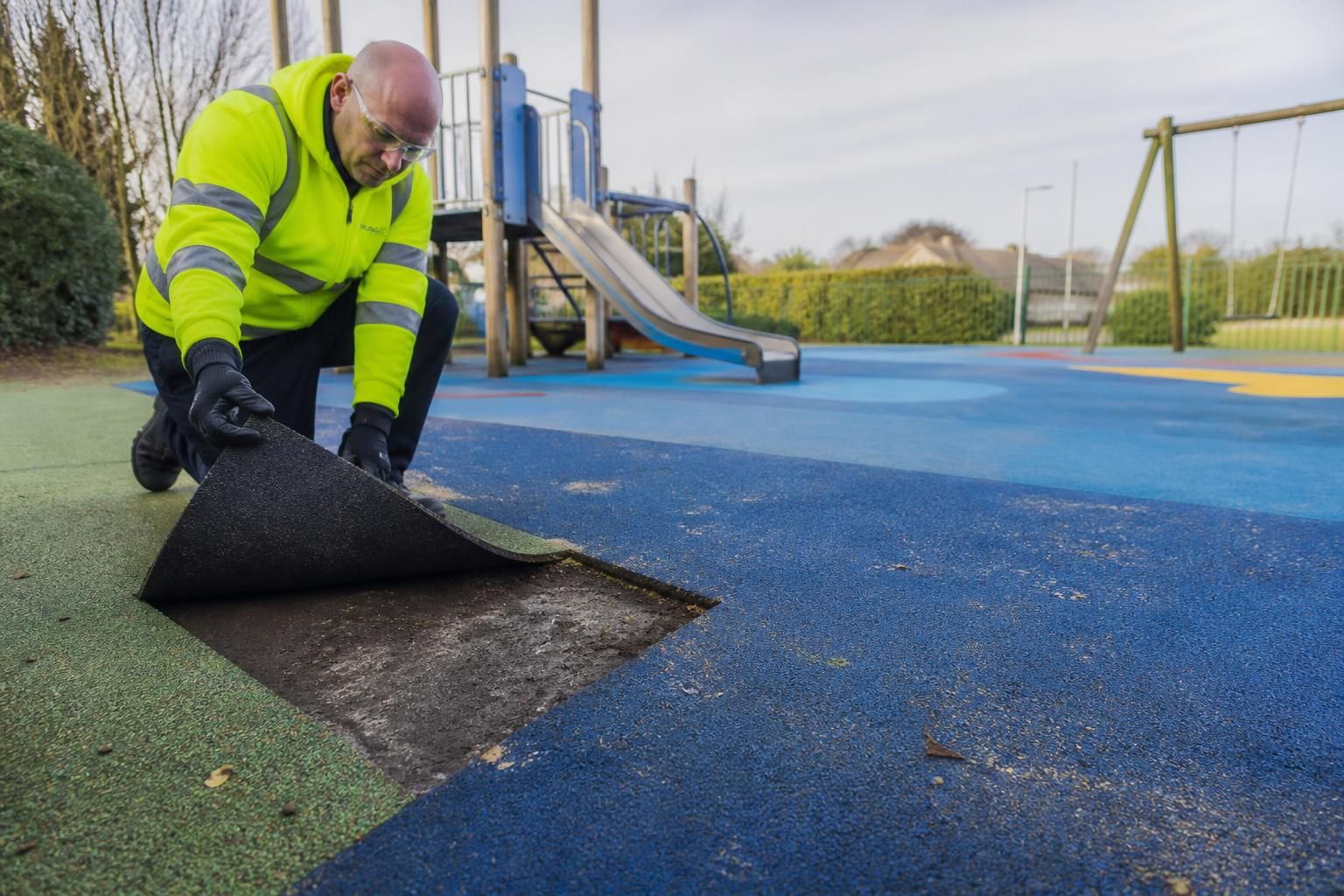
Early identification prevents expensive deterioration. Routine inspections can reveal cracked or lifting surfacing, worn impact-absorbing areas, loose fixings, damaged edging, blocked drainage channels and early corrosion. Addressing these issues while they are limited usually requires local repair rather than full resurfacing, equipment replacement or extensive groundworks. Small defects can develop quickly where playgrounds receive heavy use, water remains on the surface or dirt and organic growth are allowed to build up.
Cleaning helps preserve playground surfaces. Soil, algae, moss, food residue and other contaminants can hold moisture against rubber, wet-pour, artificial grass, tarmac and concrete surfaces. This can encourage biological growth, reduce grip and accelerate surface wear. Appropriate pressure washing, steam cleaning or other controlled methods remove contamination without unnecessarily damaging the material. Cleaning should be matched to the surface, its condition and the manufacturer’s recommendations, as excessive pressure or unsuitable chemicals can create additional repair costs.
Keeping surfaces clean also makes defects easier to identify. Cracks, depressions, loose aggregate and failed joints may be obscured by dirt or vegetation during an unplanned inspection. A clean surface allows maintenance teams to assess its condition accurately and arrange targeted remedial work before deterioration spreads.
Effective drainage reduces damage and disruption. Standing water can weaken joints, encourage moss and algae, wash out surrounding materials and contribute to frost-related damage. It can also make a play area unusable and increase the likelihood of slips. Clearing drainage routes and checking falls, gullies, channels and perimeter edges helps water leave the area as intended. Drainage maintenance is often a relatively straightforward intervention compared with replacing a saturated or structurally damaged surface.
Preventative work extends the useful life of assets. Play equipment, safety surfacing, fencing, gates and adjacent hardstanding all represent significant capital expenditure. Regular cleaning and inspection help protect these assets from contamination, corrosion, impact damage and neglect. Maintaining the surrounding area is also important: overgrown vegetation, loose debris and damaged fencing can affect both safety and the condition of the play equipment.
Extending asset life does not mean delaying replacement when a component has reached the end of its safe serviceable condition. It means identifying wear early, completing suitable repairs and retaining clear records so that replacement decisions are based on condition rather than emergency failure.
Planned maintenance can reduce closure-related costs. A playground may need to be partially or fully closed if its surface, equipment or access routes present an unacceptable risk. Unplanned closures can create additional work for site teams, disrupt residents or visitors and require urgent contractor availability. Scheduled cleaning and repairs allow work to be coordinated during quieter periods, alongside other estate or facilities maintenance, reducing disruption and making access arrangements easier to manage.
Where a defect affects only one item or section, prompt isolation and repair may prevent the entire play area from being taken out of use. This requires accurate inspection, clear communication and a practical understanding of how the playground is laid out.
Good records support better financial planning. Maintenance reports should record the condition of surfaces, equipment, drainage, access points and surrounding areas, together with photographs and details of any remedial action. These records help identify recurring problems, compare condition over time and prioritise work according to risk and cost. They also support planned budgets by showing which assets need routine attention and which may require future refurbishment.
A documented maintenance history can be useful when reviewing contractor performance, planning capital works or demonstrating that reasonable inspection and maintenance arrangements are in place. It should complement, not replace, competent inspections and the relevant operating and safety procedures for the site.
Regular maintenance also helps protect compliance and reduce liability exposure. Playgrounds should be inspected and maintained in line with the equipment manufacturer’s instructions, the applicable British and European standards, site risk assessments and the responsibilities of the operator. Clean, accessible and well-maintained surfaces make it easier to identify hazards and act on them. They do not remove the need for formal inspections, but they reduce the chance that a preventable defect remains unnoticed.
For best results, a cost-effective programme should combine:
- Routine visual checks for contamination, damage, standing water, trip hazards and obvious equipment defects.
- Scheduled cleaning appropriate to each surface material and its drainage characteristics.
- Periodic detailed inspections by a suitably competent person.
- Prompt recording and repair of defects, with unsafe areas isolated where necessary.
- Seasonal checks for moss, algae, leaf build-up, frost damage and drainage problems.
- Planned reviews of surfacing, equipment, fencing and access routes to support future budgets.
The greatest savings come from consistency. Cleaning only after a surface becomes visibly dirty, or inspecting only after a complaint, allows avoidable deterioration to continue. A maintenance schedule based on usage, location, weather exposure, surface type and previous defects provides better control over both condition and expenditure.
Regular playground maintenance therefore saves money through several connected effects: it reduces the scale of repairs, extends asset life, limits closures, supports compliance and allows expenditure to be planned rather than incurred as an emergency. The programme should always be proportionate to the site and should prioritise safety-critical defects, drainage, impact-absorbing surfacing and any areas showing rapid deterioration.
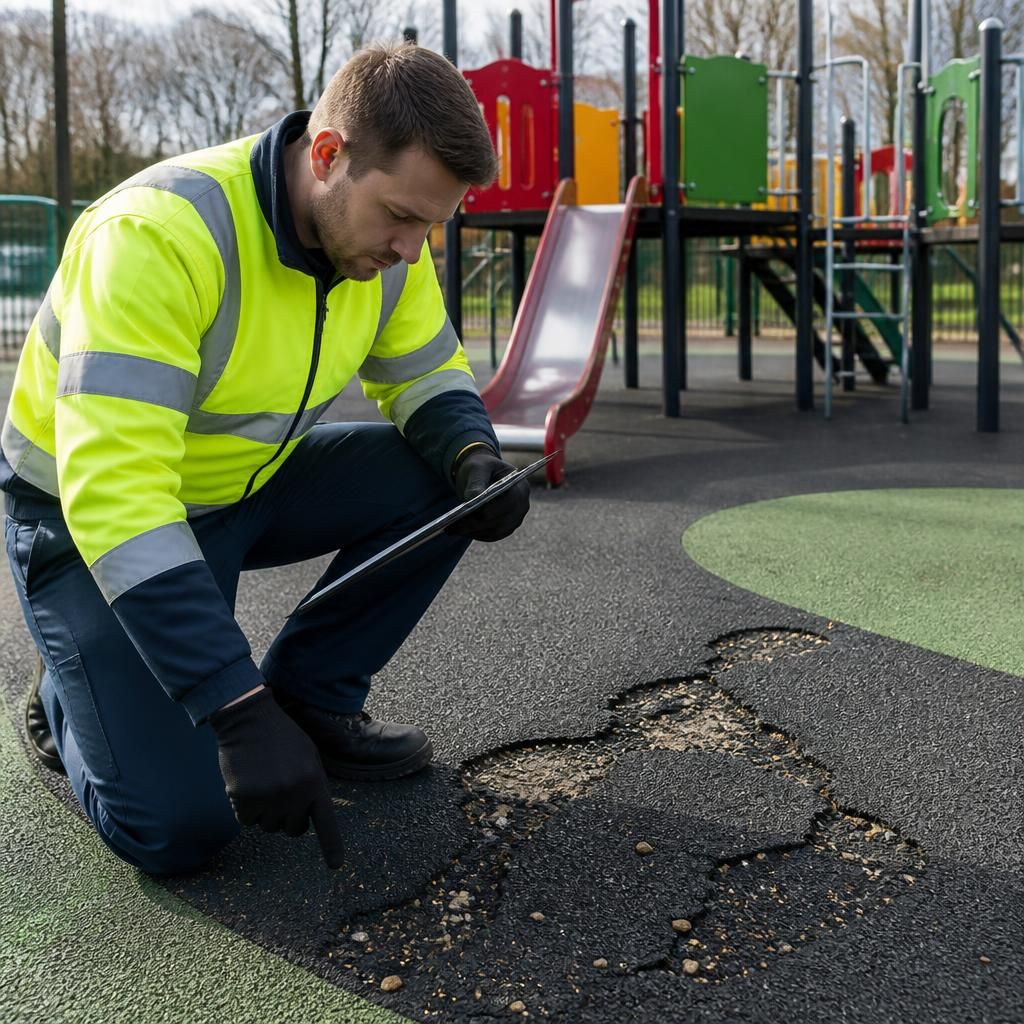
Regular playground maintenance reduces costs by identifying small defects before they develop into major repairs. Cleaning and inspecting the surface can reveal lifting edges, cracks, loose aggregate, damaged joints, standing water and worn impact-absorbing areas while targeted repairs are still possible.
Prompt action is usually more economical than replacing a larger section of surfacing or closing the entire play area after a defect becomes hazardous. Keeping clear maintenance records also helps prioritise remedial work, plan future budgets and avoid unexpected expenditure caused by deterioration, drainage problems or preventable equipment damage.
Arrange Your Playground Maintenance Assessment
Arrange your playground maintenance assessment to identify emerging surface, drainage and equipment issues before they lead to more extensive repairs or closure. We can help you plan cleaning and remedial work around your site’s condition, usage and maintenance requirements.