
How can playground cleanliness impact the health and safety of children?
Clean playgrounds help protect children’s health by reducing the build-up of germs, animal fouling, mould, algae and other contaminants on equipment and surfaces. Regular cleaning also improves safety by removing slip hazards, debris and obstructions that could contribute to falls or other injuries.
Playground cleanliness directly affects children’s health and safety by reducing exposure to harmful contaminants and removing conditions that can cause slips, trips, falls and other injuries. Regular cleaning helps control germs, animal fouling, mould, algae, litter, broken materials and slippery residues on both play equipment and surrounding surfaces.
Children have frequent contact with playground features and commonly touch their faces, mouths and food after playing. Contaminated handrails, platforms, swings, slides and sensory play elements can therefore contribute to the spread of bacteria, viruses and other contaminants. Cleaning cannot remove every health risk, but it reduces the build-up of contamination and supports good hygiene management alongside handwashing and prompt treatment of accidents.
Key ways cleanliness supports children’s health include:
- Reducing contact with animal fouling: Dog and bird fouling can contain harmful organisms and must be removed promptly using suitable protective procedures. Affected areas should be cleaned and, where necessary, disinfected before the playground is reopened.
- Controlling mould and algae: Persistent dampness, shade and poor drainage can encourage biological growth on surfaces. Mould and algae may irritate sensitive users, while algae can create a particularly slippery layer on paths, rubber surfacing, timber and other wet areas.
- Removing accumulated dirt and organic matter: Soil, leaves, pollen, food residue and general debris can retain moisture, conceal damage and provide conditions in which microorganisms or vegetation can develop.
- Improving hand-contact hygiene: Regular attention to touchpoints such as gates, rails, access panels and play controls helps reduce the transfer of contamination between users.
- Supporting a healthier surrounding environment: Clean drainage channels, edges and impact areas are less likely to retain stagnant water, waste or decomposing material around the play space.
Cleanliness also has a direct relationship with injury prevention. Dirt and biological growth can make a surface unexpectedly slick, particularly after rain. Loose litter, stones, glass, discarded packaging and fallen branches can create trip or cut hazards. Mud and compacted debris may affect the performance of impact-absorbing surfaces, while heavy soiling can hide cracks, raised edges, loose fixings or other defects that need attention.
A clean playground makes routine safety checks more effective. Equipment and surfacing can be inspected more accurately when dirt, moss and waste are not obscuring the area. Cleaning teams should report defects rather than attempting to disguise or work around them. Examples include:
- damaged or displaced wet-pour rubber, tiles or synthetic surfacing;
- loose or missing fixings, damaged panels and sharp edges;
- standing water, blocked drainage or areas of persistent dampness;
- lifting edges, exposed foundations or changes in surface level;
- graffiti, broken glass, needles or other hazardous waste; and
- contamination that cannot be safely removed using normal cleaning procedures.
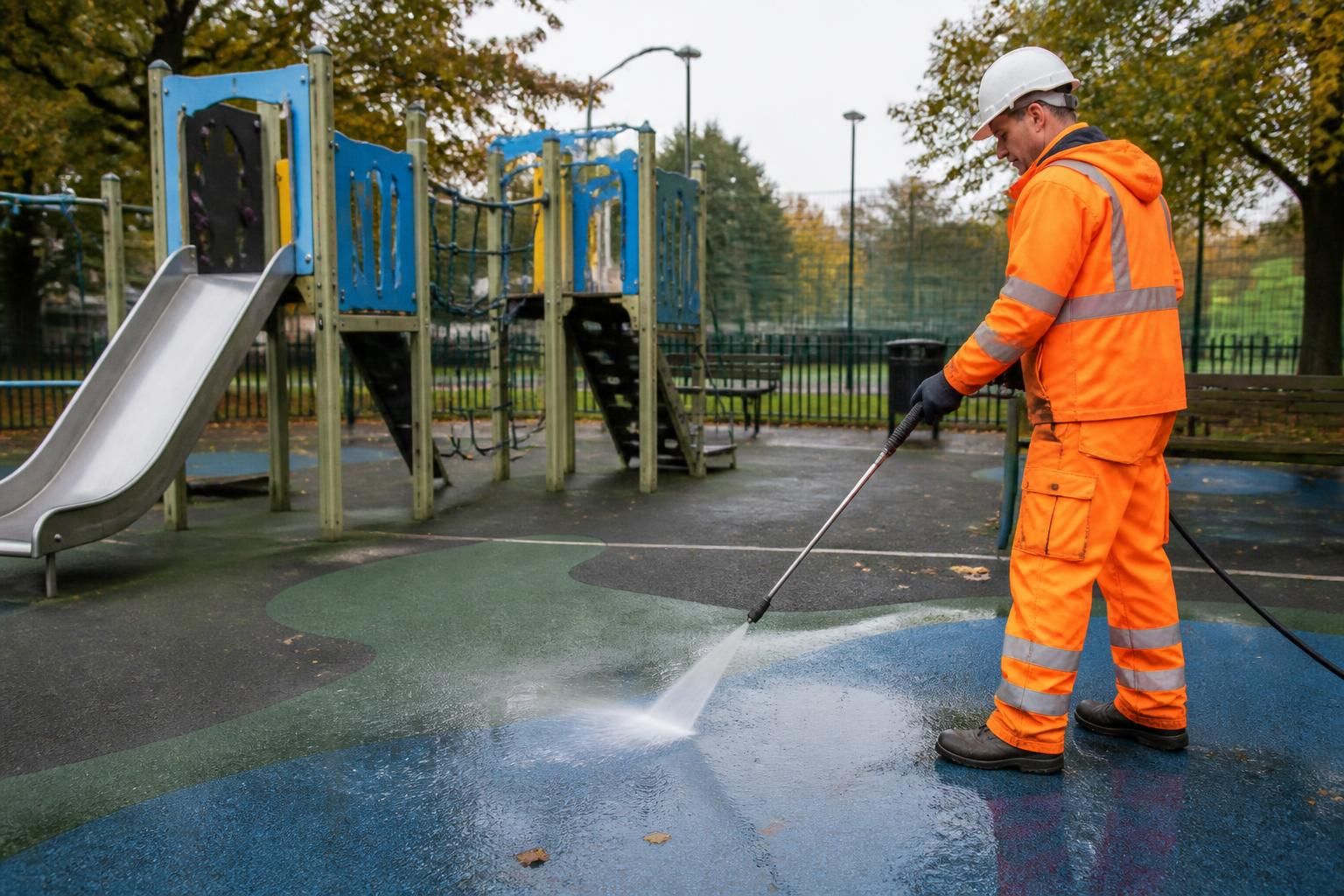
The cleaning method must match the playground material and the type of contamination. Pressure washing can remove ingrained dirt and organic deposits from suitable hard surfaces, but excessive pressure may damage rubber, paint, timber, joints or drainage components. Lower-pressure washing, soft brushing or steam cleaning may be more appropriate around sensitive equipment and detailed areas. Cleaning agents should be compatible with the surface, used at the correct dilution and fully rinsed where required. Residues left on a play surface can create skin, eye or slip hazards.
Impact-absorbing surfaces require particular care. Wet-pour rubber, rubber tiles, synthetic grass, engineered wood fibre and loose-fill materials can respond differently to water, pressure and detergents. Cleaning should avoid displacing the material, damaging the binder or leaving deposits that affect traction and drainage. Loose-fill areas may also require raking, levelling and removal of foreign objects as part of wider maintenance, rather than surface washing alone.
Safe playground cleaning should normally include the following controls:
- Inspect the area before work begins and identify fouling, sharps, damaged equipment, loose materials and other hazards.
- Prevent access while cleaning is in progress, using appropriate barriers and clear signage.
- Select equipment and cleaning products that are suitable for the surface, nearby planting, drainage system and play equipment.
- Control overspray, run-off and wastewater so that contamination is not spread to adjacent paths, seating or drainage points.
- Remove waste safely and deal with animal fouling or hazardous items using appropriate personal protective equipment and disposal arrangements.
- Rinse or otherwise finish the surface as necessary, checking that no harmful residue, standing water or slippery film remains.
- Allow the area to dry and confirm that it is safe before removing barriers and reopening it.
- Record issues found during the work and refer repairs or specialist remediation to the responsible facilities or play-area manager.
Cleaning frequency should reflect usage, weather, location and the level of contamination. Busy public playgrounds, school sites, housing developments and areas near trees or water may need more frequent inspections and targeted cleaning. Additional checks are sensible after storms, flooding, vandalism, nearby construction work, reports of fouling or any incident involving broken glass or hazardous waste. A planned maintenance schedule should combine routine visual inspections, periodic deep cleaning and immediate response to urgent contamination.
Good cleanliness does not replace formal playground inspections, repairs or compliance checks. Operators should follow the relevant UK management procedures and manufacturer guidance for the equipment and surfacing installed. Cleaning records should identify the date, areas treated, method used, products applied, defects reported and the point at which the playground was deemed safe to reopen.
Professional cleaning is particularly useful where the site includes multiple surface types, extensive play equipment, difficult access or recurring algae and fouling. Experienced operatives can adjust pressure, temperature and cleaning products to the material, protect drainage and surrounding areas, and identify maintenance concerns during the work. This helps maintain a cleaner, safer play environment without causing avoidable damage to the surfaces that children rely on for protection from falls.
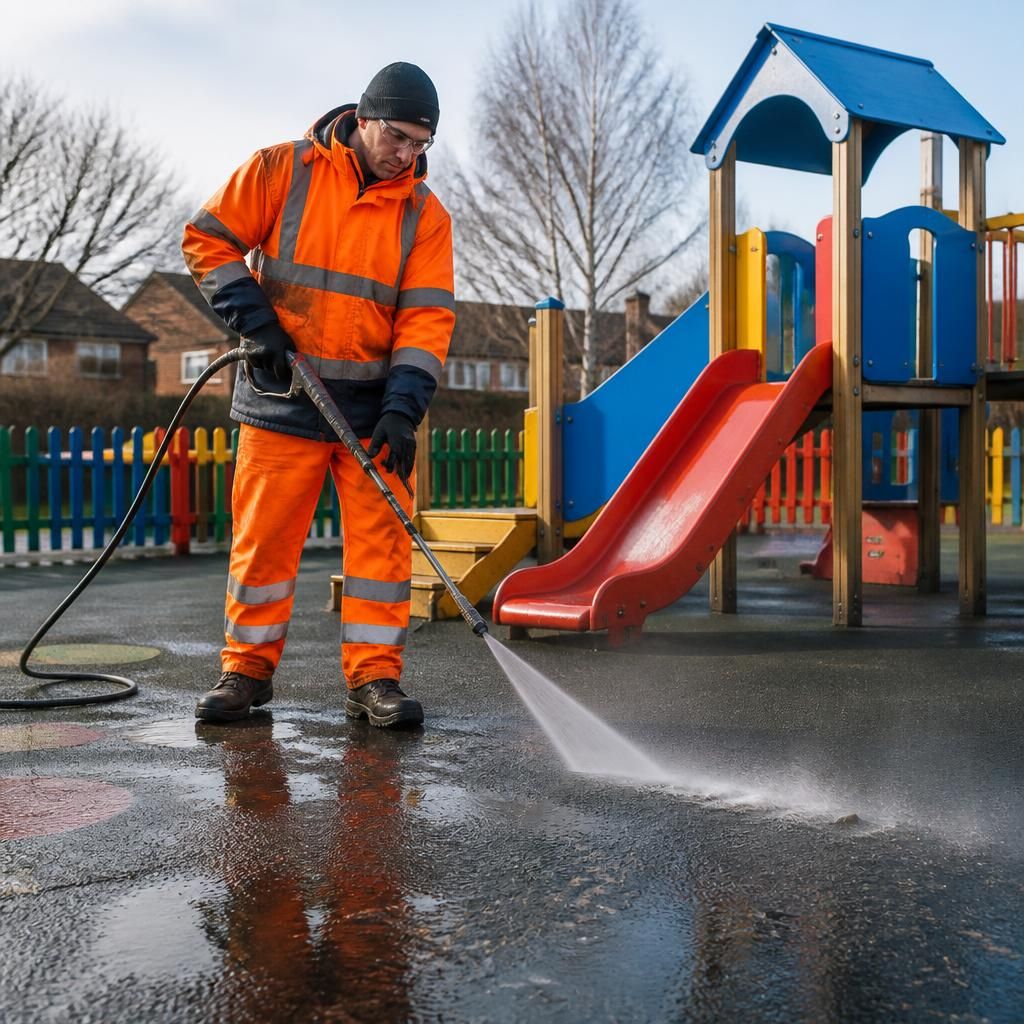
Playground cleanliness supports child safety by removing contaminants and hazards that can cause illness or injury. Animal fouling, litter, mould, algae, mud and food residue can transfer onto children’s hands or make equipment and surfaces slippery.
Regular cleaning also makes defects easier to identify. Once dirt and organic growth have been removed, operators can check for damaged rubber surfacing, raised edges, loose fixings, blocked drainage and other problems that require repair. The playground should remain closed during cleaning and only reopen when surfaces are clean, dry and free from harmful residues or obstructions.
Arrange professional playground cleaning for a safer play area
Arrange professional playground cleaning to remove contamination, slippery deposits and surface debris while helping identify maintenance issues. Contact Encanto Exterior Cleaning to discuss a cleaning programme suited to your play equipment and surfacing.