
What types of equipment are used in car park and play area cleaning to ensure efficiency and effectiveness?
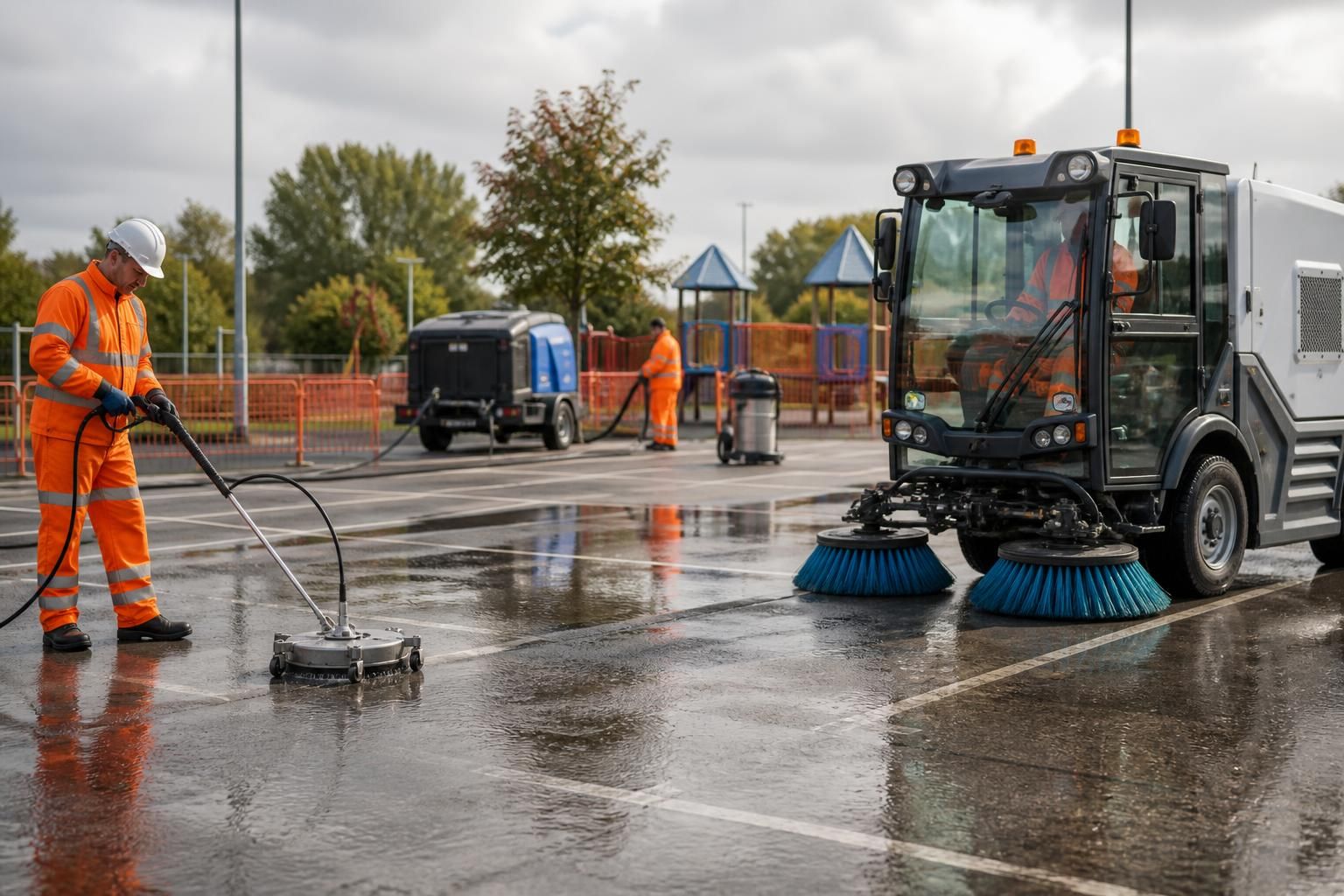
Car park and play area cleaning typically uses industrial pressure washers, steam-cleaning equipment, mechanical sweepers, wet vacuums and specialist access equipment. The equipment is selected according to the surface, contamination and safety requirements, allowing effective removal of dirt, oil, chewing gum, moss, algae, litter and other hazards without causing unnecessary damage.
Efficient car park and play area cleaning relies on choosing equipment to match the surface, type of contamination, available access and required hygiene standard. The main equipment includes industrial pressure washers, hot-water and steam-cleaning systems, mechanical sweepers, scrubber-dryers, wet vacuums, graffiti-removal equipment, specialist access equipment and wastewater recovery systems. Using the right combination removes dirt and hazards effectively while reducing the risk of surface damage, excessive water use and disruption to site users.
Industrial pressure washers are commonly used for hard surfaces such as concrete, block paving, tarmac, kerbs and paved play areas. They remove ingrained mud, dust, algae, moss, tyre marks and general surface deposits by directing pressurised water through a controlled nozzle. Surface cleaners can be fitted to pressure-washing systems to produce a more even result across large areas and help limit overspray. Pressure must be adjusted carefully, particularly on softer paving, painted markings, safety surfacing, joints and ageing tarmac.
Hot-water pressure washers are useful where cold water alone is less effective. Heat helps break down oil, grease, chewing gum and other organic residues, making it suitable for traffic lanes, parking bays, loading areas and heavily soiled entrances. Detergents may be used where appropriate, but the product must be compatible with the surface, drainage arrangements and environmental requirements. On play areas, chemical use is normally kept to the minimum necessary and surfaces are rinsed thoroughly where required.
Steam-cleaning equipment uses high-temperature steam or low-moisture heat to loosen grime, organic growth, grease and chewing gum. It can be advantageous around play equipment, seating, fencing and other areas where controlling water volume is important. Steam is also useful for detailed cleaning and sanitisation of hard, non-porous components, although it is not suitable for every material. Timber, certain plastics, rubber surfaces, painted finishes and electrical components require an assessment before heat is applied.
Mechanical sweepers improve efficiency when removing loose litter, leaves, grit, sand and other dry debris from car parks, access roads and play areas. Ride-on or pedestrian sweepers use rotating brushes to direct debris into a collection hopper, reducing the amount of manual labour required across larger sites. Sweeping is often completed before pressure washing so that loose material does not block drainage channels or become spread across the surface.
For sites requiring both washing and drying, scrubber-dryers can apply cleaning solution, agitate the surface and recover dirty water in the same operation. They are most effective on relatively even, hard surfaces such as smooth concrete or sealed paving. Their controlled water application and recovery can help keep pedestrian routes available sooner, but they are less suitable for deeply uneven surfaces, loose aggregate, soft safety surfacing or areas with substantial litter.
Wet vacuums and water-recovery equipment collect standing water, slurry and contaminated runoff after washing. This is particularly important in car parks where oil, fuel residue, silt or cleaning chemicals may be present. Recovery equipment can also help prevent dirty water flowing into surface-water drains, neighbouring land or public footways. The collected material must be handled and disposed of in accordance with the site’s drainage arrangements and applicable environmental requirements.
Gum-removal and spot-cleaning equipment is used for localised contamination that does not justify cleaning an entire surface. Steam, heated water, controlled pressure and suitable treatment products can remove chewing gum, food residue, adhesive marks and isolated oil spots. Treating these areas individually reduces unnecessary water and avoids aggressive cleaning of surrounding surfaces.
Specialist graffiti-removal equipment may be needed for walls, play-area fencing, signs, bins and other fixed features. The method can include low-pressure washing, steam, soft abrasion or a surface-specific graffiti remover. The operator should test an inconspicuous area first, as unsuitable pressure or chemicals can remove coatings, damage paintwork or leave a visible patch. Protective coatings may also be considered for surfaces that are repeatedly targeted.
Access equipment allows cleaners to reach elevated façades, canopies, lighting columns, signs and covered parking structures safely. Depending on the site, this may include water-fed poles, telescopic cleaning systems, mobile elevating work platforms, towers or other approved access arrangements. The choice depends on working height, ground conditions, overhead obstructions, traffic movement and the need to segregate the work area. Access equipment must be used by trained personnel with suitable planning and controls.
Play areas also require equipment suited to safety surfacing and fixed play features. Soft-fall rubber, wet-pour systems, bonded rubber, artificial grass, sand and bark-based surfaces can react differently to pressure, heat and detergents. Lower-pressure cleaning, soft-bristle brushes, controlled rinsing and wet vacuums are often preferable to aggressive blasting. Equipment should not dislodge loose material, open joints, expose damaged edges or remove the texture that helps provide impact protection.
Inspection and support equipment is equally important. Before cleaning, operatives may use visual checks, moisture awareness, drain inspection tools, warning barriers and signage to identify defects, standing water, loose surfacing or contamination that requires separate attention. During the work, hose management, cable protection and traffic-control equipment help prevent trip hazards and keep vehicles and pedestrians away from active cleaning zones. Appropriate personal protective equipment, including gloves, eye protection, hearing protection and waterproof footwear where required, supports safe operation.
The most effective equipment selection follows a site assessment rather than a standardised approach. Factors include surface type, contamination, drainage, water availability, access, noise restrictions, weather, nearby vehicles and the presence of children or vulnerable users. Car parks may need sweeping, degreasing, pressure washing and wastewater recovery, while play areas generally require more controlled pressure, careful rinsing and detailed inspection of surfacing and equipment. Combining these methods gives a cleaner, safer result without applying more force, heat, water or chemicals than the site can safely accommodate.
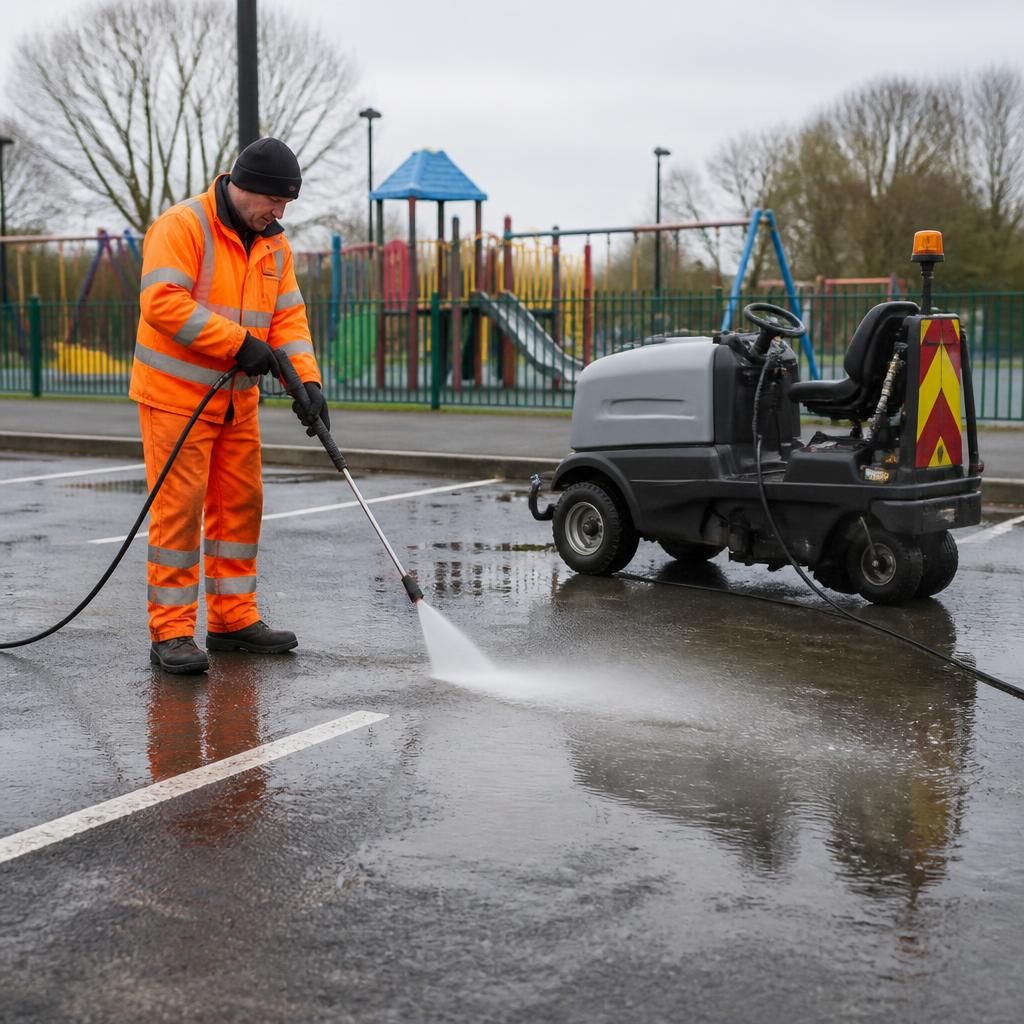
Effective car park and play area cleaning depends on using equipment suited to the surface and contamination. Industrial sweepers remove loose litter, leaves and grit efficiently, while pressure washers, hot-water systems and scrubber-dryers tackle ingrained dirt, oil, algae and tyre marks on suitable hard surfaces.
Play areas require more controlled methods. Lower-pressure washing, soft-bristle brushes, steam cleaning and wet vacuums can clean safety surfacing and play equipment while limiting excess water, heat and chemical use. Wastewater recovery equipment is important in car parks to prevent oily or contaminated runoff entering surface-water drains. Before work begins, the cleaning team should assess drainage, access, surface condition, nearby users and any restrictions on noise or water use.
Arrange a Car Park and Play Area Cleaning Assessment
Arrange a car park and play area cleaning assessment to identify the right equipment, cleaning methods, access requirements and wastewater controls for your site. Contact Encanto Exterior Cleaning to discuss your cleaning requirements across Birmingham, the West Midlands or the wider UK.