
What techniques should be employed to effectively clean and sanitise play areas to ensure safety and hygiene?
Effective play area cleaning combines manual removal of litter and organic debris with suitable pressure or steam cleaning, followed by an approved, material-compatible disinfectant applied according to the manufacturer’s instructions. Cleaners should control overspray, rinse away residues where required, allow surfaces to dry fully and inspect equipment, surfacing and drainage before reopening the area.
Effective play area cleaning uses a controlled sequence of debris removal, surface cleaning, sanitisation, rinsing where required, drying and inspection. The method must be matched to the equipment, safety surfacing and level of contamination, because excessive pressure, unsuitable chemicals or reopening the area while wet can damage surfaces or create additional risks.
Begin with a site assessment
Before work starts, isolate the play area and assess the condition of the equipment, impact-absorbing surfacing, paths, drainage and surrounding vegetation. Identify broken components, exposed fixings, standing water, damaged rubber or wet-pour surfacing, animal fouling, sharps, glass and other hazards. Cleaning should not be used to conceal defects that require repair. Where a significant safety issue is found, the affected equipment or area should remain out of use until it has been assessed by the responsible person.
Choose the cleaning method after identifying the material and finish. Powder-coated metal, painted surfaces, plastic panels, timber, rubber tiles, wet-pour rubber and synthetic grass can respond differently to pressure, heat and cleaning chemicals. A small, inconspicuous test area is useful where the surface or coating is unfamiliar.
Remove loose debris and contamination manually
- Collect litter, leaves, twigs and other loose debris before applying water or detergent.
- Remove glass, needles and other sharps using an appropriate controlled procedure and suitable personal protective equipment.
- Deal with animal fouling separately, using hygienic handling practices and disposing of waste through the correct route.
- Brush debris away from entrances, drainage channels and areas beneath equipment without pushing it into safety surfacing or gullies.
Manual removal reduces the amount of organic matter that can interfere with cleaning and prevents debris being driven into joints, porous surfaces or drainage systems during pressure washing.
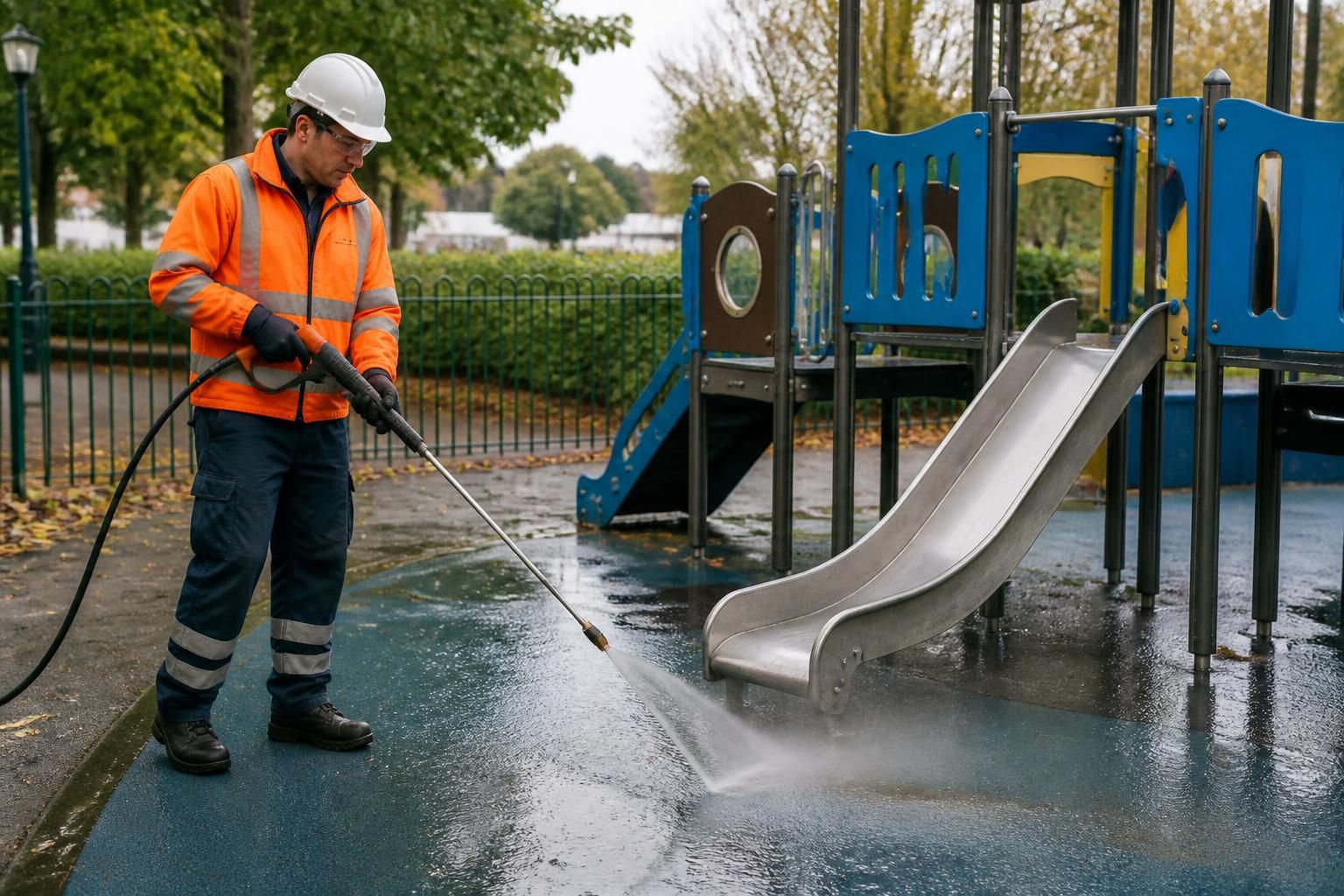
Clean surfaces using controlled pressure or steam
Low- to moderate-pressure washing can remove soil, algae, food residue and general grime from many hard surfaces. The operator should use the lowest pressure that achieves the required result, keep the lance at a controlled distance and avoid directing water at bearings, electrical components, joints, fixings or vulnerable surface edges. Broad spray patterns are generally preferable to concentrated jets, particularly on rubber surfacing and painted equipment.
Steam cleaning can be useful for targeted removal of greasy deposits, chewing gum and ingrained organic soiling, with less free water than conventional pressure washing. Heat must still be controlled: excessive temperature can affect coatings, plastics, adhesives, rubber and timber. Steam or hot-water methods should be selected only after checking the surface manufacturer’s requirements.
Apply a compatible detergent where water alone does not remove the soil. Allow the product to work for the stated dwell time, but do not allow it to dry on the surface. Agitate stubborn deposits with soft or non-abrasive brushes, then rinse thoroughly where the product instructions require it. Avoid aggressive scouring pads and abrasive treatments that can roughen finishes or create areas where dirt is more easily retained.
Sanitise with an approved, suitable product
Cleaning and sanitising are separate stages. Cleaning removes visible soil and organic material; sanitising or disinfecting reduces microorganisms on the cleaned surface. Use a product that is suitable for the specific play equipment and safety surfacing, and follow the manufacturer’s dilution, application, contact-time and rinsing instructions. Do not mix chemicals, as this can produce hazardous fumes or reduce their effectiveness.
Apply disinfectant evenly to high-contact areas such as handrails, handles, panels, gates and accessible seating, while also treating other surfaces where contamination is known or suspected. Avoid uncontrolled spraying near children, pedestrians, planted areas, drainage outlets or adjacent watercourses. Where a product requires rinsing, remove residues using clean water and prevent contaminated run-off from entering drainage systems without appropriate control.
Routine sanitisation should not replace proper cleaning. Organic matter, soil and grease can shield microorganisms and reduce the performance of a disinfectant. Conversely, excessive chemical use can damage materials, leave residues or create skin and environmental risks. Product selection should therefore be based on the contamination, the surface and the manufacturer’s instructions rather than using the strongest available chemical.
Pay particular attention to safety surfacing and drainage
Impact-absorbing surfaces need careful treatment. Avoid displacing loose-fill materials, eroding wet-pour rubber, opening joints or forcing water beneath tiles. Remove surface contamination without disturbing the depth or integrity of the surfacing. Once cleaning is complete, check for depressions, exposed edges, loose tiles, pooling water and areas where material has migrated away from its intended location.
Control run-off throughout the work. Prevent dirty water, detergent and disinfectant from flowing into sand areas, planting beds, watercourses or nearby pedestrian routes. Clear blocked gullies and channels where this can be done safely, but do not push contaminated material into the drainage network. Persistent ponding should be reported because it can contribute to algae, slippery surfaces, frost damage and deterioration of the play area.
Allow the area to dry and complete a reopening inspection
The play area should remain closed until surfaces and equipment are sufficiently dry and chemical residues have been removed or have evaporated in accordance with the product instructions. Drying time depends on the weather, shade, surface porosity, ventilation and the amount of water used. Do not rely solely on appearance where rubber or other porous materials may retain moisture.
Before reopening, inspect the area for:
- remaining litter, faeces, sharp objects or trapped debris;
- slippery deposits, chemical residue, standing water or excessive dampness;
- loose-fill displacement, damaged wet-pour surfacing or exposed trip edges;
- loose fasteners, damaged coatings, sharp edges and accessible pinch or entrapment hazards;
- blocked drainage points and run-off that has reached surrounding paths; and
- equipment or signs that have been affected by the cleaning process.
Record the work completed, products used, areas isolated, defects identified and any follow-up action required. This provides a useful maintenance history and helps coordinate cleaning with inspections, repairs and seasonal maintenance.
Use enhanced controls for higher-risk contamination
Animal fouling, vomit, blood, discarded needles and other potentially infectious contamination require more than routine pressure washing. Isolate the area, use appropriate protective equipment, prevent contact and splashing, and follow the responsible organisation’s contamination and waste procedures. A specialist response may be necessary where contamination is extensive or cannot be safely removed with standard equipment.
For regular maintenance, the most reliable approach is a planned combination of litter picking, spot treatment, periodic deep cleaning and targeted sanitisation of high-contact points. The frequency and intensity should be adjusted for usage, weather, nearby trees, vandalism, animal activity and the condition of the surfaces. A documented, material-sensitive process keeps the area cleaner while reducing the risk of damage, uncontrolled run-off and premature wear.
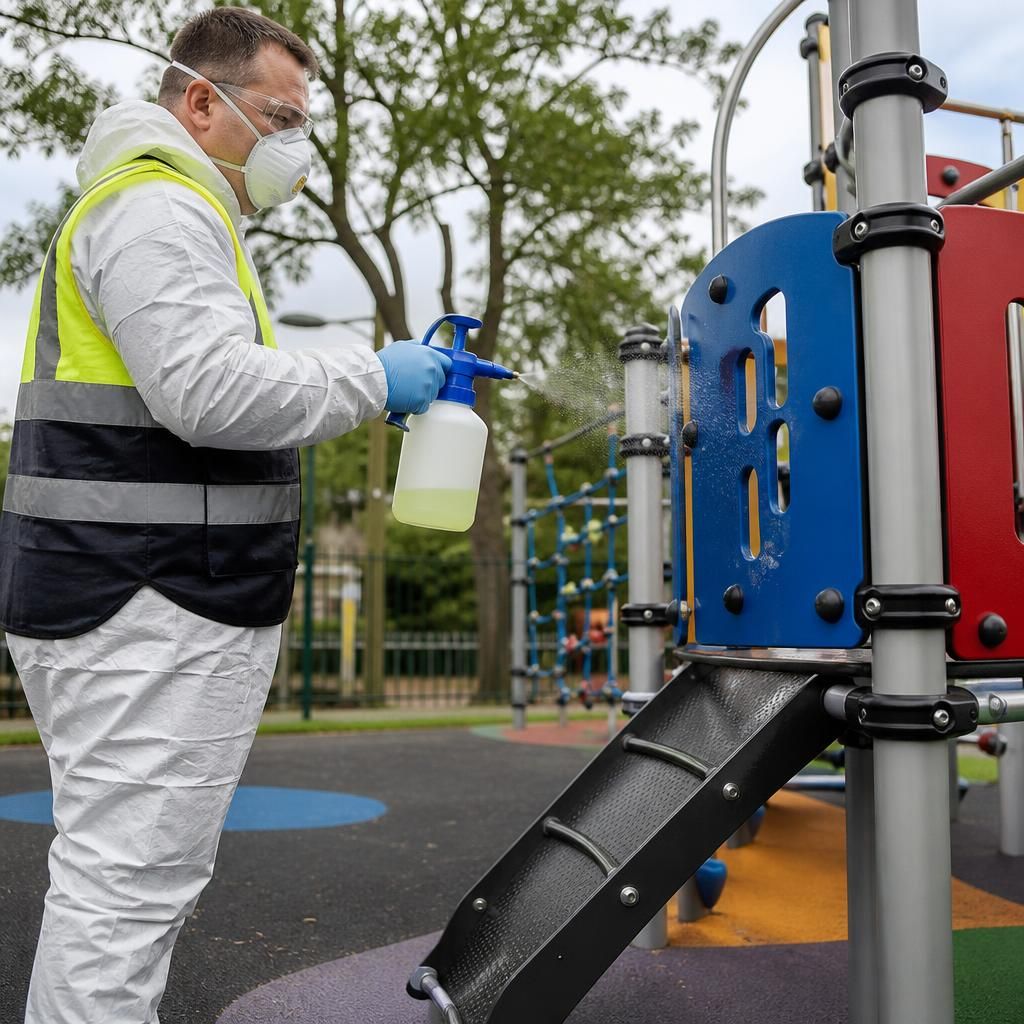
Sanitising a play area is effective only after visible dirt, grease and organic contamination have been removed. Use a compatible disinfectant on clean, dry surfaces, following the product’s dilution, contact-time and rinsing instructions.
Apply the product in a controlled way to high-contact points such as handrails, handles, gates and activity panels. Avoid uncontrolled spray near children’s routes, planted areas and drainage outlets, and never mix cleaning chemicals. Check rubber surfacing, plastics, coatings and timber for compatibility before wider application, then keep the area closed until residues have been removed and surfaces are fully dry.
Arrange a professional play area cleaning assessment
Arrange a professional play area cleaning assessment to identify contamination, surface risks and the most suitable cleaning and sanitisation methods for your site. Contact Encanto Exterior Cleaning to discuss a planned or specialist cleaning service.