
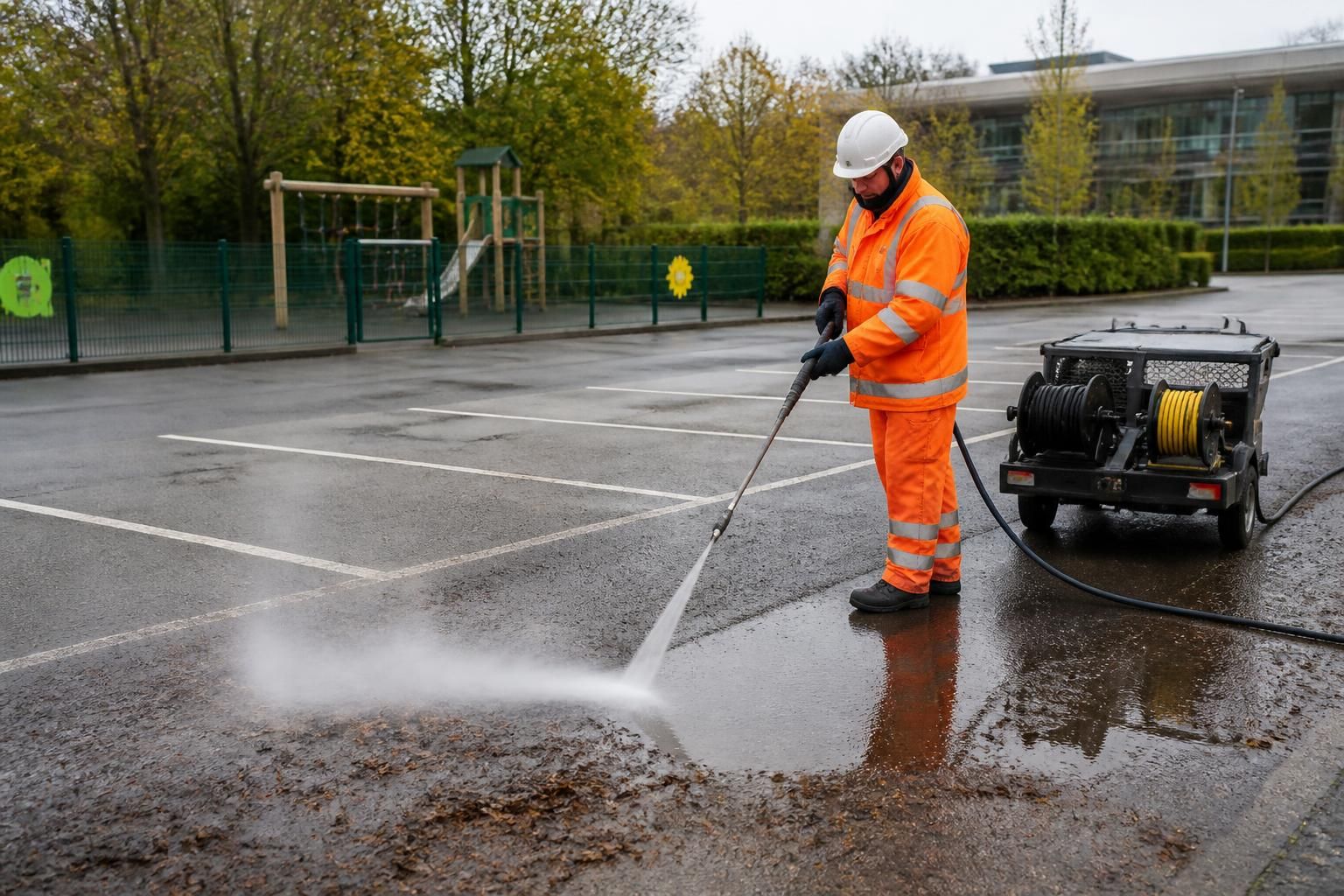
What factors should be considered when evaluating the cost-effectiveness and long-term benefits of professional car park and play area cleaning services?
The cost-effectiveness of professional car park and play area cleaning depends on the scope and frequency of cleaning, surface condition, access requirements, water and waste management, and the provider’s ability to prevent costly repairs and safety issues. Regular, properly specified cleaning can extend surface life, improve hygiene and appearance, support compliance, and reduce long-term maintenance costs compared with reactive cleaning or premature replacement.
Professional car park and play area cleaning is cost-effective when the total cost of ownership is considered rather than the initial quotation alone. The assessment should compare the cleaning price with the likely costs of surface deterioration, blocked drainage, slip hazards, contaminated play equipment, complaints, business disruption, remedial repairs and premature replacement. A suitable service should deliver a clearly defined level of cleanliness, protect the surfaces and equipment, and provide a practical maintenance plan for the site.
Assess the full scope of work
Prices should be assessed against the actual work included. Car park cleaning may involve sweeping, pressure washing, gum removal, oil and staining treatment, line and sign cleaning, drain-channel clearance, graffiti removal and the collection or treatment of contaminated wash water. Play area cleaning may include safety surfacing, wet-pour rubber, artificial grass, tarmac, paving, fencing, gates, seats and fixed play equipment.
A low price may not represent good value if important areas are excluded or if additional charges are likely for access, heavy staining, waste removal or out-of-hours working. A detailed specification makes quotations easier to compare and reduces the risk of paying separately for work that the site requires regularly.
Consider the condition and type of each surface
Cleaning methods must suit the material and its condition. Tarmac, concrete, block paving, resin-bound surfaces, rubber safety flooring and artificial grass have different tolerances for pressure, heat, detergents and moisture. Excessive pressure or unsuitable chemicals can loosen jointing, damage coatings, affect colour, lift loose material or reduce the performance of safety surfacing.
Before work begins, the contractor should identify existing defects, worn areas, failed joints, ponding, loose aggregate, damaged edging and other conditions that cleaning cannot correct. This prevents cleaning-related damage being confused with pre-existing deterioration and helps establish whether cleaning, minor maintenance or a separate repair is the appropriate solution.
Compare planned maintenance with reactive cleaning
Regular cleaning generally provides better long-term value than waiting until contamination becomes difficult to remove. Oil, chewing gum, algae, moss, litter and organic deposits can become more firmly established over time. They may also contribute to staining, blocked drainage, slippery surfaces and accelerated wear.
The most economical frequency depends on traffic, surrounding trees, weather exposure, usage, the type of contamination and the risk profile of the site. A busy commercial car park, a sheltered play area and a rarely used private facility should not automatically receive the same schedule. The correct approach is to review the site and set routine work alongside responsive treatment for spills, vandalism and seasonal build-up.
Include safety and liability in the evaluation
Cleanliness has a direct bearing on safety. Car park contamination can affect pedestrian routes, vehicle areas and drainage, while dirty or poorly maintained play areas can leave children in contact with mud, bird fouling, algae, litter, sharp debris or residues from inappropriate cleaning products.
The value of professional cleaning includes reducing foreseeable hazards and supporting the responsible management of the premises. The service specification should cover isolation of work areas, suitable signage, safe access and egress, equipment security, controlled use of chemicals, inspection after cleaning and confirmation that surfaces are safe to reopen. The contractor should also explain how defects or hazards found during cleaning will be recorded and reported.
Evaluate the effect on surface and equipment life
Cleaning should remove harmful contamination without creating avoidable wear. For car parks, this can help preserve drainage channels, surface markings, paved areas and protective finishes. For play areas, appropriate cleaning supports the condition of safety surfacing, equipment panels, handrails, seats and surrounding paths.
Cleaning is not a substitute for inspection, repairs or replacement of worn equipment. However, it can make defects easier to identify and prevent dirt, organic growth and staining from masking maintenance issues. A provider offering clear recommendations about cleaning limits, repairs and future treatment is more useful than one focused solely on making the surface look clean on the day.
Account for access, operating hours and disruption
The cost of cleaning is affected by the size and layout of the site, vehicle and pedestrian access, water availability, drainage, restricted areas, parked vehicles and the need for specialist access equipment. Play areas may require temporary closure, while commercial car parks may need phased cleaning to retain access for staff, customers or residents.
Out-of-hours or sectional cleaning can reduce disruption, but it should be assessed against the additional operating cost. A well-planned method statement, clear closure arrangements and coordinated scheduling can often reduce the amount of time a site is unavailable without reducing the quality of the work.
Review water, detergents and waste handling
Environmental controls form part of cost-effectiveness because poor wash-water management can create compliance issues, damage planted areas or pollute surface-water drainage. The contractor should explain how water is used, where it will flow, how detergents are selected and how contaminated water, litter and other waste will be contained or disposed of.
Lower-impact methods can provide long-term value where they are effective for the contamination and compatible with the surface. Steam cleaning, controlled-pressure washing, mechanical sweeping and targeted treatments may reduce unnecessary water or chemical use, but the correct method depends on the site. A method should not be judged solely by the equipment name; it should be judged by its cleaning result, surface impact, safety controls and waste-management arrangements.
Check the provider’s competence and documentation
A reliable evaluation should include the contractor’s experience with comparable commercial or public-use sites, risk assessments, method statements, insurance, staff training, equipment maintenance and relevant safety procedures. Where work involves public areas, the provider should be able to demonstrate how it controls pedestrians, vehicles, children, chemicals, electrical equipment and wet surfaces.
Documentation is also useful for demonstrating that cleaning has been planned and completed properly. Depending on the site, this may include service records, photographs, defect reports, waste-transfer documentation and notes on products or processes used. These records support facilities management, contractor review and future budgeting.
Measure value using practical outcomes
Cost-effectiveness should be reviewed against outcomes that matter to the site, not just the number of visits. Useful measures include the condition of surfaces before and after treatment, the recurrence of staining or algae, the cleanliness of drainage points, the number of reported contamination issues, disruption caused and defects identified during service visits.
For play areas, records should distinguish between cleaning observations and defects requiring inspection or repair. For car parks, they can identify recurring oil deposits, litter accumulation, blocked channels and areas where traffic or drainage patterns require a different maintenance response. Reviewing these findings helps refine the schedule instead of continuing with an unsuitable fixed programme.
Compare contract terms and long-term flexibility
A maintenance agreement can offer predictable budgeting and priority scheduling, but its value depends on clear terms. Check what is included, how additional work is priced, whether emergency call-outs are available, how cancellations are handled, and whether the schedule can change with seasonal conditions or changes in site use.
The most useful arrangement combines a defined routine service with transparent options for specialist treatments and urgent contamination. It should allow the cleaning plan to be reviewed when surfaces, occupancy, landscaping, drainage or play equipment changes.
In practice, the strongest long-term case for professional cleaning is made when the service prevents avoidable deterioration, supports safe use, reduces disruption and produces consistent maintenance records. Comparing quotations on these factors, rather than on price alone, gives a more accurate view of the value delivered to the car park or play area.
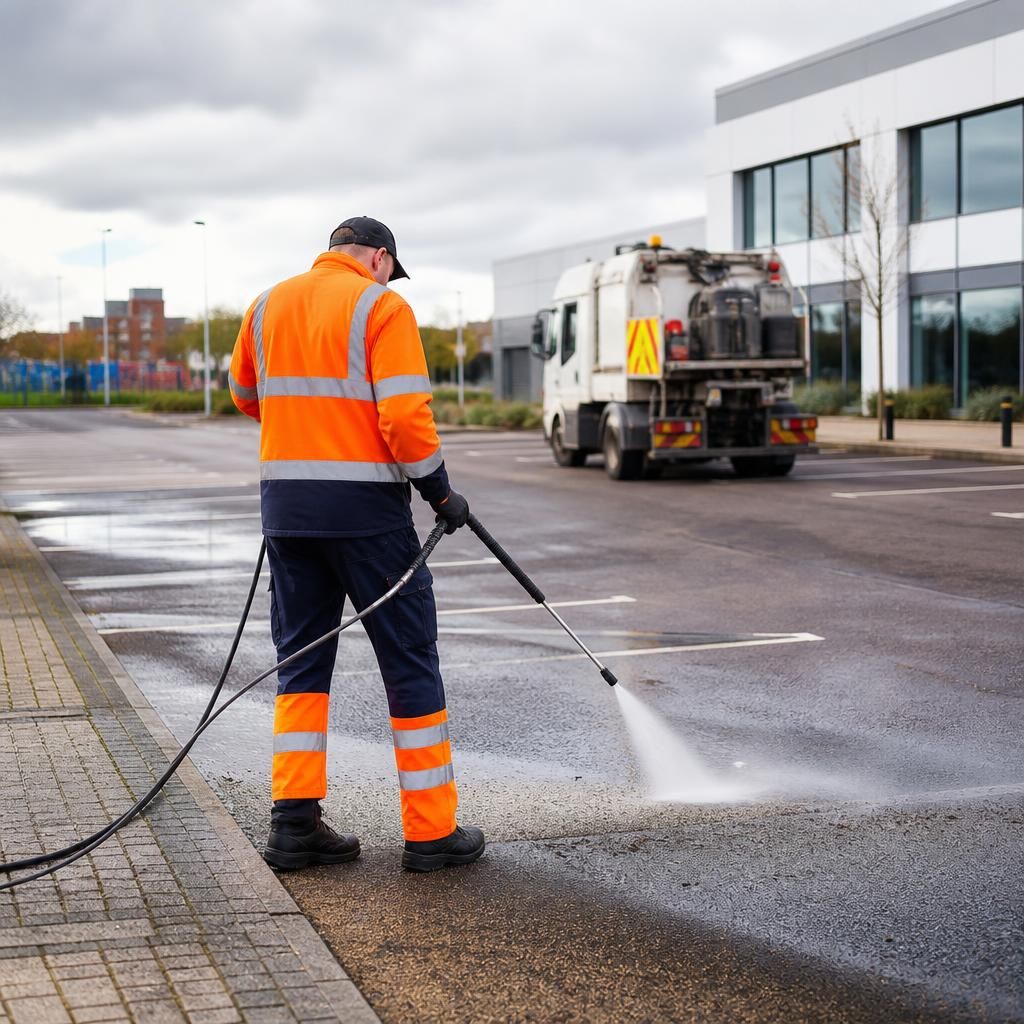
The cost-effectiveness of professional car park and play area cleaning is best assessed by comparing the full cost of ownership, rather than the initial quotation alone. A suitable service should reduce contamination, protect surfaces and equipment, limit safety risks and help prevent avoidable repairs or premature replacement.
When comparing providers, check that the specification includes the work the site actually needs, such as sweeping, pressure washing, gum and oil removal, drain clearance, safety-surface cleaning, waste handling and post-cleaning inspections. A lower price may offer poor value if heavy staining, restricted access, contaminated wash water or out-of-hours work is excluded.
- Review the condition and type of each surface before selecting cleaning methods.
- Compare planned maintenance with the likely cost of reactive cleaning, disruption and remedial work.
- Check how safety controls, temporary closures, defects and waste disposal are managed.
- Use service records and inspection findings to adjust the cleaning schedule over time.
This approach shows whether cleaning is delivering measurable operational value, not simply producing a short-term visual improvement.