
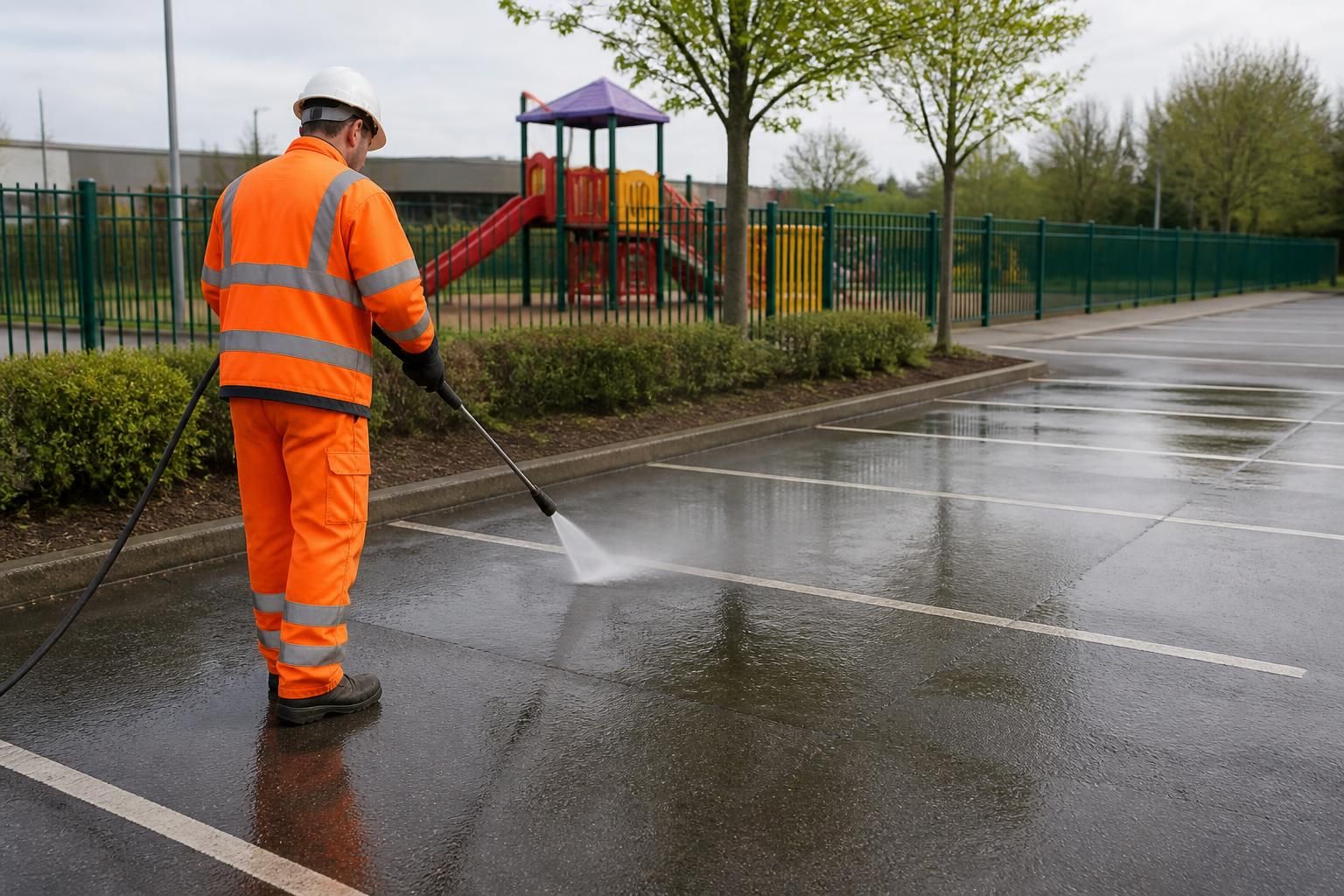
What are the environmental considerations for car park and play area cleaning?
Environmental considerations for car park and play area cleaning include controlling water use, preventing dirty water and chemicals from entering drains or soil, and selecting effective products with low environmental impact. Professional cleaning should also use appropriate pressure or steam levels, collect debris responsibly, and protect play surfaces, planting, wildlife and surrounding watercourses.
Car park and play area cleaning should minimise water consumption, prevent contaminated runoff, use the least harmful effective products and protect surrounding soil, planting, wildlife and watercourses. The correct approach depends on the surface, the type of contamination, the drainage layout and the sensitivity of the site, so environmental controls should be planned before cleaning begins rather than added afterwards.
Control dirty water and runoff
Pressure washing can mobilise oil, fuel residue, brake dust, tyre deposits, litter, organic matter and cleaning chemicals. This water must not be allowed to flow into surface-water drains, planting beds, bare soil or nearby watercourses. Surface-water systems commonly discharge to the environment without the treatment provided by a foul-water system.
- Inspect the site and identify gullies, channels, slopes, soakaways, ponds and nearby watercourses before work starts.
- Use drain covers, bunds, booms or temporary barriers where they are suitable for the site and safe for pedestrians and vehicles.
- Direct collected water to an approved foul-water connection only where permission and site arrangements allow it.
- Recover contaminated water for appropriate disposal when it cannot be safely discharged.
- Keep absorbent materials available for accidental spills, particularly in car parks with oil or fuel contamination.
Cleaning wastewater should never be discharged to a surface-water drain simply because the water appears clear. Oil, detergents and fine particles may remain present after visible dirt has been removed. Any discharge or disposal method should follow the site’s drainage arrangements, local requirements and the instructions of the relevant water or environmental authority.
Use water efficiently
Water use can be reduced without compromising hygiene by matching the cleaning method to the contamination. Dry sweeping, mechanical brushing or vacuum recovery can remove loose debris before washing. This prevents clean water being used to move avoidable dirt across the surface and reduces the volume of wastewater requiring control.
- Pre-sweep litter, leaves, grit and loose soil using suitable equipment.
- Use targeted pressure rather than washing an entire area at maximum flow.
- Adjust pressure, temperature and flow to the surface and the type of contamination.
- Use recovery equipment on hard surfaces where runoff could be contaminated.
- Reuse recovered or recycled water only where its quality and the cleaning task make this appropriate.
Steam cleaning may be useful for certain stains, chewing gum and localised contamination because it can reduce the need for chemical products and, depending on the equipment and task, use less water than conventional washing. It is not automatically the greener option in every situation: energy consumption, recovery arrangements, the surface being treated and the required cleaning result should all be considered.
Select products carefully
Cleaning products should be selected for their effectiveness at the lowest practical concentration, rather than using stronger chemicals as a default. Where a product is required, consider its biodegradability, toxicity to aquatic life, surfactants, solvents, fragrance, packaging and disposal requirements. A product described as environmentally friendly still needs to be used and discharged correctly.
- Use a product specifically suitable for the surface and contamination.
- Follow the manufacturer’s dilution, contact-time, storage and rinsing instructions.
- Do not mix products unless the manufacturer expressly permits it.
- Avoid unnecessary biocides, harsh acids, strong alkalis and solvent-based treatments.
- Prevent concentrates from entering drains, soil or watercourses during storage, mixing and application.
Product safety information should be available to the cleaning team, including the relevant safety data sheets and control measures. Staff should understand how to handle, store and dispose of products under the site’s environmental and health and safety procedures. Chemical selection also needs to account for children’s contact with play equipment, rubber surfacing, artificial grass and other porous materials.
Protect play areas and surrounding habitats
Play areas require a more cautious approach than many general hardstanding areas because children may touch surfaces and place their hands near their mouths. Cleaning products should not leave harmful residues, and equipment should be thoroughly rinsed or otherwise treated in accordance with the product and surface manufacturer’s instructions. The area must be dry and safe before it is reopened.
Cover or isolate sand, loose-fill materials, planting and sensitive equipment where practical. Avoid spraying towards trees, shrubs, ponds, insect habitats, nesting areas and occupied buildings. Do not allow detergent or contaminated silt to accumulate in bark, rubber mulch, sand pits or drainage media. If a play surface is damaged by excessive pressure or aggressive chemicals, it may release additional material and require premature replacement, creating further environmental impact.
Cleaning schedules should also account for wildlife and seasonal conditions. For example, work near vegetation may need additional planning during nesting periods, and wet weather can increase runoff and soil erosion. Any suspected pollution, dead wildlife or significant spill should be reported through the site’s incident procedure and dealt with promptly.
Manage oil, silt and litter responsibly
Car park contamination is not limited to visible litter. Fine sediment, oil residues, metal particles and organic matter can collect in corners, channels and gullies. Removing this material before washing reduces pollution risk, but the resulting sweepings, absorbents, sludge and recovered wastewater may be controlled waste depending on their contents.
- Separate general litter from contaminated absorbents, sludge and chemical containers.
- Keep waste contained and labelled where contamination is suspected.
- Use a suitable, authorised waste contractor when waste cannot be handled through the site’s normal arrangements.
- Retain transfer notes or other disposal records where required by the site’s procedures.
- Never pour recovered oil, sludge or chemical residues onto ground or into a drain.
Oil separators, drainage channels and silt traps should be inspected and maintained as part of the wider site plan. Cleaning a car park without considering an overloaded separator or blocked drainage system can move the pollution problem rather than resolve it.
Choose equipment and methods proportionately
Efficient equipment can reduce water, chemical use, energy consumption and repeat visits, but only when correctly configured and maintained. Leaking hoses, worn seals, blocked nozzles and poorly adjusted pressure settings waste resources and can damage surfaces. Operators should use the lowest effective pressure and temperature, select appropriate attachments and avoid unnecessary passes over the same area.
Battery-powered or lower-emission equipment may reduce local noise and exhaust emissions, particularly in enclosed car parks or near residential areas. The environmental benefit depends on the equipment’s energy source, battery lifecycle and suitability for the work. Equipment should therefore be selected on overall performance rather than a single green claim.
Plan work to reduce environmental risk
Before starting, review:
- the surface materials and their condition;
- the contamination and whether dry removal is possible;
- drainage routes and the method for controlling wastewater;
- nearby planting, wildlife, watercourses and sensitive receptors;
- the products, quantities and equipment required;
- weather conditions, especially heavy rain, high winds and freezing temperatures;
- how the area will be isolated, rinsed, inspected and reopened.
Work should be postponed or adapted when rainfall could overwhelm containment, carry contaminants beyond the work area or prevent the surface from drying safely. On completion, inspect drains and adjacent ground for escaped sediment or chemical residue, remove temporary controls carefully and record any incident or change needed for the next visit.
For ongoing contracts, environmental performance is easier to manage when the cleaning method, products, discharge arrangements, waste route and inspection requirements are documented in the site risk assessment and method statement. Regular review allows the service to move towards less water, fewer chemicals and more targeted cleaning while still maintaining safe, hygienic car parks and play areas.
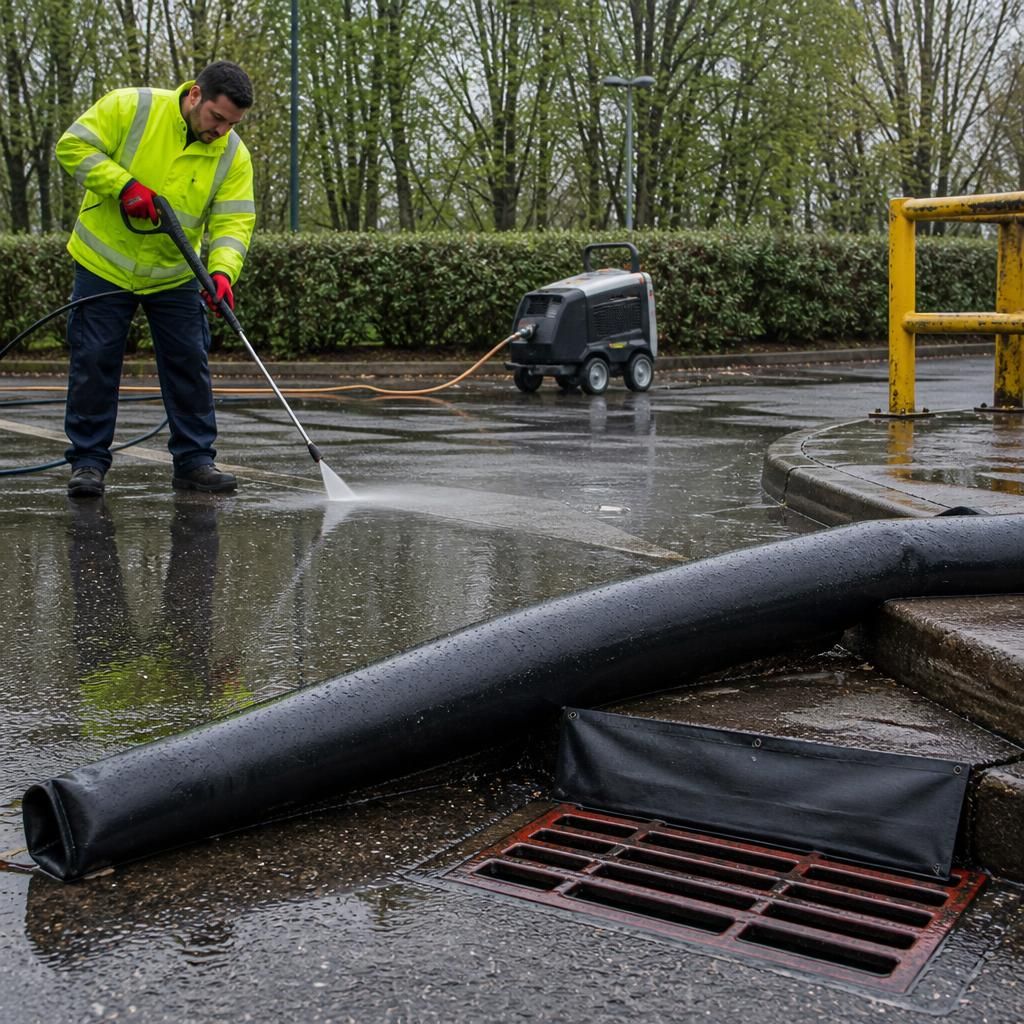
Controlling dirty water is one of the most important environmental considerations for car park and play area cleaning. Pressure washing can carry oil, brake dust, litter, sediment and detergents towards surface-water drains, soil or nearby watercourses, so runoff should be assessed and contained before cleaning begins.
- Identify gullies, slopes, soakaways and sensitive areas before work starts.
- Use drain covers, bunds or temporary barriers where suitable and safe.
- Recover contaminated water and discharge or dispose of it only through an approved arrangement.
- Keep absorbent materials available for oil and fuel spills.
Clear-looking water may still contain pollutants. Cleaning teams should therefore follow the site’s drainage plan and environmental procedures, rather than allowing wastewater to enter a surface-water drain.