
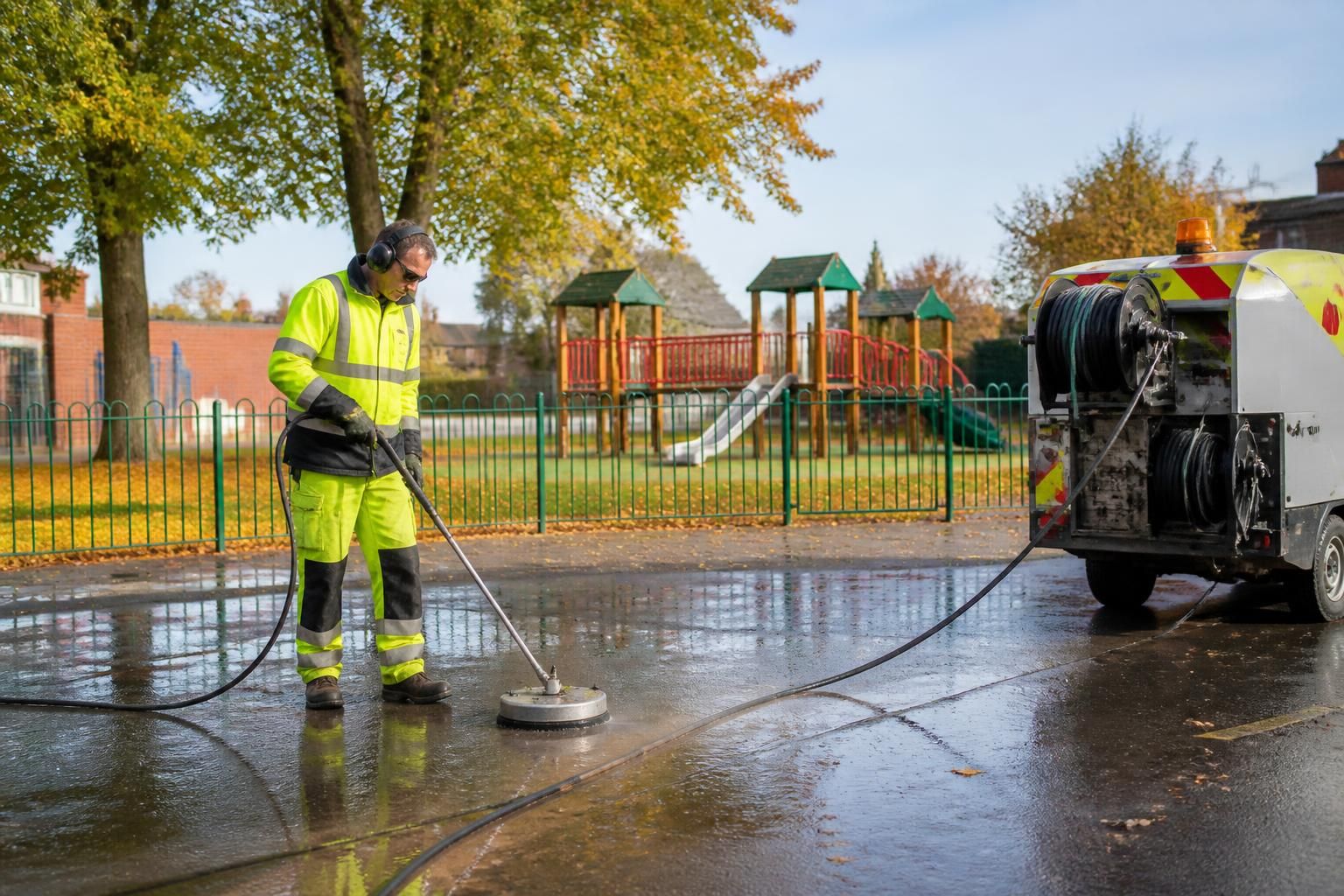
What are the environmental and community benefits of choosing eco-friendly cleaning solutions for car parks and play areas?
Eco-friendly cleaning solutions for car parks and play areas reduce the release of harsh chemicals and contaminated run-off into soil, drains and waterways, while using safer methods around children, staff, visitors and wildlife. They also support cleaner, more welcoming public spaces, protect surfaces and equipment from chemical damage, and help organisations demonstrate responsible environmental management.
Eco-friendly cleaning solutions for car parks and play areas are methods and products that achieve the required level of cleanliness while reducing chemical use, water waste, energy consumption and pollution risks. They can limit contaminated run-off, protect surfaces and equipment, and create safer shared spaces for children, residents, staff, visitors and wildlife.
Reduced pollution and safer water management
Car park cleaning can dislodge oil, fuel residues, brake dust, tyre particles, litter and other pollutants. If this material is allowed to enter surface-water drains, soil or nearby watercourses, it can contribute to pollution. Eco-conscious cleaning controls the source of the contamination and manages the resulting wastewater rather than allowing it to disperse across the site.
Appropriate measures may include dry removal of loose debris before washing, targeted application of detergents, low-pressure or steam cleaning where suitable, and the use of drain covers, suction equipment or wastewater recovery systems. Wastewater should be assessed and disposed of in accordance with site requirements and applicable environmental controls. It should never be assumed that water from a visibly clean surface is suitable for discharge to a surface-water drain.
Lower chemical exposure
Using the least aggressive product that will achieve the required result reduces the risk of unnecessary exposure for cleaning operatives, site users and the wider environment. This is particularly important in play areas, where children may touch surfaces, place their hands near their mouths or come into contact with residues on equipment.
Eco-friendly cleaning does not mean using a product solely because it is described as natural or biodegradable. The product must be suitable for the contamination, compatible with the surface, correctly diluted and used in line with its safety data sheet. A professional assessment should consider the material being cleaned, nearby drains, vegetation, watercourses, weather conditions and the time required before the area can safely reopen.
Protection for play equipment and hard surfaces
Harsh chemicals, excessive pressure and incorrect cleaning techniques can damage painted metal, plastic, rubber safety surfacing, timber, sealants, jointing and protective coatings. Surface damage can create rough edges, staining, premature wear or areas where dirt and moisture collect.
Controlled pressure, suitable temperatures and compatible detergents help preserve the condition of car park surfaces, line markings, walls, fencing and play equipment. Protecting these assets can reduce the need for repairs, replacement materials and associated waste. Cleaning should still be followed by a visual inspection for damage, loose components, trip hazards, failed surfacing or other defects that cleaning alone cannot remedy.
More responsible use of water and energy
Efficient cleaning is not simply a matter of using less water. The method should remove contamination effectively without creating additional work or repeated washing. Pre-sweeping, spot treatment, suitable pressure settings and controlled rinsing can reduce unnecessary water use. Steam or hot-water cleaning may also be appropriate for particular deposits, although the energy demand and surface sensitivity must be considered as part of the overall method.
Equipment should be selected according to the size and condition of the site. Using recovery equipment where practical can reduce the volume of wastewater entering drainage systems and make its handling more controlled. The most suitable approach depends on the contamination, access, drainage arrangement, surface type and environmental conditions.
Cleaner and more usable community spaces
Well-maintained car parks support safer access, clearer pedestrian routes and a more professional environment for residents, employees, customers and visitors. Removing oil films, organic growth, litter and accumulated grime can also help reduce slip risks, although cleaning is only one part of a wider inspection and maintenance programme.
In play areas, removing dirt, algae, food residue, bird fouling and other contamination supports hygienic use. A clean, well-presented facility is easier for local organisations and site managers to monitor and maintain. It can also help ensure that accessibility routes, entrances, seating areas and high-contact surfaces remain suitable for the people using them.
Reduced disruption for local users
Eco-conscious cleaning can be planned to reduce noise, overspray, odour and restricted access. Targeted cleaning may allow unaffected parts of a site to remain available while work takes place elsewhere. Scheduling work outside busy periods, allowing surfaces to dry fully and using clear exclusion zones are especially important around schools, nurseries, residential developments and public facilities.
Cleaning teams should communicate the work area, expected restrictions and reopening requirements to the responsible site contact. In play areas, equipment must remain closed until cleaning residues have been removed or allowed to dissipate as required by the product instructions, and all surfaces are dry and safe to use.
Support for environmental management and responsible procurement
Organisations can use eco-friendly cleaning as part of a wider environmental management policy. A suitable service specification can require responsible chemical selection, controlled wastewater handling, spill prevention, efficient equipment, appropriate waste disposal and records of products and methods used.
When reviewing a cleaning proposal, ask how the contractor will:
- identify contamination and select a proportionate cleaning method;
- protect surface-water drains, soil, planting and nearby watercourses;
- control, recover and dispose of contaminated wastewater;
- manage detergents, fuel, oil residues and other hazardous substances;
- protect children, staff, pedestrians and cleaning operatives during the work;
- confirm that play areas are safe to reopen; and
- record any defects or maintenance issues found during cleaning.
Why professional assessment matters
The environmental benefit comes from the complete cleaning process, not from the product label alone. A biodegradable detergent can still be unsuitable if it is over-applied, discharged incorrectly or used where a less intensive method would work. Conversely, mechanical cleaning, steam, hot water or controlled pressure may reduce the need for chemicals while still requiring careful wastewater management.
For car parks and play areas, the most responsible approach is therefore risk-based: remove loose contamination first, use targeted treatment, protect drainage, recover wastewater where necessary, avoid damaging surfaces and reopen the area only after a safety check. This combination reduces pollution risks while maintaining clean, usable and welcoming facilities for the surrounding community.
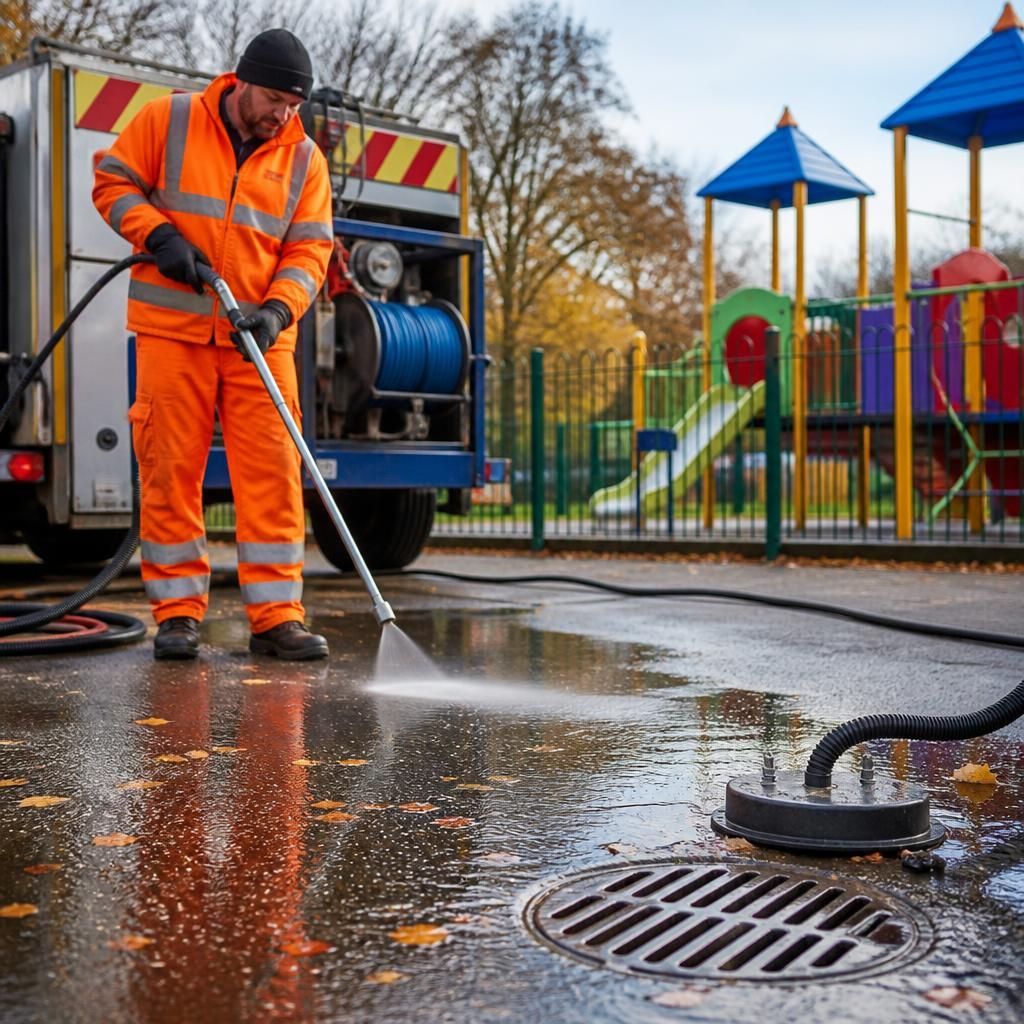
Eco-friendly cleaning for car parks and play areas reduces pollution by controlling chemicals, wash water and loosened contaminants before they can reach soil, surface-water drains or nearby watercourses.
Effective methods may include dry removal of debris, targeted detergent use, controlled-pressure or steam cleaning, drain protection and wastewater recovery where required. In play areas, using surface-compatible products and rinsing thoroughly also helps reduce residue exposure for children while protecting rubber surfacing, plastic, painted metal and other equipment.