
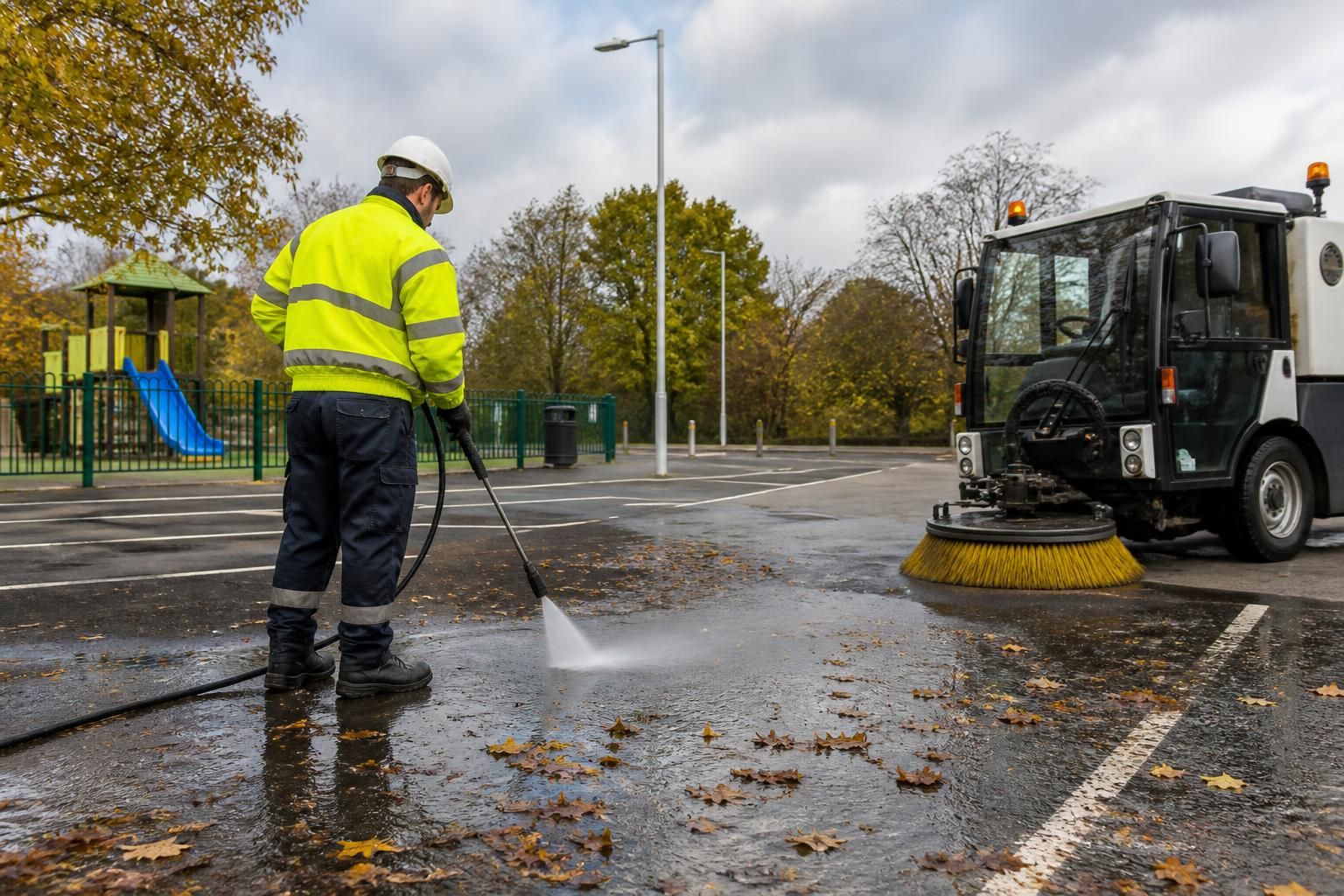
What are the best practices for maintaining cleanliness in car parks and play areas during different seasons?
Seasonal cleaning should combine planned inspections, prompt removal of contamination and methods suited to changing weather conditions across car parks and play areas. Increase attention to leaves, mud, standing water, algae, ice, grit, litter and pollen, while using safe, appropriate pressure washing or steam-cleaning techniques that protect surfaces, drainage systems, play equipment and users.
Effective seasonal maintenance for car parks and play areas combines regular inspections, prompt removal of contamination and cleaning methods suited to the weather, surface and level of use. In the UK, this means adapting routines throughout the year to manage leaves, mud, standing water, algae, ice, grit, litter, pollen, bird fouling and other contaminants without damaging surfacing, drainage systems or play equipment.
Use a planned, risk-based routine. Seasonal cleaning should begin with an inspection rather than a standard pressure-washing cycle. Check vehicle and pedestrian routes, parking bays, kerbs, drainage channels, gullies, ramps, steps, access points and areas beneath trees. In play areas, inspect safety surfacing, edges, channels, seats, bins, fencing, gates and equipment. Record visible contamination, damaged surfaces, blocked drainage, loose materials and any area that may need to be isolated before cleaning.
The required frequency depends on footfall, vehicle movements, surrounding vegetation, weather exposure, nearby construction work and the type of surface. High-use sites and areas with mature trees generally need more frequent litter, leaf and spill removal than lightly used premises. Cleaning schedules should also allow for reactive work after storms, flooding, frost, snow, building work or significant spillages.
Spring cleaning. Spring maintenance should remove the residue left by winter weather. Grit, salt, mud and organic debris can collect in corners, drainage channels and around kerbs, while damp conditions encourage algae and moss on shaded surfaces. Clear loose debris first, then use a method appropriate to the surface to remove ingrained dirt and biological growth. Take care around line markings, resin-bound areas, rubber safety surfacing, block paving joints and painted equipment, as excessive pressure or heat can cause damage.
As temperatures rise, inspect for standing water and areas that remain damp after rainfall. Persistent moisture can indicate blocked gullies, poor falls or compacted debris rather than a cleaning problem alone. Drainage defects should be reported and addressed so that newly cleaned areas do not quickly become slippery or contaminated again. In play areas, remove organic matter from safety surfacing and check that loose-fill materials have not been displaced into walkways or drainage points.
Spring pollen can settle on benches, handrails, play equipment and hard surfaces. Light rinsing or low-pressure cleaning may be suitable for surface pollen, while heavier deposits require controlled cleaning followed by thorough rinsing. Avoid leaving cleaning residues where children may touch surfaces or where pollen and dust can form a slippery film when wet.
Summer cleaning. Summer often brings increased use, dry dust, litter, food and drink spillages, chewing gum, sunscreen residue and bird fouling. Focus on touchpoints and high-traffic areas, including entrances, payment or access points, benches, bins, handrails and play equipment handles. Remove spillages promptly because sugary or greasy residues attract insects, hold dirt and may create slip risks.
Schedule intensive cleaning for cooler periods where possible, particularly when using water or cleaning products in areas used by children. Surfaces should be allowed to dry fully before the car park or play area is reopened. Do not clean equipment or surfacing when hot conditions could cause rapid drying, streaking or concentrated chemical residues. Follow product instructions and use only solutions that are suitable for the material being treated.
Dry weather can increase airborne dust, so sweeping and debris collection should be managed in a way that does not create unnecessary dust near pedestrians, parked vehicles or play areas. Where water is used, control runoff and prevent dirty water entering surface-water drains unless it has been managed in accordance with site and environmental requirements. Spill kits and prompt reporting procedures are particularly important during busy summer periods.
Autumn cleaning. Falling leaves are a priority because wet leaf matter becomes slippery and can conceal trip hazards, damaged surfacing and litter. Remove leaves before they become compacted, especially on ramps, pedestrian routes, steps, play-area entrances and areas shaded by trees. Do not simply move leaves into drainage channels or beneath play equipment, as they can block outlets and retain moisture.
Autumn routines should combine frequent litter picking with mechanical collection or controlled washing where appropriate. Check gullies and channels before periods of heavy rain and clear them using suitable equipment. Any collected leaves, silt or contaminated material should be handled and disposed of responsibly rather than washed into drainage systems.
Moisture and reduced daylight can make algae and moss more noticeable. Treat affected surfaces with a suitable method and allow adequate drying time. Cleaning should not compromise slip resistance, jointing material, protective coatings or impact-attenuating play surfacing. If biological growth returns quickly, investigate shade, drainage and ventilation as part of the maintenance plan.
Winter cleaning. Winter maintenance must address ice, snow, grit, salt, mud and prolonged wet conditions. Clear snow and loose contamination from essential pedestrian routes, entrances, ramps, disabled access routes and areas around play equipment. Use de-icing materials in line with the surface manufacturer’s guidance, as some products can affect metal components, concrete, planted areas, rubber surfacing and drainage systems.
Grit and salt should be removed when conditions permit rather than allowed to accumulate. Abrasive particles can be carried into buildings, collect in play-area surfacing and contribute to blocked drains. Following periods of frost or snow, inspect for cracking, lifting, potholes, loose edges, damaged line markings and displaced safety surfacing. Cleaning should not conceal defects that require repair.
Pressure washing is not normally appropriate when water could freeze on walkways or leave hazardous conditions. Plan water-based work for suitable temperatures and weather, and use controlled techniques that minimise runoff. Where a winter clean is necessary, isolate the work area, display clear warnings and reopen it only when the surface is safe and sufficiently dry.
Protect children and equipment during play-area cleaning. Play areas should be closed or securely segregated while cleaning takes place. Remove or protect loose items, keep hoses and electrical leads away from access routes, and prevent children or members of the public entering the work zone. Cleaning products must be selected for the relevant surfacing and equipment, used at the correct dilution and rinsed away where required. Never leave chemical containers, tools, dirty water or contaminated debris accessible to children.
Particular care is needed around soft-fall rubber, wet-pour systems, artificial grass, sand, timber, painted metal and plastic components. Use lower pressure or alternative methods where high pressure could dislodge granules, damage joints, strip coatings or force water into equipment bearings and enclosed components. Steam cleaning can be useful for certain hard, heat-tolerant surfaces, but its suitability should be assessed before work begins. Follow the equipment and surfacing manufacturer’s maintenance instructions wherever available.
Manage runoff and waste throughout the year. Before cleaning, identify surface-water drains, foul drainage, planted areas and watercourses. Prevent silt, oil, detergent, graffiti residue and other contaminants from entering drainage systems. Use recovery, containment or filtration measures where necessary, and collect removed litter, leaves and sludge for appropriate disposal. Environmental controls are particularly important after heavy rain, when runoff can travel further and drains may already be under pressure.
Coordinate cleaning with site users. Agree access restrictions, cleaning windows, weather contingencies and reopening checks with the responsible site contact. Car parks may need sections cleaned in phases to preserve access, while play areas may require clear communication with staff, residents, parents or visitors. Keep records of inspections, cleaning completed, defects identified, products used and any areas temporarily taken out of service. This creates a clear maintenance history and helps adjust the programme when seasonal conditions change.
The most reliable approach is preventative: remove contamination before it becomes ingrained, keep drainage clear, respond quickly to spills and organic growth, and use surface-specific methods in every season. Planned professional cleaning should support, not replace, daily litter checks, routine inspections and prompt repairs by the site operator.
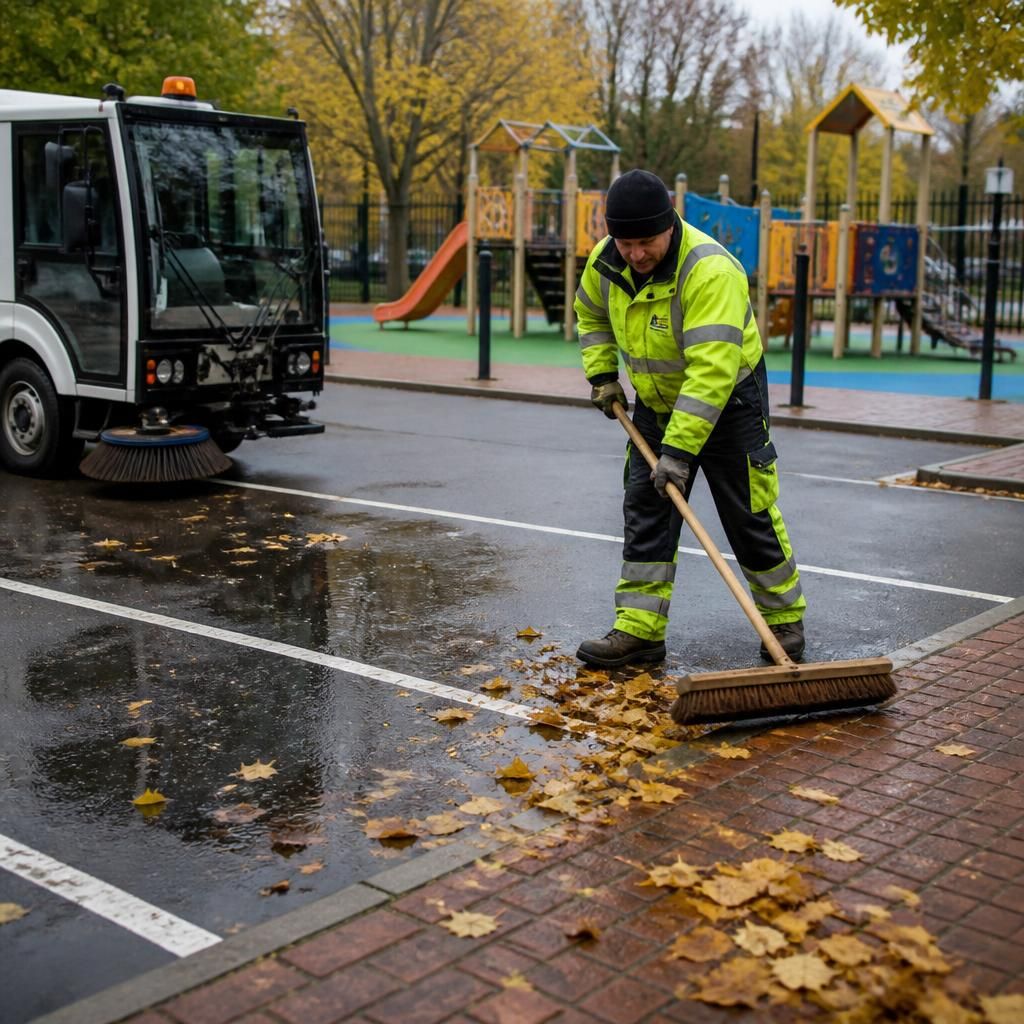
Seasonal car park and play area maintenance means changing cleaning methods as weather, contamination and surface risks change throughout the year. Regular inspections should identify leaves, grit, mud, algae, standing water, ice, litter and spillages before they create slip, drainage or hygiene problems.
Drainage deserves particular attention after heavy rain and during autumn. Keep gullies, channels and kerbs clear, but do not wash leaves, silt, oil or detergent into surface-water drains. In play areas, remove debris from safety surfacing and around equipment without displacing loose-fill materials or damaging rubber, artificial grass, timber or painted components.
Cleaning should be planned around safe access and suitable weather. Isolate play areas while work is under way, use surface-appropriate pressure or steam, allow treated areas to dry fully and check for defects revealed by cleaning before reopening. Record seasonal inspections, completed work and repairs so the maintenance programme can be adjusted as conditions change.
Arrange Seasonal Car Park and Play Area Cleaning
Arrange seasonal car park and play area cleaning with Encanto Exterior Cleaning to keep surfaces, drainage points and play equipment safe and well maintained throughout the year. Contact our team to plan cleaning around your site’s usage, surface types and seasonal risks.