
How often should car parks and play areas be cleaned to ensure safety and hygiene?
Car parks should receive routine litter, spill and debris removal, with professional pressure washing scheduled according to traffic, weather and surface condition; play areas need daily visual checks, prompt removal of contamination and regular cleaning and sanitisation based on use and risk. High-use sites may require more frequent professional cleaning, while a thorough seasonal or condition-led clean helps control grime, algae and hygiene risks.
There is no single cleaning interval suitable for every site. Car parks need routine litter, spill and debris removal, with professional pressure washing scheduled according to traffic, weather, surface condition and contamination risk. Play areas require daily visual checks, prompt removal of hazards and regular cleaning and sanitisation based on usage, equipment type and the likelihood of contact with dirt or bodily fluids. High-use locations generally need more frequent attention than lightly used private sites, while seasonal and condition-led deep cleaning helps control algae, grime and hygiene risks.
Recommended routine for car parks
- Daily or each operating day: inspect for litter, broken glass, oil or fuel spills, mud, standing water, leaves, trip hazards and damaged drainage covers. Remove waste and deal with spills promptly rather than allowing them to spread through vehicle movements or rainwater.
- Weekly: carry out a more detailed sweep of bays, pedestrian routes, kerbs, corners, pay points, trolley areas and sheltered sections where dirt accumulates. The frequency may need to increase where there is heavy footfall, food waste, construction traffic or frequent delivery activity.
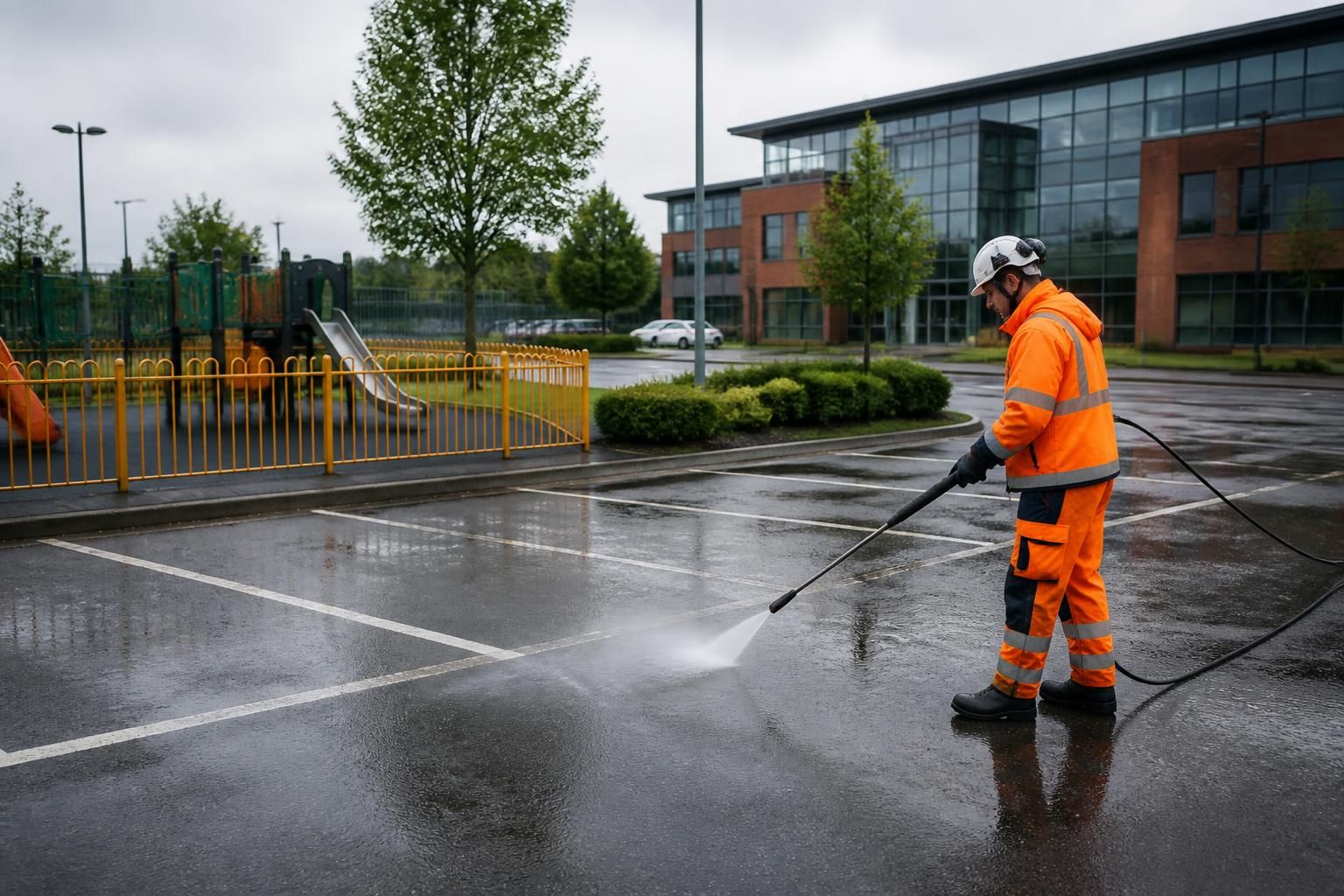
- At planned intervals: use mechanical sweeping, pressure washing or steam cleaning to remove embedded traffic film, tyre marks, oil residue, algae and general surface grime. This is normally arranged as a planned maintenance visit, but should be brought forward when the surface becomes slippery, visibly soiled or difficult to inspect.
- After incidents or adverse weather: clean immediately following fuel or chemical spills, flooding, construction work, storms or the accumulation of wet leaves. Winter grit, salt and mud should not be left to build up, as they can affect drainage, appearance and surface condition.
The appropriate professional cleaning frequency depends on traffic volume, the type of vehicles using the site, nearby trees, drainage performance, surface material and the activities taking place around the car park. Multi-storey and covered car parks often need particular attention to ramps, turning areas, corners, pedestrian walkways and ventilation or drainage channels. A condition survey can identify whether regular sweeping is sufficient or whether deep pressure washing and targeted stain treatment are required.
Recommended routine for play areas
- Daily before opening or use: inspect the surfacing, access gates, fencing, seats and play equipment for litter, glass, animal fouling, standing water, sharp objects, damaged components and obvious contamination. Any unsafe item or affected area should be isolated until it has been cleaned, assessed or repaired.
- During operating periods: remove contamination as soon as it is reported or found. This is particularly important for bodily fluids, food waste, chewing gum, animal fouling and broken materials that children could touch or put in their mouths.
- Regularly according to use: clean touch points such as handles, rails, panels, gates and seats, while removing dirt from wet-pour rubber, synthetic surfaces, plastic, metal and other compatible materials. Busy public parks, school sites, holiday parks and residential developments may require a more frequent service than a lightly used private play area.
- Seasonally and when conditions require: remove leaves, moss, algae, mud and other organic matter before it creates a slip risk or blocks drainage. A more thorough clean is often appropriate after winter, during periods of persistent wet weather and following heavy summer use.
Cleaning alone does not replace inspection and maintenance. Play equipment should be checked for damage, loose fixings and entrapment risks by the responsible site operator, with defects managed under the applicable inspection and maintenance arrangements. Cleaning methods must not damage impact-absorbing surfacing, wash contaminants into drainage systems or leave the area wet and slippery when it reopens.
When to increase the frequency
Both types of site usually need additional cleaning where there is heavy or changing use, poor drainage, shade and persistent dampness, nearby construction, food or drink consumption, vandalism, graffiti, animal access or a history of spills and fouling. Increased frequency is also sensible when users report slippery surfaces, unpleasant odours, visible staining, recurring litter or contamination that standard sweeping does not remove.
After a contamination event, the affected area should be made safe, the material removed using suitable protective equipment and the surface cleaned with a method appropriate to its construction. Where disinfection is necessary, use a product and dilution suitable for the surface and follow the manufacturer’s instructions, including any required contact time and rinsing procedure. Do not apply disinfectant indiscriminately: incorrect products, excessive pressure or aggressive heat can damage coatings, rubber surfacing, line markings and drainage components.
How to establish a practical cleaning schedule
- Assess the site’s usage, surface materials, drainage, surrounding vegetation and known contamination risks.
- Separate routine housekeeping from planned deep cleaning. Litter picking and inspections may be carried out by site staff, while specialist pressure washing, steam cleaning and stain removal can be scheduled as maintenance work.
- Record inspections, incidents, cleaning visits, defects and any areas taken out of use. These records help demonstrate that risks are being managed and show when the schedule needs to change.
- Review the programme after seasonal changes, resurfacing, changes in occupancy or traffic, complaints, accidents and repeated contamination.
- Coordinate cleaning around opening hours and allow surfaces to dry fully before reopening, particularly where water, detergents or sanitising products have been used.
For most commercial sites, a risk-based maintenance plan is more effective than an inflexible calendar. The plan should specify who carries out daily checks, what must be reported immediately, which areas receive routine cleaning and when professional equipment is required. Car parks may need frequent sweeping with periodic deep washing, whereas play areas need consistent inspections and responsive hygiene cleaning alongside scheduled surface maintenance. Reviewing both schedules together helps maintain safe access, protects surface condition and avoids treating visible dirt only after it has become a larger problem.
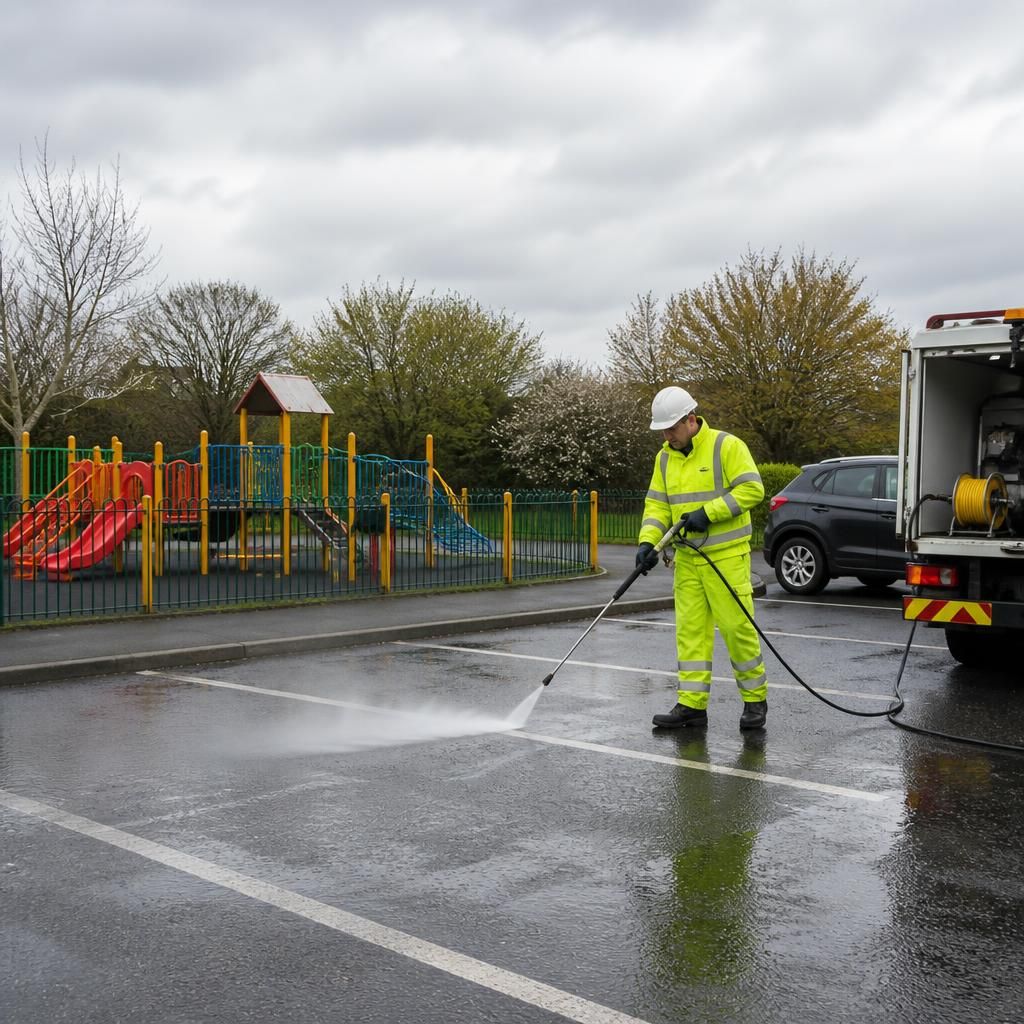
Cleaning frequency for car parks and play areas should be based on usage, contamination risk and surface condition rather than a fixed calendar alone. High-use sites need more frequent routine attention, while spills, animal fouling, broken glass, standing water and other hazards should be dealt with immediately.
Car parks benefit from regular litter removal and sweeping, with planned pressure washing or steam cleaning when traffic film, oil residue, algae or winter grime becomes established. Play areas should be visually checked before opening, with touch points, equipment and safety surfacing cleaned as required. Any contaminated or unsafe section should be isolated until it has been cleaned, assessed and allowed to dry fully.
Arrange a site-specific cleaning schedule
Arrange a site-specific cleaning schedule for your car park or play area, based on usage, surface condition and contamination risks. Contact Encanto Exterior Cleaning to discuss the routine inspections, responsive cleaning and planned deep-cleaning your site requires.