
How do you address safety during the cleaning of play areas to protect children and equipment?
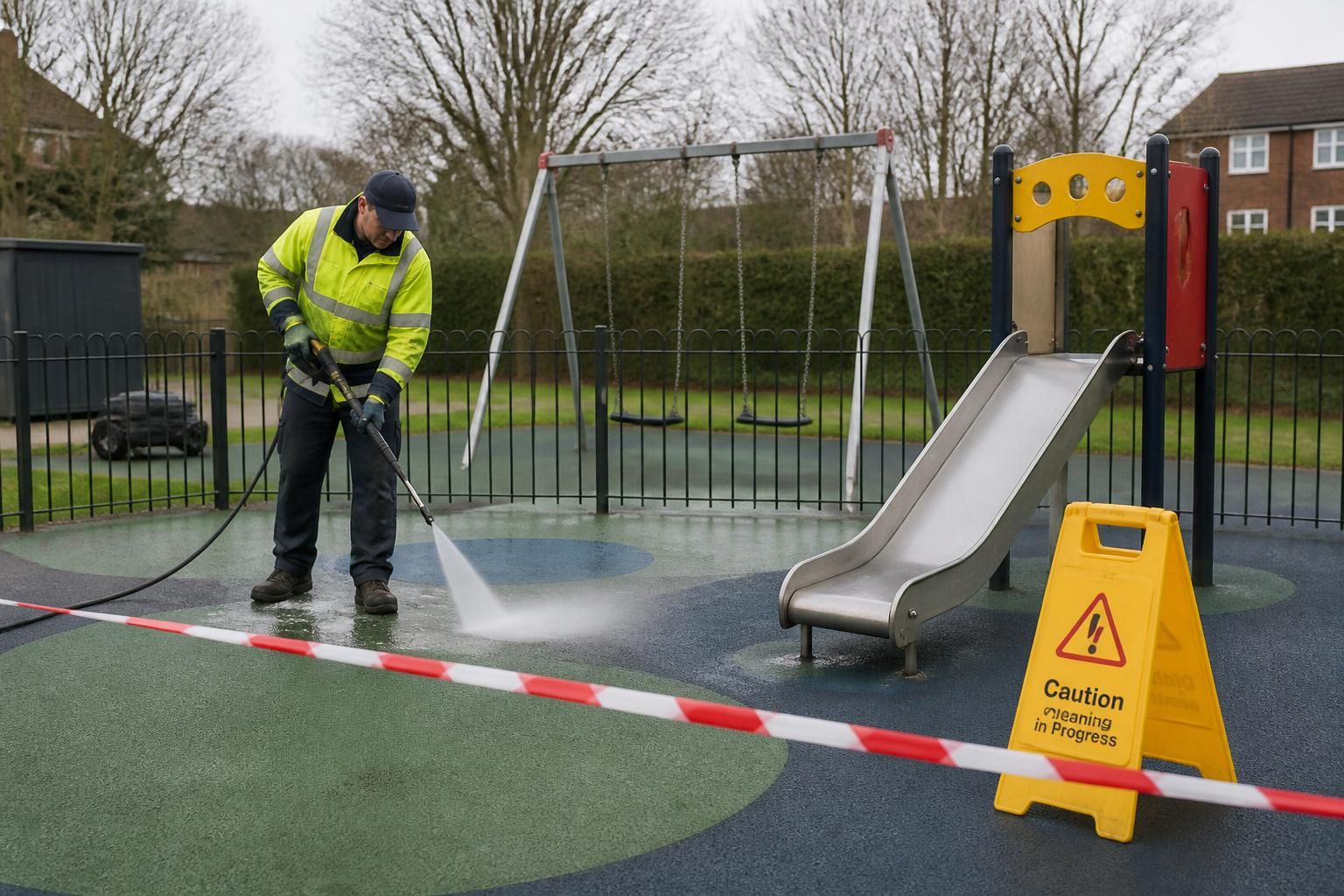
We protect children by fully isolating the play area during cleaning, using suitable low-pressure or steam-cleaning methods and child-safe products, and keeping the site closed until surfaces are rinsed, dry and inspected. Equipment is protected through a pre-cleaning assessment, controlled water pressure, careful treatment of sensitive components and checks for damage or hazards before the area is reopened.
Safety during play area cleaning is addressed by preventing access to the work zone, selecting a cleaning method that suits the surface and equipment, controlling water and chemical use, and completing documented checks before reopening. The area remains closed until equipment and surrounding surfaces are clean, dry, free from residue and confirmed safe for children.
Pre-cleaning risk assessment
Before work starts, the cleaning team assesses the play area, surfacing and equipment to identify hazards and sensitive components. This includes checking for loose fixings, damaged panels, exposed edges, worn impact-absorbing surfaces, drainage problems, electrical features and areas where water could collect. Existing defects are recorded and reported rather than concealed by cleaning.
The assessment also considers the site layout, public access, weather, nearby roads and buildings, overhead obstructions, surrounding vegetation and the location of drains. Play equipment should be cleaned in line with the manufacturer’s care instructions and relevant site procedures. Cleaning is not a substitute for a formal inspection, repair or maintenance regime.
Effective isolation of the work area
Children, parents and other unauthorised people must be kept away from the area throughout cleaning. Suitable measures can include locked gates, temporary barriers, cones and clear warning signs at every practical access point. Where the play area forms part of a public space, the responsible site contact should be informed of the closure and the expected reopening conditions.
Barriers are positioned so that children cannot reach through them to touch wet equipment, hoses or cleaning materials. Hoses and cables are routed away from pedestrian paths or secured to prevent trip hazards. Vehicles, pressure-washing equipment and storage containers are kept outside the play zone wherever possible.
Controlled cleaning methods
Pressure is selected according to the material being cleaned. Excessive pressure can damage painted finishes, timber, rubber surfacing, seals, bearings, fasteners and drainage channels, while forcing water into joints or enclosed components. Operators use controlled pressure, suitable spray patterns and an appropriate working distance rather than relying on maximum output.
Steam cleaning or lower-pressure washing may be preferable for some play equipment, sensitive finishes and areas where water volume needs to be limited. The chosen method is tested in an inconspicuous area when the surface or coating is unfamiliar. Abrasive techniques are avoided unless the material and manufacturer’s guidance confirm that they are suitable.
Safe use of cleaning products
Products are selected for the surface, the type of contamination and the intended use of the area. Where a detergent or disinfectant is necessary, it must be used at the manufacturer’s stated dilution and contact time, then removed thoroughly where required. Products that could leave harmful residues, damage coatings or create a slip risk are not suitable for children’s play environments.
Operators follow the relevant COSHH assessment and product safety information, using appropriate personal protective equipment during preparation and application. Chemicals are labelled, secured and kept away from children, food areas and drainage routes. Cleaning products must never be mixed unless the manufacturer specifically permits this, as incompatible substances can create hazardous fumes or reactions.
Protection of play equipment
Equipment is inspected before cleaning so that vulnerable parts can be protected or excluded from direct spray. Electrical housings, speakers, lighting, sensors, moving mechanisms, bearings, open tube ends and drainage points require particular care. Water is not directed into openings, joints or components that are not designed for wash-down cleaning.
Where appropriate, sensitive items are covered or cleaned by hand using a controlled amount of moisture. Operators avoid trapping water inside hollow sections and allow moving parts to drain before testing them. Any covers used during cleaning are removed before inspection, and equipment is checked for correct movement, stability and visible damage afterwards.
Slip, trip and contamination controls
Wet surfaces can create a temporary slip hazard, particularly on smooth surfacing, steps, ramps, platforms and access routes. Run-off is controlled so that it does not flow into pedestrian areas or form standing water. Drainage points are kept clear, and excess water is removed where natural drainage is insufficient.
Loose debris, faecal contamination, chewing gum, algae and other biological contamination are handled using a method appropriate to the risk. Contaminated waste, disposable materials and used water are managed in accordance with site procedures and environmental requirements. Cleaning equipment is kept in a hygienic condition so that contamination is not transferred between sites or between different play areas.
Inspection before reopening
Reopening takes place only after the cleaning team has checked that equipment and surrounding surfaces are sufficiently dry, there is no visible chemical residue, standing water or loose debris, and barriers, fixings and protective surfaces have not been disturbed. Gates, access routes and impact-absorbing surfacing are checked as part of the final inspection.
Moving and interactive elements are examined for normal operation, while the wider area is checked for new trip, sharp-edge, entrapment or stability concerns. If cleaning reveals a defect, the affected equipment is taken out of use and reported to the responsible person instead of being returned to service.
Communication and records
The site contact should receive clear information about the work area, products used where relevant, any defects identified and the conditions for safe reopening. A cleaning record can include the date, areas treated, method, products, operator checks, weather conditions where relevant and outstanding maintenance issues.
This controlled approach protects children by separating them from the hazards associated with wet cleaning, equipment and chemicals. It also protects the play installation by matching the method to its materials, limiting water and pressure, and ensuring that a competent final inspection is completed before the area is made available again.
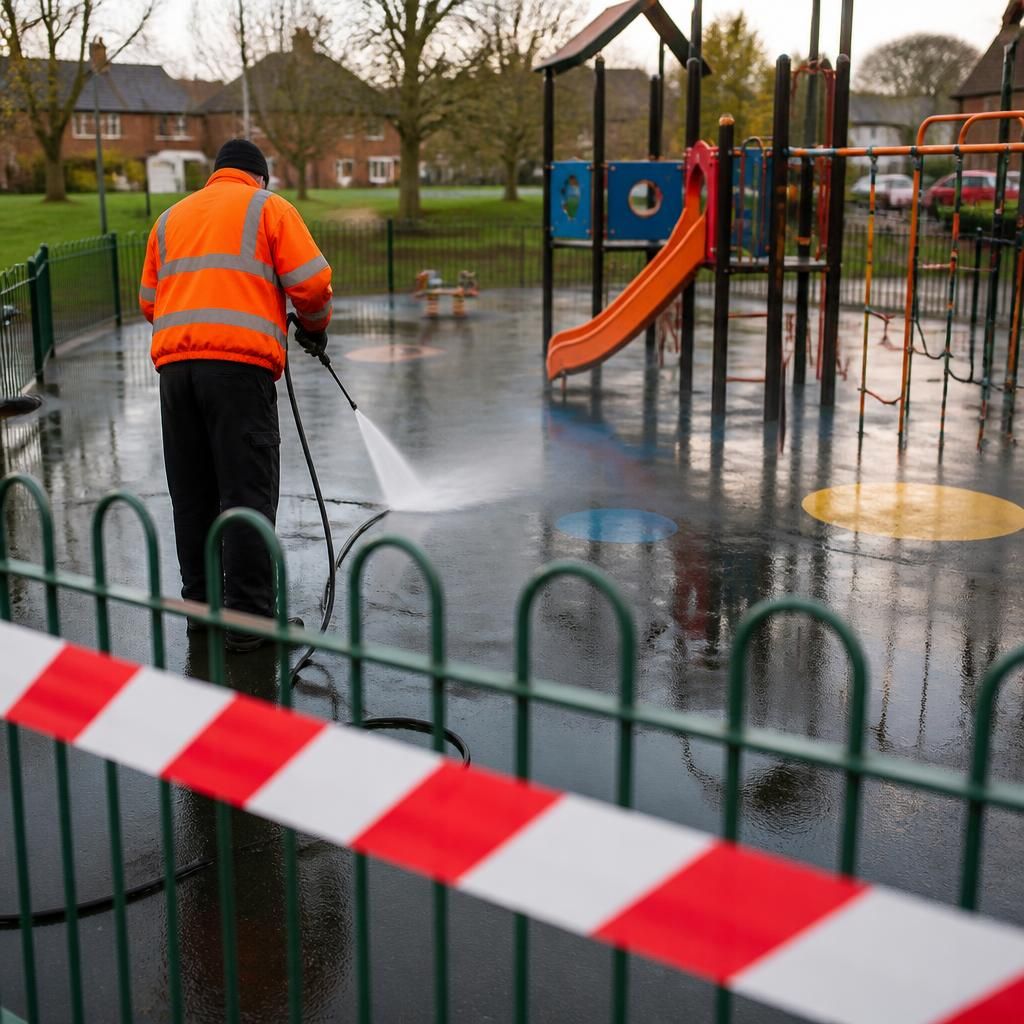
Safe play area cleaning starts with complete isolation of the work zone. Children, parents and other unauthorised people must be kept away from wet surfaces, cleaning products, hoses, cables and equipment until the work is finished and the area has been inspected.
Barriers and clear warning signs should cover every practical access point, with hoses and cables routed away from walkways to prevent trips. The area should remain closed until:
- play equipment and surfacing are clean, dry and free from standing water;
- there is no visible chemical residue, loose debris or contamination;
- gates, fixings, moving parts and impact-absorbing surfaces remain secure; and
- any defect found during cleaning has been reported and, where necessary, the affected equipment taken out of use.
This final inspection protects children from avoidable hazards and confirms that controlled cleaning has not affected the condition or operation of the play equipment.