
How can regular maintenance schedules improve the longevity and functionality of car park and play area surfaces?
Regular, planned maintenance removes dirt, organic growth, stains and surface contaminants before they cause deterioration, helping car park and play area surfaces remain safe, usable and presentable for longer. It also identifies defects early, allowing targeted cleaning, repairs and drainage checks that reduce disruption and the need for costly resurfacing or replacement.
Regular, planned maintenance extends the service life of car park and play area surfaces by removing damaging contamination, identifying defects early and keeping drainage, access routes and safety features working as intended. A scheduled approach is more effective than occasional reactive cleaning because it prevents minor problems from developing into surface failure, trip hazards, contamination issues or expensive resurfacing work.
Maintenance should combine routine inspections, appropriate cleaning, prompt repairs and periodic specialist treatment. The exact schedule depends on surface type, usage, weather exposure, nearby trees, drainage performance and the level of contamination. A busy retail car park, school play area, housing development and industrial site will not have identical maintenance requirements.
How planned maintenance protects surfaces
Dirt, oil, algae, moss, tyre residue, litter and organic debris can hold moisture against a surface. Over time, this may contribute to staining, slippery conditions, blocked drainage and deterioration of joints, coatings or porous materials. On play areas, accumulated soil and organic growth can affect hygiene and create hazards around wet-pour surfacing, rubber tiles, artificial grass, paving and equipment supports.
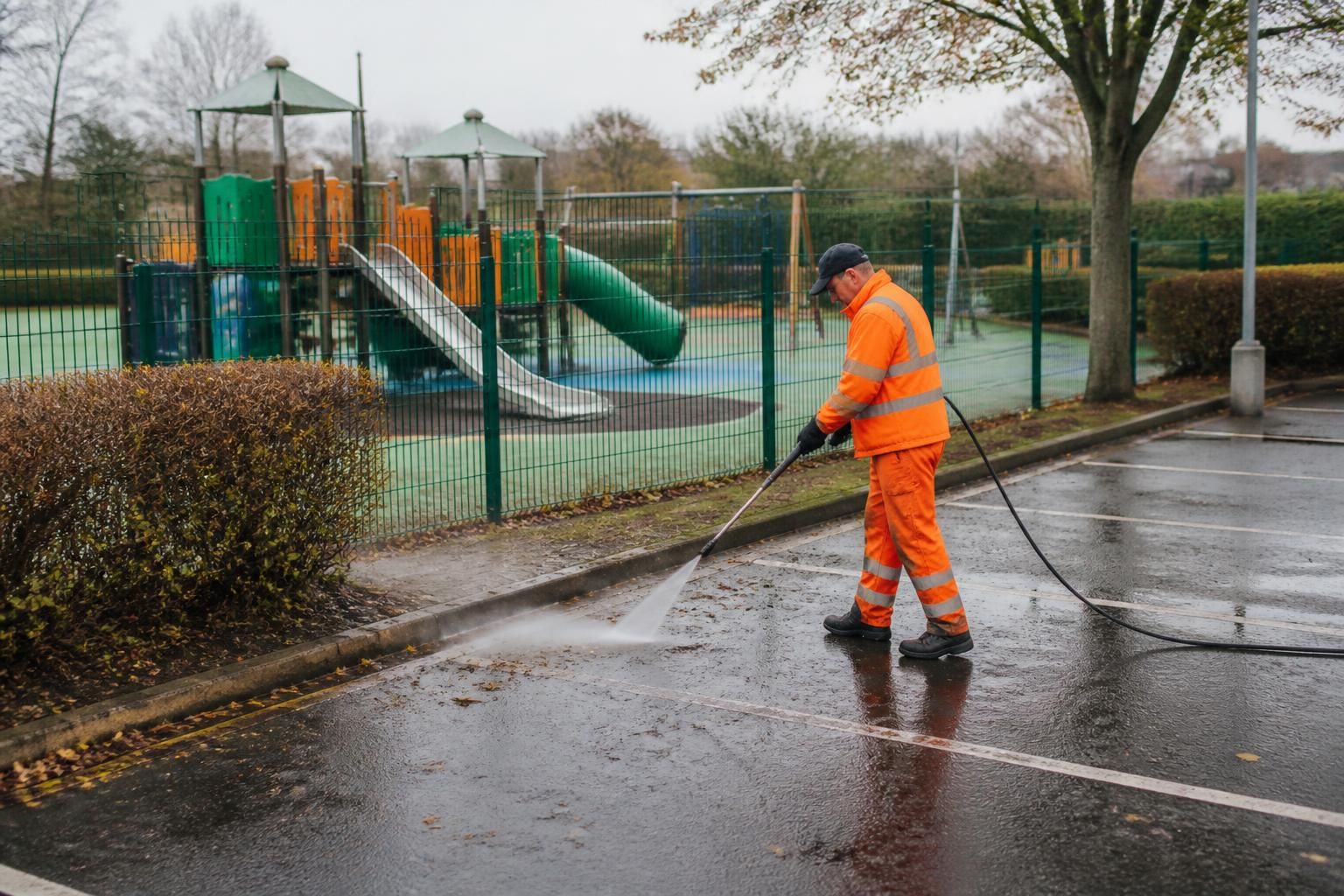
Routine cleaning removes these contaminants before they become difficult to treat. Pressure washing, steam cleaning and other methods can be selected according to the material and condition of the surface. Using the wrong pressure, temperature or chemical treatment can damage coatings, loosen aggregate, affect rubber surfacing or move contamination into drainage systems, so cleaning should be carried out with regard to the manufacturer’s recommendations and the site’s drainage arrangements.
Key elements of an effective maintenance schedule
- Routine visual inspections: Check for potholes, cracks, loose edging, worn line markings, standing water, blocked gullies, damaged kerbs and areas of oil or chemical contamination. In play areas, inspect impact-absorbing surfacing, seams, joints, access gates, fencing, drainage and the areas around equipment legs and fixings.
- Planned cleaning: Remove litter, leaves, silt, mud, bird fouling, algae, moss and vehicle-related deposits before they build up. High-traffic or shaded areas may need more frequent attention than lightly used, open areas.
- Drainage maintenance: Keep channels, gullies and outlets clear so water does not remain on car park surfaces or beneath play equipment. Poor drainage accelerates surface wear, encourages organic growth and can make play surfaces unusable.
- Defect reporting and repair: Record defects when they are found and assign them for repair according to their risk. Small cracks, isolated trip points and damaged surfacing are generally easier to address before water penetration, traffic or repeated impact makes them worse.
- Surface-specific treatment: Adapt the cleaning method to tarmac, concrete, block paving, resin-bound surfacing, rubber safety flooring, wet-pour systems or artificial grass. Testing a discreet area can help confirm that the proposed process is suitable.
- Post-work checks: After cleaning, confirm that surfaces are stable, free from excessive standing water, open to users only when safe and that displaced debris or wash water has been managed correctly.
Benefits for car park longevity and functionality
For car parks, regular maintenance helps preserve the surface and supporting features that allow vehicles and pedestrians to move safely. Removing oil, fuel residue and compacted dirt reduces slip risks and prevents contamination from becoming deeply embedded. Clearing leaves and silt helps gullies and channels operate correctly, reducing the risk of standing water, freeze-related damage and deterioration at surface edges.
Maintenance also protects visibility and site organisation. Clean line markings, kerbs, signage bases, pedestrian routes and accessible bays are easier to identify and use. Prompt removal of graffiti and staining helps maintain a professional appearance while preventing some deposits from becoming harder to remove. Where cleaning reveals cracking, rutting or settlement, the issue can be assessed before it affects a larger section of the car park.
Benefits for play area longevity and functionality
Play area maintenance must protect both the surface and the way children use the equipment. Removing mud, leaves, litter, algae and other contamination helps preserve traction and hygiene. Keeping safety surfacing clear and well drained supports its impact-absorbing function, while attention to edges and transitions reduces trip hazards.
Inspections should also consider whether surfacing has become displaced, compacted, torn or uneven around frequently used equipment. Damage near slides, swings, climbing frames, entrances and access routes may develop more quickly because these areas receive repeated traffic and impact. Cleaning does not replace formal playground inspections or repairs, but it provides an important opportunity to identify conditions that require further action and to keep the area operating as designed.
Using risk-based frequencies
A useful schedule separates daily or routine housekeeping from planned cleaning and periodic condition reviews. Litter and obvious hazards may need checking as part of normal site operations, while pressure washing or steam cleaning can be arranged at suitable intervals based on contamination and usage. A more detailed inspection should follow severe weather, construction activity, flooding, vandalism or any incident that may have affected the surface.
Frequency should be reviewed when conditions change. Increase attention during periods of heavy leaf fall, prolonged damp weather, winter gritting, high visitor numbers or building works. Shaded locations and areas beneath trees often retain moisture and organic debris for longer. Conversely, a lightly used, well-drained area may require less intensive cleaning, provided inspections continue and contamination is not allowed to accumulate.
Co-ordinating cleaning with repairs and site use
Maintenance is most effective when cleaning, inspection and repair information is shared between the site manager, facilities team and specialist contractor. Before work begins, agree access arrangements, isolation zones, traffic management, equipment restrictions, drainage controls and reopening criteria. Car parks may need sections treated in phases to maintain access, while play areas should remain closed until surfaces are clean, dry where required and free from equipment or cleaning residues.
Cleaning should not conceal defects or be used as a substitute for resurfacing where the underlying material has failed. A professional assessment can distinguish between removable contamination, surface wear and structural damage. This supports better decisions about local repairs, recoating, joint treatment, drainage work or eventual replacement.
Records help demonstrate control
Keep a maintenance record showing inspection findings, cleaning completed, defects identified, repairs recommended, products or methods used and any areas temporarily closed. Photographs can help track recurring problems such as ponding, algae growth or surface movement. These records support consistent planning, help prioritise budgets and provide evidence that safety and hygiene risks are being actively managed.
In practice, a regular maintenance schedule reduces avoidable deterioration, keeps surfaces available for their intended use and makes expenditure more predictable. For car parks and play areas across Birmingham, the West Midlands and other UK locations, combining routine checks with appropriately selected professional cleaning and timely repairs is the most reliable way to preserve surface performance and extend the period before major renewal is required.
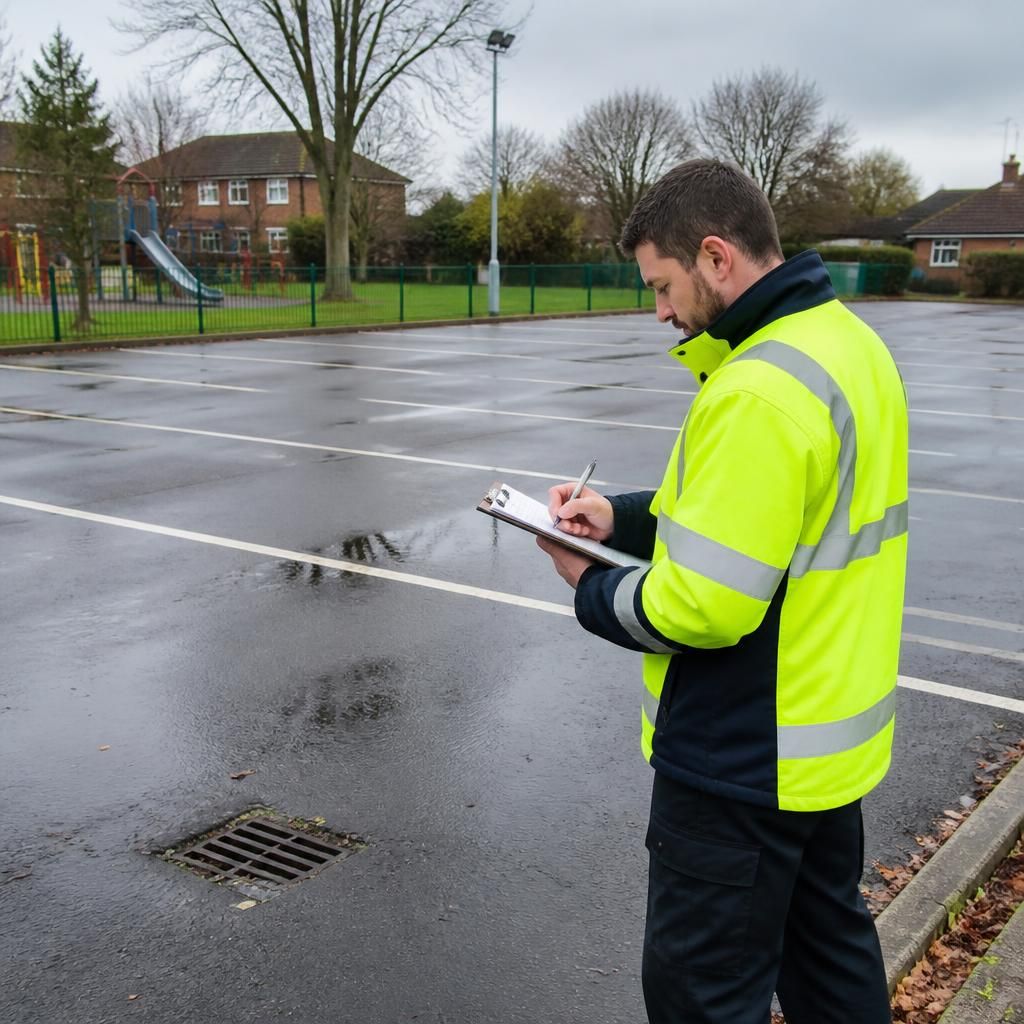
A planned inspection and cleaning schedule helps protect car park and play area surfaces by identifying contamination, drainage problems and early defects before they affect safety or require extensive repairs. Routine attention is more effective than waiting for visible deterioration or user complaints.
Inspections should check for standing water, blocked gullies, algae, moss, oil, litter, cracks, worn markings and uneven areas. In play areas, include impact-absorbing surfacing, seams, edges and the ground around equipment supports. Cleaning methods can then be matched to the surface, while defects are recorded for prompt repair. This keeps surfaces usable for longer and helps maintain their intended slip resistance, drainage and impact-absorption performance.