
What safety measures are taken during the moss and algae removal process?
During moss and algae removal, we assess the site, identify hazards, use suitable access equipment and PPE, and control the work area to protect people, vehicles and property. We select a suitable low-pressure or soft-wash method, protect vulnerable surfaces and manage runoff carefully to reduce the risk of damage, slips and exposure to cleaning treatments.
Safety during moss and algae removal is managed through a planned combination of site assessment, suitable access equipment, personal protective equipment, controlled cleaning methods and protection for people, property and the surrounding environment. Before work starts, we assess the roof or surface, its condition, the access requirements and the risks created by moss, algae, water, cleaning solutions and falling debris.
For commercial and industrial sites, the work is planned around the building’s use and the public areas nearby. Where appropriate, the method statement and risk assessment identify the equipment, controls and responsibilities for the project. We also consider site-specific requirements, including tenant or pedestrian access, vehicle movements, delivery areas, plant, neighbouring properties and emergency arrangements.
Key safety measures include:
- Pre-work inspection: We check the surface for fragile or damaged roof tiles, loose coverings, defective gutters, rooflights, exposed services and other hazards. Moss can conceal defects, so the condition of the surface is considered before anyone begins cleaning.
- Safe access planning: We select access equipment according to the height, layout and condition of the building. This may include appropriately positioned ladders, mobile access equipment, scaffold or other specialist systems. Equipment is set up on suitable ground and used in accordance with the relevant safety requirements.
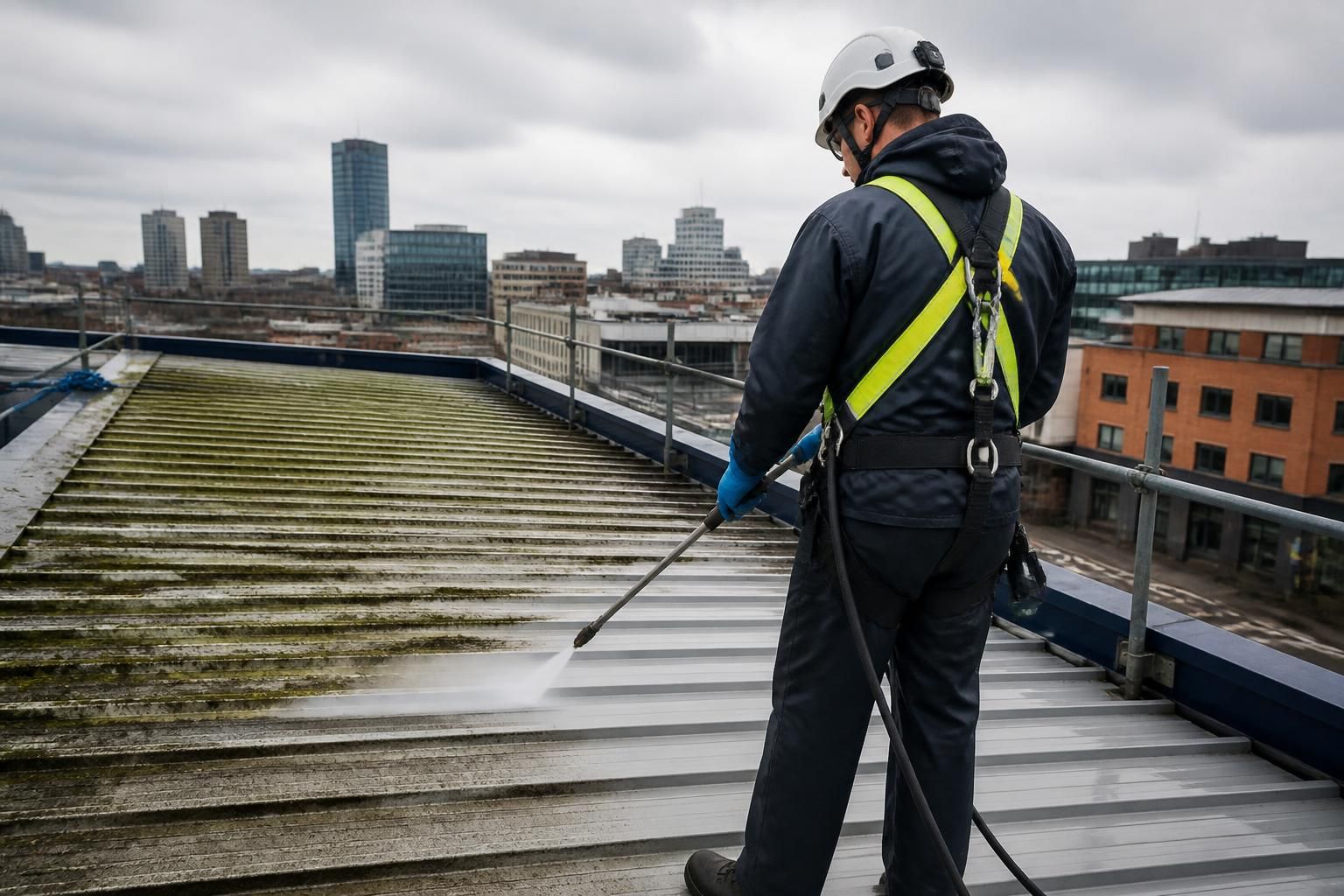
- Fall prevention: Where work at height is required, the access and work method is planned to reduce the risk of falls. Operatives use suitable edge protection, restraint or other control measures where required, rather than relying on the roof surface or moss for secure footing.
- Personal protective equipment: PPE is selected for the task and can include safety footwear with suitable grip, gloves, eye protection, protective clothing and head protection. Additional respiratory or chemical-resistant protection may be required when particular treatment products or working conditions make it appropriate.
- Exclusion zones: The area below and around the work is controlled to protect pedestrians, staff, visitors, vehicles and members of the public from falling moss, equipment, water or residue. Barriers, signage and a banksman or other site control may be used where the site layout requires them.
- Electrical and building services checks: We identify nearby electrical equipment, external lighting, ventilation openings, air-conditioning units, communication equipment and other services before applying water or treatments. Vulnerable items are isolated, covered or otherwise protected where appropriate.
The cleaning method is also an important safety control. We do not use unnecessary pressure simply to remove moss quickly. Low-pressure cleaning or soft washing is selected according to the roofing material, surface condition and type of growth. This helps reduce the risk of dislodging tiles, damaging coatings, forcing water beneath coverings or spreading debris into vulnerable areas.
Where a biocide or other treatment is required, the product is selected and applied in line with its instructions and the conditions identified during the assessment. Operatives take account of contact risks, wind direction, nearby planting, watercourses, animals, occupants and adjacent surfaces. Treatments are not applied in conditions where spray drift or uncontrolled run-off cannot be properly managed.
Run-off and debris are controlled throughout the work. Moss, algae, silt and dirty water can create slip hazards and may block drainage if they are allowed to accumulate. We protect or monitor vulnerable drainage points, collect loose material where practicable and keep access routes clear. Water and treatment residues are managed to prevent avoidable contamination of adjacent areas, drains or landscaped surfaces. Any site-specific drainage restrictions are considered before work begins.
Weather conditions are monitored because rain, wind, frost and poor visibility can affect both safety and the quality of the clean. Wet moss and treated surfaces can be particularly slippery, while strong winds can affect access equipment, spray control and the stability of loose debris. Work may need to be paused or rearranged when conditions make the planned controls ineffective.
Care is taken around fragile roof areas and features that are not designed to carry normal foot traffic, including rooflights, translucent panels, unsupported coverings and deteriorated sections. Operatives use the planned access route and avoid placing weight on unsuitable areas. If the inspection identifies a structural or maintenance issue outside the cleaning scope, it is recorded and brought to the client’s attention rather than being treated as a cleaning problem.
During the process, the team maintains communication with the site contact and follows the agreed site rules. Equipment, hoses and cables are positioned to minimise trip hazards, and work areas are kept orderly. The cleaning progress is monitored so that pressure, water volume and treatment application can be adjusted if the surface responds differently from expected.
On completion, the area is checked for remaining debris, slippery residue, blocked outlets, damaged coverings and unintended spray or run-off. Protective coverings and controls are removed only when it is safe to do so, and access routes are left in a suitable condition. The client is advised of any defects, access limitations or follow-up treatment requirements identified during the work.
These measures do not remove every risk associated with roof and exterior cleaning, but they reduce foreseeable risks through preparation, competent working practices and continual site monitoring. The exact controls vary according to the building, surface, height, access arrangements, weather and cleaning treatment required.
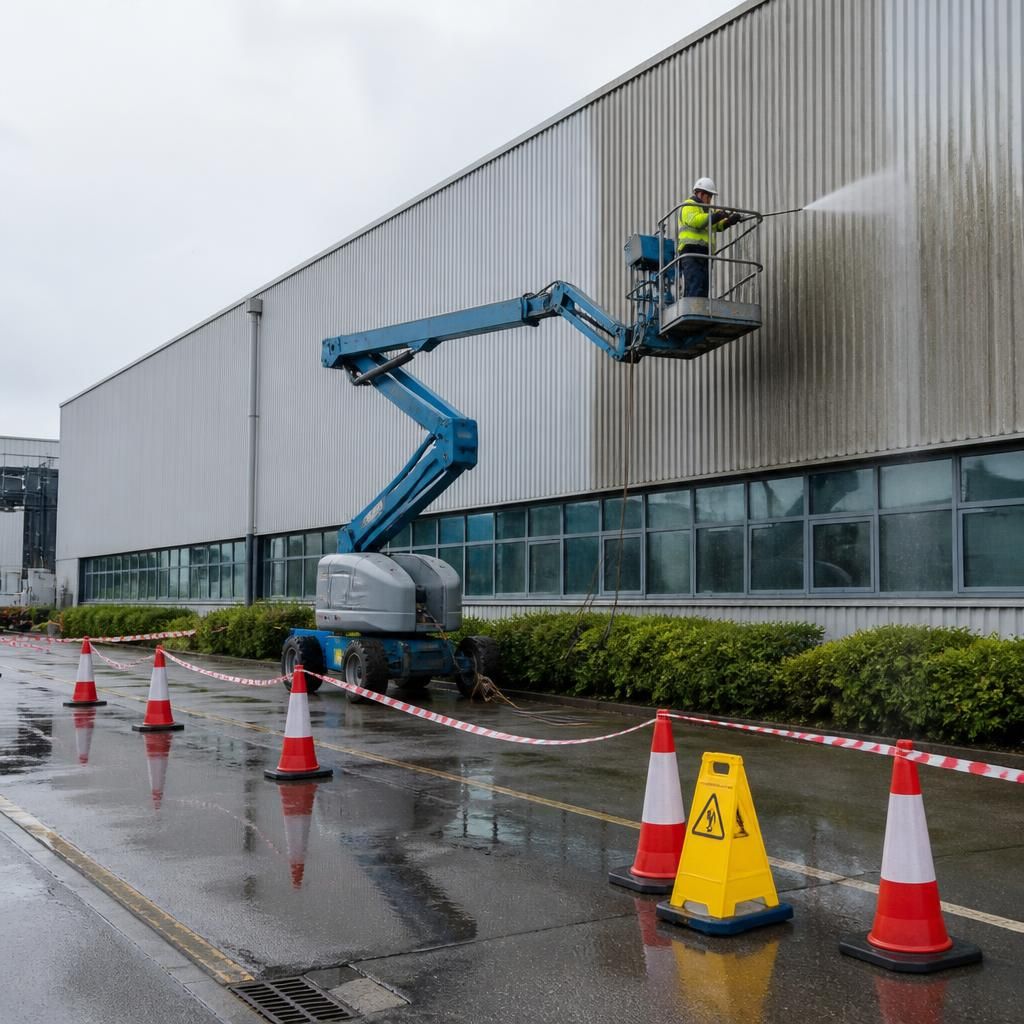
Safe access and controlled work areas are essential during moss and algae removal, particularly where roofs, elevated façades or busy commercial premises are involved. Before cleaning begins, we assess the surface, access route, ground conditions and nearby hazards, then select suitable equipment and controls for the site.
Operatives use appropriate personal protective equipment and fall-prevention measures where required. Barriers and warning signs can be installed below the work area to protect pedestrians, vehicles and building users from falling moss, water or debris. Hoses and cables are positioned to reduce trip hazards, while fragile roof areas, rooflights, electrical services and vulnerable building features are protected or avoided.
Arrange a Safe Moss and Algae Removal Assessment
Arrange a safe moss and algae removal assessment so we can review the surface, access requirements and site-specific hazards before work begins. Contact Encanto Exterior Cleaning to discuss the right cleaning method and safety controls for your property.