
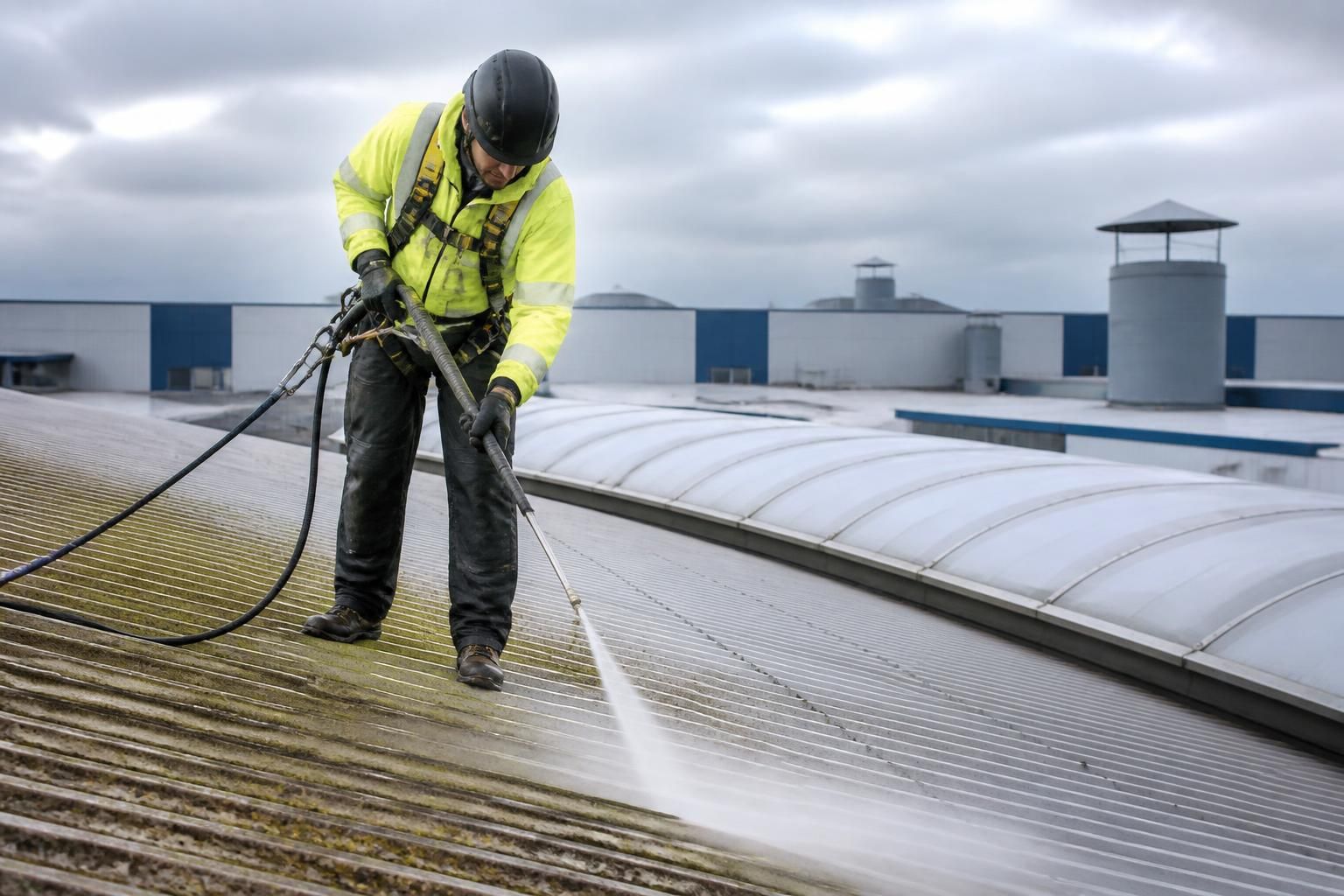
What safety measures are in place during moss and algae removal on roofs?
During roof moss and algae removal, safety is managed through a site-specific risk assessment, suitable access equipment, trained operatives and appropriate personal protective equipment. Work areas are controlled to protect people and property, while suitable low-pressure or soft-wash methods help reduce risks to the roof and surrounding surfaces.
Safety during moss and algae removal on roofs is managed through a site-specific risk assessment, suitable access equipment, trained operatives, appropriate personal protective equipment and controlled cleaning methods. The work is planned to protect the operatives, building occupants, members of the public, the roof structure and surrounding property.
Site assessment before work begins
The roof, access arrangements and surrounding area are assessed before cleaning starts. This includes checking the roof covering, pitch, age, condition, fragile areas, skylights, roof lights, chimney features, gutters and any signs of structural weakness. Moss can conceal damaged tiles, loose components and slippery surfaces, so operatives identify these hazards before deciding how the work should be carried out.
The assessment also considers nearby buildings, public footpaths, roads, parked vehicles, overhead services, entrances and areas where falling debris or cleaning solution could cause harm. Where the roof cannot be accessed or cleaned safely, the work method is reviewed rather than placing operatives at unnecessary risk.
Safe access and work-at-height controls
Suitable access equipment is selected for the property and the task. Depending on the roof and site conditions, this may include scaffold towers, fixed scaffolding, edge protection, access platforms or other professionally operated access equipment. Ladders may provide access in limited circumstances, but they are not automatically suitable as a working platform for roof cleaning.
Access equipment is positioned on stable ground and checked before use. Operatives use designated access points wherever possible and avoid stepping on fragile roof lights, unsupported coverings or areas that have not been assessed. Where fall risks cannot be adequately controlled by collective protection, suitable harness and restraint or fall-arrest systems may be required, with appropriate anchorage and a planned rescue arrangement.
Work at height is planned and carried out in line with applicable UK health and safety requirements, including the principles of the Work at Height Regulations. Equipment is used only by people who are trained and competent to operate it, and access routes are kept clear throughout the job.
Weather and surface conditions
Rain, frost, high winds and poor visibility can make roof cleaning unsafe. Wet moss and algae can be particularly slippery, while wind can affect access equipment, overspray and the handling of hoses or tools. Work may therefore be delayed, adjusted or stopped when weather conditions create an unacceptable risk.
The condition of the roof is monitored during the work. If tiles become unstable, the surface is more fragile than expected or safe footing cannot be maintained, operatives stop and reassess the method. Cleaning should never continue simply to maintain the original schedule.
Personal protective equipment
Personal protective equipment is selected according to the risks identified on site. This can include safety footwear with suitable grip, protective gloves, eye protection, head protection, protective clothing and respiratory protection where the assessment indicates that it is necessary. Harnesses and other fall-protection equipment are used only as part of a suitable work-at-height system, not as a substitute for properly planned access and edge protection.
When biocides, detergents or other treatment products are used, the required gloves, eye protection, clothing and respiratory controls are determined from the product information and the control measures identified under the Control of Substances Hazardous to Health requirements. Operatives are expected to follow the relevant handling, storage and application instructions.
Controlled removal and cleaning methods
Moss is removed using a method appropriate for the roof covering and its condition. Excessive pressure can damage tiles, pointing, coatings, flashing and neighbouring surfaces, so pressure is controlled and tested where appropriate. Soft-wash or low-pressure approaches can reduce the need for aggressive mechanical action, although the selected method still depends on the roofing material and the extent of contamination.
Tools, hoses and cables are managed to reduce trip hazards and prevent damage to tiles or roof edges. Moss and loosened debris are collected where practicable rather than being allowed to fall unpredictably. Gutters, downpipes and drainage points are checked during the process so that removed material does not create blockages or uncontrolled runoff.
Protection of people and property below
Ground-level work areas are controlled with barriers, signage or exclusion zones where there is a risk of falling moss, tools, water or equipment. Occupants, visitors, other contractors and members of the public are kept away from areas beneath the work and from access equipment. Doors, windows, vents, air-conditioning units, vehicles, paved areas and sensitive landscaping may be protected against splashing, debris and treatment products.
Where cleaning takes place near public areas or shared premises, the work may be phased or supervised to maintain safe pedestrian and vehicle movement. Operatives communicate with people on site before moving equipment, starting cleaning or changing the work area.
Safe use of treatment products
Biocides and other roof treatments are used only where suitable for the roof, the level of growth and the surrounding environment. Product labels and safety data are followed, including requirements for dilution, application, storage and contact with people, animals, plants and watercourses. Unnecessary overspray is avoided, and runoff is managed so that treatment solution does not enter drains, ponds or other sensitive areas without appropriate controls.
Windows, doors, air intakes and vulnerable surfaces are protected where necessary. If conditions such as wind make accurate application difficult, treatment is postponed or the application method is changed. Containers and equipment are handled and stored securely, and any spill is dealt with using the site procedure.
Training, communication and supervision
Roof cleaning should be carried out by operatives who understand work-at-height risks, access equipment, roof coverings, cleaning equipment, chemical controls and emergency procedures. The team is briefed on the risk assessment and method of work before starting, including known fragile areas, exclusion zones, communication arrangements and the procedure for stopping work.
Supervision is proportionate to the complexity and risk of the project. Operatives remain in communication with colleagues and the person responsible for the site, particularly where access equipment, public interfaces or restricted visibility are involved. Any change in roof condition, weather, access or surrounding activity is reported and assessed.
Emergency planning and final checks
A safe system includes arrangements for dealing with falls, injury, equipment failure, chemical exposure, sudden weather changes and damage to the roof. Emergency access, first-aid arrangements and rescue procedures are considered before work begins. A person who falls while using a harness must not be left suspended while waiting for help, so rescue planning is an important part of fall-protection arrangements.
After cleaning, the roof and surrounding areas are checked for displaced tiles, remaining debris, blocked gutters, damaged fixtures, treatment residue and hazards left by access equipment. Equipment is removed in a controlled manner, and the work area is left safe for occupants and the public. If pre-existing or newly identified roof defects are found, they should be recorded and brought to the customer’s attention rather than concealed by the cleaning process.
These controls are adjusted for every property because roof design, access, materials, contamination and the surrounding site can vary considerably. A professional assessment should confirm the proposed method, access arrangements, protective measures and any limitations before moss and algae removal starts.
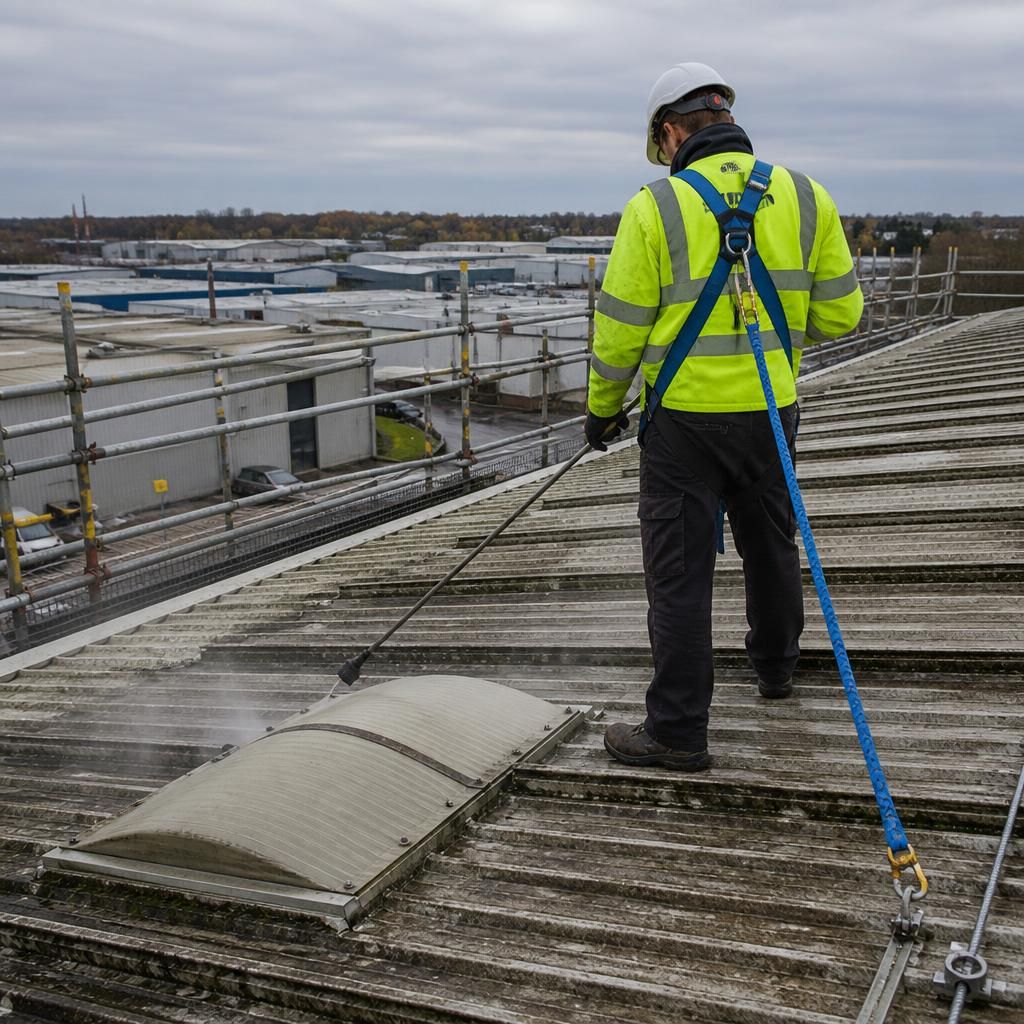
Safe roof access is a key control during moss and algae removal. Before work begins, the roof condition, pitch, fragile areas, roof lights, access points and surrounding ground are assessed so suitable equipment can be selected. Depending on the property, this may include scaffolding, edge protection, access platforms or other work-at-height equipment.
Operatives do not rely on ladders as a roof-working platform where safer access is required. They use suitable footwear and task-specific protective equipment, keep tools and hoses controlled, and work within defined exclusion zones to protect people below from falling moss, water or equipment. If the roof becomes unstable, slippery or affected by poor weather, work is paused and the method is reassessed.