
What factors should be considered when choosing between low pressure washing and soft washing for moss removal on different roofing types?
Choosing between low pressure washing and soft washing for roof moss removal depends on the roofing material, its condition, moss severity, drainage, and the risk of surface or water damage. Low pressure washing may suit robust, sound tiles where controlled rinsing is appropriate, while soft washing is generally preferable for delicate, aged, porous or fragile roofs because it uses a gentler application with a suitable treatment solution rather than relying on mechanical force.
The choice between low pressure washing and soft washing for moss removal should be based on the roofing material, the roof’s age and condition, the depth of moss growth, and the risk of disturbing tiles, coatings, flashings or underlying waterproofing. Low pressure washing can be suitable for robust, sound roof tiles when controlled rinsing is needed, whereas soft washing is generally the safer option for aged, porous, delicate or fragile roofing because it relies on a carefully selected treatment solution rather than force to break down moss and organic growth.
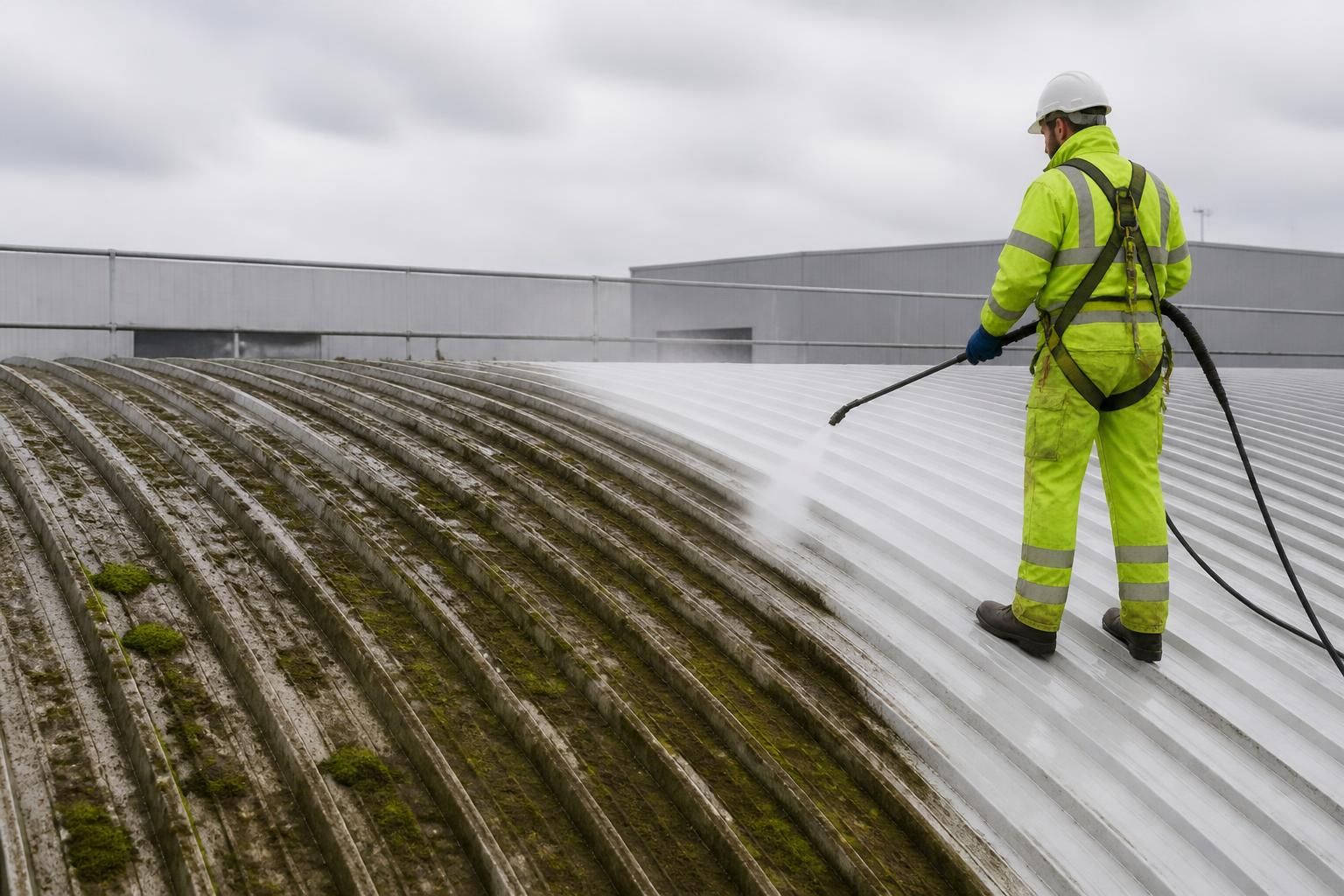
Low pressure washing and soft washing are not the same process. Low pressure washing uses reduced water pressure compared with conventional jet washing, but still relies partly on water flow and controlled mechanical action to dislodge moss, dirt and residue. Soft washing uses very low pressure to apply and rinse a treatment solution, commonly a roof-safe biocidal cleaner selected for the surface and the type of growth present. The solution works over time to kill or loosen moss, algae and lichen, allowing the residue to be removed with minimal abrasion.
The terms are sometimes used inconsistently, so the important issue is not the name of the method but the pressure, nozzle selection, chemical concentration, dwell time, rinsing technique and competence of the contractor. A roof should never be treated with a standard high-pressure jet simply because moss is firmly attached.
Roofing material is the first consideration.
- Concrete roof tiles: Sound concrete tiles are usually more tolerant of controlled low pressure cleaning than delicate materials. However, older tiles may have a weathered or porous surface, weakened edges, loose granular coatings or hairline cracking. A lower-pressure treatment and rinse, or a soft wash followed by natural weathering, may be more appropriate than aggressive removal.
- Clay tiles: Clay tiles can be durable but may be brittle, aged or affected by previous frost damage. Their profile, surface finish and condition should be checked before any mechanical cleaning. Soft washing is often preferable where the tiles are porous, historic or easily chipped.
- Natural slate: Slate can split, delaminate or become loose if it is struck, walked on incorrectly or subjected to unsuitable pressure. Soft washing is generally the lower-risk approach, with particular care around fixings, laps, ridges and verges. Any loose or damaged slates should be identified rather than forced clean.
- Coated or painted tiles: Mechanical cleaning can mark, strip or dull a coating. A compatible soft wash or carefully controlled low pressure method should be selected after checking the coating and testing an inconspicuous area.
- Metal roofing: Metal sheets and coated panels may tolerate gentle rinsing, but pressure can damage protective finishes, force water beneath laps or affect seals and fixings. The cleaning solution must be compatible with the metal and its coating, and runoff should be controlled to reduce the risk of corrosion or damage to surrounding materials.
- Roofing felt, membranes and other flat-roof systems: These surfaces may be more vulnerable to puncture, lifting, seam damage and water ingress. Mechanical moss removal should be limited, and the system should be assessed before treatment. Soft washing may be considered for suitable membranes, but only with a compatible product and careful rinsing. Standing water, blocked outlets and defects in the membrane must also be addressed.
- Thatch and specialist or historic roofs: These should not be treated as ordinary tiled roofs. Pressure washing may damage the structure, disturb the thatch or introduce water into vulnerable areas. Specialist advice and a method appropriate to the construction are required.
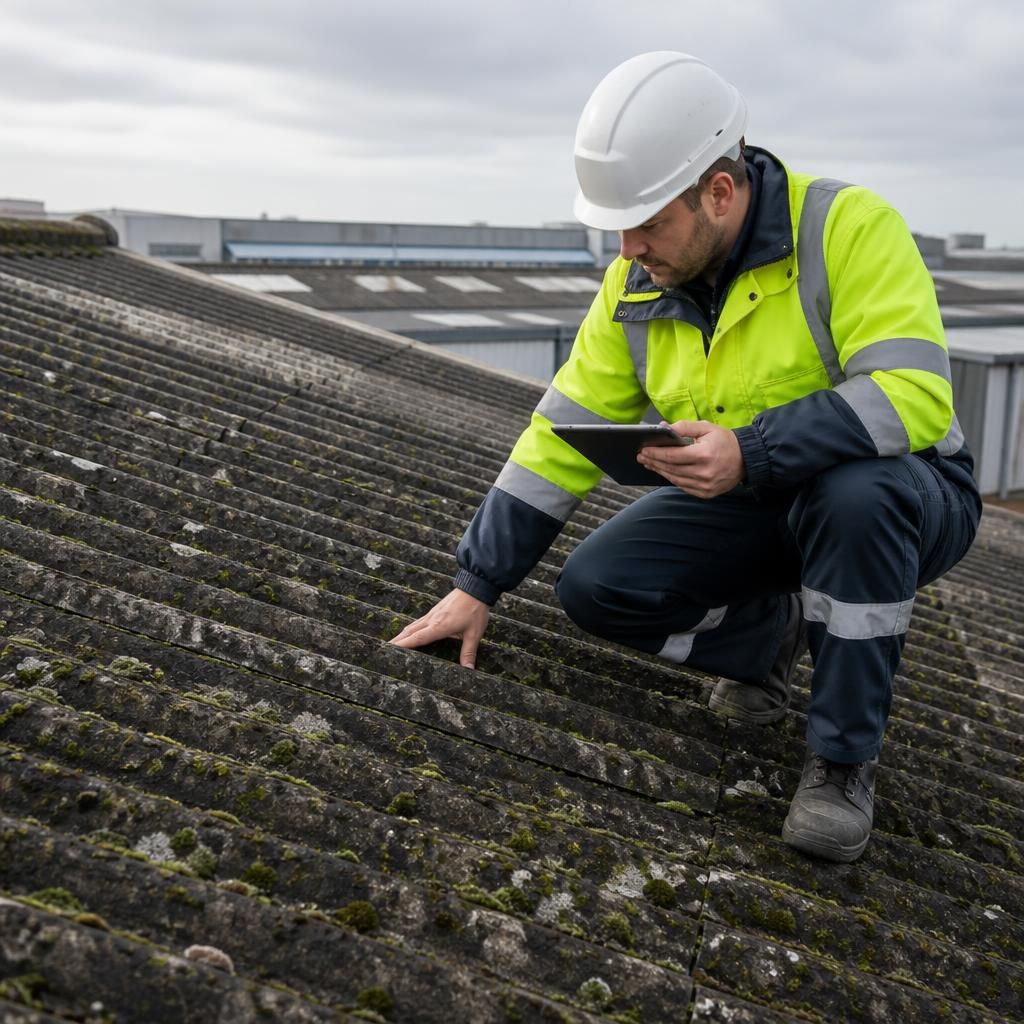
The roof’s condition can be more important than its material. A relatively robust tile can still be unsuitable for low pressure washing if it is cracked, loose, friable, heavily weathered or already losing its surface finish. Before selecting a method, the roof should be checked for slipped tiles, failed pointing, damaged ridges, open joints, defective flashings, exposed underlay, blocked gutters and signs of water entry. Moss can sometimes conceal defects, so cleaning should not proceed as though the roof were sound without a visual assessment.
Age is also relevant. Older roofs generally require a more conservative approach because fixings may have corroded, bedding mortar may have weakened and the surface may have become more porous. On a newer, well-maintained tiled roof with firmly seated tiles, controlled low pressure rinsing may be practical. On an older roof, a soft wash with limited manual removal of thick growth may reduce the risk of breakage and unnecessary surface wear.
The amount and type of growth affects the process. Light algae staining does not require the same treatment as thick moss with established root-like growth and heavy debris. Where moss is shallow and loose, gentle manual removal followed by a suitable treatment may be sufficient. Where growth is dense, it may need to be eased away in stages rather than blasted from the surface. Lichen can be particularly well attached and may require treatment time to loosen it; trying to remove it immediately with pressure can damage the roof while leaving biological residue behind.
Soft washing is often useful where the objective is to treat the causes of regrowth as well as improve the roof’s appearance. A suitable biocidal treatment can remain effective after the visible material has been removed, although it is not a substitute for correcting persistent shade, poor drainage, overhanging vegetation or damaged roof details. Treatment selection must take account of the roofing material, nearby plants, watercourses, rainwater goods and the manufacturer’s instructions.
Water ingress is a key risk when choosing a method. Even low pressure water can enter through defective laps, failed seals, damaged flashing, open ridge joints or poorly secured tiles. It can also travel beneath sheets and membranes if directed against overlaps or vulnerable details. The cleaning direction, nozzle distance and rinse volume should therefore be controlled, particularly around roof penetrations, skylights, valleys, chimneys and abutments. A method that is safe on the main field of a roof may not be suitable around its edges and details.
Drainage and runoff must be planned before cleaning. Moss, silt and treatment residue can block gutters, downpipes and surface drainage if they are allowed to accumulate. Gutters may need to be protected, monitored and cleared as part of the work. Runoff should be managed so that treatment solutions and loosened debris do not enter watercourses, contaminate sensitive planting or stain walls and paved areas. This is particularly important on commercial premises, where large roof areas can generate substantial runoff and where public access may continue around the building.
Access and safety also influence the decision. Moss makes roofs slippery, and walking on many roof types can cause more damage than the cleaning method itself. Work should be planned using suitable access equipment, edge protection and fall-prevention measures rather than relying on unsupported roof access. Fragile roof areas, rooflights and asbestos-containing materials require additional controls. If asbestos cement or another hazardous material is suspected, it should be identified and managed under the appropriate procedures; ordinary pressure washing is not a suitable response.
A practical method-selection process includes:
- Identifying the roofing material, finish, age where known and any manufacturer or building requirements.
- Inspecting for cracks, movement, loose components, failed joints, water entry and fragile areas.
- Assessing whether the growth is moss, algae, lichen or a combination, and how firmly it is attached.
- Checking the likely effect of water and treatment products on tiles, coatings, metals, membranes, render, glazing and surrounding surfaces.
- Testing the proposed method and product in a discreet area to confirm that it cleans effectively without unacceptable marking, colour change or surface damage.
- Choosing the lowest effective pressure and avoiding concentrated force at laps, edges, flashings and roof penetrations.
- Protecting access routes, vegetation and drainage systems, and arranging the collection or controlled disposal of loosened debris.
- Agreeing whether the work is intended as moss removal only or includes a follow-up treatment designed to reduce regrowth.
In many cases, the most suitable approach is a combination of methods rather than a strict choice between them. Thick moss may be gently removed by hand, a compatible treatment may then be applied, and low pressure rinsing may be used selectively where the roof can safely tolerate it. Other roofs may need treatment and natural weathering, with only loose residue removed, because forcing every mark from a fragile or aged surface would create unnecessary risk.
Low pressure washing is therefore not automatically safe, and soft washing is not automatically suitable for every roof. The treatment must be compatible with the material, applied at the correct strength and controlled so that it does not damage the roof or surrounding environment. Where the roof is fragile, historic, heavily weathered or affected by suspected defects, a condition-led assessment should take priority over achieving immediate visual uniformity.
For commercial and industrial premises, the method should also reflect the roof’s function, scale, access arrangements and maintenance history. A documented inspection, agreed treatment specification and suitable controls for runoff and public safety help ensure that moss is removed without creating avoidable damage or disruption. Regular inspections and timely treatment can then reduce the need for more aggressive cleaning in the future.
Choosing between low pressure washing and soft washing for roof moss removal depends first on the roof’s material and condition, not simply on how much moss is present. Sound concrete tiles may tolerate carefully controlled rinsing, while aged clay tiles, natural slate, coated surfaces and roof membranes usually require a gentler treatment-led approach.
Before work begins, the roof should be checked for cracked or loose tiles, failed pointing, damaged flashings, open laps, fragile coatings and signs of water ingress. Low pressure washing can still force water beneath defective areas, whereas soft washing reduces mechanical impact but must use a treatment compatible with the roofing material and surrounding surfaces.
Where thick moss is firmly established, gentle manual removal followed by a suitable biocidal treatment may be safer than trying to dislodge everything with water pressure. A discreet test area can confirm whether the proposed method causes marking, colour change, coating loss or other damage before the full roof is treated.
Request a roof assessment for moss removal
Request a roof assessment from Encanto Exterior Cleaning to identify the safest moss removal method for your roofing material, its condition and surrounding drainage. We can recommend whether low pressure washing, soft washing or a combination of treatment-led methods is appropriate.