
What environmental factors contribute to moss and algae growth on roofs?
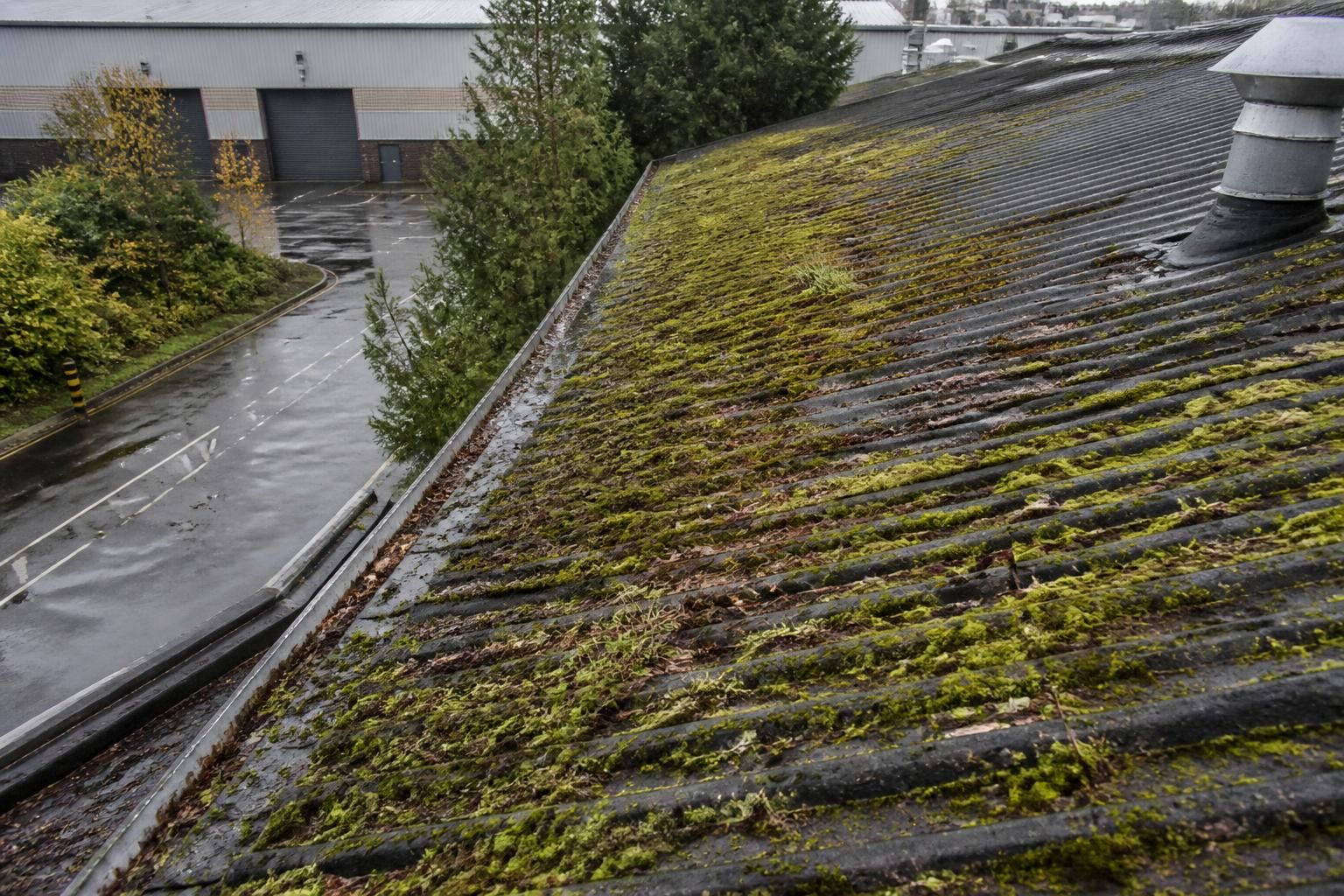
Moss and algae growth on roofs is encouraged by persistent moisture, limited sunlight, high humidity, mild temperatures and organic debris such as leaves. Overhanging trees, north-facing or shaded roof slopes, poor drainage and nearby vegetation can keep roof surfaces damp for longer, allowing these organisms to establish and spread.
Moss and algae growth on roofs is primarily caused by persistent dampness, limited sunlight, high humidity, mild temperatures and the build-up of organic material. These conditions allow spores to settle, retain moisture and establish on roofing surfaces. The problem is more likely where water drains slowly, roof slopes remain shaded or leaves and other debris collect around tiles, gutters, valleys and roof details.
Moisture is the main contributing factor. Moss needs a consistently damp surface to grow, while algae can spread across areas that remain wet for extended periods. Rainfall, condensation, mist and overnight dew can all contribute to surface moisture. If a roof dries quickly after wet weather, growth is less likely to become established. Where water remains trapped between tiles, in surface irregularities or beneath accumulated debris, moss and algae have more opportunity to develop.
Drainage problems can therefore have a direct effect on biological growth. Blocked gutters, overflowing downpipes, damaged valleys and poorly directed rainwater can keep sections of the roof wet. Water may also run repeatedly over the same area where a gutter joint is leaking or where a roof edge discharges incorrectly. These localised problems often explain why moss or algae is concentrated around particular elevations rather than spread evenly across the whole roof.
Reduced sunlight and shade create favourable conditions. North-facing roof slopes generally receive less direct sunlight in the UK, especially during the shorter days of autumn and winter. Roofs shaded by taller buildings, parapets, plant equipment, boundary structures or nearby trees may experience the same effect. Limited sunlight slows evaporation, so the surface remains damp for longer after rain or overnight condensation. Shade alone does not cause moss or algae, but it becomes significant when combined with poor airflow and regular moisture.
Overhanging trees can affect a roof in several ways. Branches reduce sunlight and restrict air movement, while falling leaves, needles and small twigs create a layer that holds moisture against the roof. Organic debris also provides nutrients as it breaks down. It can collect in valleys, behind roof plant, around skylights and at parapet edges, creating small damp zones where moss is able to take hold. Vegetation close to a building may also increase the amount of windborne material and spores reaching the roof.
Humidity and local weather conditions also influence growth. High humidity reduces the rate at which wet roofing materials dry. This is particularly relevant in exposed areas near vegetation, water, woodland or dense urban development where air circulation may be limited. Mild conditions can allow moss and algae to remain active for longer, whereas prolonged freezing or very dry weather may slow visible growth. Seasonal weather patterns often explain why biological staining becomes more noticeable after a wet autumn and winter.
Air movement is an important but sometimes overlooked factor. A roof with good exposure to wind can dry more quickly, although strong winds may also deposit leaves and spores. Conversely, enclosed roof areas between buildings or behind parapets may have little ventilation. Flat and low-pitched roofs can be particularly susceptible to surface contamination where ponding water, blocked outlets or inadequate falls prevent effective drainage. The roof design and drainage arrangement should be assessed alongside the visible growth rather than considering the staining in isolation.
The condition and texture of the roofing material affect how easily growth becomes established. Older tiles may have a weathered, porous or roughened surface that holds water and organic particles. Cracks, failed coatings, open joints and surface degradation can create additional points where moisture collects. Concrete tiles, clay tiles, slate and coated metal can all develop moss or algae, although the appearance and cleaning requirements differ. A surface that looks similar from ground level may need a different cleaning approach depending on its material, age, condition and detailing.
Roof pitch also affects moisture retention. Steeper slopes normally shed rainwater more effectively, while shallow pitches and nearly flat areas may retain water and debris. However, pitch is not a reliable indication of risk on its own. A steep roof beneath dense tree cover, for example, may develop more growth than a clear, well-ventilated roof with a lower pitch. The interaction between slope, shade, drainage, surface condition and surrounding vegetation is more important than any single factor.
Algae and moss should also be distinguished from general dirt or pollution staining. Algae may appear as green, dark green, grey or black discolouration and can spread as a thin film across larger areas. Moss is usually more raised and fibrous, forming visible tufts or mats. Lichen can attach firmly to the surface and may be associated with long-standing dampness and airborne particles. These organisms can occur together, but each responds differently to cleaning and treatment. Identifying the type and extent of growth helps determine whether a roof needs physical removal, a specialist treatment, or both.
Building use and surrounding activity can add to the environmental load on a commercial roof. Dust, soot, construction residue, bird fouling and airborne organic material can provide deposits in which moisture is retained. Roofs close to busy roads, industrial areas or active construction sites may require more frequent inspection because surface contamination can accumulate even where shade is limited. This does not mean that pollution alone causes moss or algae, but it can contribute to a surface that stays dirty and damp.
Practical checks should focus on the conditions that allow growth to return:
- Inspect gutters, outlets, valleys and downpipes for blockages, leaks and standing water.
- Check whether overhanging branches are reducing sunlight or depositing leaves and needles.
- Look for shaded elevations, enclosed roof areas and locations with poor air circulation.
- Assess damaged, porous or deteriorating tiles, slates, coatings and joints.
- Identify recurring water run-off from plant, parapets, roof edges or defective rainwater goods.
- Record whether growth is isolated to particular slopes or concentrated around roof details.
Removing visible growth without addressing the underlying conditions may only provide a temporary improvement. Long-term control normally involves clearing organic debris, correcting drainage defects where possible, reducing avoidable shading, maintaining gutters and selecting a suitable roof treatment. Any work should take account of the roofing material and the risk of damage from excessive pressure, aggressive brushing or unsuitable chemicals. On commercial and industrial premises, safe access, protection of occupants and control of run-off are also essential parts of the assessment.
Environmental factors cannot always be eliminated, particularly on shaded roofs or buildings surrounded by mature trees. However, regular inspections and planned maintenance can reduce the time that moss and algae remain undisturbed. Understanding why growth has developed allows the cleaning method and prevention plan to be matched to the roof’s actual exposure, drainage and condition rather than relying on a single treatment for every property.
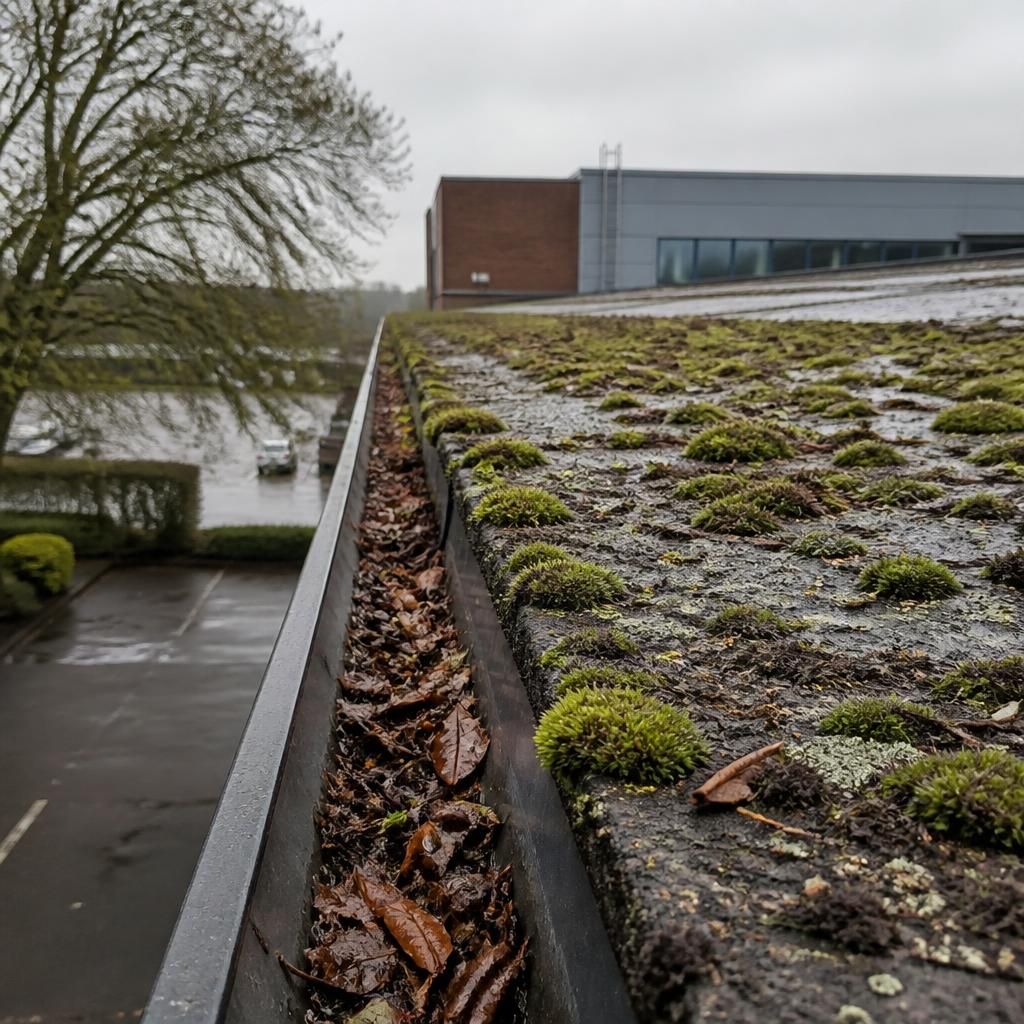
Persistent moisture is the main environmental factor behind moss and algae growth on roofs. Shaded slopes, overhanging trees, blocked gutters and poor drainage slow evaporation, leaving the roofing surface damp for longer after rain, dew or condensation.
Leaves, needles and other organic debris can make this worse by holding moisture against tiles and collecting in valleys, around roof details and beside parapets. Clearing debris and correcting drainage issues helps the roof dry more effectively, reducing the conditions that allow moss and algae to return after cleaning.