
What are the most effective methods for removing moss and algae from different roofing materials?
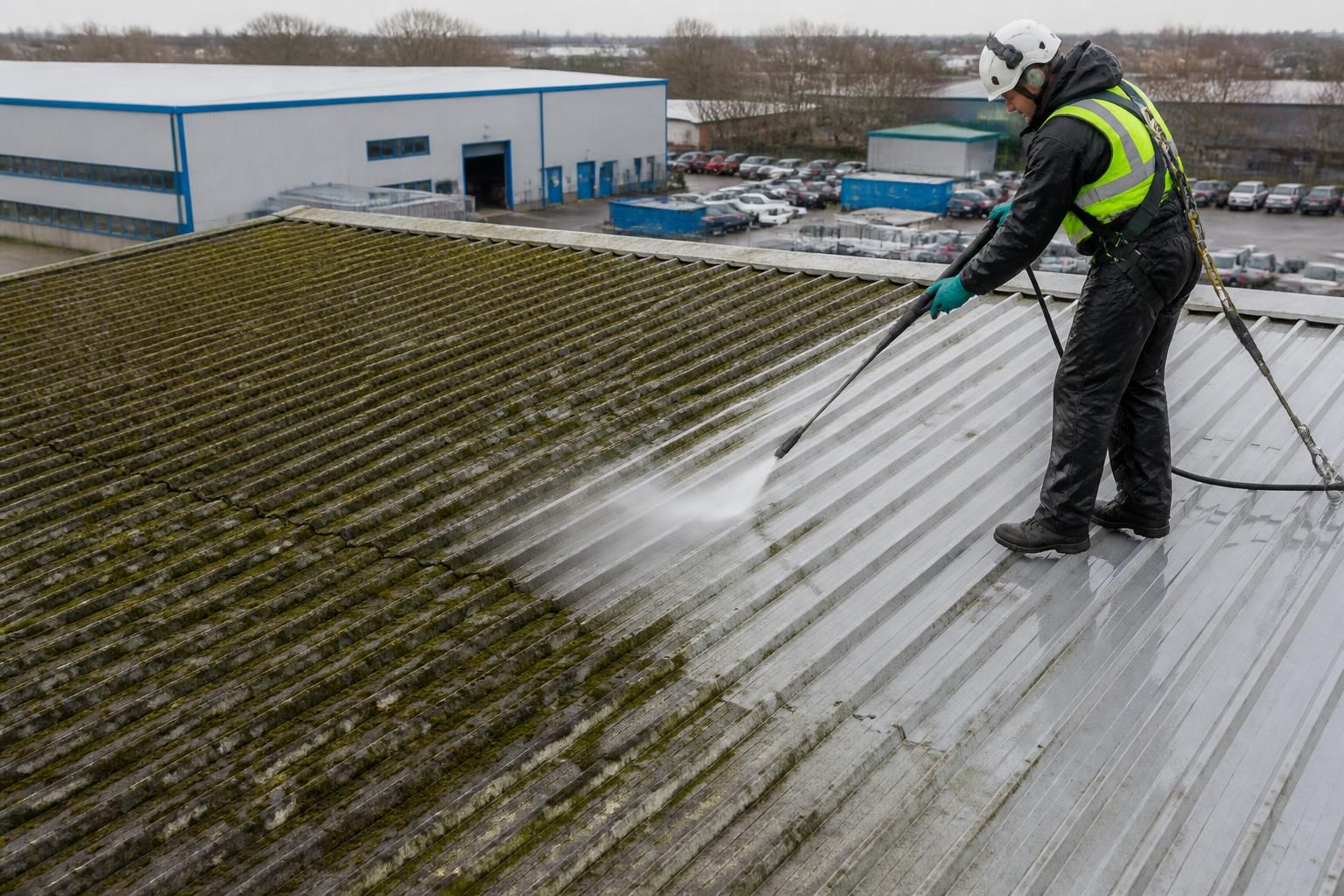
The most effective method depends on the roofing material and its condition: soft washing with a suitable biocidal treatment is generally appropriate for concrete and clay tiles, while controlled low-pressure cleaning or specialist treatment is safer for slate, metal and delicate or coated roofs. Moss should be loosened and removed without aggressive pressure, followed by a compatible treatment to kill remaining algae and spores while protecting the roof surface.
The most effective moss and algae removal method depends on the roofing material, its condition and the type of growth present. In most cases, the safest approach is to remove loose growth mechanically with minimal disturbance, then apply a compatible soft-wash or biocidal treatment to deal with remaining spores and staining. Concrete and clay tiles usually tolerate controlled cleaning, whereas slate, metal, coated systems and older or damaged roofs require lower-impact techniques and more careful chemical selection.
Concrete roof tiles
Concrete tiles are relatively robust, but excessive pressure can still strip surface coatings, expose the aggregate, force water beneath laps or damage weakened areas. Loose moss is normally removed using hand tools or a controlled low-pressure rinse, working from the ridge towards the eaves so water is not driven underneath the tiles. A suitable biocidal treatment can then be applied to kill residual moss, algae and lichen.
Where the tiles are sound and the surface permits it, a carefully controlled pressure-washing process may be appropriate. The pressure, nozzle, distance and direction of application should be adjusted to the roof rather than using a fixed setting. Older concrete tiles with erosion, cracking or previous coating failure are better treated with a gentler soft-wash method.
Clay roof tiles
Clay tiles can be durable but may be brittle, porous or affected by age and frost damage. Aggressive pressure washing can remove the weathered surface, damage the tile or disturb the mortar at ridges and verges. Moss should therefore be loosened carefully, with particular attention to cracked tiles and vulnerable edges.
A low-pressure rinse or soft wash, followed by a clay-compatible biocide, is commonly more suitable than forceful cleaning. Treatment is especially useful where algae and lichen have left staining after the visible moss has been removed. Any replacement tiles should be identified before work begins, as walking on old clay roofing can cause breakage.
Natural slate
Slate requires a conservative approach because individual slates can split, delaminate or become displaced when subjected to impact or excessive water pressure. Cleaning should normally involve manual removal of established moss, followed by a low-pressure application of a treatment that is confirmed as suitable for natural slate.
Pressure should not be directed beneath slate courses, around exposed fixings or into defective flashing. The condition of the nails, hooks, ridges, valleys and underlay also matters. If the slate is already deteriorating, cleaning may reveal defects that were hidden by moss, so a visual roof inspection is an important part of the process. Damaged slates should be repaired or replaced by a suitably qualified roofing professional where necessary.
Metal roofs
Metal roofing is generally cleaned using a low-pressure rinse and a compatible treatment rather than abrasive methods. Moss often develops around laps, fixings, rooflights, shaded edges and areas where debris remains damp. High pressure can remove protective coatings, damage sealants, bend thin panels or drive water into joints.
The treatment must be suitable for the particular metal and coating. Galvanised steel, aluminium, zinc, painted panels and plastisol-coated systems do not all respond in the same way to cleaning products. Chloride-rich or highly corrosive products should be avoided, and chemical run-off must be controlled to protect gutters, adjacent cladding and drainage components. Where surface corrosion is present, cleaning alone will not restore the protective finish; remedial coating or repair may be required.
Profiled sheets and coated cladding
Industrial and commercial roofs made from profiled metal sheets or coated panels should be assessed for coating condition, sealant failure, corrosion and safe access before cleaning. A soft wash or low-pressure clean is usually preferable to blasting the surface. Equipment should not be dragged across panels, and operatives should avoid unsupported areas, rooflights and fragile translucent sheets.
Cleaning products need to be compatible with the coating and surrounding construction materials. A small test area can help confirm whether the treatment causes colour change, chalking or damage before the full application. Any areas where moss has entered laps or blocked drainage should be cleared without lifting or deforming the sheets.
Roof membranes, felt and other low-slope systems
Single-ply membranes, asphalt, felt and other flat-roof coverings are particularly vulnerable to puncture, abrasion, standing water and chemical incompatibility. Established moss should be removed by hand or with a very gentle technique, using equipment and treatments approved for the specific membrane. Pressure washing is often unsuitable, particularly where seams, outlets or edge details are exposed.
Drainage outlets and gutters should be cleared so that treatment water does not remain ponded on the roof. The source of persistent growth should also be addressed, such as blocked outlets, overhanging vegetation, poor falls or shaded areas. If the membrane is lifting, cracked or badly weathered, remedial advice should take priority over cosmetic cleaning.
Painted, sealed or previously treated roofs
Existing coatings can change how a roof responds to cleaning. Strong pressure may cause flaking or expose the substrate, while an incompatible chemical can soften, discolour or strip the finish. The cleaning method should therefore be based on the coating manufacturer’s guidance where available. Testing an inconspicuous area is advisable, particularly on coloured or recently refurbished roofs.
It is important to distinguish between removing organic growth and removing failed paint or protective coating. Moss and algae can be treated without unnecessarily removing a sound finish, but a roof with widespread coating failure may need a separate preparation and refurbishment specification.
Why soft washing is often used after physical removal
Physical cleaning removes the visible growth, but small roots, spores and staining can remain in pores, joints and surface irregularities. A compatible soft-wash or biocidal treatment helps break down this remaining organic matter without relying on damaging pressure. The product, dilution, dwell time and rinsing requirements should be selected for the roofing material and used in accordance with the manufacturer’s instructions.
Soft washing is not the same as applying a strong chemical indiscriminately. The treatment must be kept away from sensitive plants, watercourses, painted surfaces and materials that may corrode or discolour. Run-off should be managed, gutters protected or cleared, and surrounding areas rinsed where appropriate.
Factors that determine the correct method
- The roofing material, age, surface finish and manufacturer’s recommendations.
- Whether the roof is sound, cracked, porous, corroded, loose or already weathered.
- The type and thickness of growth, including moss, algae, lichen and embedded staining.
- The roof pitch, access arrangements, fragile areas and the condition of rooflights and flashings.
- The location of gutters, drainage outlets, vegetation, vehicles and other surfaces vulnerable to run-off.
- Whether the work is a one-off clean, part of planned maintenance or preparation for repair or coating.
Before cleaning, the roof should be inspected for defects and the method agreed around its weakest components. Afterward, gutters and downpipes should be checked, loose debris removed and any damaged areas reported. The most appropriate result is not necessarily the most visually aggressive clean; it is the method that removes the growth while preserving the roof’s weathering function and protective finish.
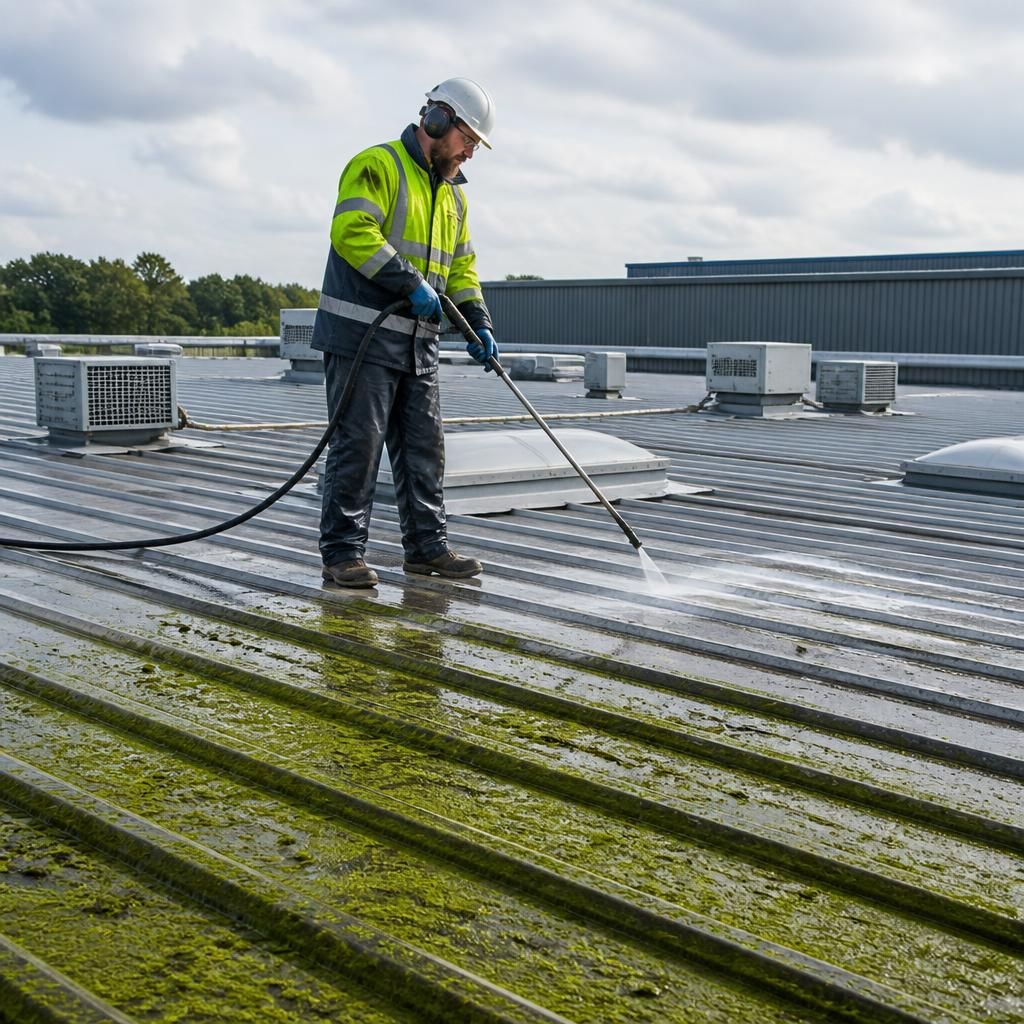
The most effective moss and algae removal method is determined by the roofing material and its condition, not simply by how much pressure can be applied. Concrete tiles may tolerate controlled low-pressure cleaning, while slate, metal, coated panels and roof membranes usually require manual removal, gentle rinsing and a compatible biocidal treatment.
Before work begins, the roof should be checked for cracked tiles, loose slates, corrosion, damaged coatings, fragile rooflights, exposed fixings and blocked drainage outlets. This assessment helps prevent water being forced beneath laps, coatings being stripped or weakened areas being damaged. A small test area can also confirm that the cleaning product is suitable for the surface.
After visible growth has been removed, a suitable treatment helps deal with remaining spores, staining and organic matter in joints and pores. Product selection, dwell time, run-off control and rinsing must be managed carefully, particularly near gutters, plants, cladding and other sensitive surfaces.
Arrange a Roof Moss and Algae Removal Assessment
Arrange a roof moss and algae removal assessment so we can inspect the roofing material, surface condition and drainage before recommending the safest effective cleaning method. We will identify any fragile or damaged areas and explain the treatment and maintenance options clearly.