
What are the long-term benefits of regular moss and algae removal?
Regular moss and algae removal helps protect roofs, paths and other exterior surfaces from moisture retention, staining and gradual material deterioration. It also improves safety and appearance, supports planned maintenance, and can help preserve the condition and value of the property over the long term.
Regular moss and algae removal is a planned maintenance measure that helps limit moisture retention, staining and surface deterioration on roofs, paths, façades and other external areas. Removing growth before it becomes established can preserve the condition of the underlying material, reduce safety risks and make future cleaning more manageable.
Protecting roofing materials and exterior surfaces
Moss holds moisture against a surface for extended periods. On roof tiles, this can contribute to persistent dampness, surface weathering and the gradual breakdown of more vulnerable materials. Algae and lichen can also leave staining and biological residues that become harder to remove when they are allowed to build up.
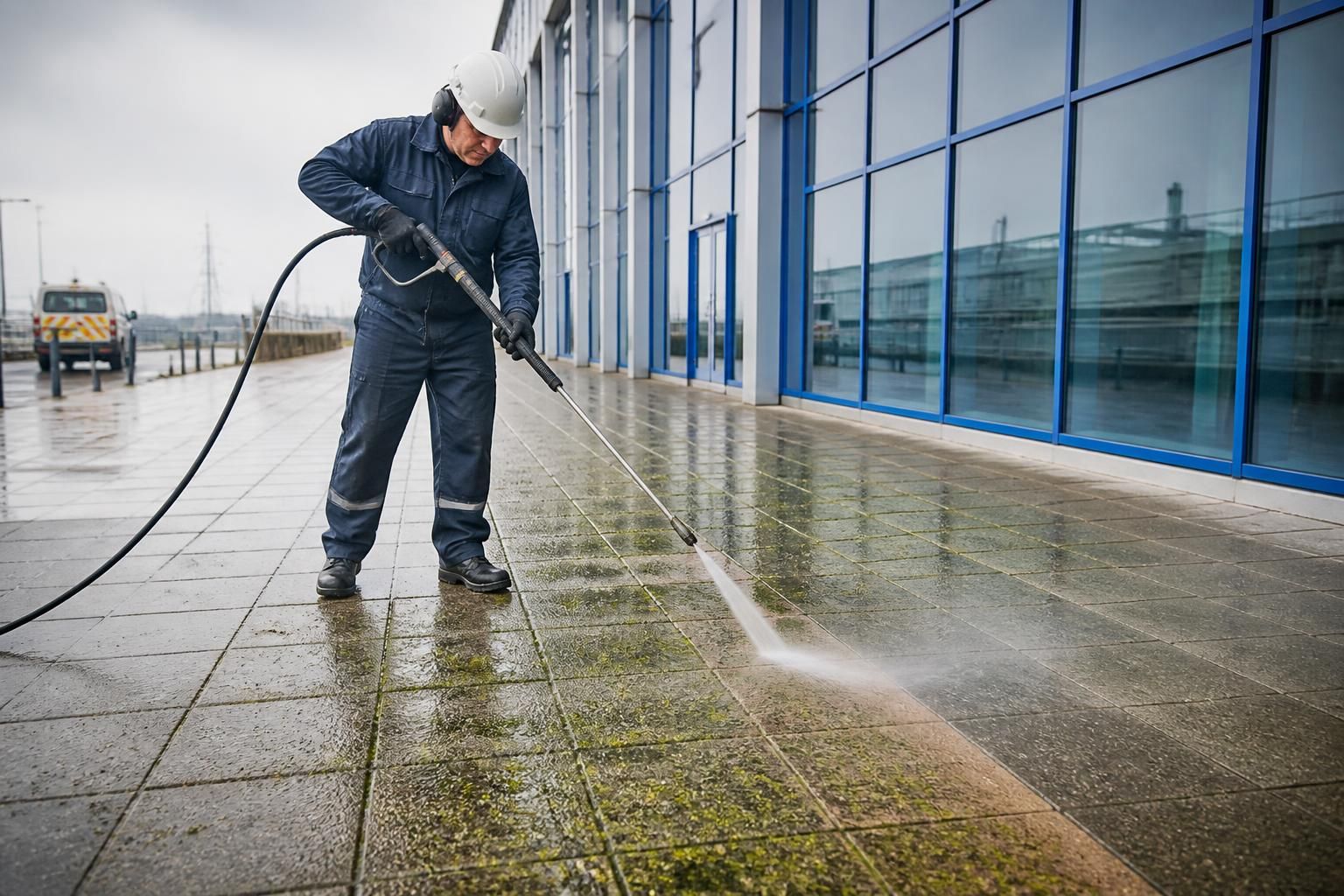
Routine removal helps prevent organic growth from becoming deeply rooted or spreading across larger areas. On paths, paving, walls and cladding, this can reduce the likelihood of surface discolouration and deterioration caused by repeated damp conditions. The correct cleaning approach remains important: pressure, steam, soft washing and treatment products should be selected according to the material, its condition and the location of the growth.
Reducing moisture-related problems
Established moss can interfere with the way rainwater runs across roof surfaces. Loose material may be carried towards gutters, outlets and drainage channels, where it can contribute to blockages. Keeping roof coverings and adjacent drainage areas clear supports more reliable water run-off and makes it easier to identify defects such as cracked tiles, failed pointing, damaged flashing or blocked gutters.
Moss and algae removal does not repair an existing leak or resolve a drainage defect. However, it can form part of a wider maintenance programme in which visible surfaces are cleaned and inspected, allowing underlying issues to be reported before they cause more extensive damage.
Improving safety underfoot
Algae, moss and lichen can make paths, steps, ramps, loading areas and other hard surfaces slippery, particularly when wet. Regular cleaning helps reduce the biological contamination that contributes to this risk. It is especially relevant for commercial premises, communal areas and sites where pedestrians, vehicles or deliveries use the same external surfaces.
Cleaning alone should not be treated as a permanent guarantee against slipping. Shaded areas, poor drainage, leaf debris and ongoing dampness can encourage regrowth. A durable maintenance plan should therefore consider water run-off, surface condition, local shading and the frequency with which the area is used.
Maintaining a professional appearance
Green growth, dark algae staining and lichen can make a roof, pavement, façade or entrance appear neglected even when the underlying structure remains sound. Planned removal helps maintain a cleaner and more consistent appearance across the site. This is useful for offices, retail premises, managed property, public buildings, industrial units and developments where external presentation forms part of day-to-day property management.
Regular maintenance is generally more controllable than allowing heavy growth and staining to accumulate. It can help avoid the need for more aggressive cleaning, although the appropriate method must always be assessed for the substrate and the level of contamination.
Supporting planned maintenance and inspections
Clear surfaces make it easier to inspect roof coverings, paving, joints, wall finishes and drainage details. During scheduled cleaning, defects may become more visible, including loose tiles, eroded joints, damaged sealants, standing water or areas where the surface is beginning to fail. Identifying these conditions early allows the appropriate roofing, building or drainage contractor to investigate them.
For commercial and industrial sites, planned removal can be incorporated into an ongoing external maintenance schedule. This helps coordinate cleaning with gutter clearance, roof inspections, façade maintenance, landscaping and other access requirements, reducing reliance on reactive call-outs.
Helping control long-term maintenance costs
Regular removal can reduce the likelihood that minor contamination develops into a more difficult cleaning or repair issue. Heavy, established growth may require additional preparation, treatment or access equipment, while prolonged dampness can increase the risk of deterioration to susceptible materials. Preventive cleaning cannot eliminate repair costs, but it can help property managers identify and address problems before they become more disruptive.
The most cost-effective interval depends on the surface and its surroundings. A shaded roof beneath trees may need attention more frequently than an exposed roof, while a busy path or entrance may require maintenance based on safety and presentation requirements. A site-specific inspection is more reliable than applying the same schedule to every property.
Reducing regrowth between visits
Removal is the first stage of long-term control rather than a complete solution on its own. Spores and microscopic residues can remain after visible growth has been cleared, particularly on porous or weathered surfaces. Suitable post-cleaning treatments may help slow regrowth, but their use must take account of the material, nearby vegetation, drainage systems and environmental controls.
Regrowth can also be limited by addressing the conditions that support it. Practical measures may include improving drainage, clearing overhanging vegetation, reducing persistent shade where possible, keeping gutters and outlets clear and removing leaf debris from surfaces. These measures work best when combined with appropriate cleaning and periodic inspection.
Preserving property condition and value
Well-maintained roofs, paths and façades contribute to the overall condition of a property. Keeping external surfaces free from heavy moss and algae can support routine inspections, reduce visible deterioration and help maintain the standard expected by occupants, visitors, tenants or prospective purchasers. It is not a substitute for structural maintenance, but it forms part of responsible property upkeep.
For larger premises, records of cleaning, treatments, inspections and identified defects can also support planned asset management. Documenting the work helps establish how quickly growth returns and whether changes to drainage, shade or site use are needed.
Choosing a suitable long-term approach
The best results come from matching the cleaning method and treatment to the surface rather than using the highest available pressure. Roof tiles, slate, delicate coatings, masonry, paving and cladding can respond differently to water pressure, heat and chemical treatments. Excessive pressure or unsuitable chemicals may remove finishes, drive water into vulnerable areas or cause avoidable damage.
- Assess the substrate, age, condition and previous repairs before cleaning.
- Remove loose growth and debris using a controlled method appropriate to the surface.
- Use soft washing, low-pressure cleaning, steam or other techniques where they provide safer control.
- Apply any treatment in accordance with the product requirements and site environmental controls.
- Check gutters, outlets, joints and surrounding areas after cleaning.
- Set future inspections according to the rate of regrowth and the risks associated with the site.
Regular moss and algae removal is therefore most effective as part of a wider exterior maintenance programme. It helps protect surfaces from persistent damp and biological build-up, improves underfoot safety and presentation, supports more useful inspections and can reduce the need for disruptive reactive work. The appropriate frequency and method should be reviewed whenever the surface condition, surrounding vegetation, drainage or use of the property changes.
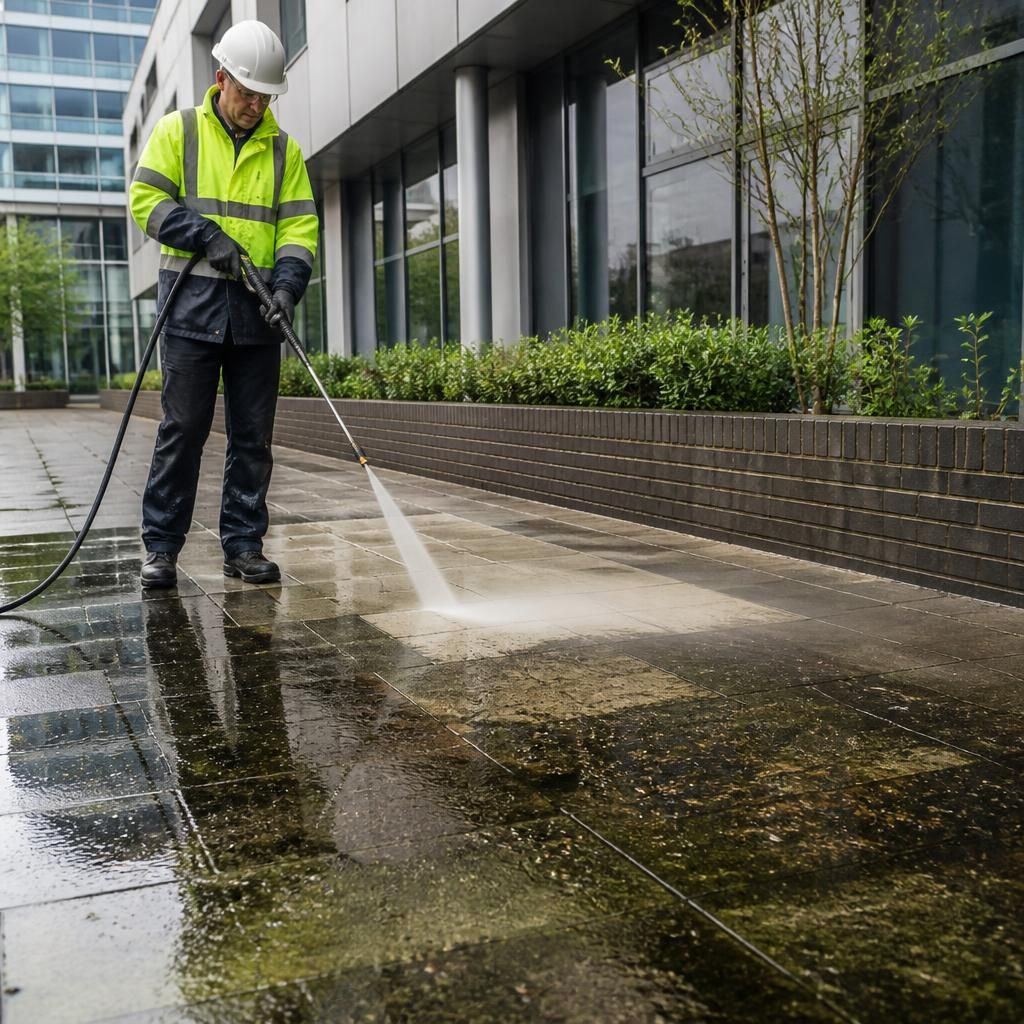
Regular moss and algae removal helps protect exterior surfaces by reducing the time they remain damp and covered by biological growth. On roof tiles, paving, paths and other porous materials, established growth can retain moisture, cause staining and make surface deterioration harder to identify. Removing it at planned intervals makes cleaning more manageable and allows defects such as damaged tiles, failed joints or poor drainage to be spotted earlier.
It also supports safer and more presentable premises. Moss, algae and lichen can create a slippery film on paths, steps, ramps and entrances, particularly in shaded or poorly drained areas. Routine cleaning reduces this contamination, although it should be combined with effective drainage, removal of leaf debris and suitable follow-up treatments to help control regrowth. The correct cleaning method must always be matched to the surface, its condition and the surrounding environment.