
What are the differences between low pressure and soft wash methods for moss and algae removal?
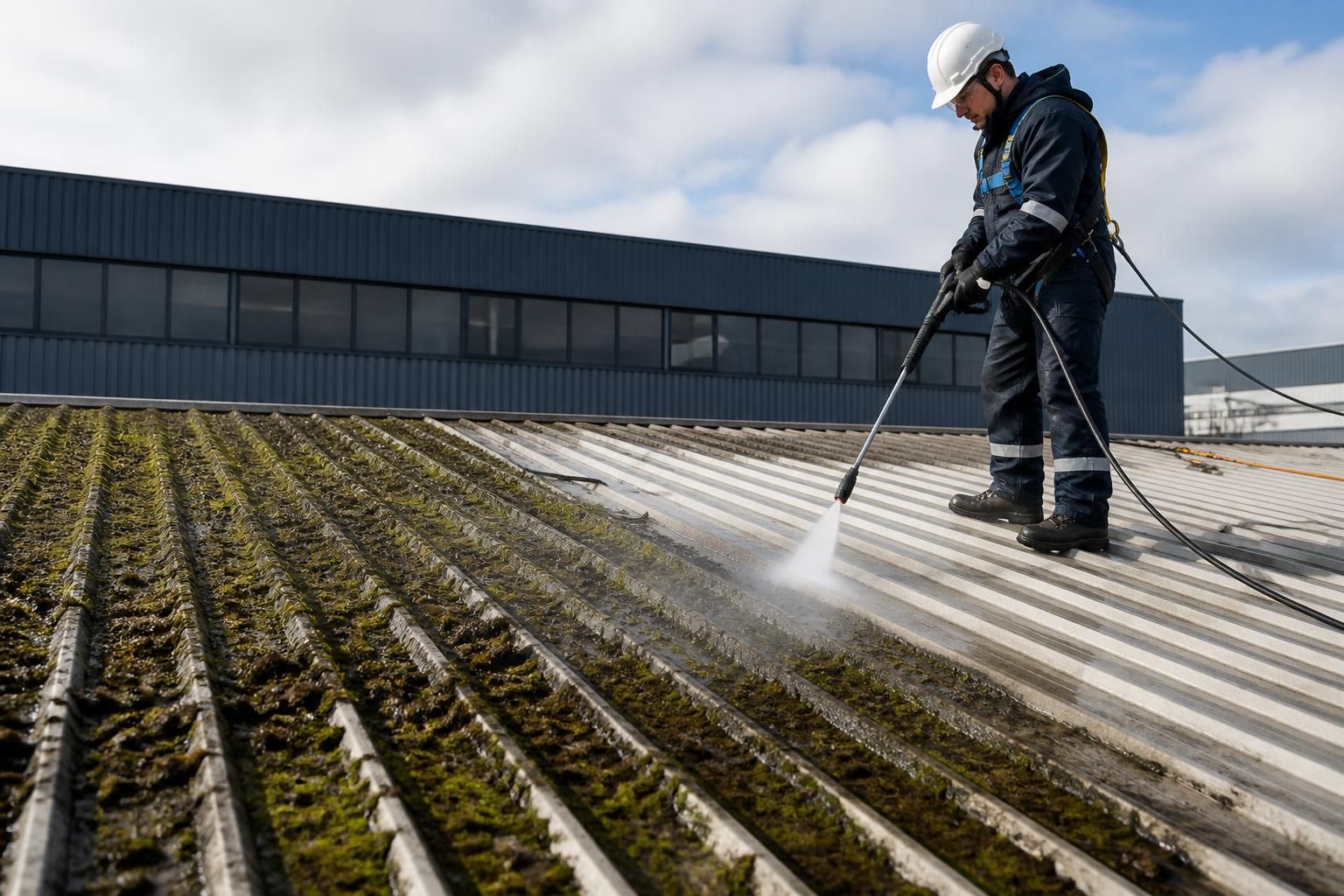
Low-pressure washing uses controlled water pressure to remove surface moss and algae, while soft washing combines very low pressure with a specialist cleaning solution to treat organic growth at its source. Soft washing is generally more suitable for delicate roof tiles and surfaces, whereas low pressure may be appropriate for tougher materials when carefully controlled by an experienced technician.
Low-pressure washing and soft washing are both controlled methods for removing moss and algae, but they work in different ways. Low-pressure washing relies mainly on water to loosen and rinse away organic growth, while soft washing uses very low water pressure alongside a specialist cleaning solution to break down and treat moss, algae and related staining. Soft washing is usually the gentler and more effective option for delicate or heavily affected roof surfaces, whereas low pressure can be suitable for robust materials and lighter surface contamination when applied by an experienced technician.
How low-pressure washing works
Low-pressure washing uses substantially less force than conventional high-pressure cleaning. The operator adjusts the pressure, water flow and nozzle selection to remove loose moss, algae, dirt and residue without unnecessarily stressing the surface. On suitable materials, this can provide a relatively straightforward way to clear visible growth and restore the appearance of paving, concrete, certain cladding systems and other durable external surfaces.
The method is primarily mechanical. Water is directed across the affected area to dislodge growth, after which the debris is rinsed away and collected or managed appropriately. If the moss has established firmly in joints, pores or surface imperfections, low-pressure washing may remove the visible growth without fully addressing the underlying spores. Regrowth can therefore occur unless a suitable treatment is applied afterwards.
Low pressure does not mean that every surface can safely be washed in the same way. Excessive flow, an unsuitable nozzle or directing water into vulnerable details can still damage coatings, force water beneath tiles or cladding joints, disturb pointing, or spread debris into gutters and drainage areas. The pressure must be selected according to the material, condition and construction of the surface.
How soft washing works
Soft washing combines very low-pressure application with a purpose-selected cleaning solution. The solution is allowed to dwell on the surface so that it can break down organic growth and staining. The treated material is then rinsed carefully, normally at low pressure, to remove the loosened residue.
Because the cleaning action comes largely from the solution rather than forceful water impact, soft washing can clean uneven and delicate surfaces with less risk of abrasion or displacement. It is commonly considered for roof tiles, coated surfaces, façades, render and other areas where aggressive mechanical cleaning could shorten the life of the material.
Soft washing is not simply a weaker form of pressure washing. The choice and concentration of the treatment, contact time, rinsing method and control of run-off all affect the result. Treatments must be compatible with the substrate and surrounding vegetation, glazing, metalwork and drainage systems. A responsible application includes protection of nearby areas and suitable management of any contaminated run-off.
Key differences between the two methods
- Primary cleaning action: low-pressure washing depends mainly on water movement and physical removal; soft washing depends mainly on a cleaning treatment, followed by a gentle rinse.
- Effect on organic growth: low pressure can remove loose or superficial growth effectively, while soft washing is designed to break down growth and staining that may be embedded in pores or surface irregularities.
- Risk to delicate materials: both methods are safer than high-pressure cleaning when correctly controlled, but soft washing generally places less mechanical stress on vulnerable tiles, coatings and aged surfaces.
- Need for treatment: low-pressure cleaning may need a separate biocidal or preventative treatment to reduce regrowth. Treatment is integral to most soft-wash systems, although it is not a guarantee that moss or algae will never return.
- Appearance immediately after cleaning: low pressure may provide a faster visible change where growth is loose. Soft washing can require dwell time and, on some surfaces, remaining staining may continue to fade after the initial application.
- Surface assessment: low-pressure washing is often selected for sound, durable substrates, whereas soft washing is more appropriate where the surface is weathered, porous, coated or easily disturbed.
Which method is suitable for roofs?
Roof cleaning requires particular care because tiles, slates, membranes, flashings, ridges, pointing and sealants can all respond differently to water and chemical treatment. Loose moss is often removed manually or with carefully controlled low-pressure rinsing, rather than by directing strong water at the roof. A soft-wash treatment may then be used to address residual algae, lichen staining and microscopic organic contamination.
Soft washing is often preferred for roof tiles because it reduces the risk of lifting tiles, damaging protective finishes or driving water beneath overlaps. However, the correct approach depends on the roofing material and its condition. A fragile, cracked or delaminating roof may require a different treatment from a sound concrete-tiled roof. Some surfaces may need dry removal, localised treatment or repair before any extensive cleaning is attempted.
Low-pressure washing can be appropriate where the roof covering is stable and the growth is readily removable, but the operator must avoid forcing water upwards beneath laps and joints. Water should also be kept away from vulnerable vents, rooflight details and electrical equipment unless these have been properly protected.
Which method is suitable for façades, paths and other surfaces?
On concrete, block paving and other robust hard surfaces, controlled low-pressure washing can be effective for removing surface algae, moss, dirt and loose deposits. The condition of joints, pointing and drainage should be assessed first. Soft washing may be preferable where staining has penetrated a porous surface, where the substrate is painted or coated, or where mechanical agitation could cause unnecessary wear.
For façades and cladding, the material, coating, height and access arrangements influence the decision. Low pressure may be suitable for some durable cladding systems, while soft washing can help reduce the risk of scratching or coating damage. Test cleaning in an inconspicuous area is good practice, particularly where the finish is aged, weathered or previously repaired.
Factors considered before selecting a method
- The type and age of the material, including whether it is porous, coated, painted, glazed or sealed.
- The condition of the surface, such as cracks, loose tiles, failing pointing, corrosion, delamination or existing water ingress.
- The type of organic growth present, including loose moss, algae film, lichen and established root-like attachment.
- The location of the growth and the risk of water entering joints, cavities, roof spaces or building services.
- The height, accessibility and safe working requirements of the area.
- The proximity of plants, ponds, drainage channels, vehicles, glazing and sensitive metalwork.
- The required finish, whether the priority is immediate removal, stain reduction or longer-term control of regrowth.
Why an assessment matters
There is no universally safe pressure or treatment for every roof and exterior surface. A site assessment identifies the substrate, confirms how securely the growth is attached and highlights defects that cleaning could expose or worsen. It also allows the work method, access equipment, protection measures and run-off controls to be planned before cleaning begins.
Where moss is growing because of blocked drainage, persistent shade, overhanging vegetation or retained moisture, cleaning alone will not remove the cause. Gutters and outlets may need clearing, nearby vegetation may require management and damaged tiles, joints or coatings may need attention. These factors should be addressed as part of the maintenance plan rather than increasing cleaning pressure.
Which method gives the longer-lasting result?
Longevity depends on the surface, local environmental conditions and the extent to which the cause of the growth is controlled. Low-pressure washing can produce a clean result where organic growth is loose and the surface is sound, but visible removal does not necessarily neutralise remaining spores or staining. Soft washing generally offers better treatment of residual organic contamination because the solution is intended to act beyond the immediately visible growth.
Neither method prevents regrowth indefinitely. Shaded, damp and poorly ventilated areas are naturally more likely to develop moss and algae again. Scheduled inspections, gutter maintenance, removal of leaf deposits and appropriate follow-up treatments can help extend the time between cleaning visits.
In practical terms, low-pressure washing is mainly a controlled rinsing and removal technique. Soft washing is a low-impact cleaning and treatment system. The safest choice is determined by the material and its condition, not by selecting the lowest possible pressure or the strongest available chemical. For commercial and industrial premises, the method should also be compatible with access plans, operational requirements, environmental controls and the need to keep surrounding areas safe and presentable.
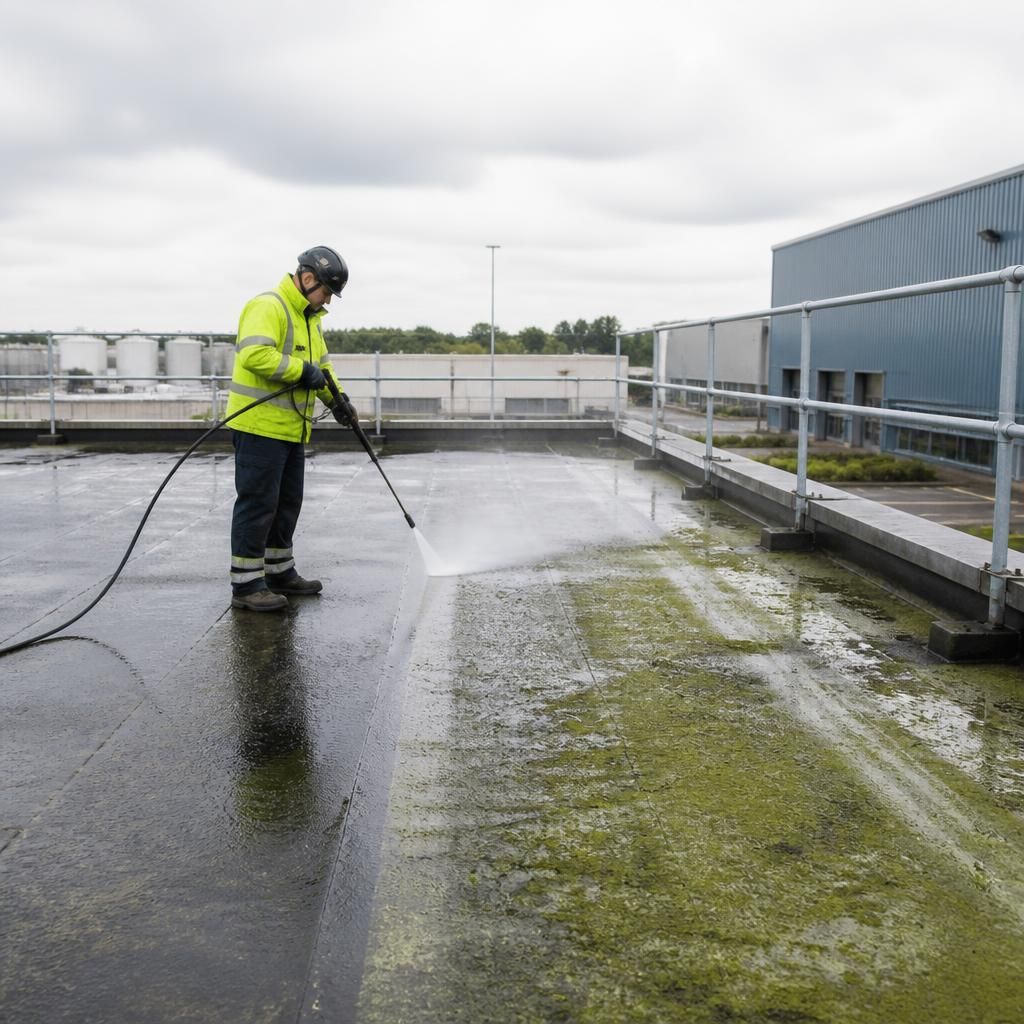
The main difference is that low-pressure washing removes moss and algae primarily through controlled water flow, while soft washing uses a compatible cleaning solution to break down organic growth before a gentle rinse. Soft washing therefore places less reliance on mechanical force and can be better suited to porous, coated, weathered or delicate surfaces.
Neither method should be selected by pressure alone. The substrate, surface condition, type of growth and risk of water entering joints or roof spaces must be assessed first. On roofs, loose moss may be removed carefully before a soft-wash treatment is applied to residual algae, lichen and staining. A small test area also helps confirm that the chosen treatment is suitable for the tiles, façade, cladding or paving.
Book a moss and algae removal assessment
Book a moss and algae removal assessment to confirm whether low-pressure washing, soft washing or a combination of methods is suitable for your roof or exterior surfaces. We will assess the material, condition, access requirements and surrounding areas before recommending a safe cleaning plan.