
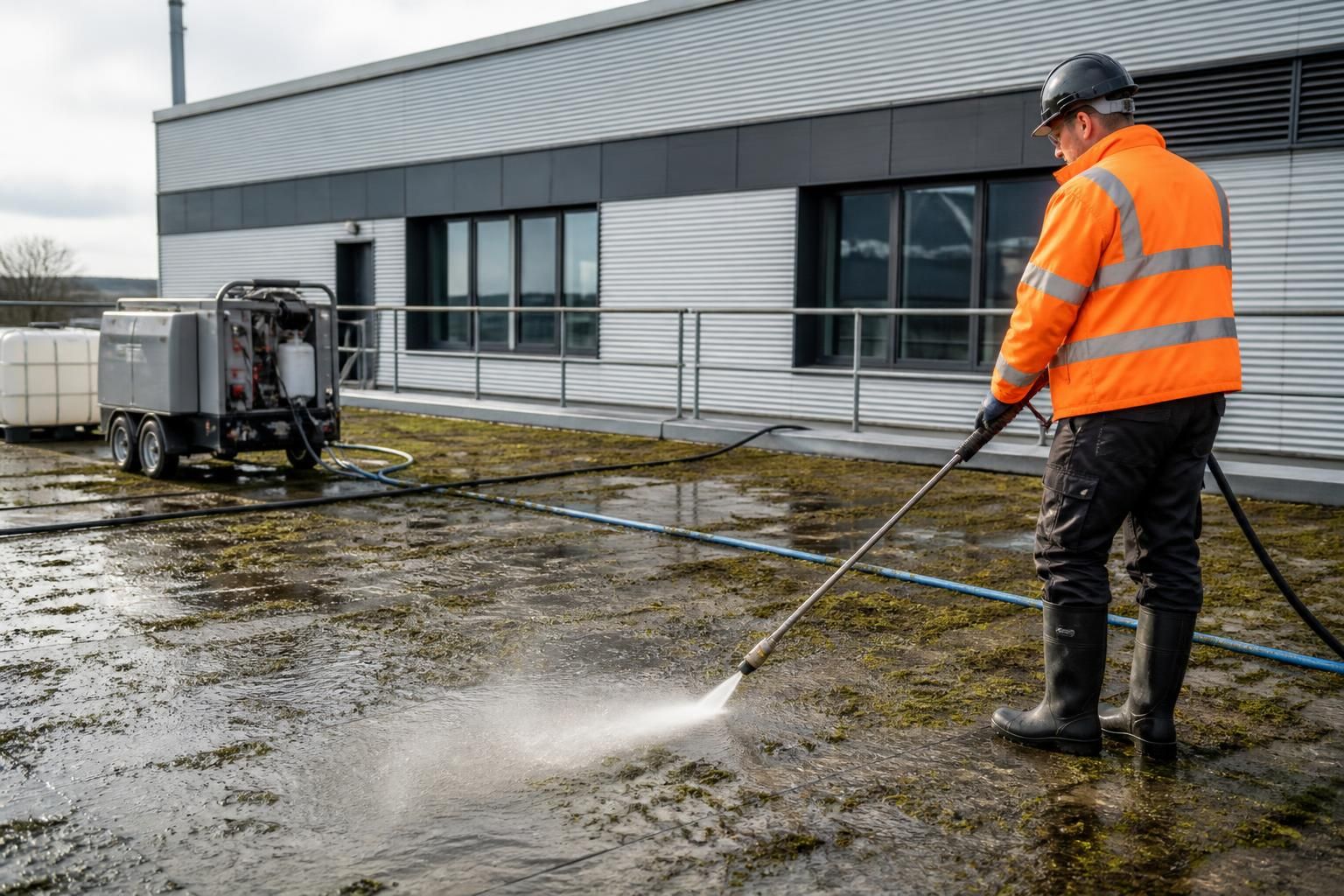
What are the costs associated with moss and algae removal services?
The cost of moss and algae removal services depends on the area and surface being cleaned, the level of growth, site access, required equipment and whether protective treatments or ongoing maintenance are included. A tailored site assessment provides an accurate quote, with separate consideration given to roofs, façades, paths, car parks and other large commercial surfaces.
The cost of moss and algae removal is determined by the surface area, type and condition of the surface, the severity of the growth, access requirements, cleaning method and any follow-up treatment. Roofs, façades, paths, car parks and other commercial surfaces each require a different assessment, so a reliable price should be based on a site survey or detailed photographs rather than a standard rate alone.
What is included in the price?
A professional quotation will normally account for the inspection, preparation, removal of moss and algae, collection or rinsing of loosened material, application of any agreed treatment and a review of the finished surface. The scope should also make clear whether access equipment, traffic management, water supply, waste handling and any required reinstatement are included.
For commercial and industrial premises, the quotation may also cover method statements, risk assessments, site inductions, coordination with other contractors and work scheduled around the client’s operating hours. These requirements can affect the overall cost even when the area to be cleaned is relatively straightforward.
Key factors that affect moss and algae removal costs
- Surface area: Larger areas generally require more labour, water, treatment product and time. Pricing may be assessed by the area, by the work required, or as part of a wider planned maintenance package.
- Surface material: Roof tiles, slate, concrete, paving, tarmac, render, cladding and painted surfaces have different cleaning tolerances. Delicate or weathered materials need a more controlled method, which can require additional preparation and slower application.
- Severity of growth: Light surface staining is usually less labour-intensive than thick moss, established algae, lichen, embedded organic matter or growth that has entered joints and drainage channels.
- Surface condition: Cracked tiles, loose pointing, damaged coatings, blocked gutters and degraded surfaces may need to be recorded before cleaning. Cleaning cannot correct pre-existing defects, and additional remedial work may be recommended separately.
- Access: Ground-level paths and open car parks are often easier to reach than roofs, courtyards, elevated façades or areas obstructed by plant, parked vehicles and street furniture. Roof access may require ladders, towers, powered access equipment or suitable edge protection.
- Site logistics: Restricted entrances, limited water availability, long hose runs, pedestrian routes, vehicle movements and the need to protect nearby buildings or landscaping can add preparation and supervision time.
- Cleaning method: Low-pressure cleaning, steam cleaning and soft washing have different equipment, labour and treatment requirements. The selected method should be appropriate for the material and growth rather than chosen solely on price.
- Working restrictions: Out-of-hours work, phased cleaning, noise limits, public access controls and weather-sensitive scheduling may increase the resources needed to complete the work safely.
- Follow-up protection: Biocidal treatments, algae inhibitors, moss prevention treatments or planned repeat visits are separate cost considerations unless they are included in the agreed scope.
How roof cleaning costs differ from ground-level cleaning
Roof moss removal commonly costs more than cleaning an accessible path or open hardstanding because it involves additional safety controls and access planning. The pitch, height, roof material, condition of the tiles, proximity to fragile features and method of removing debris all influence the quotation. Protecting gutters, outlets, glazing, vehicles and planted areas may also require extra preparation.
Paths, patios and car parks can still require specialist planning. Moss and algae may be present across joints, kerbs, ramps and drainage channels, while public or vehicle access may need to be managed during the work. Large paved areas can often be treated efficiently, but heavy staining, uneven levels and difficult water run-off can increase labour requirements.
Façades and cladding are priced according to the material, height, access equipment, staining and the need to control run-off. A surface that appears to need simple washing may require testing first to avoid damage to coatings, sealants, joints or adjacent materials.
Removal, treatment and maintenance are different services
Physical removal takes away existing moss and algae. A follow-up biocidal or specialist treatment helps address residual spores and surface contamination, although it is not a guarantee that regrowth will never occur. Preventive maintenance may include scheduled inspections, gutter clearance, repeat treatments and early intervention before growth becomes established.
When comparing quotations, check whether the price covers removal only or includes treatment and future maintenance. A lower initial price may not include access equipment, waste removal, protective measures or a return visit, making direct comparisons misleading.
What a site assessment should consider
- The measured or estimated area and the surfaces involved.
- The type, thickness and distribution of moss, algae or lichen.
- Roof pitch, height, access points and any fragile or damaged sections.
- Nearby windows, doors, vehicles, landscaping, drainage systems and sensitive equipment.
- Water, power and waste-handling arrangements.
- Required pressure limits, treatment dwell time and rinsing or collection arrangements.
- Health and safety controls, including exclusion zones and access equipment.
- Whether the work must be phased or completed outside normal operating hours.
- Any follow-up treatment, inspection or maintenance required after cleaning.
How to obtain an accurate quotation
Provide clear information about the site, the surfaces affected, access restrictions, operating hours and any known defects. Photographs can support an initial assessment, but an on-site inspection is preferable for roof work, larger commercial areas and properties where access or drainage is complicated.
Ask for the quotation to separate cleaning, treatment, access, waste handling and any optional maintenance. It should also identify exclusions, relevant safety arrangements and whether VAT applies. This provides a clearer basis for comparing proposals and avoids unexpected additions once work has started.
For a commercial property, the most economical option is not necessarily the lowest initial price. A suitable method, careful preparation and an appropriate preventative treatment can reduce the likelihood of surface damage, repeated emergency cleaning and disruption to the site. A tailored assessment allows the work to be specified accurately and the cost to reflect the actual condition and requirements of the premises.
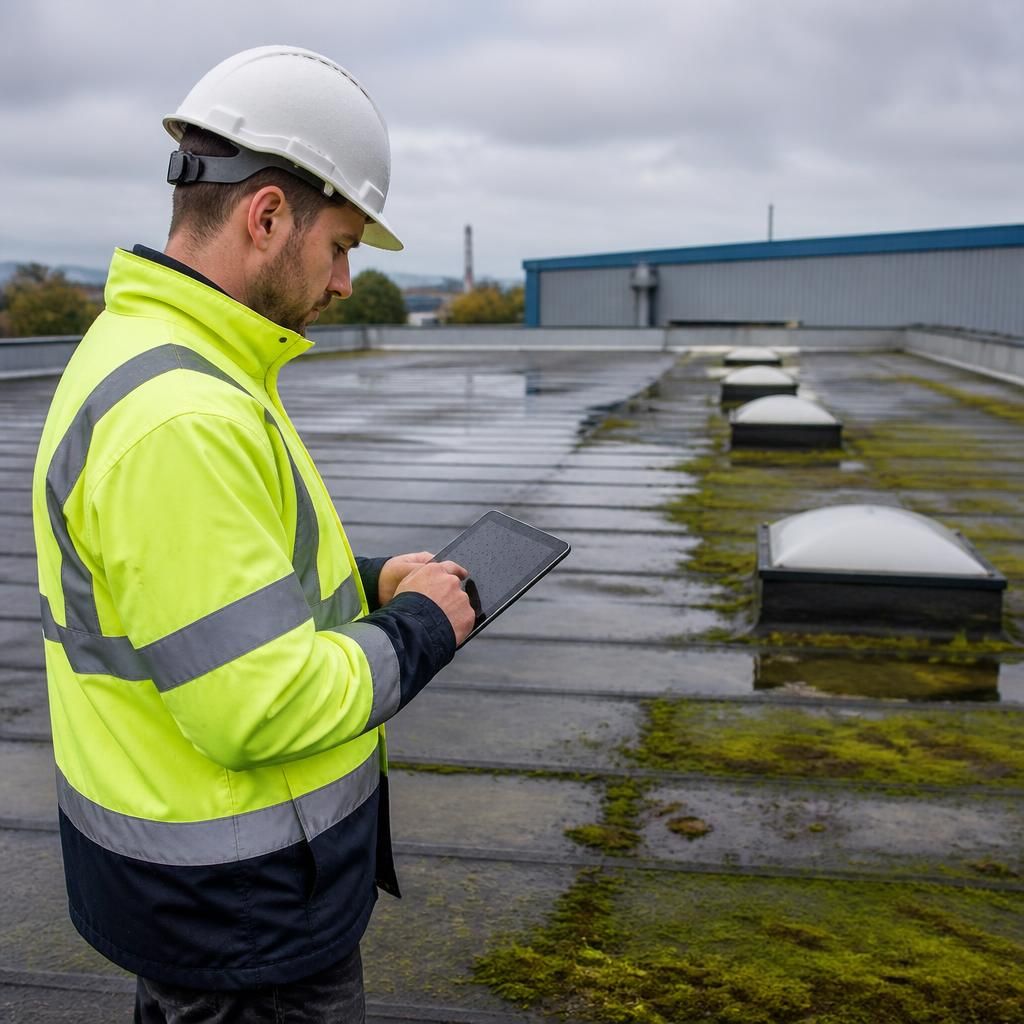
An accurate moss and algae removal price depends on a proper assessment of the site. The quotation should consider the surface area, material, severity of growth, access arrangements, drainage and the cleaning method required. Roofs, façades and large commercial surfaces may also need access equipment, exclusion zones, run-off controls and waste handling.
When comparing quotations, check whether the price includes preparation, removal, rinsing or collection, biocidal treatment, access equipment and any follow-up visit. Separating these items makes it easier to compare like-for-like proposals and avoid unexpected costs during the work.