
What are the benefits of using a soft wash method for removing moss and algae from roofs?
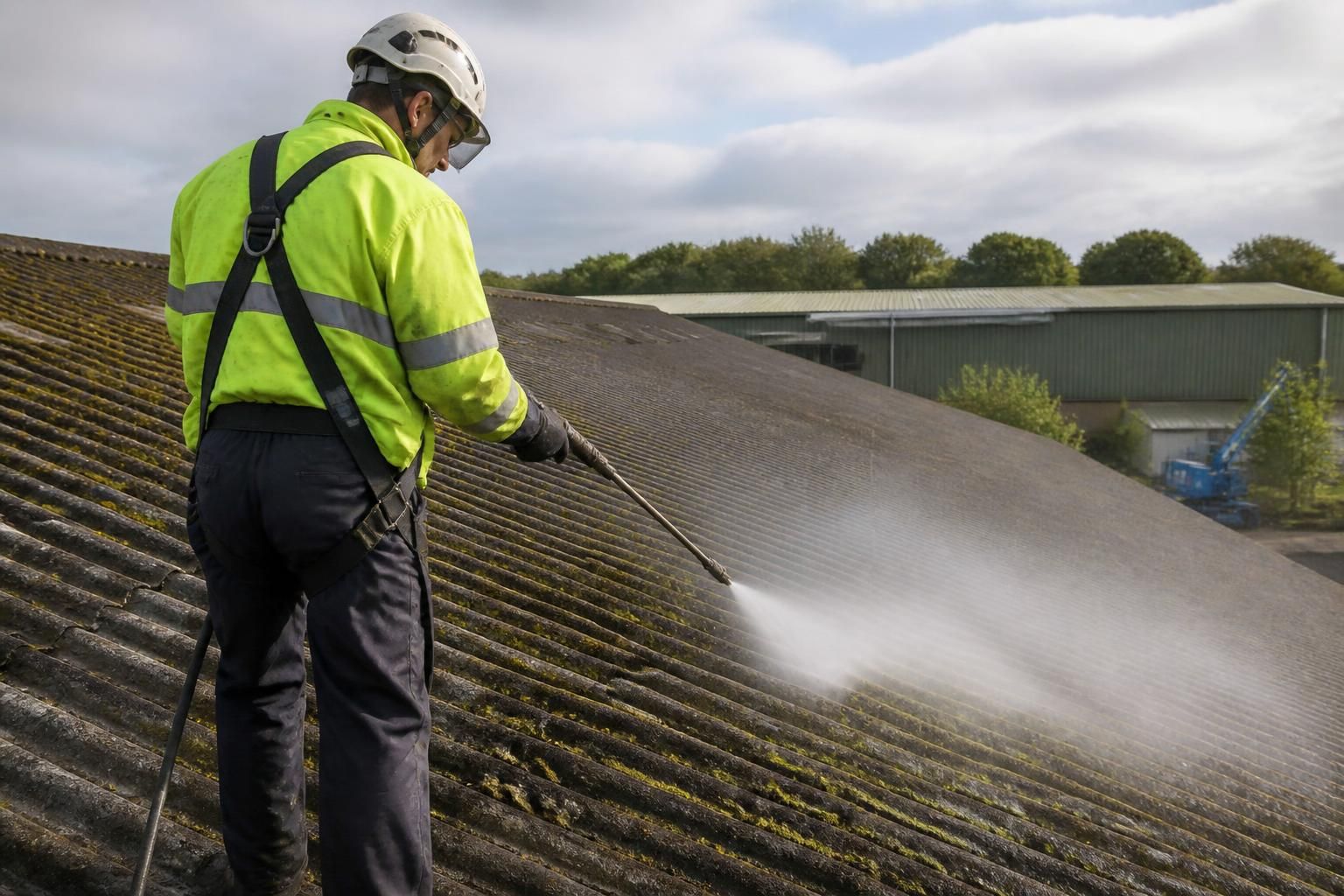
Soft washing removes moss and algae from roofs using low-pressure water alongside a suitable treatment, reducing the risk of damage associated with aggressive pressure washing. It can clean more gently, reach organic growth at its roots, help delay regrowth and protect roofing materials when the treatment is selected and applied appropriately.
Soft washing is a low-pressure roof-cleaning method that combines controlled water application with a suitable moss and algae treatment. Its main benefit is that it removes or loosens organic growth without subjecting roof tiles, slates, pointing or protective coatings to the force associated with high-pressure washing. When the roof condition and treatment are assessed properly, soft washing can provide a gentler and more effective approach to moss and algae removal.
Reduced risk of damage to roofing materials
High-pressure water can force moisture beneath overlapping tiles, damage weathered surfaces, dislodge pointing and strip away finishes. It may also break up tiles that have already become brittle through age, frost or previous damage. Soft washing uses considerably less pressure, so the cleaning action comes mainly from the treatment and careful manual removal rather than force alone.
This is particularly useful on older or fragile roofs, including roofs with weathered concrete tiles, clay tiles, slate, delicate coatings or vulnerable mortar joints. Low pressure does not mean that every roof can be cleaned in the same way, however. The method must still be adapted to the material, pitch, condition and construction of the roof.
Treatment reaches organic growth at its source
Moss is not only a surface stain. It can establish itself in tile overlaps, around roof details and within surface irregularities, while algae and lichen can form firmly attached growth or discolouration. A suitable soft-wash treatment can penetrate the organic material and act on the growth below the visible surface. This helps loosen moss and weaken algae and lichen so that they can be removed more safely.
In contrast, water-only cleaning may remove visible debris without addressing the biological growth sufficiently. This can leave remnants behind and allow regrowth to occur sooner, especially where the roof remains shaded and damp.
Better control over the cleaning process
Soft washing allows the operative to work methodically rather than relying on a powerful jet to strip the roof clean. Loose moss can be removed by hand or with suitable tools, followed by careful application of the treatment. This approach helps prevent dislodged growth from being driven into gutters, roof valleys, vents or adjoining areas.
It also makes it easier to identify cracked tiles, slipped tiles, damaged flashing, defective pointing and blocked drainage channels during the work. Cleaning should not conceal defects that need repair; any significant issues found should be recorded and brought to the property manager or responsible client.
Improved appearance without aggressive surface cleaning
Moss, algae and lichen can create green, black or grey staining across roof coverings. Soft washing can improve the appearance of the roof while avoiding the surface scouring that may occur with aggressive pressure washing. The result is usually a more even clean, although the final appearance depends on the roof material, the depth of staining and how long the growth has been established.
Some discolouration may remain after the initial visit because organic staining can fade gradually as the treatment continues to work and weathering takes place. A roof should not be treated with excessive pressure simply to achieve an immediate cosmetic result if doing so could damage the covering.
Can help delay moss and algae regrowth
Because soft washing uses a treatment rather than water alone, it can help reduce the organisms responsible for visible regrowth. This does not make a roof permanently moss-proof. New growth can return where conditions remain favourable, particularly on shaded or north-facing slopes, beneath overhanging trees, or where leaves and moisture collect.
Regular inspection, removal of accumulated debris and appropriate follow-up treatments can help maintain the result. Keeping gutters and valleys clear is also important because standing moisture and trapped organic material can contribute to further growth.
Suitable for roofs where pressure washing is inappropriate
Soft washing is often considered where pressure washing could compromise the roof covering or surrounding building fabric. It can be appropriate for many tiled and slated roofs, but suitability must be confirmed during an assessment. Some materials, coatings and older repairs may react adversely to particular cleaning solutions, while heavily degraded surfaces may require repair or replacement rather than cleaning.
The treatment should therefore be selected according to the roof material and the type of growth present. Application must be controlled to avoid unnecessary contact with glazing, painted surfaces, metalwork, plants, water features and drainage systems. Run-off should be managed responsibly and any required precautions should be agreed before work begins.
Soft washing is not a substitute for safe working practices
Although the water pressure is lower, roof cleaning remains a specialist activity. Access equipment, edge protection, suitable personal protective equipment and safe methods for working at height may be required. Operatives should also assess the roof’s pitch, access points, fragile areas, weather conditions and the condition of the underlying structure before starting.
In summary, the principal benefits of soft washing are gentler cleaning, reduced risk of pressure-related damage, treatment of moss and algae beyond the visible surface, improved control of run-off and the potential to delay regrowth. The best results come from combining an appropriate treatment with careful removal, thorough inspection and ongoing roof maintenance. Soft washing should always be specified after considering the roof material, its condition and the surrounding property rather than used as a standard process for every roof.
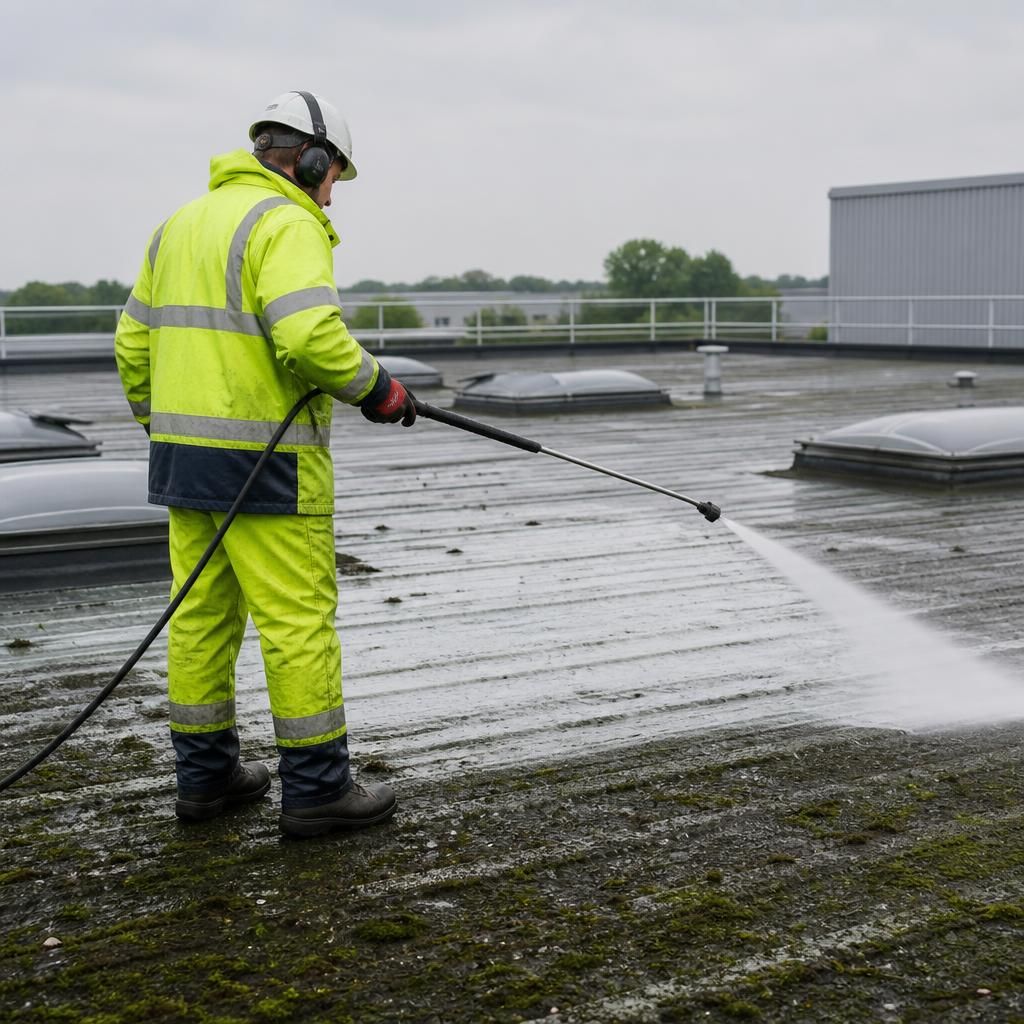
Soft washing removes roof moss and algae with a low-pressure application of water and a suitable treatment, rather than relying on force alone. The treatment helps weaken organic growth at and below the visible surface, allowing loosened moss and algae to be removed with less risk of damaging tiles, slates, pointing or protective coatings.
This approach is particularly useful where roofing materials are weathered, fragile or unsuitable for aggressive pressure washing. It can also help delay regrowth, although shaded areas, overhanging trees, trapped leaves and persistent moisture may still encourage moss and algae to return. The treatment must be selected for the roof material and applied with appropriate controls to protect gutters, plants, glazing, metalwork and surrounding surfaces.