
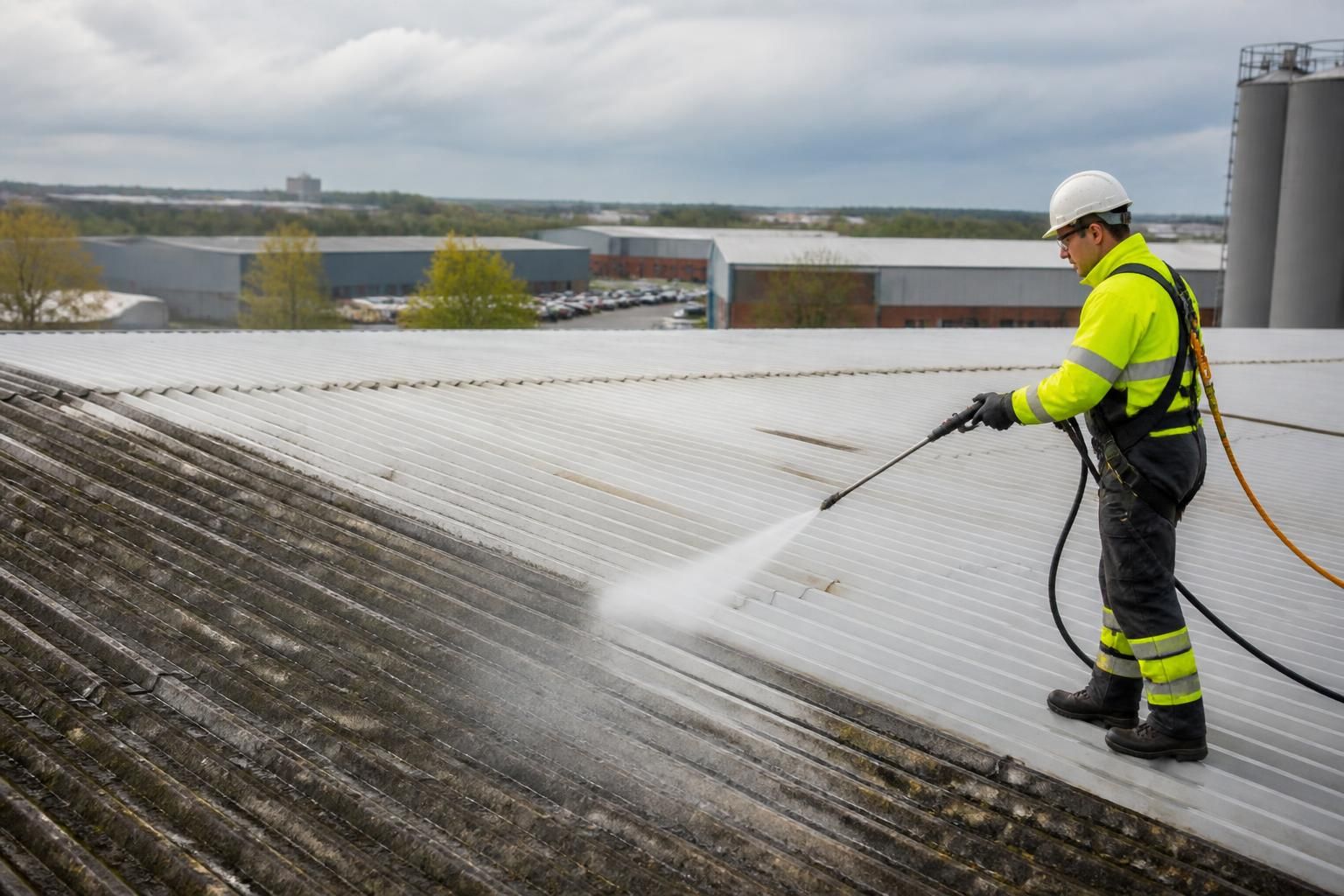
What are the benefits of applying biocides and other treatment options for long-term moss and algae prevention?
Biocides and specialist treatments help control the organic spores and growth left after moss or algae removal, slowing regrowth on roofs and other exterior surfaces. This can extend the time between cleaning, protect surface condition and reduce ongoing maintenance, provided the treatment is selected and applied correctly for the material and site conditions.
Biocides and other specialist treatments help prevent moss, algae, lichen and other organic growth from returning after cleaning. They work by reducing or disabling the remaining spores and growth on the surface, giving the roof, façade, paving or other exterior area longer-lasting protection than physical removal alone. The treatment must be selected for the surface, applied at the correct strength and used alongside suitable cleaning and maintenance methods.
Removing visible moss and algae does not necessarily eliminate every microscopic spore. Organic growth can remain in surface pores, joints, overlaps and shaded areas, where it may gradually become established again. A post-cleaning treatment addresses this residual contamination and can slow the rate of regrowth. It is therefore a preventative stage rather than a substitute for removing heavy moss, staining or built-up debris.
The main benefits include:
- Longer intervals between intensive cleaning: Slowing regrowth can reduce how often a roof or hard surface needs mechanical cleaning or washing.
- Improved appearance: Treatments help preserve a cleaner, more consistent appearance by controlling green algae, dark organic staining and early moss formation.
- Protection of surface condition: Moss can retain moisture against materials and its roots can work into joints, laps and small surface defects. Controlling it helps reduce the risk of continued deterioration, although no treatment repairs existing damage.
- Reduced maintenance disruption: Fewer recurring growth problems can mean less interruption for occupiers, visitors, tenants and site operations.
- Better control of difficult areas: Biocidal treatments can reach pores, joints and uneven surfaces that are difficult to clean completely by pressure or agitation alone.
- Support for planned maintenance: Applying treatment as part of a scheduled maintenance programme makes it easier to monitor changes and deal with early regrowth before it becomes established.
Several treatment options may be considered, depending on the location and material. A professional biocidal wash is commonly used after moss or algae removal on suitable roofing and exterior surfaces. Algaecidal or fungicidal products may be appropriate where the primary issue is biological staining rather than thick moss. Some specialist surface treatments are designed to inhibit the attachment or development of organic growth, while protective coatings may provide additional resistance where the substrate and condition make them suitable.
These options are not interchangeable. A treatment suitable for concrete may be unsuitable for certain metals, painted finishes, natural stone, roof tiles or sensitive landscaping. The age, porosity, condition and previous coatings on the surface must be considered. Run-off, nearby watercourses, planted areas, rainwater collection systems, access arrangements and the intended use of the site also affect the choice of product and application method.
A typical treatment process involves:
- Inspecting the surface: The condition, material, drainage, growth type and likely causes of regrowth are assessed. Persistent shade, overhanging vegetation, blocked gutters and poor drainage may need to be addressed as part of the wider solution.
- Removing loose contamination: Established moss, lichen, dirt and failing material are removed using a method appropriate to the surface. This may involve controlled low-pressure washing, soft washing, manual scraping or a combination of techniques.
- Applying the treatment: The selected product is applied evenly and allowed to work for the specified contact time. Coverage is important because untreated patches can become sources of renewed growth.
- Managing run-off and protection: Surrounding surfaces, plants, access routes and drainage points are protected or managed in accordance with the product instructions and site risk assessment.
- Checking the finished area: The treated surface is inspected for missed areas, remaining contamination and any signs of material sensitivity. Further work may be recommended where growth is particularly established.
Some treatments act gradually rather than producing an immediate visual change. Remaining staining may weather or fade over time, and dead organic material may need to be removed during a later maintenance visit. This is normal for certain applications and does not necessarily indicate that the treatment has failed. The expected result and timescale should be explained before work begins.
Biocides do not create a permanent barrier against moss and algae. Regrowth remains possible where surfaces stay damp and shaded or where spores are continually introduced by surrounding vegetation and airborne contamination. Roof orientation, local weather, tree cover, drainage, surface texture and the condition of joints all influence how long the preventative effect lasts. Regular inspections and prompt treatment of small areas are usually more effective than allowing heavy growth to become established again.
For some roofs and hard surfaces, physical prevention measures may complement a chemical treatment. Keeping gutters and outlets clear helps prevent persistent dampness, while managing overhanging branches can improve light and airflow. In suitable situations, correctly installed metal strips near a roof ridge may help limit biological growth as rainwater passes over the metal, but they are not appropriate for every roof and should not be treated as a complete replacement for cleaning or inspection.
Safety and environmental control are essential when using biocidal products. Applications should be carried out by trained operatives following the product label, safety data and relevant site controls. This includes selecting appropriate personal protective equipment, controlling access, protecting nearby people and property, managing run-off and avoiding unsuitable conditions such as heavy rain or strong wind. Products should never be mixed unless the manufacturer specifically permits it, and water butts or other rainwater collection systems should be isolated where necessary.
The most effective long-term approach is usually a combination of suitable removal, correctly specified treatment and planned maintenance. A treatment can reduce the rate of moss and algae return, protect the appearance and condition of the surface, and help control future cleaning requirements, but its performance depends on accurate diagnosis and proper application. During an assessment, the treatment should be matched to the substrate, existing damage, surrounding environment and the level of prevention required.
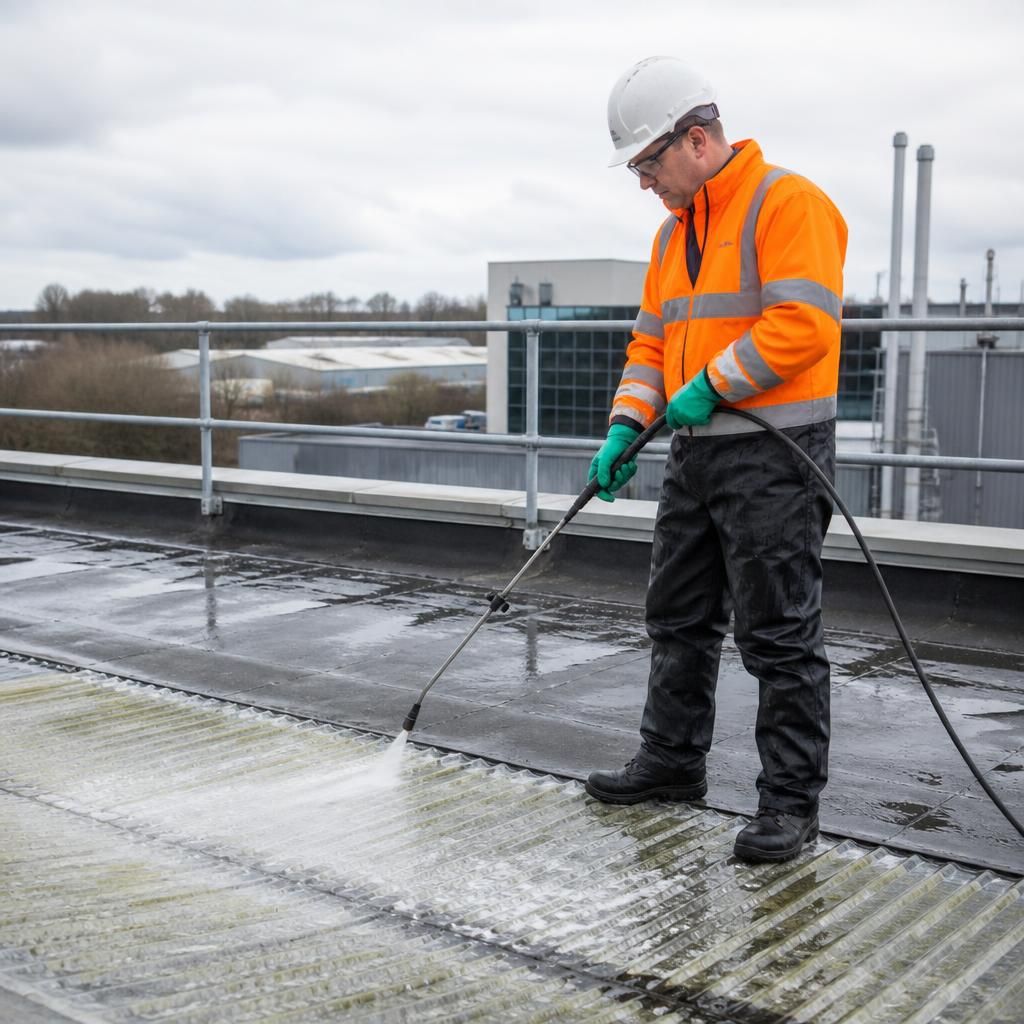
Biocides provide longer-term moss and algae control by treating residual biological contamination after visible growth has been removed. They can reach pores, joints and uneven areas that physical cleaning may not fully clear, slowing regrowth and extending the time before further intensive maintenance is needed.
The treatment must be matched to the surface and site conditions. Roof tiles, painted metal, concrete, natural stone and sensitive areas may require different products or application methods. Surrounding plants, drainage points, watercourses and rainwater collection systems also need protection, with run-off controlled in line with the product instructions and site risk assessment.
Biocides are preventative rather than permanent. Damp, shaded surfaces, overhanging vegetation and poor drainage can still encourage regrowth, so periodic inspections and prompt treatment of small affected areas remain important.