
What safety precautions should be taken during moss removal from commercial surfaces?
Commercial moss removal should begin with a site risk assessment covering slip hazards, nearby pedestrians and vehicles, water runoff, electrical equipment, fragile surfaces and safe access requirements. Use suitable PPE, isolate or segregate the work area, select a cleaning method that will not damage the surface, control wastewater and follow equipment and working-at-height procedures throughout the work.
Safe commercial moss removal requires a documented site risk assessment, effective segregation of the work area, suitable personal protective equipment, controlled use of water and chemicals, and properly maintained equipment. The method must also account for the surface material, nearby people and vehicles, drainage, electrical hazards, access arrangements and the risk of slips during and after cleaning.
Complete a site-specific risk assessment before work begins
The assessment should identify the condition of the moss-covered surface, the proposed cleaning method and any hazards created by the surrounding premises. Commercial sites can include pedestrian routes, loading areas, car parks, service yards, plant rooms and public access points, so the controls should reflect how the area is used.
- Identify slip, trip and fall hazards caused by moss, algae, standing water, hoses and uneven surfaces.
- Check for pedestrians, delivery vehicles, moving plant and restricted visibility around the work area.
- Locate drains, watercourses, landscaped areas, doors, air intakes and sensitive equipment that could be affected by runoff or spray.
- Inspect the surface for loose slabs, damaged joints, fragile coatings, voids and concealed defects that could worsen during cleaning.
- Confirm whether work at height, lifting equipment, temporary access equipment or traffic management is required.
- Consider weather conditions, particularly rain, frost, strong wind and temperatures that could affect cleaning, drying or safe access.
The findings should be communicated to the cleaning team and, where appropriate, to the site manager or responsible person. Method statements and emergency arrangements should be available for higher-risk work.
Segregate the work area and manage site traffic
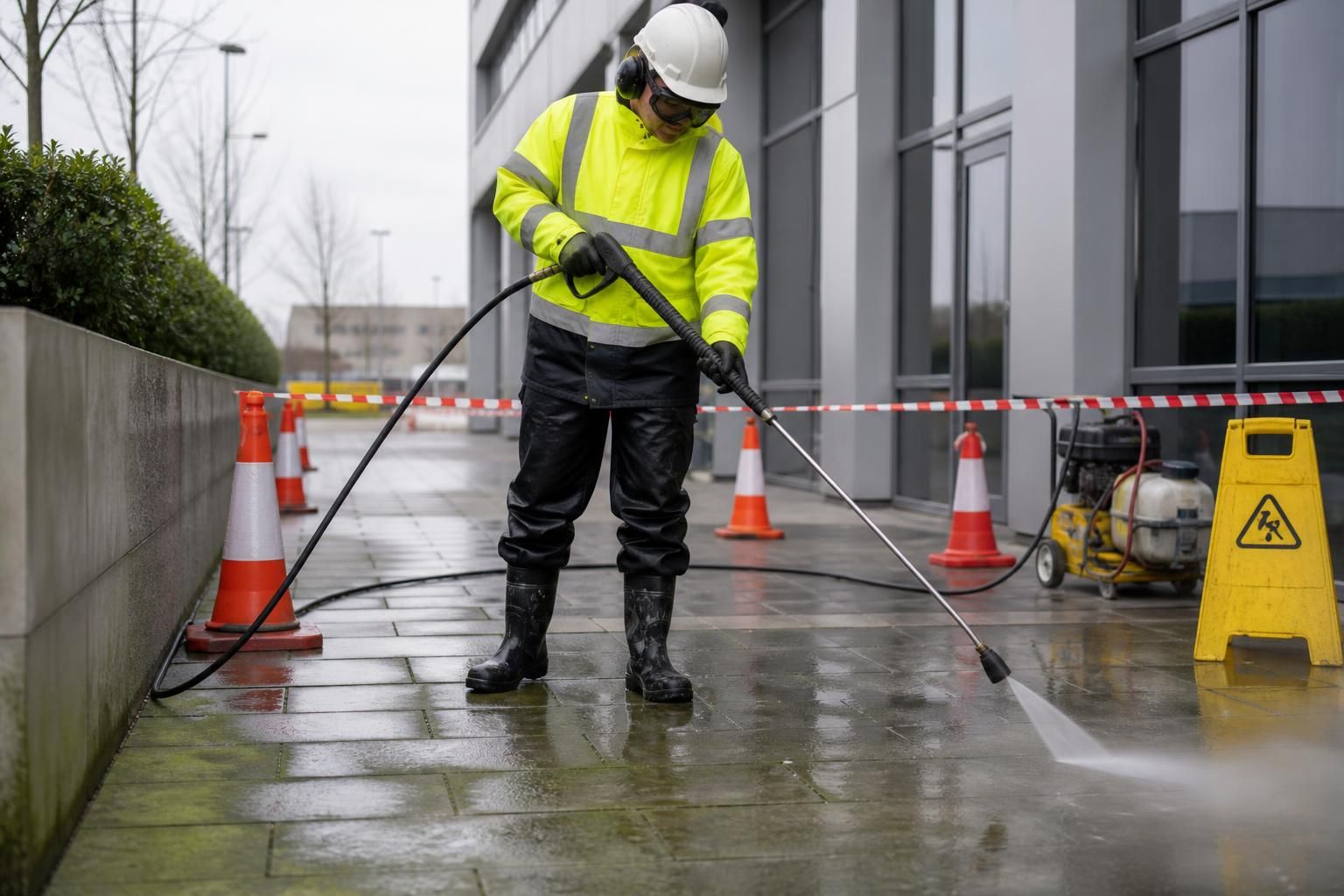
Moss removal should not take place while people can freely walk or drive through the active cleaning zone. Use suitable barriers, cones, warning signs and controlled access points. On busy commercial premises, a phased closure or agreed working window may be needed to separate cleaning from deliveries, staff movements and public access.
Keep hoses, power leads and equipment away from walkways wherever possible. Where they must cross a route, use suitable cable or hose protection and provide a clearly marked alternative path. Do not rely on warning signs alone where spray, equipment or wet surfaces create a continuing hazard. A competent person should monitor the exclusion area and prevent unauthorised access.
Use appropriate personal protective equipment
PPE should be selected following the risk assessment and the products and equipment being used. Typical controls may include waterproof protective clothing, slip-resistant safety footwear, suitable gloves and eye protection. Face protection or respiratory protection may be necessary where the process creates spray, mist, dust or chemical vapour.
PPE is a final layer of protection rather than a substitute for safe planning. It must be compatible with the cleaning agent, maintained in good condition and used in accordance with the manufacturer’s instructions. Contaminated clothing and gloves should be removed safely, and workers should wash their hands before eating, drinking or leaving the site.
Control pressure, heat and cleaning chemicals
Pressure washing equipment should be operated only by trained personnel who understand the machine, nozzle selection and safe working distance. Excessive pressure can dislodge paving, remove jointing material, damage coatings and drive water beneath cladding, thresholds or building components. Start with the least aggressive effective setting and test an inconspicuous area before treating the full surface.
Steam cleaning can reduce the need for chemical treatment, but hot water and steam still present burn, scald and pressure-injection risks. Operators should keep the lance directed away from people, use appropriate gloves and eye protection, and allow recently treated surfaces and equipment to cool before handling.
Where biocides, detergents or other treatments are required, check the product label and safety data sheet before use. Follow the specified dilution, application method, storage, PPE and disposal requirements. Commercial use may also require controls under the Control of Substances Hazardous to Health Regulations. Never mix products unless the manufacturer expressly permits it, and do not apply chemicals near drains, watercourses, sensitive planting or occupied areas without suitable controls.
Protect electrical systems and building services
Water and electrical equipment must be kept apart. Identify external sockets, lighting, distribution equipment, charging points, cables, ventilation systems and other services before work begins. Isolate or protect vulnerable equipment where appropriate, and use electrical equipment that is suitable for the working conditions and connected through appropriate residual-current protection.
Do not direct high-pressure water at electrical enclosures, vents, seals, open joints or building openings. If electrical equipment becomes wet or damaged, stop work and arrange inspection by a suitably qualified person before it is returned to service. Operators should also prevent water entering occupied areas, plant rooms, lift entrances and other sensitive spaces.
Plan safe access and work at height
Roofs, canopies, raised walkways, walls and elevated façades require additional planning. Avoid working at height where the task can be completed safely from ground level. If access equipment is necessary, it should be selected, inspected and operated by competent people, with firm ground, safe positioning and adequate clearance from traffic and overhead services.
Work at height should be planned and carried out in line with the Work at Height Regulations, including suitable edge protection, fall prevention or fall-arrest measures where required. Ladders should not be treated as a general work platform for prolonged pressure washing. Never use unstable surfaces, improvised platforms or unapproved attachments to gain reach.
Access equipment must not be repositioned while occupied unless it is specifically designed and approved for that purpose. Tools and hoses should be managed to prevent falling objects, entanglement and sudden movement. Ground-level staff should remain outside the fall zone and maintain communication with the operator.
Control wastewater, spray and contaminated debris
Moss removal can release organic matter, sediment, cleaning residues and contaminated water. Prevent uncontrolled runoff from entering surface-water drains, watercourses, neighbouring property or planted areas. Use drain covers, bunding, wet vacuums, collection systems or other suitable measures where the risk assessment requires them.
Do not allow captured slurry to dry on adjacent paths or roadways, where it can become a further slip hazard. Remove moss and debris promptly, keep the waste contained and dispose of it in accordance with the site’s waste arrangements and applicable environmental requirements. Where runoff may contain chemicals or pollutants, obtain approval for the disposal route rather than assuming it can be discharged to a drain.
Control overspray around vehicles, glazing, painted finishes, air-conditioning intakes and occupied buildings. Close windows and doors where necessary, and notify occupants if temporary ventilation or access restrictions are required.
Inspect the surface and use a controlled cleaning sequence
Before applying water, heat or treatment products, remove loose moss mechanically where appropriate and inspect the exposed surface. Pay particular attention to cracked paving, eroded joints, hollow-sounding slabs, porous masonry, painted finishes and areas where previous repairs may be weak.
A safe sequence normally includes isolating the area, testing the chosen method, removing loosened growth, cleaning in controlled sections, collecting debris and checking the result before reopening the surface. Work should progress away from clean areas where possible so that dirty water and foot traffic do not recontaminate completed sections.
Do not use aggressive scraping or pressure to compensate for an unsuitable method. Delicate surfaces may require low-pressure cleaning, steam, manual removal or a carefully selected treatment rather than intensive jetting. Any suspected structural defect should be recorded and referred to the responsible property manager instead of being concealed by cleaning.
Manage the surface after cleaning
A cleaned surface can remain slippery until all residual moisture, treatment product and loosened organic matter have been removed. Keep the area closed until it has been inspected and judged safe for normal use. In cold or shaded locations, drying may take longer and the risk of frost or renewed slipperiness should be considered.
Complete a final inspection for remaining moss, loose jointing, damaged paving, standing water, overspray, trailing hoses and unprotected drains. Replace or reposition barriers only when the route is safe. Record defects and advise the client if repairs, improved drainage or a preventative maintenance treatment is needed.
Maintain equipment and prepare for emergencies
Pressure washers, steam units, hoses, lances, pumps, vacuums, access equipment and PPE should be checked before use and maintained according to the manufacturer’s instructions. Equipment that is leaking, damaged or operating unpredictably should be taken out of service. Operators should know how to stop the equipment quickly and where isolation points are located.
The team should have arrangements for dealing with slips, falls, burns, chemical splashes, equipment failure, blocked drains and accidental release of wastewater. Keep first-aid provision and emergency contact details accessible, and report incidents and near misses through the agreed site procedure. These precautions help protect people, preserve the surface and ensure that commercial areas can be returned to service in a controlled and documented way.
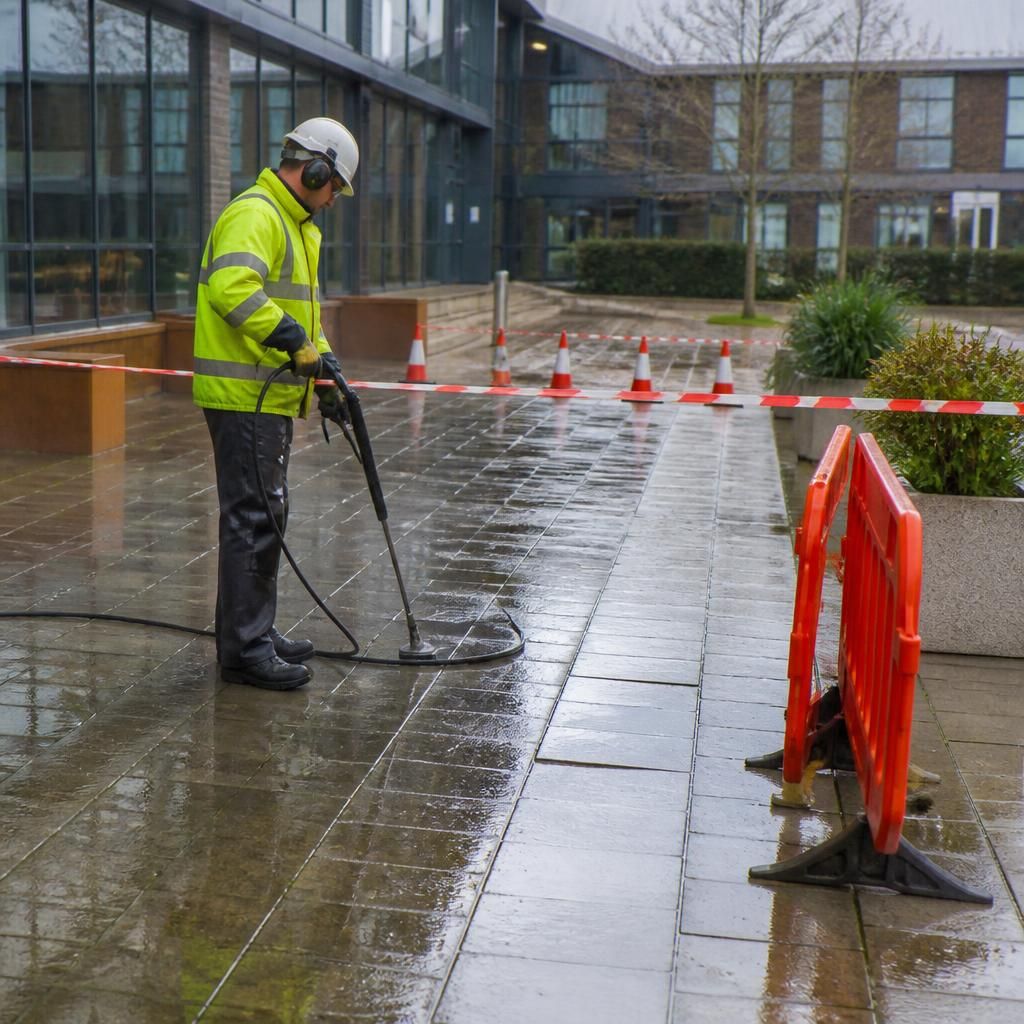
After commercial moss removal, the surface must remain closed until it has been inspected and confirmed safe to use. Residual water, loosened moss, treatment products and disturbed jointing can create slip and trip hazards even when the visible growth has been removed.
- Collect moss, slurry and debris rather than allowing them to dry on adjacent paths or roadways.
- Check for standing water, damaged paving, loose joints, trailing hoses, overspray and blocked drains.
- Keep barriers and warning signs in place while the area dries, particularly in shaded or heavily trafficked locations.
- Record defects discovered during cleaning and report any required repairs or drainage improvements to the responsible property manager.
Only reopen the area once the cleaning team or site representative has completed the final safety check and confirmed that pedestrians, vehicles and nearby building services can use it without avoidable risk.