
What environmental considerations should be taken into account during moss removal on commercial surfaces?
Commercial moss removal should minimise water and chemical use, prevent contaminated runoff from entering drains or watercourses, and protect surrounding soil, plants, wildlife and the underlying surface. Effective planning also includes selecting an appropriate low-impact method, containing and disposing of moss and wastewater responsibly, and following relevant environmental regulations.
Environmental considerations during commercial moss removal centre on using the least harmful effective method, controlling water and chemical use, preventing polluted runoff, and protecting surrounding soil, vegetation, wildlife and drainage systems. The method should also be suitable for the surface, because avoidable damage can create rough, porous areas that retain more moisture and encourage future moss growth.
A responsible assessment should be completed before work begins. This should consider the type and extent of moss, the surface material, nearby planting, the position of gullies and watercourses, weather conditions, pedestrian or vehicle access, and how removed material and wastewater will be collected. A method that is suitable for a concrete service yard may not be appropriate for masonry, natural stone, coated cladding or a surface close to a pond.
- Choose a proportionate cleaning method: Mechanical removal, controlled pressure washing or steam cleaning may be sufficient where moss is mainly present on the surface. Using strong chemicals when they are not necessary increases the risk to plants, soil and drainage systems.
- Control pressure and temperature: Excessive pressure can erode joints, strip coatings, damage friable masonry and force contaminated water into porous materials. Steam cleaning can reduce the need for chemical treatment, but its temperature and application still need to be controlled to avoid damaging sealants, paintwork or sensitive surfaces.
- Use chemicals only where justified: If a biocide or other treatment is required, it should be selected for the particular surface and applied strictly in accordance with its label, safety data and applicable UK requirements. Avoid overspray, unnecessary repeat applications and treatment immediately before rain. Chemical products should never be allowed to enter surface-water drains, soil or open water unless this is specifically permitted.
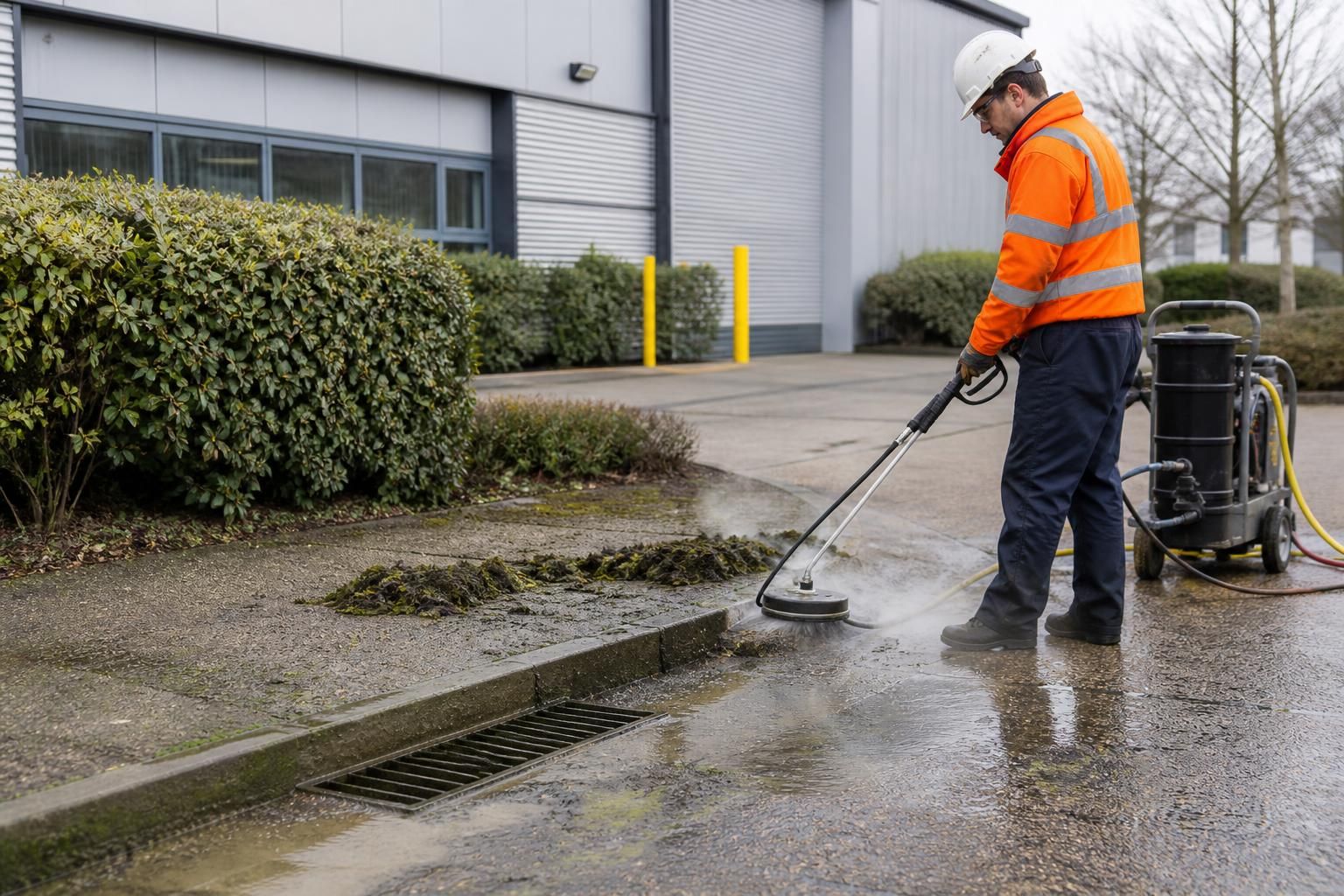
Water management is one of the most important environmental controls on a commercial site. Moss removal can release organic matter, sediment, dirt, treatment residues and other contaminants. Before washing starts, drains should be identified and, where appropriate, protected with suitable drain covers, socks or temporary containment. These controls must not create a flooding risk or block essential drainage without a plan for safely managing the water.
Runoff should be directed to an appropriate collection point rather than allowed to flow across neighbouring land or into a watercourse. Depending on the site and the contaminants involved, wastewater may need to be collected for controlled disposal, filtered or allowed to enter the foul drainage system only where the relevant sewerage provider permits it. Surface-water drains generally discharge to the environment and must not be treated as a convenient disposal route. If there is any uncertainty, the disposal route should be confirmed with the local water authority, sewerage provider or environmental regulator before work begins.
Water use should be planned rather than estimated casually. Low-flow equipment, targeted application and staged cleaning can reduce consumption without compromising the result. Dry scraping or brushing can remove loose moss before wet cleaning, reducing the amount of suspended material in the wastewater. Reusing recovered water may be possible for suitable preliminary tasks, but only where it will not spread contaminants or compromise hygiene and where the equipment and process are designed for it.
Surrounding vegetation and wildlife also require protection. Moss removal should avoid unnecessary wetting of planted areas and prevent chemical drift onto leaves, bark and root zones. Work should be reviewed for the presence of ponds, streams, nesting areas, pollinator habitats and other sensitive features. Where wildlife could be disturbed or exposed to treatment products, the programme and method should be adjusted, and specialist ecological advice obtained where appropriate. Removed moss should be gathered rather than left in planted beds, gutters or drainage channels, where it can decompose, obstruct flow or spread to other surfaces.
Weather conditions affect both environmental risk and cleaning quality. Heavy rain can carry loosened material and treatment residues into drains and watercourses, while strong wind increases the risk of spray drift. Work should normally be postponed when conditions prevent effective containment or when rain is likely to wash an applied product from the surface. Cold conditions can also affect equipment, chemical performance and the safe storage of recovered wastewater.
The underlying material must be protected as part of the environmental approach. Replacing damaged paving, coatings or joints creates additional material waste and may require further cleaning or construction work. Operators should test the proposed method in an inconspicuous area, identify weak joints and surface defects, and use the lowest effective pressure, temperature and dwell time. Particular care is needed with historic masonry, soft stone, decorative finishes, painted surfaces and areas where water may reach the building structure.
Waste should be segregated and handled responsibly. Collected moss, silt and debris can often be disposed of as general commercial waste, but material contaminated with chemicals, oils or other substances may require different handling. Wastewater, filters, absorbents and empty treatment containers should be managed in line with the product instructions and the site’s waste procedures. Records of the products used, quantities, containment measures, disposal arrangements and any incidents provide useful evidence of proper environmental control.
For larger sites, the environmental controls should be included in the method statement and risk assessment. The plan should identify sensitive receptors, drainage routes, responsible personnel, spill response arrangements and the procedure for stopping work if containment fails. Staff should know how to use drain protection, respond to a spill and report a discharge or near miss. Where a spill could reach a watercourse or where an environmental permit may be relevant, the issue should be escalated promptly to the responsible site manager and the appropriate regulator.
In practice, the lowest-impact approach is usually a planned combination of physical moss removal, controlled low-pressure or steam cleaning, limited use of suitable treatments and effective runoff containment. The correct balance depends on the surface, site drainage and level of contamination. A commercial cleaning contractor should assess these factors before starting and explain any restrictions, disposal requirements or additional controls needed for the premises.
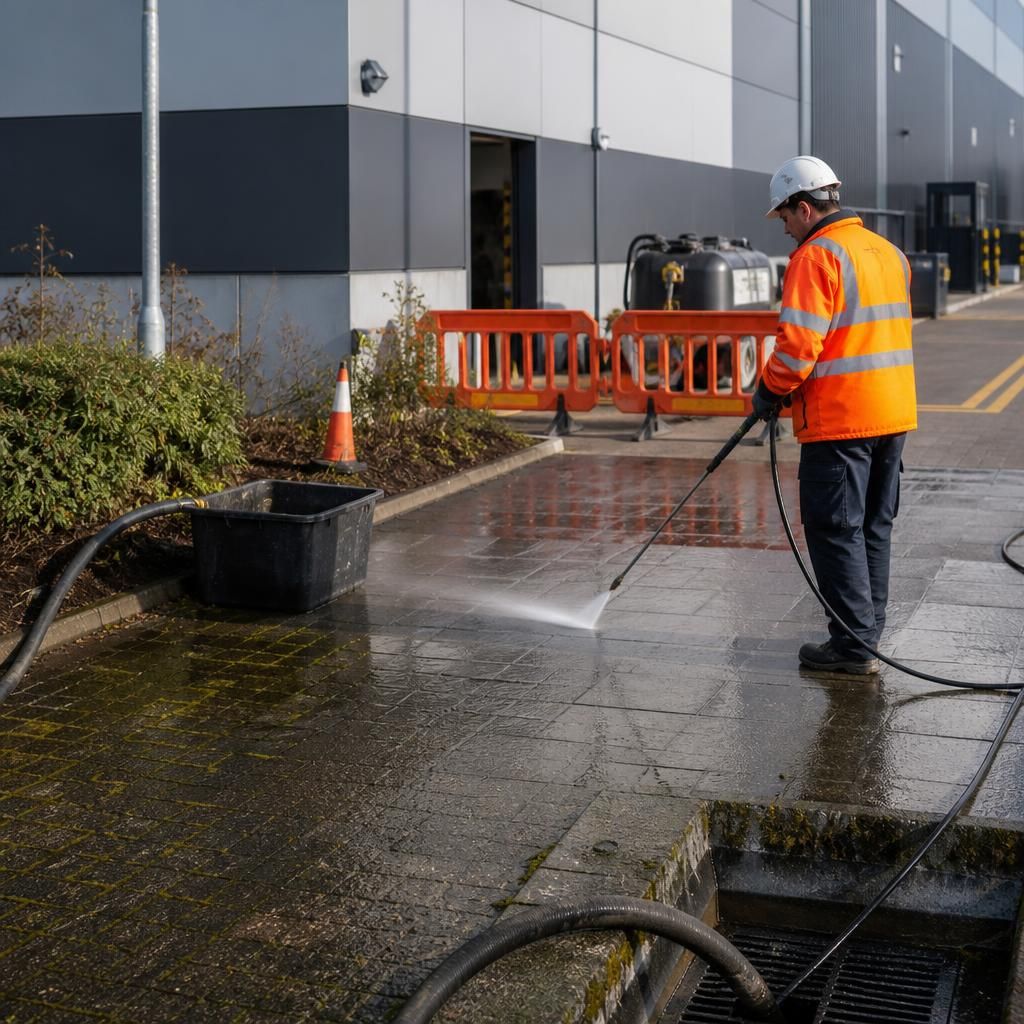
Runoff control is a key environmental consideration during commercial moss removal because wash water can carry moss, silt, cleaning residues and other contaminants into surface-water drains, soil or nearby watercourses.
Before cleaning begins, the drainage layout should be checked and vulnerable gullies protected where appropriate. Loose moss should be removed by brushing or scraping first, while wash water is directed to a suitable collection point rather than allowed to spread across planted areas or neighbouring land. Any treatment products must be used sparingly, kept away from vegetation and drainage routes, and applied only when weather conditions allow effective containment.
Collected debris and wastewater should be handled through an agreed disposal route. Surface-water drains must not be used for contaminated discharge, and the correct arrangements should be confirmed with the site manager, sewerage provider or environmental regulator where necessary.