
What are the most effective methods for removing moss from concrete paths?
The most effective method for removing moss from concrete paths is usually professional pressure washing, often followed by an appropriate biocidal treatment to remove remaining spores and slow regrowth. For delicate, heavily soiled or environmentally sensitive areas, steam cleaning and controlled manual treatment can provide a lower-impact alternative.
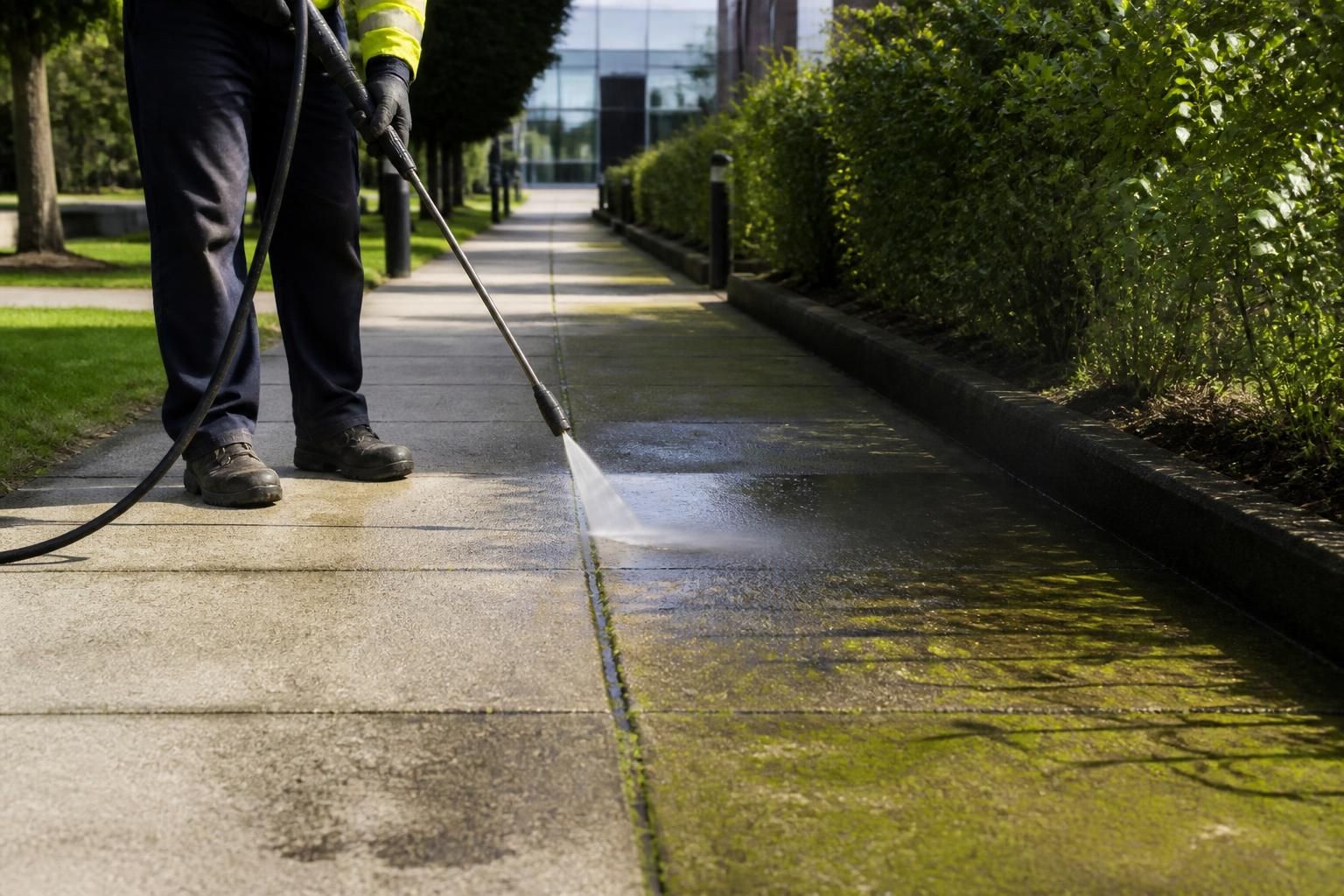
Professional pressure washing is usually the most effective method for removing moss from concrete paths because it lifts moss, algae, soil and other organic deposits from the textured surface. Where appropriate, pressure washing can be followed by an approved biocidal treatment to deal with residual spores and help delay regrowth. Steam cleaning, controlled manual removal and targeted treatment are useful alternatives where the concrete is fragile, heavily weathered, close to sensitive planting or subject to environmental restrictions.
Pressure washing for established moss
Pressure washing provides a rapid mechanical clean across large areas and is particularly suitable for commercial paths, access routes, courtyards and paved approaches. The operator uses a suitable pressure, nozzle and working distance for the condition of the concrete rather than applying maximum pressure automatically. This helps remove moss without unnecessarily eroding the surface, exposing aggregate or forcing water into joints and cracks.
Before washing, loose moss is generally scraped or brushed away and the area is inspected for defects. Cracked concrete, damaged joints, raised edges and drainage points need to be identified before cleaning begins. During the work, dirty water and dislodged moss should be managed so that they do not block gullies, spread onto adjoining surfaces or enter watercourses.
Pressure washing is highly effective at removing visible growth, but it does not always prevent moss from returning. Shaded, damp concrete can retain spores and organic contamination, particularly where drainage is poor. For this reason, a suitable post-cleaning treatment may be recommended after the surface has been cleaned.
Biocidal and post-treatment applications
An appropriate professional biocidal treatment can be applied after mechanical cleaning to target remaining moss, algae and lichen. It is generally most useful as part of a wider cleaning process, rather than as a substitute for removing thick, established growth. Heavy moss may shield the surface from the treatment, reducing its effectiveness.
Product selection and application must take account of the concrete, nearby vegetation, drainage arrangements, weather conditions and any requirements governing commercial premises. The treatment should be used only in accordance with its label and relevant safety guidance. Run-off must be controlled, and applications should not be carried out when rain is likely to wash the product into drains, planting beds or surface water.
Steam cleaning
Steam cleaning uses heated water at comparatively controlled pressure to loosen moss and organic deposits. It can be a suitable option where reducing water use, splash or mechanical impact is important, although the correct method depends on the equipment and the condition of the path. Steam is particularly useful around building entrances, sensitive features and areas where aggressive pressure washing could damage a worn surface.
Steam cleaning may take longer on thick or deeply rooted moss and may still need to be combined with manual preparation or a compatible treatment. The operator must also consider the risk of heat affecting sealants, joints, painted markings or adjacent materials. A small test area is advisable where the concrete has been repaired, coated or previously treated.
Manual scraping and brushing
Manual removal is a low-impact method for isolated patches, edges, narrow access routes and areas that cannot be cleaned safely with machinery. Stiff brushes, scrapers and suitable hand tools can remove surface moss from concrete without exposing the path to high water pressure. This approach is also useful for clearing growth from joints, drainage channels and around fixed street furniture.
Manual work is less efficient for extensive commercial areas and can leave organic residue behind if the surface is heavily contaminated. It is therefore often used as a preparation or finishing technique alongside pressure washing or steam cleaning. Care is needed around cracked concrete, as forceful scraping can widen existing damage.
Chemical moss killers and household remedies
Uncontrolled use of household bleach, strong acids, salts or improvised chemical mixtures is not recommended. These substances can discolour or weaken concrete, damage nearby vegetation, corrode metalwork and create harmful run-off. They may also provide only temporary results if the underlying damp and shaded conditions remain.
Commercial cleaning should use a treatment that is suitable for the surface and site, with appropriate controls for storage, dilution, application, personal protective equipment and waste management. A professional assessment is especially important near public footways, food premises, watercourses, planted areas and drainage systems.
A practical method for commercial concrete paths
- Survey the area: Check the concrete condition, moss thickness, drainage, access requirements, surrounding materials and risks to pedestrians or vehicles.
- Prepare the site: Remove loose growth, protect vulnerable features, manage access and identify where wash water will be collected or directed.
- Choose the cleaning system: Use controlled pressure washing for robust, heavily soiled concrete; steam or manual methods for more sensitive areas; and a combined approach where conditions vary across the site.
- Clean methodically: Work in manageable sections, avoiding unnecessary pressure on joints, cracks, edges and repaired areas. Do not simply move moss onto adjoining paths or roadways.
- Inspect the result: Check for remaining growth, staining, blocked drainage points and areas requiring additional treatment.
- Apply post-treatment where suitable: Use an approved product in accordance with its instructions and the site’s environmental controls.
- Restore safe access: Remove debris, confirm that the surface is not presenting an avoidable slip risk and reopen the area only when it is suitable for normal use.
The best method depends on the concrete’s condition and the site environment, not simply on how much moss is visible. Sound, robust paths with widespread growth will often respond well to controlled pressure washing and suitable aftercare. Weathered or delicate concrete may require steam cleaning and manual preparation, while paths beside sensitive planting or drainage infrastructure need additional run-off controls. Regular inspections, improved drainage, removal of leaf debris and attention to persistent shade can then reduce the conditions that allow moss to return.
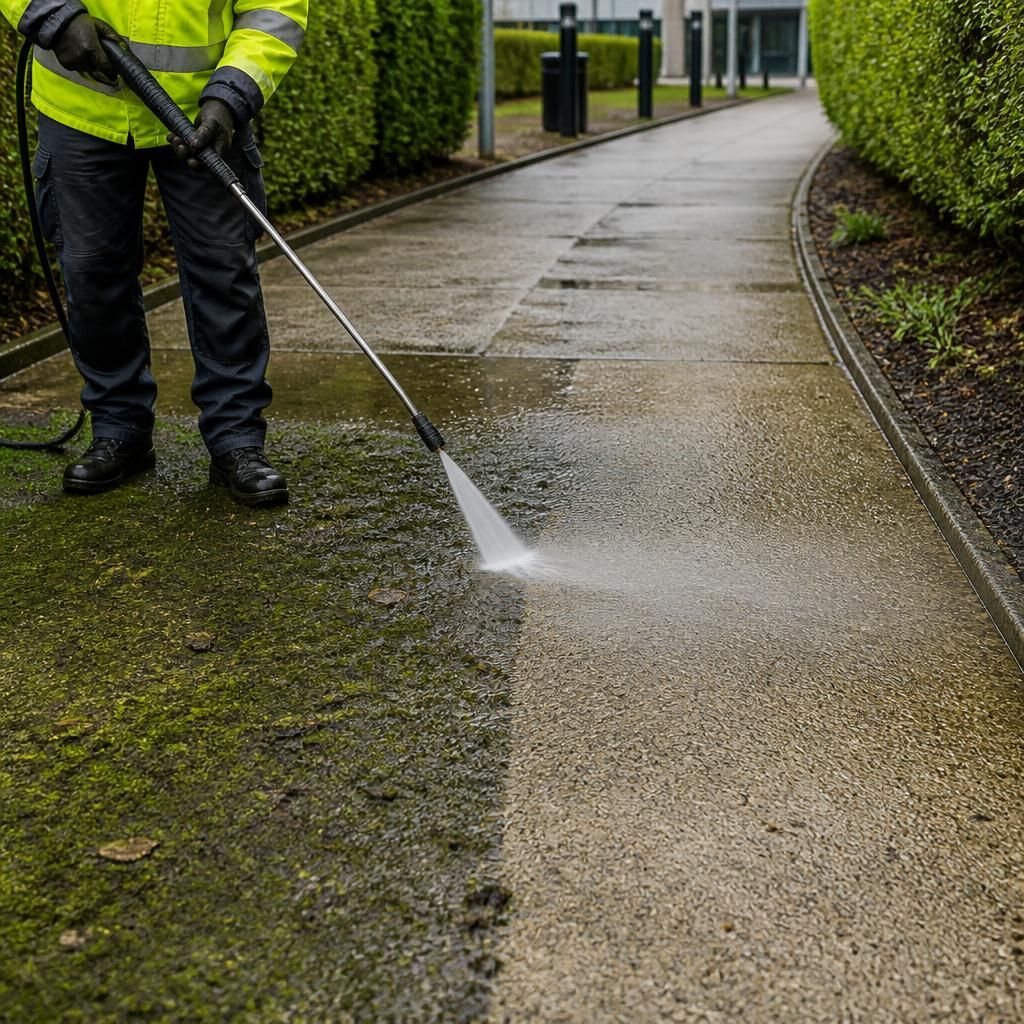
For most sound concrete paths, the most effective approach is controlled pressure washing followed by suitable aftercare. Pressure removes established moss, soil and organic deposits from the textured surface, while an appropriate professional treatment can help deal with residual spores and delay regrowth.
The pressure must be matched to the concrete’s condition. Excessive force can erode weathered surfaces, expose aggregate or damage cracks and joints. A site assessment should also consider drainage, nearby planting and pedestrian access so that dislodged moss and wash water are contained rather than spread or allowed to enter surface-water systems.
Arrange a professional moss removal assessment for your concrete paths
Arrange a professional assessment of your concrete paths to identify the safest and most effective moss removal method for the surface, drainage and surrounding areas. Contact Encanto Exterior Cleaning to plan suitable cleaning and aftercare for your site.