
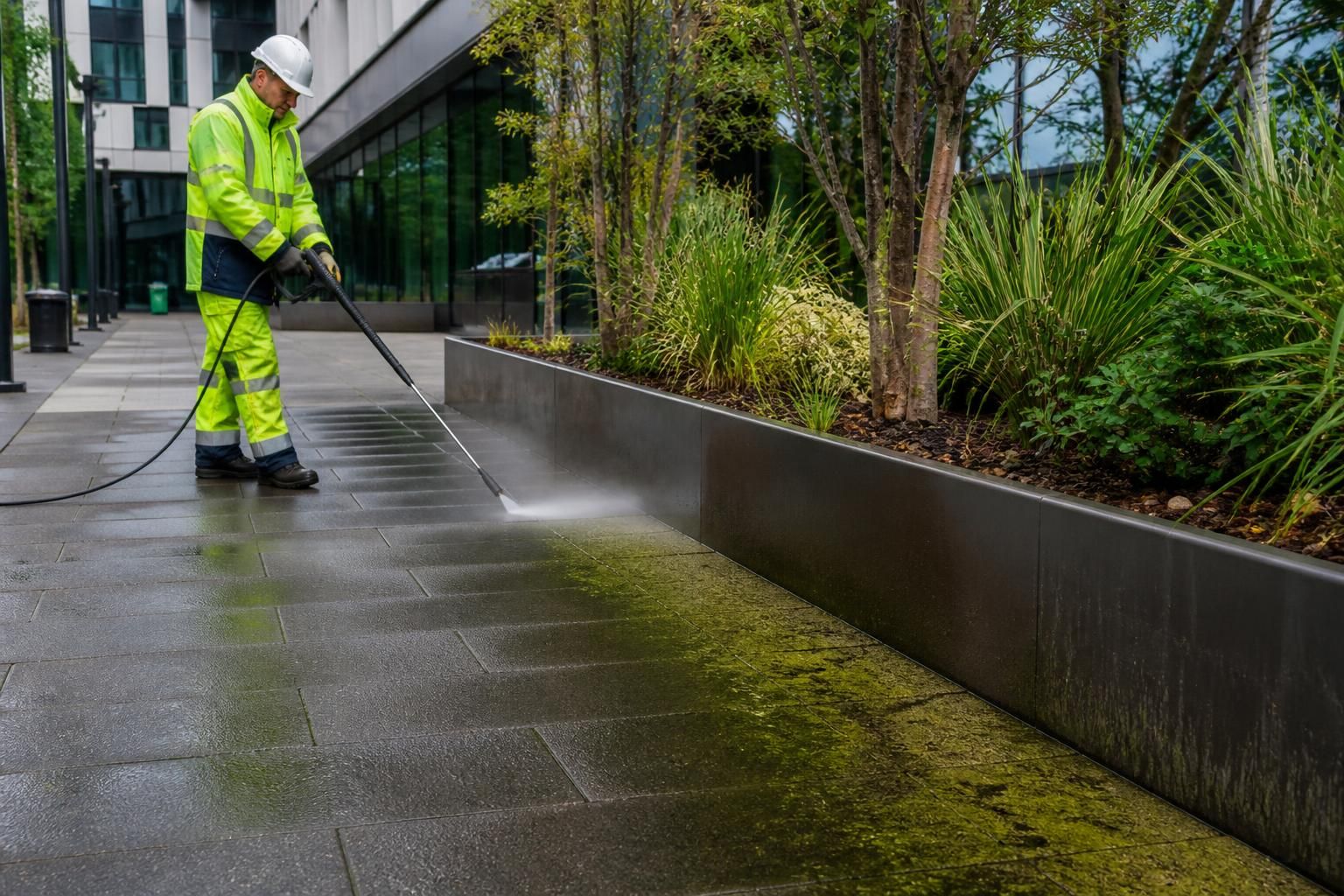
What are the key environmental considerations when choosing a moss removal method for outdoor paths and surfaces?
Choose a moss removal method that controls growth without unnecessarily harming surrounding plants, soil, wildlife, drainage systems or the surface itself. The main considerations are water and chemical use, run-off containment, waste disposal, energy consumption and whether the method is suitable for the material and local environment.
The most environmentally responsible moss removal method is the one that achieves adequate control with the least disruption to surrounding vegetation, soil, wildlife, drainage and the surface being cleaned. The choice should therefore consider chemical use, water consumption, run-off, energy requirements, waste handling, local conditions and the risk of repeated cleaning.
Assess the site before selecting a method. Moss on a concrete path beside a planted border presents different environmental risks from moss on a roof, porous paving, a retaining wall or a large vehicle-access area. A site assessment should identify nearby drains, watercourses, ponds, planting, trees, exposed soil, nesting areas and sensitive surfaces. It should also establish whether the moss is caused by persistent shade, poor drainage, organic debris or leaking services. Addressing the underlying condition can reduce the need for frequent treatment.
Consider whether chemicals are necessary. Mechanical brushing, scraping, pressure washing or controlled steam cleaning may remove moss without applying a biocidal product. These methods can be appropriate where growth is mainly superficial and where contaminated water can be controlled. Chemical treatments may provide longer-lasting suppression in some situations, but they should only be used when justified by the site and applied in accordance with the product label and applicable regulations. Product selection should take account of its environmental classification, dilution requirements, application rate and restrictions near drains, watercourses, plants and animals.
Biocidal treatments must not be allowed to drift onto adjacent planting or enter surface-water drainage. A product that is suitable for one surface or setting may be inappropriate for another. The fact that a treatment is described as biodegradable or environmentally preferable does not remove the need for correct storage, handling, application and disposal.
Control water and run-off. Pressure washing can use substantial volumes of water and may dislodge soil, organic matter, cleaning residues and moss fragments. Run-off should be directed away from planted areas and watercourses, and drains should be protected where necessary. Depending on the site, this may involve temporary bunding, drain covers, wet vacuum recovery, controlled collection or filtration. Collected water should be managed in line with local drainage requirements rather than discharged indiscriminately.
Using the lowest practical water flow and pressure helps reduce consumption and limits the spread of contaminated water. Water recycling or recovery may be suitable for larger projects, provided that the recovered water is managed safely and does not transfer contaminants back onto clean areas. Fresh water should not be used simply to move moss and sediment into an uncontrolled drainage system.
Compare pressure washing, steam and manual methods carefully. Manual removal generally uses little water and no chemical, but it can be labour-intensive and may disturb joints or fragile surfaces if tools are used aggressively. Pressure washing can be efficient for robust concrete and some hard paving, although excessive pressure can erode joints, expose aggregate or damage the surface. Steam cleaning uses heated water and can reduce or avoid chemical use, but its energy demand and suitability depend on the size of the area, equipment and access conditions.
The most sustainable option is not always the method with the lowest immediate water or energy use. A technique that damages a surface, washes out jointing material or leaves conditions that encourage rapid regrowth can create additional repair, material and cleaning requirements. Environmental assessment should include the likely service life of the result, not just the cleaning operation itself.
Protect soil, plants and wildlife. Moss removal should be planned to minimise physical damage to lawns, planted borders, tree roots and exposed soil. Splashing, chemical drift, hot water and displaced sediment can affect nearby vegetation. Where wildlife may be present, the work should be timed and controlled to avoid unnecessary disturbance, particularly around water features, dense vegetation and areas used by nesting birds or other animals. Moss and debris should be collected where practical rather than spread into planted areas or drainage channels.
Watercourses, ponds and ecological features require particular care. Their proximity may restrict the use of certain products or discharge methods and may require additional containment. If there is uncertainty about whether a treatment is permitted in a particular setting, the product instructions, site requirements and relevant environmental guidance should be checked before work starts.
Plan waste disposal correctly. Removed moss, silt, leaves and contaminated absorbent materials should be gathered and handled according to their condition and the site’s waste arrangements. Waste should not be swept into gullies or left where it can be washed into watercourses. Containers, unused products and chemical residues must be stored securely and disposed of through appropriate channels. Keeping waste streams separate can make it easier to identify and manage material that has been contaminated by treatment products.
Account for access equipment and energy use. Large commercial areas may require pressure-washing systems, steam equipment, water recovery units or powered access equipment. Fuel consumption, electricity use, transport and equipment movements all contribute to the environmental impact of the work. Efficient site planning, suitable equipment selection and completing related cleaning tasks during the same mobilisation can reduce unnecessary travel and operating time. Equipment should be matched to the surface and area rather than using a more powerful system than necessary.
Choose a method that suits the surface. Porous stone, aged concrete, block paving, clay pavers, resin-bound surfaces, painted areas and coated façades can react differently to pressure, heat, abrasion and chemicals. Damage to a surface can increase its porosity, remove protective coatings or disturb jointing, making future moss growth more likely. A small test area should be used where the material, coating or previous treatment is uncertain. The cleaning plan should specify safe pressure, temperature, tools, products and run-off controls before full-scale work begins.
Reduce the need for repeat treatments. Long-term environmental performance depends on what happens after removal. Improving drainage, clearing leaf litter, reducing persistent dampness, managing shade where practicable and repairing defective joints can help slow regrowth. A proportionate maintenance schedule is preferable to repeated intensive treatments, particularly where the surface is close to planting or sensitive drainage. Preventative measures should be selected so that they do not introduce new risks, such as unnecessary herbicide use or impermeable alterations that increase run-off.
For commercial paths and surfaces, the cleaning method should be recorded alongside the areas treated, products used, run-off controls, waste arrangements and any restrictions or follow-up work. This provides a clear basis for future maintenance and helps ensure that subsequent teams understand the site’s environmental requirements. Where a location is close to a watercourse, contains sensitive landscaping or involves a large volume of contaminated run-off, the method should be reviewed with the responsible property manager and, where appropriate, the relevant drainage or environmental authority.
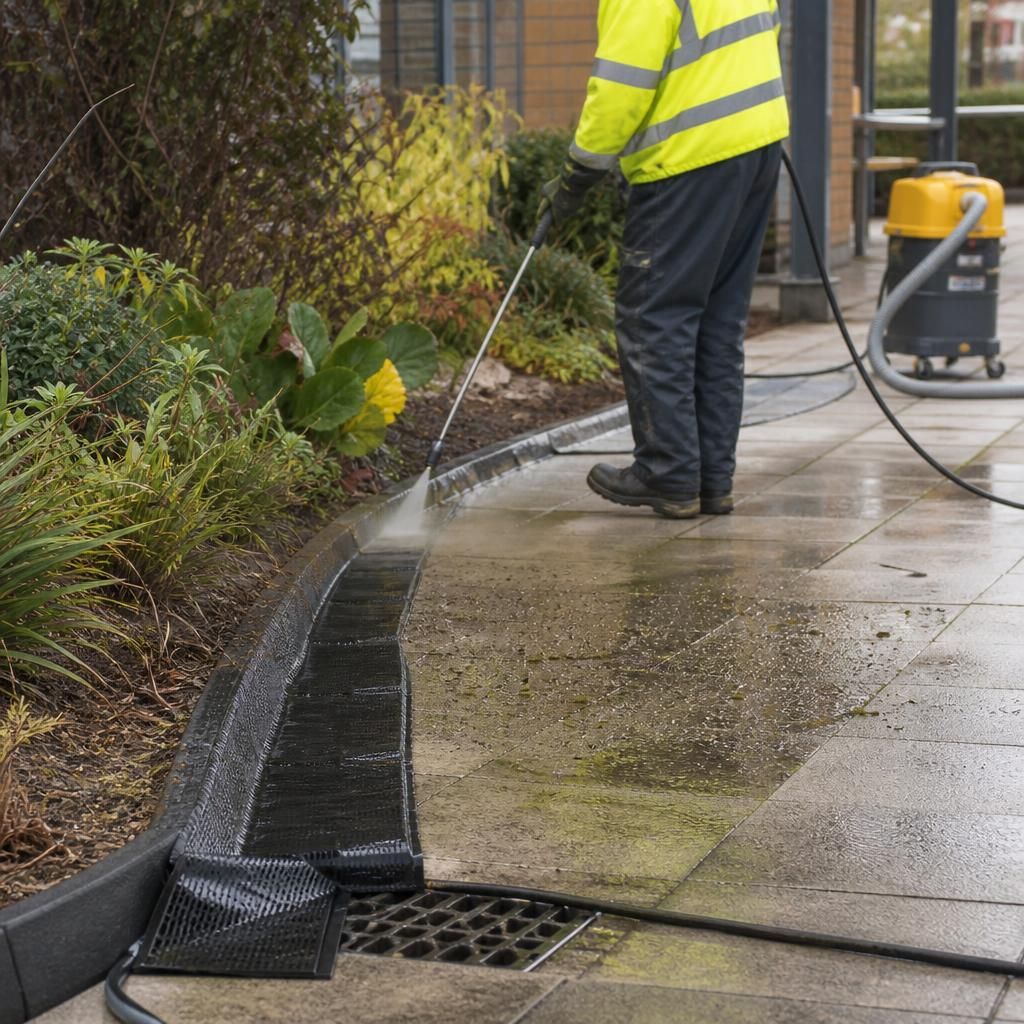
Run-off control is a key environmental consideration during moss removal because wash water can carry moss fragments, sediment, cleaning residues and treatment products into planted areas, surface-water drains or nearby watercourses. Before work begins, identify drainage routes and protect vulnerable areas with suitable drain covers, temporary bunding or controlled collection.
Use only the water and pressure needed for the surface, and recover or filter contaminated water where the site requires it. Collected water and removed debris must be managed through the site’s approved drainage and waste arrangements rather than being swept into gullies. This helps protect local vegetation and wildlife while reducing the risk of blocked drains and uncontrolled pollution.
Discuss an environmentally responsible moss removal plan
Discuss an environmentally responsible moss removal plan with Encanto Exterior Cleaning, tailored to your surface, drainage arrangements and surrounding landscape. We can help you select suitable methods, run-off controls and follow-up measures for your site.