
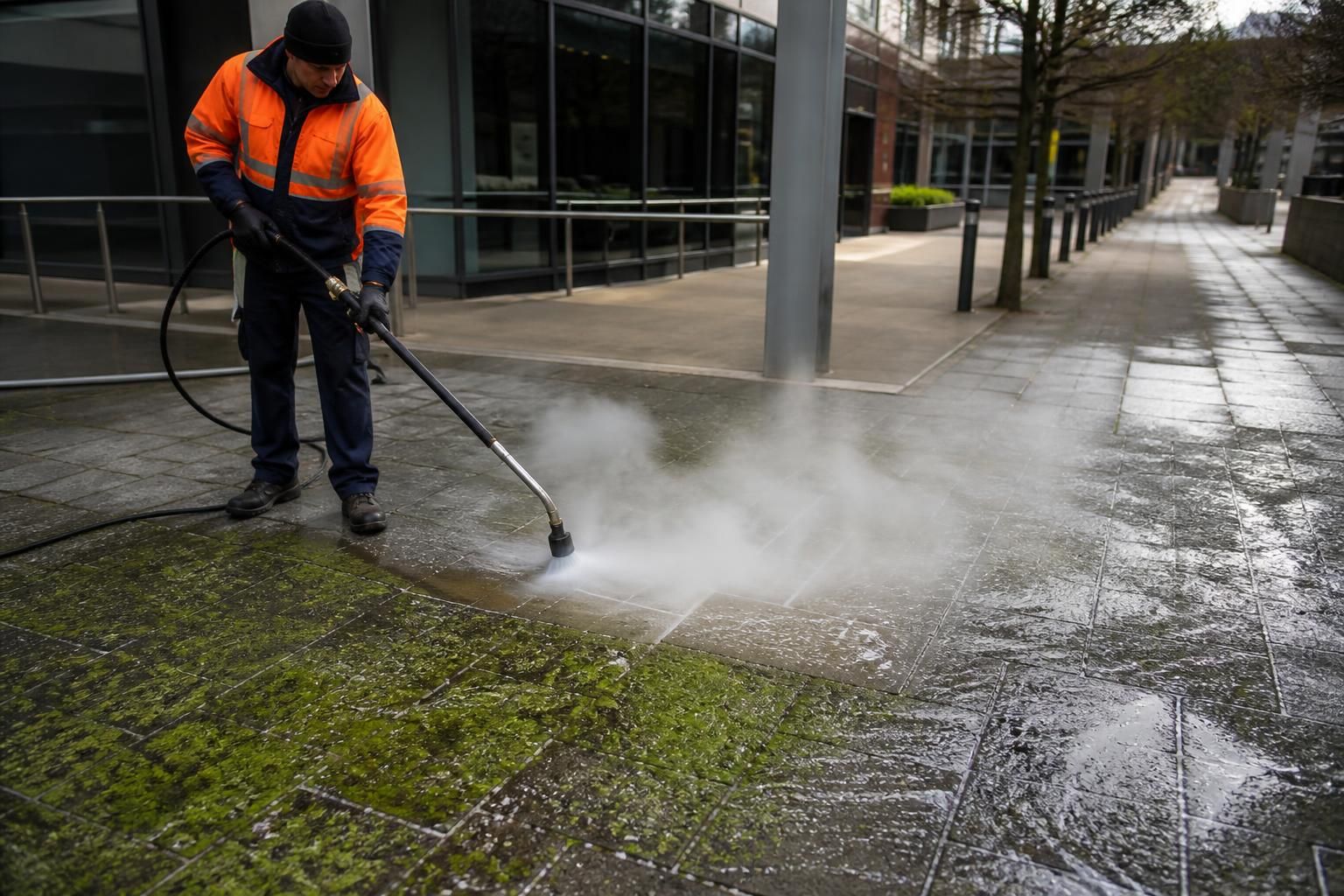
What are the benefits of steam cleaning for moss removal on commercial surfaces?
Steam cleaning uses controlled high-temperature vapour to loosen and remove moss from commercial paths and surfaces, often with little or no chemical treatment. It can improve slip safety, reduce the risk of surface damage associated with aggressive mechanical methods, and leave areas cleaner while limiting chemical runoff.
Steam cleaning removes moss by applying controlled high-temperature vapour to the growth and the surface beneath it. On commercial paths, paving, steps, courtyards and other hard surfaces, the heat helps loosen moss, algae and associated organic residue so it can be lifted and rinsed away with limited reliance on chemical treatments. This makes steam cleaning a useful option where slip risk, surface appearance, chemical runoff and material protection all need to be considered together.
Improved slip safety is one of the main practical benefits. Moss and the damp organic film that commonly surrounds it can make paths and access areas slippery, particularly in shaded or poorly drained locations. Steam cleaning breaks down this contamination and removes the material that holds moisture against the surface. The area must still be allowed to dry properly, and drainage or recurring dampness should be addressed, but removing the growth reduces an avoidable source of underfoot risk.
Reduced chemical use is another important advantage. The heat can be effective against moss without depending on strong biocides or intensive detergents. This can help reduce chemical residues and the risk of contaminated runoff entering planted areas, drains or watercourses. It does not mean that every project is entirely chemical-free: treatment requirements depend on the surface, the extent of growth and the risk of regrowth. Any cleaning solution used should be selected carefully, controlled during application and managed in accordance with the site’s drainage and environmental requirements.
Lower risk of mechanical damage can make steam suitable for surfaces that may be affected by aggressive pressure washing or abrasive methods. A controlled steam system can remove organic growth while avoiding the same level of direct mechanical impact associated with high-pressure cleaning. This is particularly relevant to older paving, textured concrete, some masonry and surfaces with joints or decorative finishes. The correct temperature, flow, distance and technique remain essential. Steam is not automatically safe for every material, and testing an inconspicuous area is good practice before wider cleaning begins.
Effective cleaning of organic contamination means steam can address more than visible moss. It may help loosen algae, lichen, biofilm and embedded dirt that contribute to a green or darkened appearance. Removing this surrounding contamination can leave paths, entrances and communal areas more uniform and easier to inspect. On commercial premises, that can support routine housekeeping and help identify defects such as cracked paving, open joints, damaged pointing or poor falls that were hidden by growth.
Useful for sensitive or operational sites is a further benefit. Where fumes, chemical handling or overspray need to be limited, steam may offer a more controlled approach than some conventional treatments. It can be considered for pedestrian routes, courtyards, access ways, public-facing areas and sites where nearby vegetation or building occupants must be protected. Site controls are still required, including segregation of the work area, warning signs, suitable personal protective equipment and management of hot water and vapour.
Steam cleaning does not guarantee permanent moss prevention. Moss returns when the conditions that support it remain, such as persistent shade, standing water, blocked drainage, organic debris, porous materials and infrequent maintenance. After cleaning, the surface should be inspected for drainage problems and sources of repeated dampness. Regular sweeping, prompt removal of leaves and attention to joints and edges can reduce the amount of organic matter available for regrowth. Where appropriate, a compatible preventative treatment can also be considered, subject to the surface and environmental controls.
The method must be matched to the material and site conditions. A commercial cleaning assessment should consider:
- the type, age and condition of the surface, including concrete, block paving, natural stone, brick or coated materials;
- the thickness and spread of the moss, along with any algae, lichen or embedded soil;
- nearby doors, glazing, painted finishes, electrical equipment, planted areas and drainage points;
- pedestrian and vehicle movements, access restrictions and the need to keep parts of the site operational;
- the collection, control and safe discharge of loosened debris and wash water; and
- the drying time and any temporary restrictions required after cleaning.
Steam cleaning is often most effective as part of a planned moss-removal process rather than as an isolated treatment. The work typically involves inspecting and testing the surface, removing loose debris, applying controlled steam, agitating or lifting softened growth where necessary, collecting residues and checking the finished area. Joints, edges, kerbs and shaded locations need particular attention because moss commonly remains in these areas and can spread back across the cleaned surface.
For larger commercial areas, the benefits should be weighed against the scale of the infestation, available access, water management and the required completion time. Mechanical brushing, low-pressure washing or carefully selected treatments may be more suitable for some surfaces or conditions, while a combined method can provide better control than relying on one technique alone. The priority should be to remove the growth thoroughly without eroding the surface, disturbing jointing or creating uncontrolled runoff.
In summary, steam cleaning can improve the safety, cleanliness and presentation of commercial surfaces while limiting chemical use and reducing the need for aggressive mechanical action. Its performance depends on correct equipment settings, competent application, suitable surface assessment and sensible follow-up maintenance. For paths and external areas where moss is recurring, combining steam cleaning with drainage checks, debris removal and a planned inspection schedule provides the most reliable approach to long-term surface health.
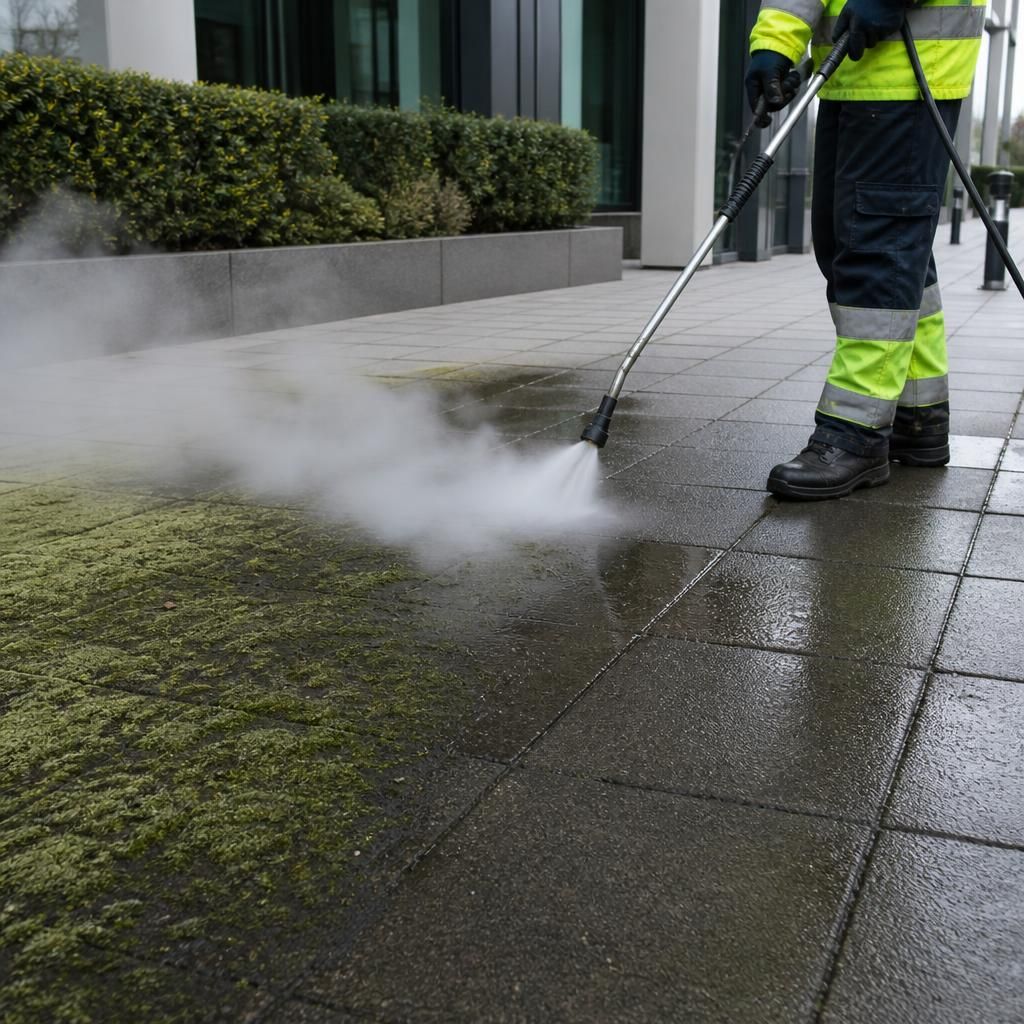
Steam cleaning removes moss from commercial surfaces using controlled high-temperature vapour, often reducing the need for strong chemical treatments. The heat loosens moss, algae and the damp organic residue beneath it, allowing the contamination to be lifted and collected with less risk of chemical runoff affecting nearby planting, drainage points or watercourses.
This benefit is particularly relevant on pedestrian routes, courtyards and public-facing areas where chemical handling and overspray must be carefully controlled. Steam cleaning is not automatically chemical-free or suitable for every material, so the surface should be assessed and tested first. Operators must also manage hot vapour, loosened debris and wash water safely, while addressing shade, blocked drainage and other conditions that could encourage moss to return.
Arrange a Commercial Steam Cleaning Assessment
Arrange a commercial steam cleaning assessment to establish whether controlled steam is suitable for your moss-affected paths and surfaces. We can review the materials, access, drainage and runoff requirements before recommending an appropriate cleaning plan.