
How can property managers ensure that moss removal techniques do not damage delicate path and surface materials?
Property managers should identify the surface material and its condition before choosing a moss removal method, then use the gentlest effective approach. Test a small inconspicuous area first and control pressure, heat, water flow and cleaning products to prevent etching, cracking, staining or loss of surface finish.
Property managers can prevent damage during moss removal by identifying the surface and its condition first, selecting the least aggressive effective method, and testing it in a discreet area before treating the full surface. Pressure, heat, water volume, mechanical action and any cleaning product should be controlled to avoid etching, cracking, staining, joint loss or damage to coatings and surface finishes.
Begin with a surface and condition assessment
Moss removal should not be planned solely around how much growth is present. The material beneath it is equally important. Inspect the area for cracks, loose slabs, open joints, failed pointing, frost damage, flaking coatings, previous repairs and areas where water is already collecting. Moss can conceal defects, and aggressive cleaning may worsen a weakness that was not visible during an initial walkover.
Identify whether the surface is concrete, natural stone, brick, block paving, asphalt, resin-bound aggregate, porcelain, painted masonry or another specialist finish. Consider the age of the installation and whether it has been sealed. Older, weathered and porous materials generally need more careful treatment than sound, dense surfaces. Heritage paving and decorative finishes may also require advice from a conservator or the relevant building owner before cleaning begins.
Use a controlled test area
A small test patch in an inconspicuous location should be cleaned before the main work starts. The test should represent the proposed process, including the equipment, pressure, temperature, dwell time and cleaning solution. Inspect the result after rinsing and again once the surface has dried. This helps reveal colour changes, etching, streaking, loosened aggregate, damaged joints or a finish that has become patchy.
A test is not simply a demonstration that moss can be removed. It establishes the safest working settings for that particular material. If the result is unsatisfactory, adjust the method or seek specialist guidance rather than increasing pressure or using a stronger chemical treatment across the whole area.
Match the cleaning method to the material
- Concrete: Sound concrete can often tolerate carefully controlled pressure washing, but worn, decorative or exposed-aggregate concrete may suffer surface erosion or loss of aggregate. Keep the lance moving, avoid concentrating the jet on one point and take particular care around joints and damaged edges.
- Natural stone: Limestone, sandstone and other porous stones can be marked, etched or stripped of their weathered appearance by unsuitable pressure or acidic products. Use a method appropriate to the stone type and avoid assuming that all paving slabs can be treated in the same way. A low-pressure approach, soft agitation or controlled steam may be more suitable than a forceful jet.
- Brick and masonry: High pressure can erode the face of older bricks and remove or loosen mortar. Keep water away from vulnerable joints where possible and use gentle agitation or a carefully selected treatment for delicate masonry.
- Block paving: Cleaning can disturb jointing material and leave blocks uneven if the process is too aggressive. Protect or reinstate joints where necessary and check that water is not washing sand or debris into drainage systems.
- Asphalt: Excessive pressure, heat or concentrated mechanical action can loosen the surface dressing or expose aggregate. Use a controlled method and avoid prolonged treatment in one area, particularly where the asphalt is aged or already breaking down.
- Resin-bound surfaces: These can be damaged by aggressive pressure, harsh solvents or unsuitable chemicals. Use a lower-impact process and follow the installer’s or manufacturer’s maintenance guidance where available.
- Porcelain, ceramic and sealed surfaces: These are relatively dense but may have vulnerable grout, edges or specialist coatings. Avoid damaging joints and check that the proposed product will not leave a film, alter slip resistance or affect the seal.
- Painted, coated or treated surfaces: Moss removal should preserve the coating as well as remove the growth. Test for adhesion and colour stability, and avoid processes that lift, blister or dull the finish.
Control pressure, heat and mechanical action
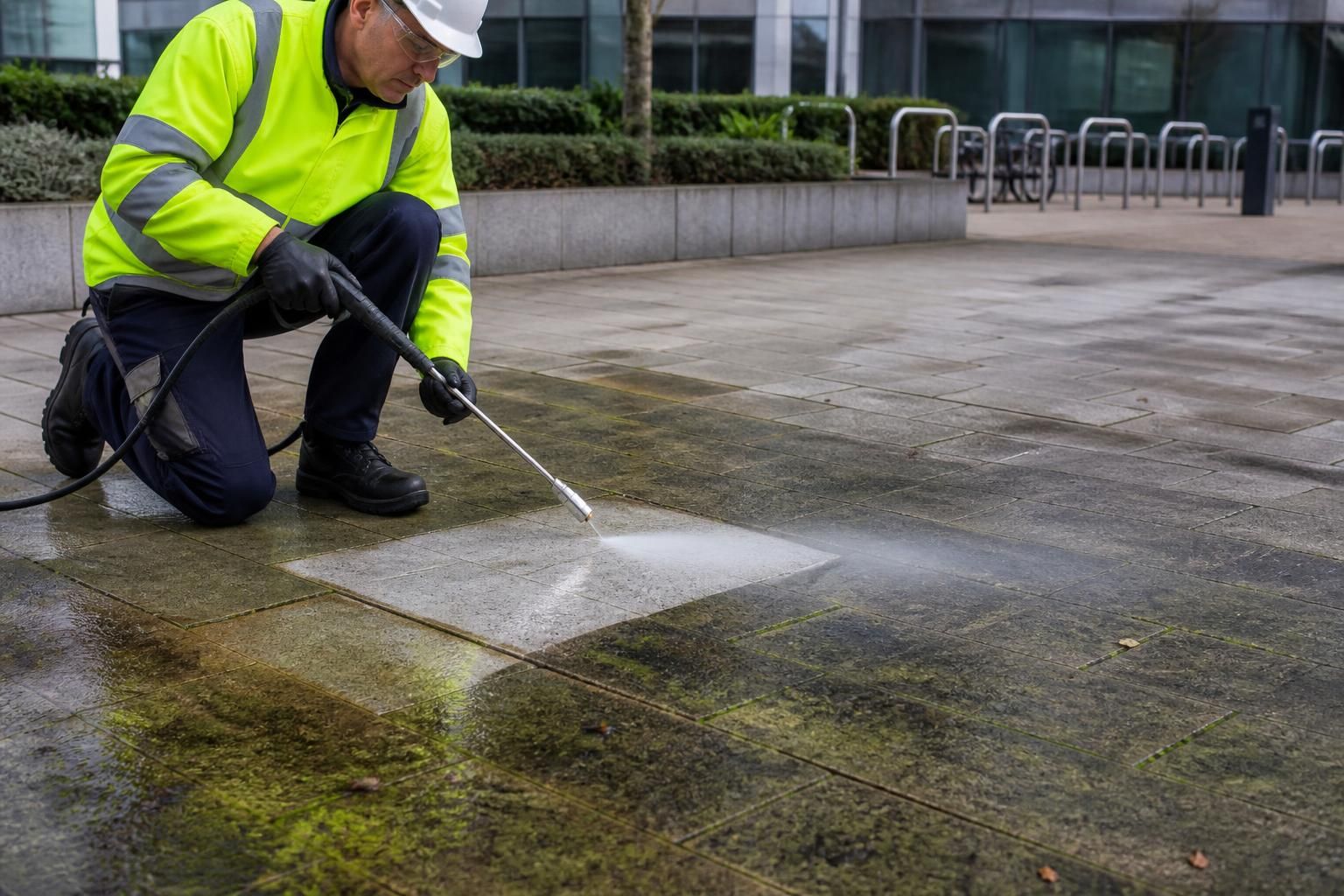
Pressure washing is not automatically unsuitable for delicate surfaces, but the equipment must be set for the material rather than operated at maximum output. Use the lowest pressure and water flow that achieves the required result, maintain a suitable distance from the surface and keep the nozzle moving. Fan patterns are generally easier to control than a concentrated pencil jet. Operators should take extra care at corners, joints, raised edges, drainage channels and areas where the surface has already failed.
Steam cleaning can reduce the need for high water pressure, but heat still requires control. Excessive heat or prolonged application may affect sealants, coatings, resin systems and some synthetic materials. Mechanical brushes and scrapers should also be selected carefully: stiff or abrasive tools can scratch smooth finishes and remove more than the moss.
Choose cleaning products conservatively
Cleaning chemicals should be compatible with the surface, surrounding vegetation, drainage arrangements and any existing sealant. Do not use an acidic product on acid-sensitive stone or apply a treatment without checking its effect on coatings and jointing materials. Follow the product instructions for dilution, contact time, application and rinsing, and never mix products unless the manufacturer specifically permits it.
Where a biocidal treatment is appropriate, it may help weaken moss so that less aggressive physical cleaning is needed. It must still be applied by a competent operator with suitable controls for people, animals, planted areas and watercourses. Product residues and contaminated runoff should be managed in accordance with the relevant safety and environmental requirements.
Protect joints, edges and adjoining areas
Most avoidable damage occurs at transitions and weak points rather than in the centre of a sound slab. Shield doors, vents, painted walls, signage, electrical equipment, planted borders and vulnerable façades from spray and runoff. Avoid directing water beneath slabs or into open joints. Where paving is loose, mark the area for repair before cleaning rather than relying on the cleaning process to stabilise it.
Check drainage before work begins and prevent moss, sediment and cleaning residue from entering gullies or watercourses. Controlled collection and disposal may be required on commercial sites, particularly where the runoff could contain treatment products or substantial organic debris.
Use competent operators and record the process
Operators should understand the risks associated with different paving and façade materials, recognise early signs of damage and know when to stop. A method statement should record the surface assessment, test results, equipment settings, products used, protection measures, weather conditions and any areas excluded from treatment. Photographs before and after cleaning can support future maintenance decisions and help distinguish pre-existing defects from issues identified after the work.
Finally, inspect the surface with the client or responsible site representative once it is clean and dry. Look for exposed aggregate, colour variation, disturbed joints, coating loss, cracking and remaining moss in shaded or inaccessible areas. If the surface is too fragile for conventional cleaning, a gentler treatment followed by planned maintenance is safer than trying to achieve immediate removal through greater force.
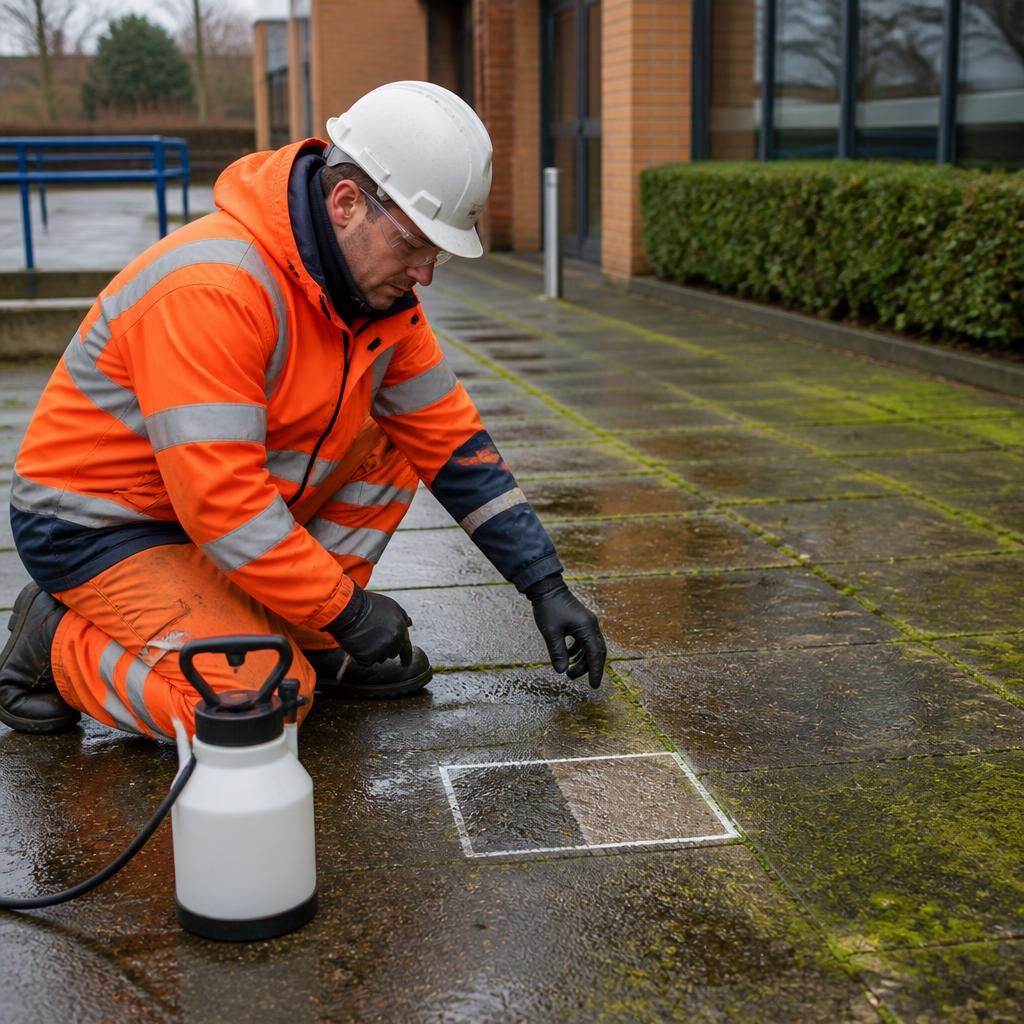
A controlled test patch is the most reliable way to confirm that a moss removal method will not damage a delicate path or surface. The test should use the same equipment, pressure, heat, cleaning product and contact time proposed for the full area.
Choose an inconspicuous section that reflects the material’s condition, then inspect it after rinsing and again once dry. Check for:
- Etching, scratches or exposed aggregate
- Colour changes, streaking or coating loss
- Disturbed joints, loosened edges or displaced particles
- Changes to the surface texture or slip characteristics
If the result is unsatisfactory, reduce the intensity or choose a gentler method rather than proceeding across the site.