
How can businesses integrate moss removal processes within their overall maintenance strategy to ensure long-term surface health and safety?
Businesses should integrate moss removal into a planned exterior maintenance programme, combining routine inspections, prompt treatment, surface-appropriate cleaning and measures that reduce recurring moisture and shade. Recording moss growth, surface condition and completed work helps property teams schedule maintenance before growth creates slip risks, blocks drainage or causes long-term surface deterioration.
Moss removal should be managed as a planned maintenance activity rather than an occasional reaction to visibly green surfaces. A robust strategy combines routine inspections, risk-based treatment, surface-appropriate cleaning, drainage and vegetation control, and accurate records of work completed. This helps businesses address slip hazards promptly while reducing moisture-related deterioration, staining and recurring growth.
Begin with a site-wide condition survey. Record where moss, algae and other organic growth are present, the type and condition of each surface, areas that remain shaded or damp, and any defects such as cracking, loose paving, failed joints or blocked drainage. Include paths, ramps, steps, loading areas, courtyards, car parks, roof access routes and other locations used by staff, visitors or vehicles. Photographs and marked-up site plans make it easier to compare conditions during later inspections.
The survey should also identify how serious each location is from an operational and safety perspective. Prioritise areas with pedestrian traffic, slopes, steps, entrances, emergency routes, access points and surfaces that stay wet for prolonged periods. Moss on a rarely used decorative wall may require a different response from moss on a frequently used ramp or service yard. This risk-based approach ensures that resources are directed towards locations where growth is most likely to cause a slip, trip, drainage or access problem.
Set inspection and treatment frequencies according to site conditions. There is no universal cleaning interval that suits every property. Shaded elevations, north-facing paths, tree-covered courtyards and areas with poor drainage generally require closer monitoring than exposed, well-drained surfaces. Inspections should be increased during persistently wet periods and after work that may disturb soil, vegetation or drainage channels. They should also follow reports of slippery surfaces, water pooling or rapidly returning growth.
Routine inspections should look beyond the visible presence of moss. Check whether growth is lifting or concealing paving joints, retaining moisture against masonry, narrowing drainage channels or making surface defects harder to see. Note slippery films, discolouration, loose aggregate, damaged sealants and areas where cleaning has exposed a pre-existing defect. These observations help determine whether moss removal alone is sufficient or whether repairs, drainage work or vegetation management are also required.
Coordinate moss removal with the wider maintenance programme. Cleaning is often most effective when scheduled alongside related tasks, such as gutter and drain clearance, tree or hedge pruning, roof maintenance, façade cleaning, paving repairs and sealant replacement. Removing overhanging vegetation can improve drying and light levels, while clearing blocked drainage reduces the damp conditions that support regrowth. Repairs should be planned before or after cleaning as appropriate so that newly cleaned surfaces are not immediately contaminated by construction debris or disturbed soil.
Where a site has multiple contractors, establish clear responsibility for reporting and responding to moss growth. A facilities team may identify the issue during an inspection, while a specialist contractor carries out the treatment and a repair contractor addresses damaged paving or drainage. Written instructions should define the areas included, access requirements, expected finish, protection of adjacent materials and the process for reporting defects discovered during cleaning.
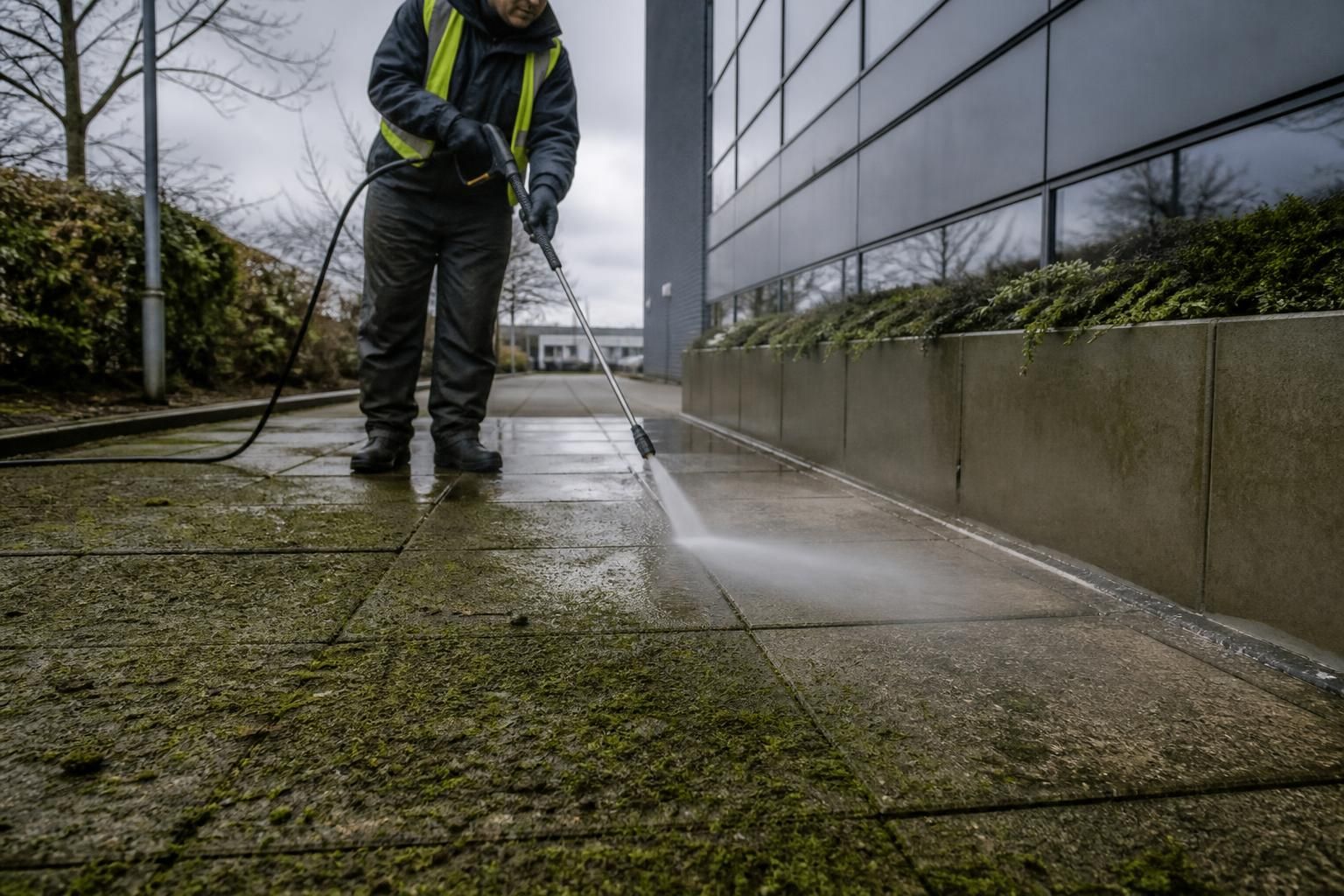
Choose the cleaning method according to the surface and the source of the risk. Pressure washing can be suitable for robust, sound concrete or other compatible hard surfaces, but excessive pressure or an unsuitable nozzle can erode joints, dislodge aggregate and drive water into vulnerable areas. Steam cleaning offers controlled treatment for some sensitive or heavily soiled surfaces and can reduce the need for aggressive mechanical action. Manual scraping, brushing or low-pressure cleaning may be more appropriate for fragile paving, older masonry, painted surfaces or areas with vulnerable joints.
Before full treatment, assess the surface for age, porosity, coatings, repairs, jointing materials and existing damage. A small test area can confirm whether the selected method removes growth without causing unacceptable colour change, surface marking or loss of material. The treatment plan should also consider nearby drains, planting, water-sensitive equipment, vehicles, electrical installations and building entrances. Run-off and waste should be controlled in line with the site’s environmental requirements.
Build safety controls into every stage of the process. Moss removal can create temporary slip hazards because loosened growth, water and cleaning residues may spread beyond the immediate work area. Use suitable barriers, warning signs and exclusion zones, and plan pedestrian and vehicle diversions where necessary. Work should be sequenced so that access routes are reopened only when they have been adequately rinsed, inspected and are safe to use.
Risk assessments and method statements should address work at height, powered equipment, pressurised water, manual handling, traffic movement, electrical hazards and contact with cleaning agents. Operatives should use appropriate personal protective equipment and follow the site’s control measures. Particular care is needed on ramps, steps, loading bays and sloping surfaces, where residual moisture or uneven cleaning can create additional risks. Cleaning should not conceal or worsen defects that require repair.
Use preventative measures to reduce the conditions that allow moss to return. Keep gullies, channels and downpipes clear, correct drainage problems where practicable, and manage vegetation that creates persistent shade or drops organic debris. Review irrigation arrangements and investigate areas that remain wet without an obvious cause. On suitable, sound surfaces, a compatible protective treatment may help reduce water retention or make future cleaning easier, but it should be selected only after checking compatibility, appearance, slip characteristics and maintenance requirements.
Preventative work does not eliminate the need for inspection. Moss can return where dampness, shade and airborne organic matter remain, and coatings can wear or become unsuitable as surfaces age. Treat preventive measures as part of a maintenance cycle, with their condition reviewed during subsequent inspections rather than assuming that one application provides permanent protection.
Keep records that support decisions and demonstrate control. A useful maintenance record should include the inspection date, location, observed growth, surface condition, risk level, method used, products or equipment applied, weather or site conditions where relevant, precautions taken, waste or run-off controls, defects identified and any follow-up action. Before-and-after photographs can help verify the work and provide a reference for recognising unusual regrowth or deterioration.
Records allow property managers to identify recurring problem areas and adjust the maintenance plan based on evidence. For example, repeated growth beside a blocked channel suggests a drainage issue, while regrowth beneath dense vegetation may indicate a need for pruning. A pattern of damage around joints may show that the cleaning method or pressure requires review. This information also supports communication between facilities teams, contractors and site users.
Review the programme after each treatment and following significant site changes. Assess whether the surface is clean, stable and safe to use, whether drainage is functioning, and whether any defects need a separate repair. Reconsider the method if the surface has changed through resurfacing, refurbishment, coating or wear. New extensions, landscaping, tree growth, construction activity and changes in traffic can also alter moisture patterns and cleaning requirements.
For larger commercial or industrial sites, a planned schedule can combine routine visual checks by on-site staff with periodic specialist inspections and targeted treatment. On-site teams should know how to report slippery growth, pooling water, damaged paving and blocked drainage without waiting for the next scheduled clean. Specialist contractors can then provide a condition-based response, use the appropriate access and cleaning equipment, and advise whether the underlying cause needs attention.
Integrating moss removal in this way protects the surface itself while supporting wider duties for safe access, effective drainage and responsible property management. The most sustainable approach is not simply to clean more often, but to inspect intelligently, treat the correct areas with a compatible method, remove the causes of persistent dampness where possible and verify that the surface remains safe and serviceable afterwards.
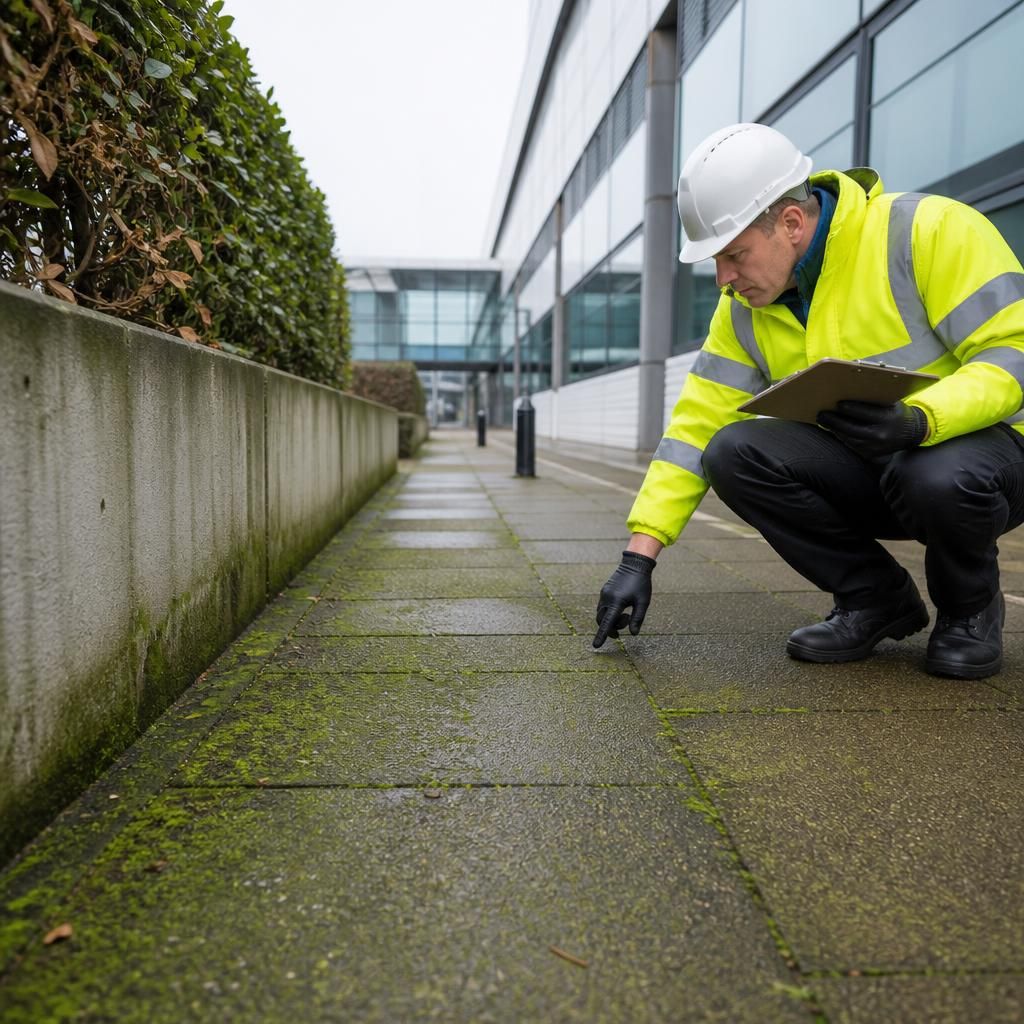
Integrating moss removal into a planned inspection and maintenance cycle helps businesses address slip hazards and surface deterioration before they become wider access or repair problems. Routine checks should identify moss, algae, standing water, blocked drainage, damaged joints and areas that remain shaded or damp.
Record each finding by location, surface type, risk level and required action. This allows property teams to prioritise busy paths, ramps, steps, entrances, loading areas and emergency routes, while monitoring less frequently used surfaces according to their exposure and condition.
- Schedule inspections alongside drain clearance, vegetation management, paving repairs and façade or roof maintenance.
- Use photographs and site plans to compare regrowth and surface condition over time.
- Review the cleaning method if joints, coatings, aggregate or delicate materials show damage.
- Reinspect treated areas after cleaning to confirm that they are stable, adequately rinsed and safe to use.
Arrange Your Planned Moss Removal Maintenance Programme
Arrange your planned moss removal maintenance programme with Encanto Exterior Cleaning to keep commercial paths and surfaces safe, clean and serviceable. We can help assess recurring growth, identify underlying causes and schedule suitable cleaning alongside your wider property maintenance.