
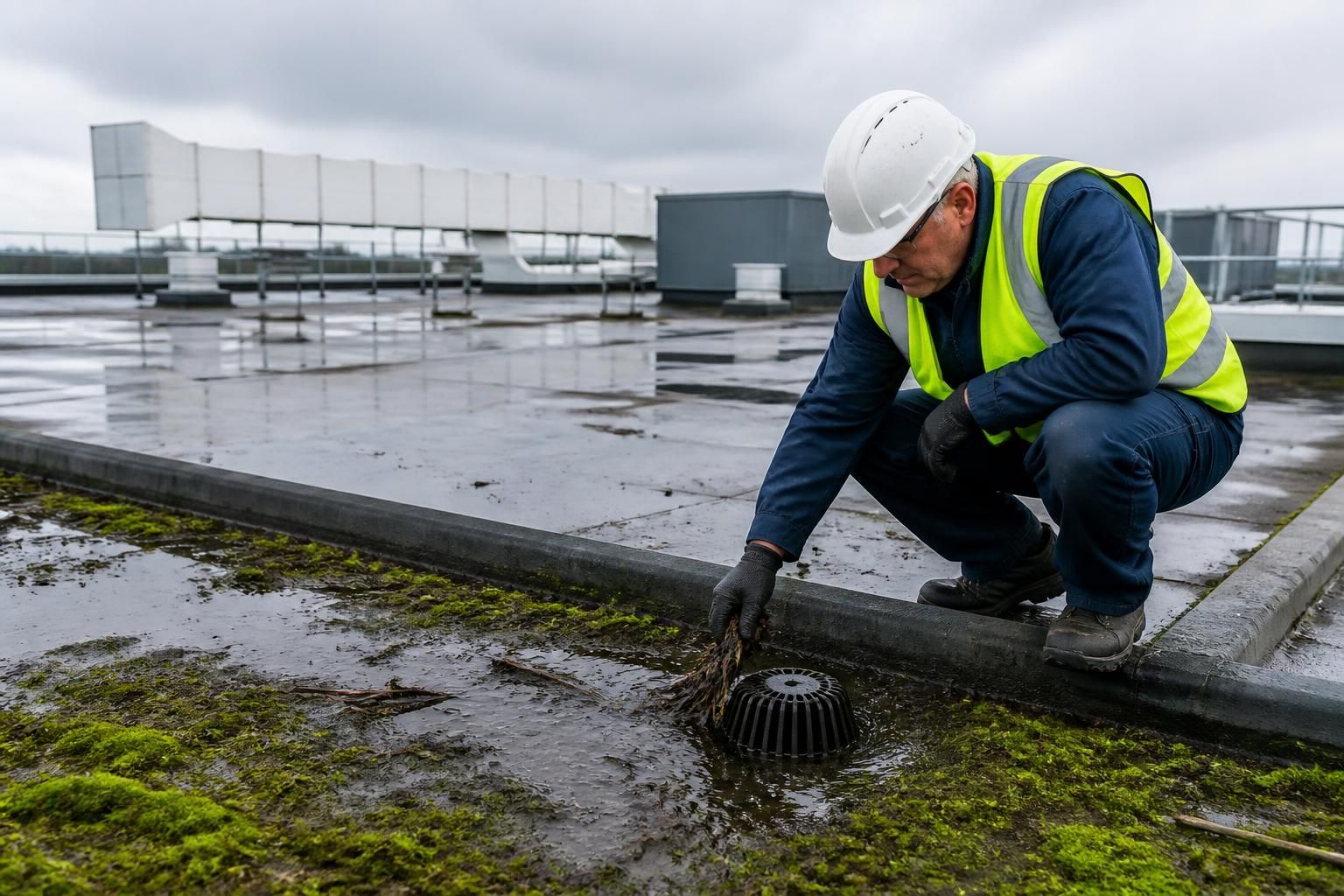
What methods are available for preventing moss growth on flat roofs?
Preventing moss growth on flat roofs typically involves removing existing moss, applying a suitable biocidal treatment, keeping outlets and drainage channels clear, and reducing shade or debris where practical. Regular inspections and professional cleaning help identify blocked drainage, retained moisture and damaged waterproofing before moss can become established.
Preventing moss growth on a flat roof usually requires a combination of careful moss removal, compatible biocidal treatment, effective drainage and regular inspections. Flat roofs are particularly prone to moss where water remains on the surface, outlets become obstructed, or the roof is shaded by nearby buildings and vegetation. The correct method depends on the waterproofing system, roof access, drainage design and condition of the surface.
Remove existing moss before applying preventative treatment
Any established moss, algae and accumulated organic debris should be removed before prevention work begins. On many flat roofs, this is done by hand or with soft brushes and scrapers selected for the roof material. The aim is to lift the growth without cutting, puncturing or abrading the waterproof layer beneath it.
High-pressure washing is not automatically suitable for a flat roof. Excessive pressure can damage mineral finishes, disturb laps and joints, force water beneath membrane edges or shorten the life of older roofing materials. Where cleaning equipment is appropriate, the pressure, temperature and distance from the surface should be controlled by someone familiar with the particular roof system.
Apply a suitable biocidal treatment
After physical cleaning, a compatible biocidal treatment can help control remaining moss spores, algae and lichen. These treatments work over time rather than simply removing growth immediately, so the roof may need to be monitored after application. Product choice and dilution must follow the manufacturer’s instructions and account for the membrane, surrounding materials, drainage arrangements and environmental controls.
A treatment used on a traditional mineral-finished felt roof may not be suitable for EPDM, PVC, TPO, GRP or coated metal. Some products can affect surface finishes, seals or adjoining materials. Run-off should also be managed responsibly, particularly where roof outlets discharge into planted areas, watercourses or sensitive surfaces.
Keep outlets, gutters and drainage channels clear
Blocked outlets are one of the most important conditions to address on a flat roof. Leaves, silt and moss can restrict drainage and create areas of persistent moisture, which encourage further growth and place additional stress on the waterproofing system. Regularly clear outlets, gutters, gullies, channels and protective leaf guards, taking care not to push debris into the drainage system.
Drainage should be checked after heavy rainfall as well as during planned maintenance. Water that remains on the roof may indicate a blocked outlet, damaged drainage component, settlement, inadequate falls or a defect in the roof construction. Cleaning alone will not resolve an underlying drainage problem.
Reduce the conditions that encourage moss
Moss favours moisture, shade and organic material. Prevention can therefore include trimming overhanging branches, removing leaves and silt, and keeping nearby trees and vegetation under control where this can be done safely. Ventilation and drying may improve when obstructions around the roof are reduced, although no structural or building alteration should be made without suitable advice.
It is not always possible to remove shade from adjacent buildings or plant growth, so these measures should be combined with inspections and treatment rather than treated as a complete solution.
Use roof coatings only where they are appropriate
Specialist roof coatings can improve surface protection on some systems, but they are not a universal moss-prevention method. A coating must be compatible with the existing membrane or finish, suitable for the expected movement and weather exposure, and applied to a clean, dry and sound surface. Covering moss, trapped moisture or defective areas can conceal problems and lead to premature failure.
Before coating, inspect laps, seams, penetrations, edge details, flashings and areas around plant or service equipment. Repairs should be completed with materials approved for that roof system. A coating should be considered as part of a wider maintenance plan, not as a substitute for clearing drainage or correcting ponding.
Consider physical deterrents carefully
Metal strips or similar moss-deterrent products are sometimes proposed because rainwater can carry small quantities of metal across a roof surface. Their effectiveness on flat roofs is inconsistent, particularly where the roof has limited water flow or several separate drainage areas. They may also create corrosion or run-off concerns and should not be installed without checking compatibility with the roof and drainage system.
These products are not a replacement for cleaning, biocidal treatment or regular inspection. They are generally less useful where water ponds rather than flowing across the roof.
Adopt a planned inspection and maintenance routine
Flat roofs benefit from a documented maintenance schedule that records the roof condition, drainage points, previous treatments, defects and areas where moss returns. Inspections should include:
- moss, algae, lichen and organic debris on the roof surface;
- blocked or damaged outlets, gutters, gullies and leaf guards;
- ponding water or areas that remain damp after rainfall;
- lifting, cracking or open joints, laps and edge details;
- damage caused by foot traffic, equipment, birds or vegetation; and
- the condition of flashings, penetrations, upstands and roof-access points.
Inspections are especially important after severe weather, building work or access by other contractors. Maintenance should be carried out by people who can work safely at height and understand the risk of damaging the waterproofing system.
Choose the method according to the roof type
Traditional felt, EPDM rubber, single-ply membranes, GRP and metal roofs have different tolerances for cleaning methods and chemicals. Older or weathered roofs may require a gentler approach than a newer, robustly finished surface. If the roof is under warranty, check whether cleaning products, coatings or repair materials need to be approved by the system manufacturer.
For large commercial or industrial roofs, a professional assessment is useful before work starts. It can identify the membrane type, locate vulnerable details, assess access and fall-protection requirements, and establish whether moss is a surface-maintenance issue or a symptom of defective drainage or waterproofing.
The most reliable prevention plan is therefore to remove moss without damaging the roof, apply a roof-compatible treatment where appropriate, keep drainage clear, limit debris and shade where practical, and inspect the surface at planned intervals. If moss is recurring quickly, the cause should be investigated rather than repeatedly treating the visible growth. Persistent moisture, ponding or damaged roof details may require repair or a wider roofing assessment.
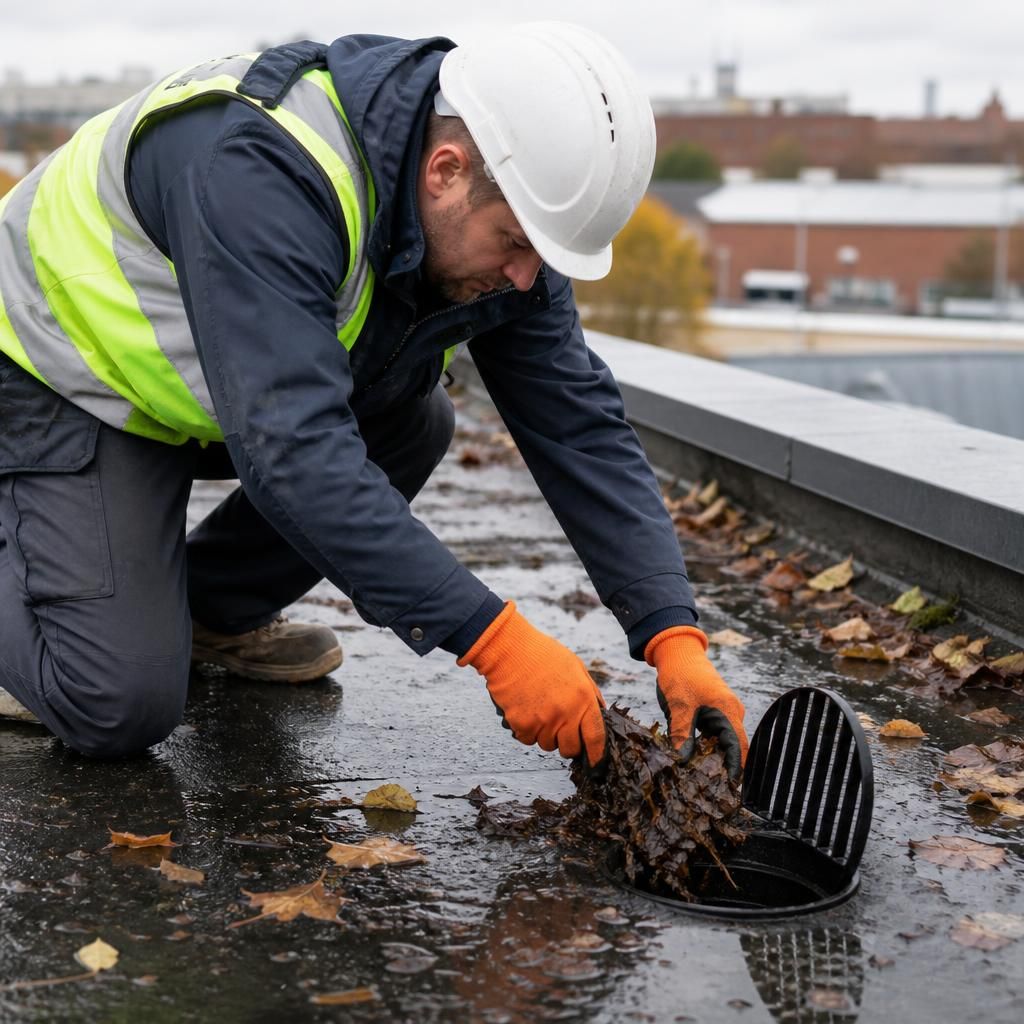
Keeping flat-roof drainage clear is one of the most effective ways to prevent moss growth. Moss thrives where water, silt and organic debris remain on the surface, so blocked outlets, gullies and channels should be cleared before they create persistent damp areas.
Planned inspections should check outlets, leaf guards, gutters, upstands and areas around roof equipment. After heavy rain, look for ponding that remains once surrounding areas have dried. Standing water may indicate a blockage, damaged outlet, inadequate falls or a defect in the roof system, rather than a simple cleaning issue.
Remove debris carefully without pushing it into the drainage system, and avoid tools or pressure-washing methods that could puncture or abrade the waterproofing. Where moss is already established, physical removal followed by a roof-compatible biocidal treatment can help control remaining growth. The treatment must be selected for the specific membrane or roof finish, with run-off managed responsibly.