
What maintenance routines should be implemented after a roof moss treatment to ensure ongoing moss prevention?
After a roof moss treatment, implement scheduled roof inspections, remove leaves and debris, keep gutters and drainage channels clear, and address damaged or shaded areas that could support regrowth. Arrange follow-up cleaning or preventative treatment when early moss appears, while using suitable access and methods that avoid damaging the roofing materials.
Ongoing moss prevention after a roof treatment depends on routine inspections, keeping the roof and drainage system clear, correcting conditions that encourage regrowth, and arranging follow-up treatment before moss becomes established again. The maintenance plan should reflect the roof covering, building use, surrounding vegetation, local exposure and the product or cleaning method originally used.
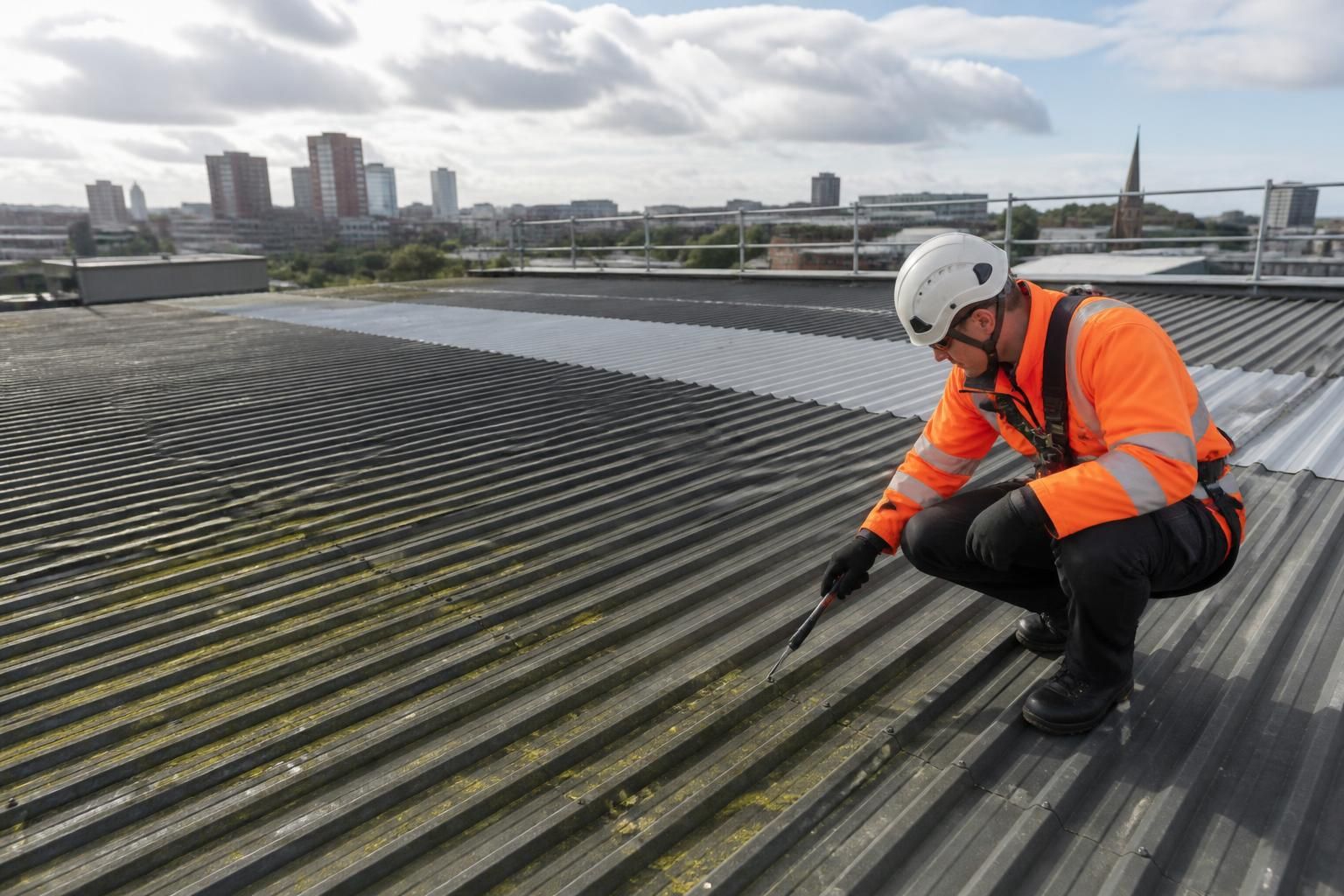
Inspect the roof regularly. Arrange planned visual inspections throughout the year, with additional checks after prolonged wet weather, storms or nearby construction work. Look for returning moss, algae or lichen, trapped leaves, standing water, displaced roof components, blocked outlets, damaged coatings and areas where debris has accumulated. Early regrowth is usually easier to manage than thick moss that has developed roots and retained moisture within joints or surface imperfections.
Inspections should be carried out from a safe position wherever possible. Roof access should not be attempted by untrained staff, particularly on fragile, steep or wet surfaces. Commercial properties may require a documented inspection process, suitable access equipment and controls for working at height. A professional inspection can identify problems that are not visible from ground level without placing building occupants or maintenance staff at unnecessary risk.
Keep gutters, outlets and drainage channels clear. Moss and roof debris can be washed into gutters and downpipes after treatment. If these routes become blocked, water may back up beneath roof coverings, overflow onto façades or create persistently damp conditions that support further biological growth. Include gutters, valleys, parapet outlets, hopper heads, rainwater pipes and other drainage points in the maintenance plan rather than inspecting the roof surface alone.
Remove leaves, twigs, silt and other organic matter before it remains wet against the roof for extended periods. Pay particular attention to areas below overhanging trees, beside roof-mounted equipment and around roof edges where wind-blown debris tends to collect. Vegetation should be managed where practical, as branches can shade the surface, deposit nutrients and physically damage roof coverings during adverse weather.
Check for conditions that encourage regrowth. Moss is more likely to return where a roof remains damp and shaded. During inspections, assess overhanging vegetation, poor ventilation, blocked drainage, leaking pipework, defective flashings and areas of standing water. Repairs to these underlying issues are an important part of prevention. Applying another treatment without correcting a persistent moisture source may provide only short-term improvement.
Roof repairs should be completed using materials and methods compatible with the existing covering. Damaged tiles, slates, sheets, membranes, pointing, sealants and protective coatings can create places where moisture and organic matter collect. Any repair or replacement work should be coordinated with the cleaning and treatment plan so that newly treated areas are not contaminated or damaged by subsequent access.
Monitor the treatment result and arrange follow-up work when needed. Some treatments continue to work after application, so visible changes may occur gradually rather than immediately. Avoid removing residual treatment or applying additional chemicals unless this has been recommended for the specific roof covering. If moss begins to reappear, arrange an assessment while growth is still light. Follow-up cleaning or preventative treatment should be selected according to the material, its condition and the previous treatment method.
Do not assume that a roof is permanently protected after one application. Treatment life varies according to weather exposure, shading, roof condition, surrounding vegetation and the type of growth present. A maintenance plan should therefore use inspection findings to determine when further work is appropriate rather than relying on an unsuitable fixed interval.
Use roof-covering-specific maintenance methods. Different materials tolerate different levels of pressure, heat, chemical treatment and mechanical agitation. Fragile tiles, aged slates, coated metal, roof membranes and other specialist systems may require controlled low-pressure cleaning, soft washing, steam cleaning or hand removal instead of aggressive pressure washing. Product compatibility should be confirmed before any preventative treatment is applied, particularly where a roof has a factory finish, waterproofing layer or existing protective coating.
Routine maintenance should also protect the roof from avoidable damage. Do not drag equipment across the surface, place heavy items on unsupported areas or allow unplanned foot traffic by contractors. Where access is required for plant, signage, inspections or other building services, use designated walkways and suitable protection. Cleaning teams and other contractors should be informed of fragile areas and any restrictions associated with the roof system.
Keep records of inspections and maintenance. Record the inspection date, observed growth, blocked drainage, defects, areas of shading, work completed and any recommended follow-up. Photographs taken from consistent viewpoints can help compare changes over time. For managed commercial premises, these records support planned maintenance, help coordinate contractors and provide evidence that roof drainage and visible defects are being monitored.
Seasonal checks are particularly useful. After autumn leaf fall, clear organic debris and inspect drainage. During wetter and cooler periods, look for damp areas and returning growth. Following storms, check for displaced or damaged components and new debris. In drier weather, arrange repairs and vegetation management where safe access is available. The exact timing should be adapted to the site rather than applied as a rigid programme.
Contact the maintenance team promptly if moss returns in concentrated patches, gutters repeatedly block, water remains on the roof, internal damp appears, or roof materials become loose or damaged. These signs may indicate a drainage, repair or moisture problem rather than simple surface regrowth. A planned response helps preserve the treatment result, reduce disruption to the building and maintain a safer, cleaner commercial roof.
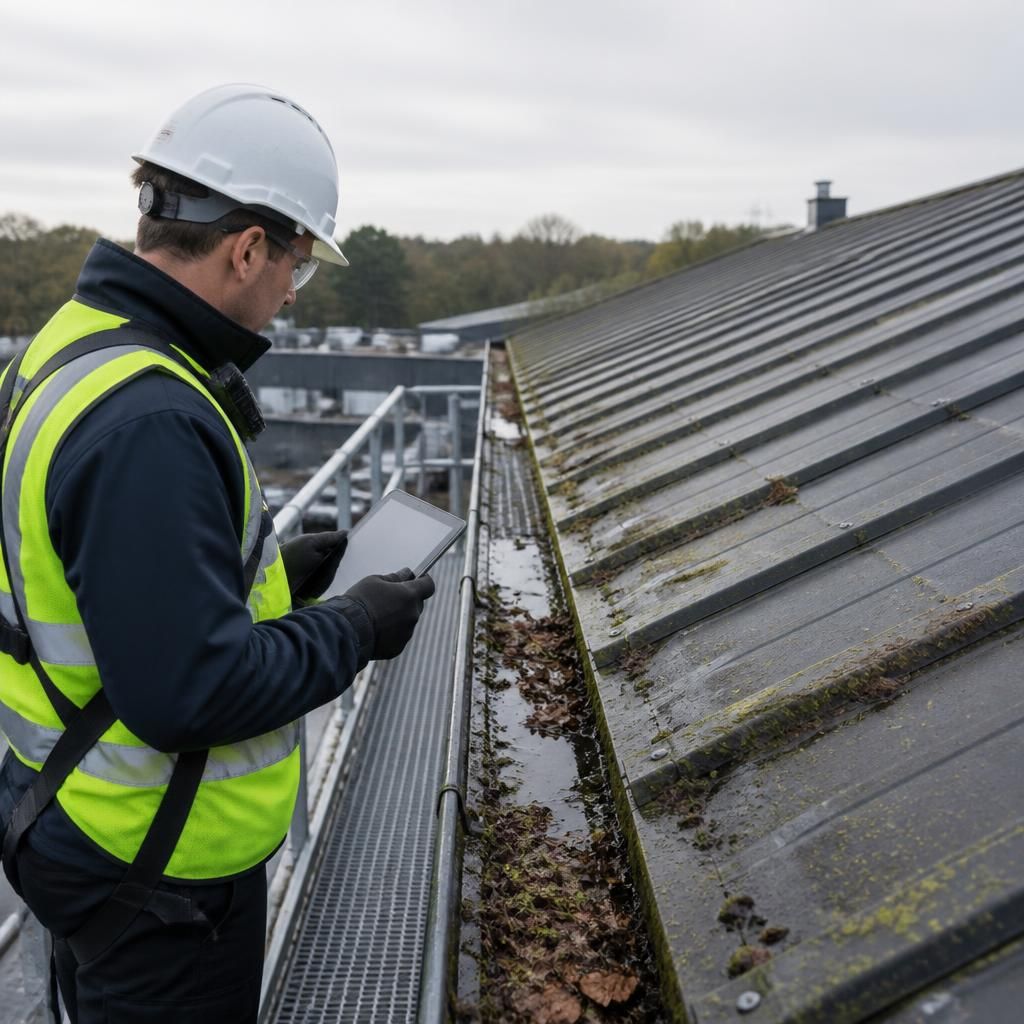
Post-treatment roof inspections are a key part of ongoing moss prevention because they identify early regrowth, trapped debris and drainage problems before these conditions become established. Check the treated roof surface, gutters, valleys, outlets and nearby vegetation from a safe access position, particularly after periods of wet weather or strong winds.
- Remove leaves, twigs and silt that can retain moisture against the roof.
- Check for returning moss, algae, lichen, standing water, damaged coverings and defective flashings.
- Keep overhanging vegetation managed where practical to improve light and reduce organic debris.
- Record findings and arrange suitable follow-up treatment while regrowth remains limited.
Maintenance should use methods compatible with the roof covering. Fragile or coated materials may require controlled cleaning or hand removal rather than aggressive pressure washing, and all work at height should be completed with suitable access equipment and controls.
Book a Roof Moss Treatment Follow-Up Inspection
Book a roof moss treatment follow-up inspection to check for early regrowth, trapped debris, drainage issues and any roof defects requiring attention. We can recommend suitable maintenance or further treatment based on the roof covering and its current condition.