
What factors should be considered when selecting a moss treatment method for different roof types?
Select a moss treatment method by considering the roof’s material, pitch, condition, drainage, surrounding vegetation and the extent of moss growth. The treatment must be compatible with the roofing surface, applied safely without damaging tiles, membranes, coatings or fixings, and supported by suitable follow-up maintenance to help prevent regrowth.
The most suitable moss treatment method depends on the roof covering, its condition, design, access requirements and the extent of the growth. A method that is appropriate for robust concrete tiles may be unsuitable for slate, coated metal, single-ply membranes or an aged roof. Selection should therefore balance cleaning effectiveness with the risk of surface damage, water ingress, chemical incompatibility, runoff and future regrowth.
Roofing material and surface finish
The roof covering is the first factor to assess. Concrete and clay tiles can often tolerate controlled manual removal followed by an appropriate biocidal treatment, provided the tiles and their coatings are in sound condition. Older or brittle tiles require a gentler approach because aggressive pressure can dislodge the surface, expose the underlying material or break already weakened sections.
Natural slate needs particular care. Slate can delaminate, crack or become loose around fixings, especially where it has weathered. Treatment should normally prioritise careful removal and a compatible moss-control product rather than high-pressure cleaning. The condition of the nails, hooks, flashings and abutments should also be considered before work begins.
Concrete and clay tiles may have factory-applied coatings or weatherproof finishes. Strong chemicals, excessive heat and abrasive techniques can alter their appearance or reduce the protection provided by the finish. Where the roof has been painted, sealed or otherwise coated, the treatment must be checked for compatibility with that coating.
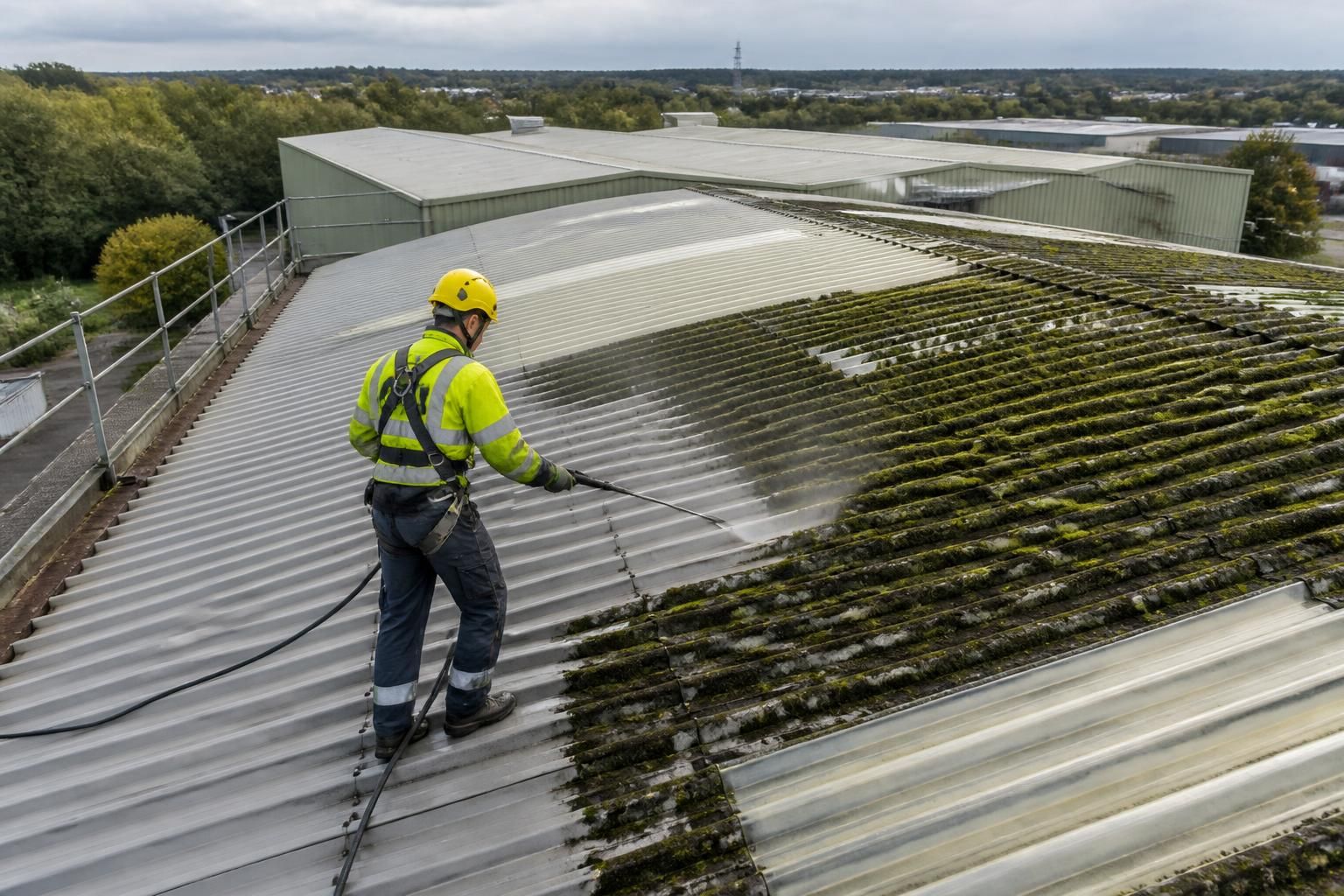
Metal roofing, profiled sheeting and coated panels can be affected by harsh chemicals, abrasive cleaning and poorly controlled pressure. Moss is less commonly established across exposed metal surfaces, but it can collect at laps, gutters, fixings and shaded edges. A low-impact cleaning process is generally preferable, with particular attention to preventing corrosion and protecting painted or polymer-coated finishes.
Flat roofs require a different assessment. On single-ply membranes, liquid-applied systems, felt, asphalt or coated roofs, the priority is to preserve the waterproofing layer. Scraping, concentrated pressure, sharp tools and unsuitable solvents can puncture or weaken the membrane. Moss should be removed carefully, drainage outlets kept clear and any treatment selected only after confirming that it is suitable for the specific roofing system.
Roof pitch, access and safe working conditions
The roof pitch affects both the treatment method and the level of access equipment required. Steep roofs present greater risks to operatives and make uncontrolled pressure washing unsuitable. Work may require scaffold, a mobile elevated work platform, roof ladders, temporary edge protection or other planned access arrangements.
Even a low-pitched roof can be hazardous when covered with wet moss. Moss retains water and creates a slippery surface, while fragile tiles may not safely support foot traffic. The method should allow as much work as possible from a safe position rather than relying on operatives walking across the roof. Access planning should also account for nearby buildings, public areas, vehicles, plant and pedestrian routes.
Where a roof cannot be safely accessed, treatment should not proceed until the risks have been assessed and suitable controls put in place. For commercial premises, the plan should also consider site inductions, permit requirements, isolation of work areas and coordination with the building manager or other contractors.
Condition of the roof and existing defects
Moss treatment should not be used to conceal or postpone underlying roof problems. Before selecting a method, inspect for cracked, slipped or missing tiles, damaged pointing, failed flashings, open joints, loose ridge or verge components, ponding and blocked drainage. Dense moss can hide defects, so removal may need to be gradual and followed by a close inspection.
If the covering is already fragile, manual removal with minimal disturbance may be more appropriate than pressure washing. In some cases, repairs should be completed before treatment; in others, the roof may require a specialist condition assessment or replacement rather than extensive cleaning. Applying chemicals to a failing roof will not restore its waterproofing and may make existing defects more apparent.
Extent and type of moss growth
Light surface growth can often be managed with a controlled application of a suitable moss treatment, followed by natural weathering and a planned inspection. Thick or established moss may need careful physical removal first so that the treatment can reach the roof surface. Removing large growth mechanically also reduces the risk of moss being washed into gutters and drainage systems.
Moss may be accompanied by algae, lichen, leaf debris or rooted vegetation. These growths do not always respond in the same way to a single treatment. The product, dwell time and follow-up process should reflect the organisms present, while remaining safe for the roof material and surrounding environment.
Choosing between manual cleaning, pressure washing, steam and chemical treatment
Manual removal offers a high level of control and is useful for delicate or uneven surfaces. It can be labour-intensive and must be carried out without levering against tiles, membranes, flashings or fixings.
Pressure washing can remove heavy deposits quickly from suitable robust surfaces, but it must be carefully controlled. Excessive pressure or an unsuitable nozzle can drive water beneath laps and tiles, damage coatings, loosen pointing and spread contaminated runoff. It is not automatically appropriate simply because moss is visible.
Steam cleaning uses controlled heat and lower mechanical force than conventional high-pressure cleaning. It may be useful where surface deposits need to be removed without aggressive abrasion, although the roof covering, coatings, membranes, seals and drainage arrangements must still be assessed for heat and moisture sensitivity.
Biocidal or other specialist moss treatments can help control remaining growth and slow regrowth after physical cleaning. The product must be approved and suitable for the intended surface, mixed and applied according to its instructions, and kept away from people, animals, sensitive vegetation and watercourses. Treatment alone is unlikely to provide lasting results where shade, dampness, blocked gutters or persistent organic debris remain.
Drainage, runoff and the surrounding environment
Gutters, downpipes, outlets and drainage channels should be considered before work starts. Detached moss and treatment liquid can enter the drainage system, causing blockages or allowing contaminated runoff to reach hard surfaces, planted areas or watercourses. Downpipes may need to be protected, temporarily disconnected or monitored, depending on the site and the selected treatment.
Nearby trees and vegetation are also relevant. Overhanging branches increase shade, deposit organic matter and retain moisture, creating conditions for regrowth. However, vegetation should not be exposed to unsuitable chemicals or uncontrolled wash water. On commercial or public sites, the method statement should include measures for protecting landscaping, collecting debris and controlling runoff.
Weather and timing
Weather conditions influence both safety and treatment performance. Rain can dilute a product or move it away from the intended surface, while strong wind can create spray drift and make access equipment unsafe. Cold conditions, prolonged dampness and rapid drying in direct sun may also affect the application process. Treatment should be planned for a suitable weather window and the roof should be inspected afterwards to confirm that gutters, outlets and surrounding areas are clear.
Long-term prevention and maintenance
The best method is not necessarily the one that removes moss most quickly; it is the one that suits the roof and supports manageable maintenance. After treatment, agree an inspection routine based on the roof’s exposure, surrounding vegetation, drainage performance and growth rate. Keeping gutters clear, removing leaf accumulation, controlling overhanging vegetation where appropriate and addressing sources of persistent shade or dampness can reduce regrowth.
For larger commercial roofs, records should be kept of the roof material, areas treated, products used, access arrangements, defects identified and any follow-up work required. When the roof type or condition is uncertain, a site assessment is safer than selecting a treatment based solely on the visible moss. The final method should be proportionate, surface-compatible, environmentally controlled and supported by planned maintenance.
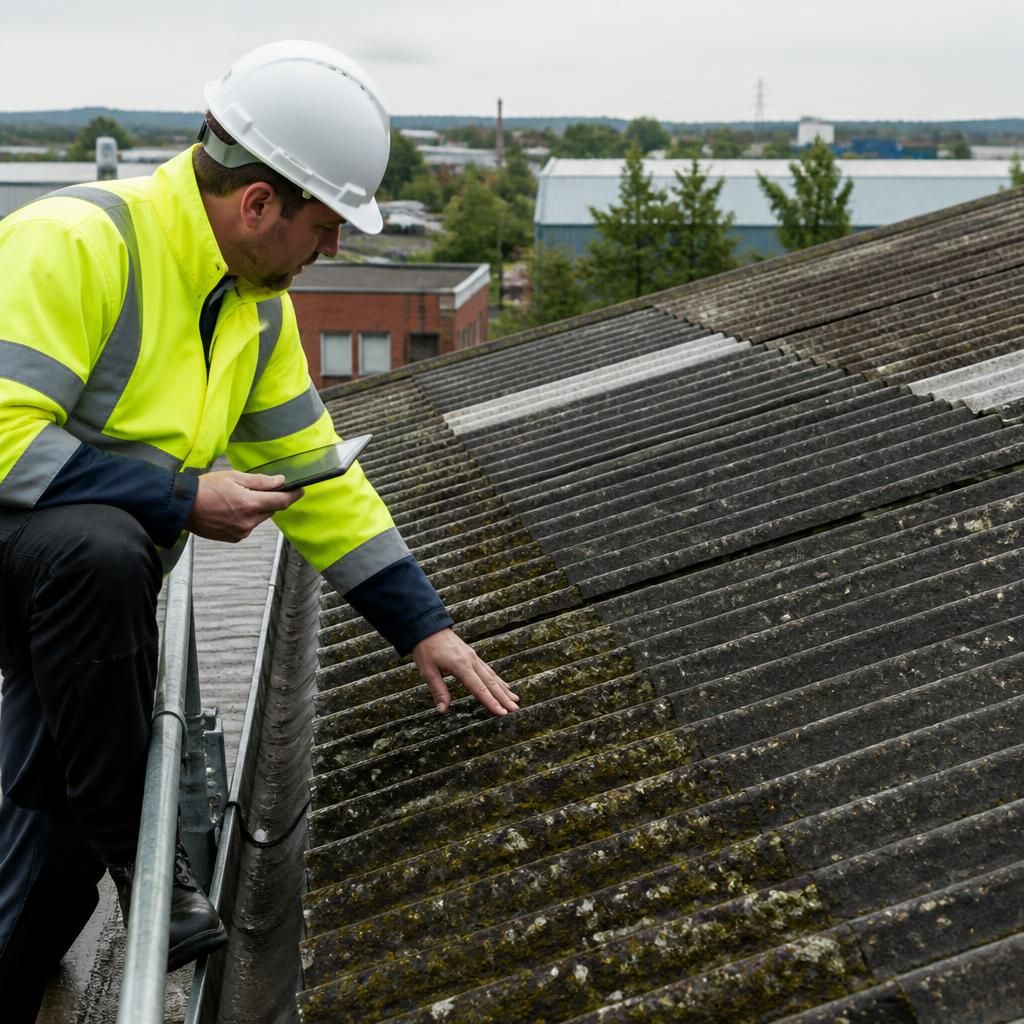
Roofing material is the primary factor when selecting a moss treatment method because tiles, slate, metal and flat-roof membranes have different tolerances to pressure, heat, chemicals and foot traffic.
Concrete tiles may suit controlled manual removal followed by a compatible treatment, while aged or coated tiles often require a gentler approach. Natural slate can crack or delaminate if handled aggressively, and single-ply membranes, felt and liquid-applied systems must be protected from scraping, sharp tools and unsuitable products. The roof’s condition should also be checked first, as moss treatment cannot repair damaged coverings, failed flashings or blocked drainage.