
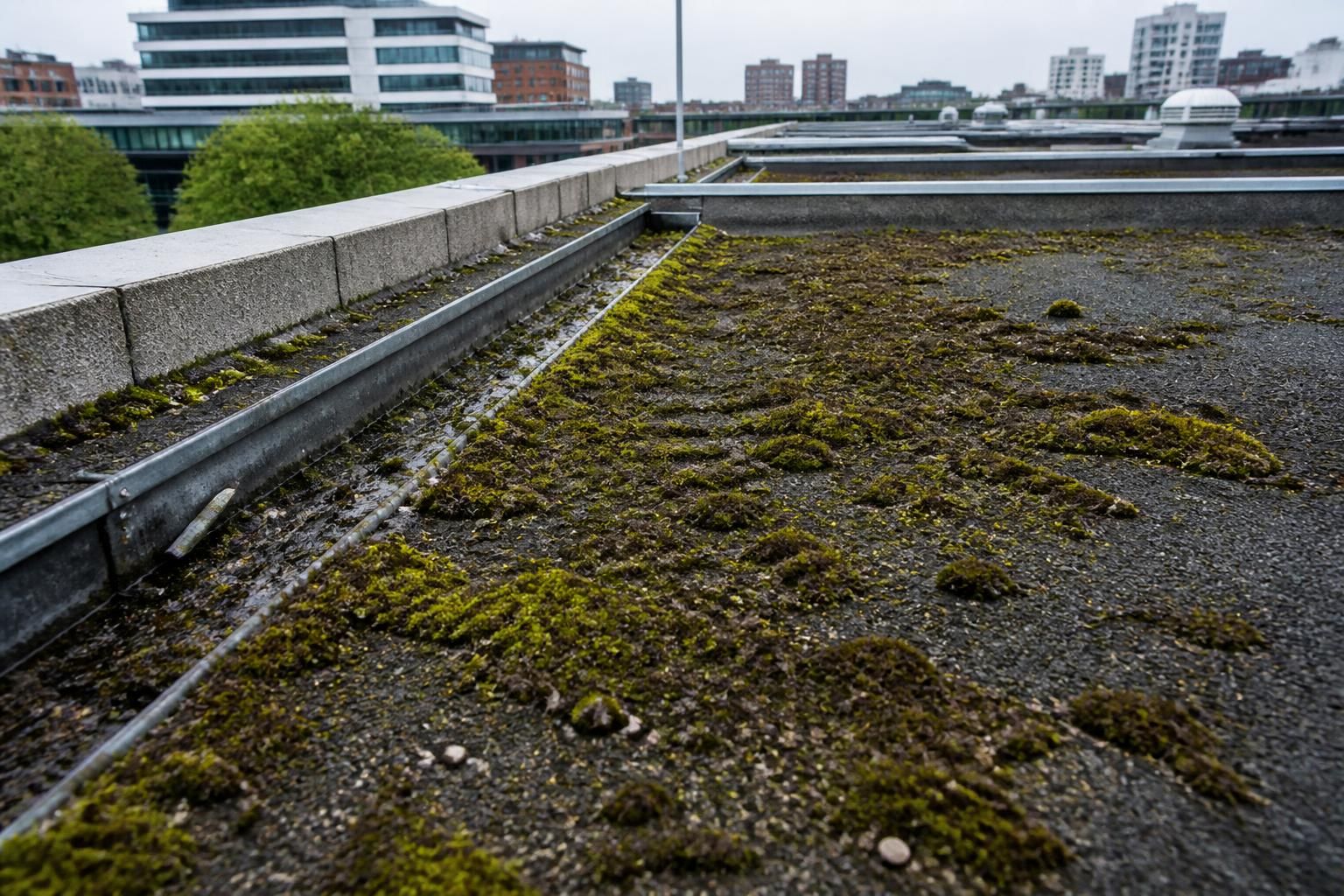
What are the potential risks of not implementing regular moss treatment and prevention on my roof?
Without regular moss treatment and prevention, moss can retain moisture against the roof, block drainage routes and contribute to damage to tiles, membranes, fixings and underlying structures. Over time, this increases the risk of leaks, damp, slipped or broken roofing materials, blocked gutters and more costly remedial work.
Not implementing regular moss treatment and prevention allows moss to retain moisture against the roof, obstruct drainage and place continual stress on roofing materials. If the growth is left unmanaged, the risk can extend from surface staining and blocked gutters to damaged tiles, leaks, damp insulation and deterioration of the underlying roof structure.
Moss is more than a cosmetic issue. It acts like a moisture-holding layer, keeping roof surfaces damp for longer after rainfall. This can slow drying, encourage algae and lichen growth, and create conditions in which roofing materials deteriorate more quickly. Areas shaded by nearby buildings, trees or roof features are particularly prone to persistent moisture and recurring growth.
Damage to tiles and roof coverings
Moss can attach itself around the edges and surfaces of tiles, slates and other roof coverings. As it thickens, it may lift or displace overlapping materials, leaving gaps through which rainwater can enter. Its growth can also make tiles more difficult to inspect, concealing cracked, slipped or loose sections until the defect becomes more serious.
Repeated wetting and drying can weaken some porous materials, while cold weather can increase the risk of freeze-thaw damage. Water absorbed into small cracks or porous surfaces may expand when it freezes, gradually enlarging existing defects. Moss does not cause every type of roof failure, but unmanaged growth can contribute to conditions that accelerate deterioration.
Blocked drainage and localised water ingress
Dislodged moss can wash into valleys, gutters, outlets and downpipes. When these routes become restricted, rainwater may overflow onto fascias, walls, cladding, access routes or areas around entrances. On flat or low-pitched roofs, organic debris can also collect around outlets and increase the risk of standing water.
Persistent standing water places additional demands on membranes, joints and roof details. It may find its way through failed laps, damaged seals, punctures or defective flashing. Internal signs can include staining, damp smells, peeling finishes and water marks, although a roof leak may travel along the underside of the roof before appearing inside the building.
Impact on membranes, fixings and supporting components
Where moss remains wet against a roof for prolonged periods, metal fixings, clips and other components may be more vulnerable to corrosion, particularly if protective coatings are damaged. On systems with exposed or ageing membranes, trapped moisture and root-like attachment can make inspection and maintenance more difficult. Any disturbance to a membrane, flashing or seal should be assessed carefully rather than removed by aggressive scraping or high-pressure cleaning.
If water reaches insulation, roof timbers or internal linings, the consequences can include reduced thermal performance, deterioration of timber and more extensive remedial work. In commercial premises, unnoticed moisture can also affect stored goods, equipment, electrical installations and occupied areas. The seriousness of the risk depends on the roof construction, the condition of the covering and how quickly defects are identified.
Safety and maintenance risks
Moss makes roof surfaces slippery and can increase the hazard for anyone carrying out inspections, plant maintenance or access work. Loose growth may fall onto pavements, loading areas, vehicles or building entrances. Blocked gutters can become heavy with wet organic matter, increasing strain on their brackets and fixings and raising the likelihood of overflow or detachment.
Attempting to remove established moss without suitable access equipment, edge protection and an appropriate method can cause injury or damage to the roof. A roof should not be walked on simply to check the extent of growth, particularly where the covering is fragile, steep, wet or concealed beneath vegetation.
Higher repair and disruption costs
Neglect can turn a manageable cleaning and prevention requirement into a roofing repair project. Once moss is associated with slipped tiles, damaged pointing, failed flashing, blocked drainage or internal damp, the work may involve several trades and may require temporary protection, access equipment or disruption to the building’s normal use.
For commercial and industrial sites, the practical impact can include restricted access, disruption around entrances and loading areas, damage to external finishes and unplanned maintenance. Regular treatment does not eliminate the need for roof inspections or guarantee that leaks will not occur, but it helps keep defects visible and reduces the amount of organic growth that can contribute to drainage and moisture problems.
Why prevention should be matched to the roof
Not every roof should be treated in the same way. The appropriate approach depends on the roof covering, pitch, age, condition, drainage design, extent of growth and surrounding environment. A method suitable for robust concrete tiles may be unsuitable for fragile slates, coated metal, roof membranes or surfaces with vulnerable joints and details.
Effective moss management may include a condition survey, controlled removal of loose growth, clearing of gutters and outlets, an appropriate treatment, and follow-up inspections. Treatment products must be selected and applied according to the roof material, site conditions and manufacturer guidance. Run-off should also be controlled so that removed material or treatment solution does not enter unsuitable drainage systems or affect nearby surfaces and planting.
When to arrange an assessment
An inspection is advisable where moss is thick or widespread, gutters overflow, tiles appear displaced, internal damp is present, or growth is close to valleys, outlets, rooflights, plant or access routes. It is also sensible before planned refurbishment or other roof work, as moss can conceal defects that need to be recorded and addressed.
Regular visual checks from ground level, clearance of accessible drainage routes and prompt reporting of changes can help identify problems early. Professional roof moss treatment and prevention should form part of a wider planned maintenance schedule, with the frequency based on the roof’s condition and exposure rather than a fixed routine applied to every building.
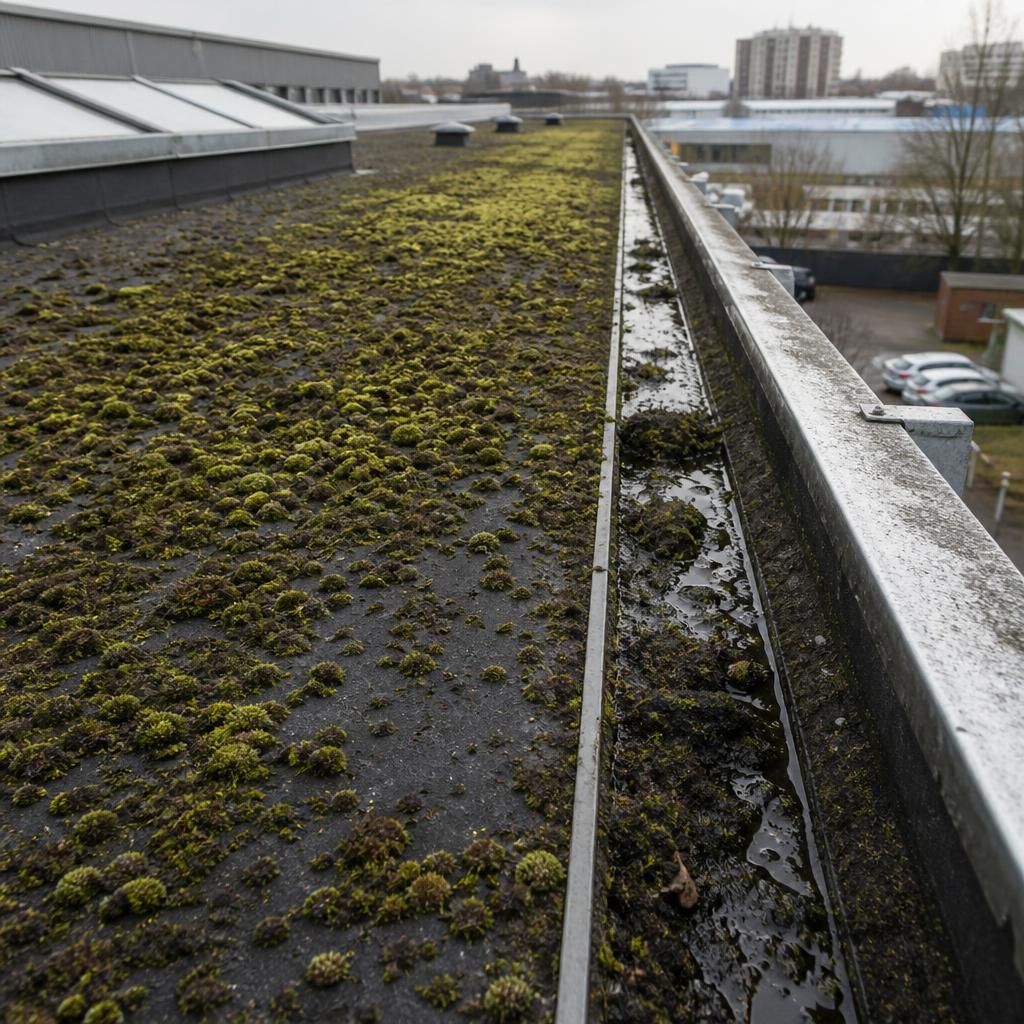
Unmanaged moss increases the risk of roof leaks by holding moisture against the covering and obstructing gutters, valleys and outlets. As moss loosens, it can wash into drainage routes, causing rainwater to overflow or remain on the roof for longer.
Persistent damp can accelerate deterioration around cracked tiles, damaged flashing, membrane joints and fixings. Water may then reach insulation, timbers or internal finishes before the leak becomes visible. Regular treatment, controlled removal and drainage clearance help keep defects visible and reduce the conditions that allow moisture-related damage to develop.
Arrange a professional roof moss assessment
If moss is obscuring roof coverings, blocking drainage or associated with damp, arrange a professional roof moss assessment before further damage develops. We can assess the roof condition and recommend a suitable treatment and prevention plan for the roof system.