
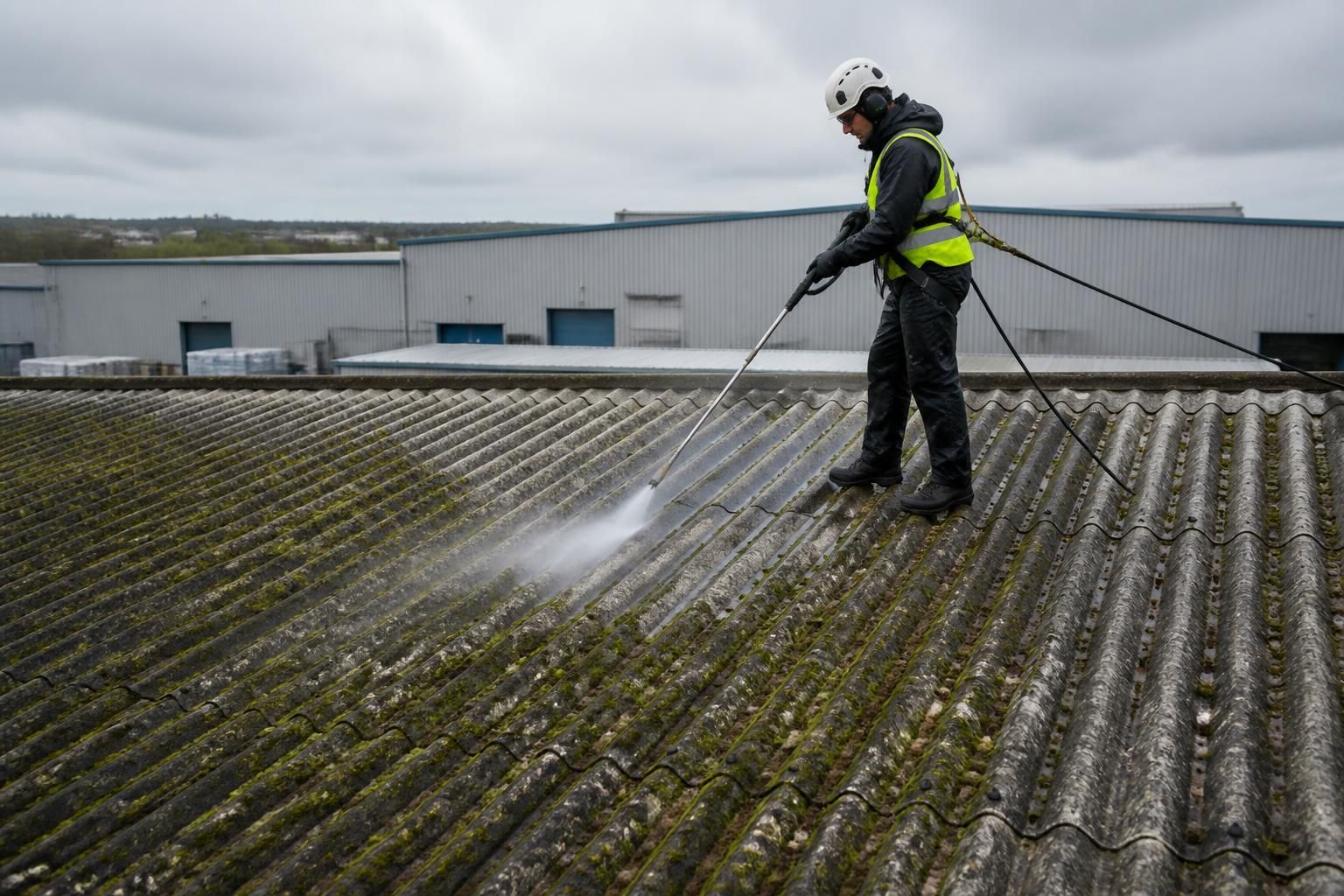
What are the long-term benefits of professional roof moss treatment and prevention services?
Professional roof moss treatment removes existing growth and helps prevent it returning, reducing moisture retention, blocked drainage and damage to roof coverings. Over time, this can extend the service life of the roof, reduce remedial maintenance and help preserve a safe, presentable building exterior.
Professional roof moss treatment and prevention services provide long-term value by removing established moss safely, reducing the conditions that support regrowth and identifying roof defects before they become costly problems. The main benefits are improved drainage, less moisture-related deterioration, a longer serviceable life for roof coverings and more predictable maintenance for the building owner or facilities team.
Moss is not simply a cosmetic issue. It holds moisture against roof surfaces, can spread beneath overlapping tiles or coverings and may obstruct gutters, valleys, outlets and other drainage points. Professional treatment addresses the growth itself while taking account of the roof construction, covering material, access requirements and surrounding environment. This is particularly important on commercial and industrial premises, where an avoidable roof defect can affect operations, stored goods, tenants and building users.
Reduced moisture retention and weathering
Untreated moss remains damp after rainfall and can keep roof materials wet for longer than normal. Repeated wetting and drying can contribute to the deterioration of porous tiles, mortar, coatings and some roofing membranes. Moss may also encourage other organic growth, including algae and lichen, which can further discolour and retain moisture on the surface.
Removing the growth and applying an appropriate preventative treatment helps the roof dry more effectively between periods of wet weather. This reduces the persistent damp conditions that accelerate surface weathering. Treatment does not make a roof immune to age, frost or storm damage, but it can remove one avoidable source of stress from the roofing system.
Protection of roof coverings and joints
Moss can work into laps, joints, fixings and the interfaces between tiles or other roof coverings. As it expands and contracts in changing conditions, it may disturb loose materials or expose weaknesses that were previously less apparent. On pitched roofs, growth can also contribute to slipped or cracked tiles where the covering is already vulnerable.
A professional service normally includes a visual assessment of the roof before work begins. This helps distinguish moss-related contamination from existing defects such as broken tiles, failed pointing, damaged flashings or deteriorated sealants. Addressing these issues separately prevents a treatment programme from being mistaken for a complete roof repair.
More reliable rainwater drainage
Dislodged moss can collect in gutters, hopper heads, downpipes and outlets. Blockages may cause water to overflow onto façades, soffits and access routes, increasing the risk of staining, damp penetration and slippery surfaces. On larger buildings, a blocked outlet or internal drainage route may also allow water to accumulate on a roof area for longer than intended.
Professional moss removal, combined with clearing relevant drainage points, helps rainwater leave the roof as designed. Ongoing inspections are still necessary because leaves, silt and other debris can cause blockages even after moss has been treated.
Extended serviceable life
Preventative treatment can help preserve the condition of roofing materials by limiting prolonged dampness, organic growth and avoidable obstruction. In practical terms, this may delay the need for extensive cleaning, localised repairs or premature replacement, provided the roof is otherwise suitable for continued service.
The result depends on the roof’s age, material, previous maintenance, exposure and underlying condition. Treatment cannot reverse brittle tiles, failed membranes, corrosion, defective detailing or structural movement. Its long-term benefit is greatest when it forms part of a planned roof maintenance programme rather than being used to conceal an existing defect.
Lower remedial maintenance requirements
Early moss control can reduce the likelihood of reactive work caused by blocked drainage, water staining, loose coverings and contamination spreading across adjacent areas. Planned maintenance also makes it easier to schedule access equipment, cleaning and follow-up inspections around the building’s operational requirements.
For property managers and facilities teams, this creates a clearer maintenance record. Reports can document the roof condition, areas treated, drainage points checked and any recommendations for repair or monitoring. That information supports budgeting and helps contractors prioritise genuine defects before they develop into larger work packages.
Improved appearance and property presentation
Moss, algae and lichen can create uneven green or dark staining across roof surfaces and elevations. Removing the growth restores a more consistent appearance and helps maintain the professional presentation of commercial premises, managed property and public buildings. Clean roof areas can also make subsequent inspections easier by allowing defects, staining and damaged components to be identified more clearly.
Appearance should be treated as a secondary benefit rather than the sole reason for the work. A roof that looks clean may still have defects, and a treated roof still requires routine inspection.
Safer, more controlled maintenance
Roof cleaning can involve fragile coverings, steep pitches, fragile surfaces and difficult access. Professional contractors assess the access method and select equipment and cleaning techniques that limit unnecessary loading, abrasion and uncontrolled pressure. Depending on the roof, this may involve low-pressure washing, soft-washing, steam cleaning, manual removal or a combination of methods.
The correct approach matters. Excessive pressure can dislodge coverings, drive water into vulnerable areas or damage protective finishes, while aggressive scraping can mark or break tiles. A professional assessment also considers nearby pedestrians, vehicles, landscaping, drainage systems and building occupants, helping to control runoff and dislodged material during the work.
Long-term prevention rather than one-off removal
Removal deals with the visible growth, but prevention depends on reducing the conditions that allow it to return. A suitable preventative treatment can slow regrowth, although no treatment can guarantee that moss will never reappear. Shaded roof slopes, overhanging trees, persistent dampness, poor ventilation and local weather conditions can all shorten the interval between treatments.
For this reason, the most effective programme combines treatment with practical measures such as keeping gutters and outlets clear, controlling vegetation where appropriate, checking roof drainage and arranging periodic condition inspections. The timing and frequency of follow-up work should be based on the roof’s exposure and observed regrowth rather than a fixed assumption that applies to every building.
What to expect from a professional treatment programme
- A pre-work assessment of the roof covering, condition, access requirements and surrounding areas.
- Identification of fragile, damaged or unsuitable areas that may need repair or a different cleaning method.
- Controlled removal of moss and associated organic growth using a technique appropriate to the roof material.
- Attention to gutters, valleys, outlets and other drainage points where moss or debris may accumulate.
- Application of a compatible preventative treatment where the roof and site conditions allow.
- Advice on repairs, inspection intervals and measures that can reduce regrowth.
- Follow-up checks or planned maintenance where the building requires ongoing monitoring.
The long-term benefits are therefore best understood as risk reduction and asset preservation. Professional roof moss treatment can help maintain drainage, protect roof coverings from avoidable moisture exposure, improve inspection access and support more predictable maintenance costs. It should be combined with prompt repairs and a site-specific inspection regime, particularly where the roof serves a large commercial or industrial building.
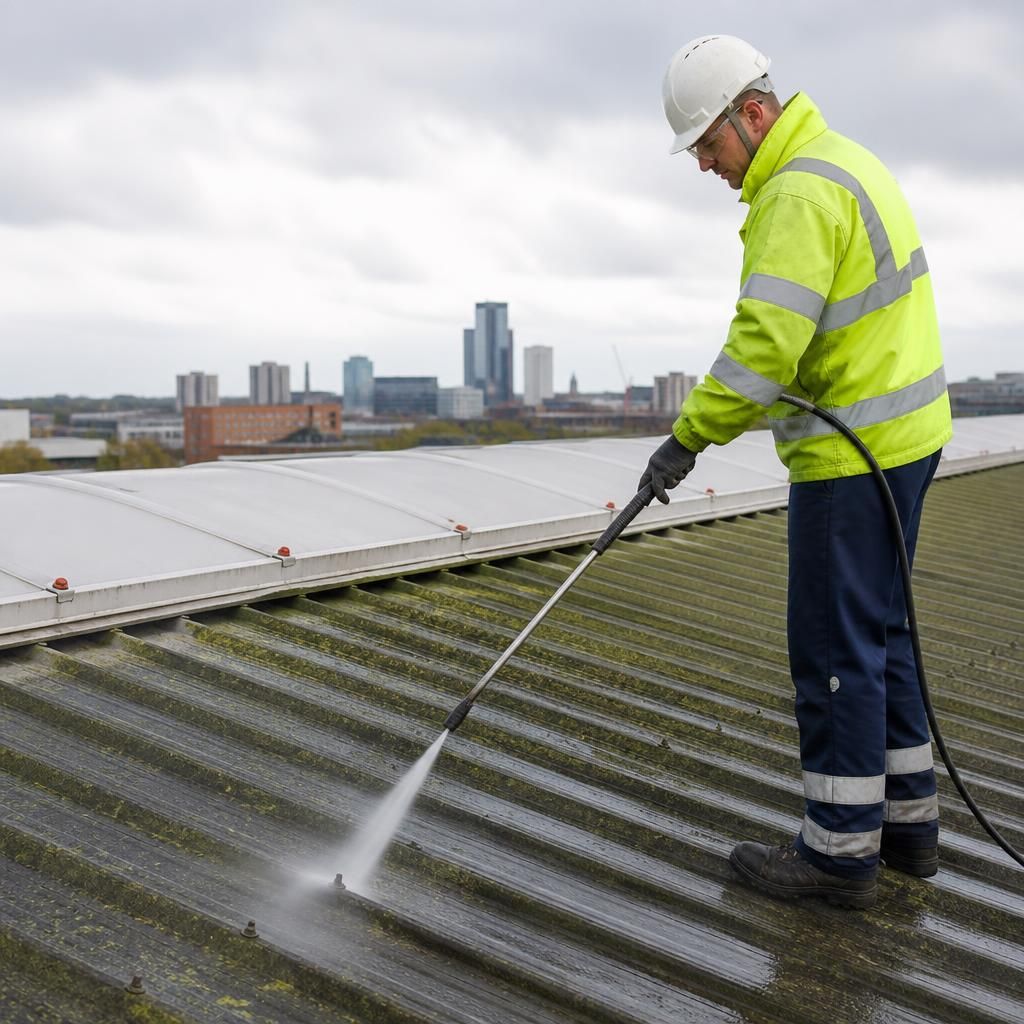
One of the main long-term benefits of professional roof moss treatment is reduced moisture retention. Moss holds rainwater against tiles, joints and other roof surfaces, keeping them damp for longer and creating conditions that can accelerate weathering, algae growth and deterioration.
Removing the moss and applying a compatible preventative treatment helps the roof dry more effectively between periods of rainfall. This can support the serviceable life of the roof covering and reduce avoidable maintenance caused by blocked gutters, displaced material and moisture-related defects. It does not replace repairs or routine inspections, particularly where the roof is already aged, damaged or exposed to persistent shade.