
What are the best practices for maintaining a moss-free roof throughout different seasons?
Maintain a moss-free roof by arranging a professional inspection and treatment before peak growth periods, keeping gutters and drainage clear, and removing overhanging vegetation that creates shade and retains moisture. Check the roof after autumn leaf fall, winter storms and spring rainfall, while using suitable, non-damaging cleaning methods rather than aggressive pressure washing that can dislodge tiles or affect protective coatings.
Maintaining a moss-free roof requires a planned cycle of inspection, gentle removal, suitable treatment and preventative maintenance throughout the year. In Birmingham, the West Midlands and other parts of the UK, damp weather, shade, fallen leaves and blocked drainage can support moss growth, so the most effective approach is to address moisture and debris before moss becomes established rather than relying on occasional heavy cleaning.
Arrange an annual roof inspection and treatment plan. A professional inspection should assess moss coverage, lichen, algae, cracked or slipped tiles, deteriorated pointing, blocked gutters, leadwork and areas where water may be ponding. The inspection should also consider the roof covering, pitch, age, access requirements and any manufacturer restrictions. These factors determine whether manual removal, soft washing, steam cleaning or a carefully selected treatment is appropriate.
Spring is the main opportunity for preventative work. After winter, check for moss loosened by frost, damaged tiles, displaced ridge or verge components and gutters containing moss or silt. Spring rainfall can quickly spread debris into drainage systems, while increasing daylight and moisture can encourage renewed growth. Remove loose organic matter using a method that does not damage the roof surface, then apply a roof-compatible treatment where appropriate. Treatment should be used according to the condition and material of the roof, rather than applied as a universal solution.
During spring and summer, reduce the conditions that allow moss to return:
- Keep gutters, downpipes, outlets and drainage channels clear so water does not remain against the roof or building fabric.
- Prune overhanging branches where permitted to improve airflow and reduce shade, leaf fall and organic debris.
- Check areas beneath trees, beside parapets and around roof penetrations more frequently because they often remain damp for longer.
- Repair leaking gutters, defective flashings and other sources of persistent moisture promptly.
- Avoid storing materials or allowing vegetation to accumulate against walls, roof edges or drainage points.
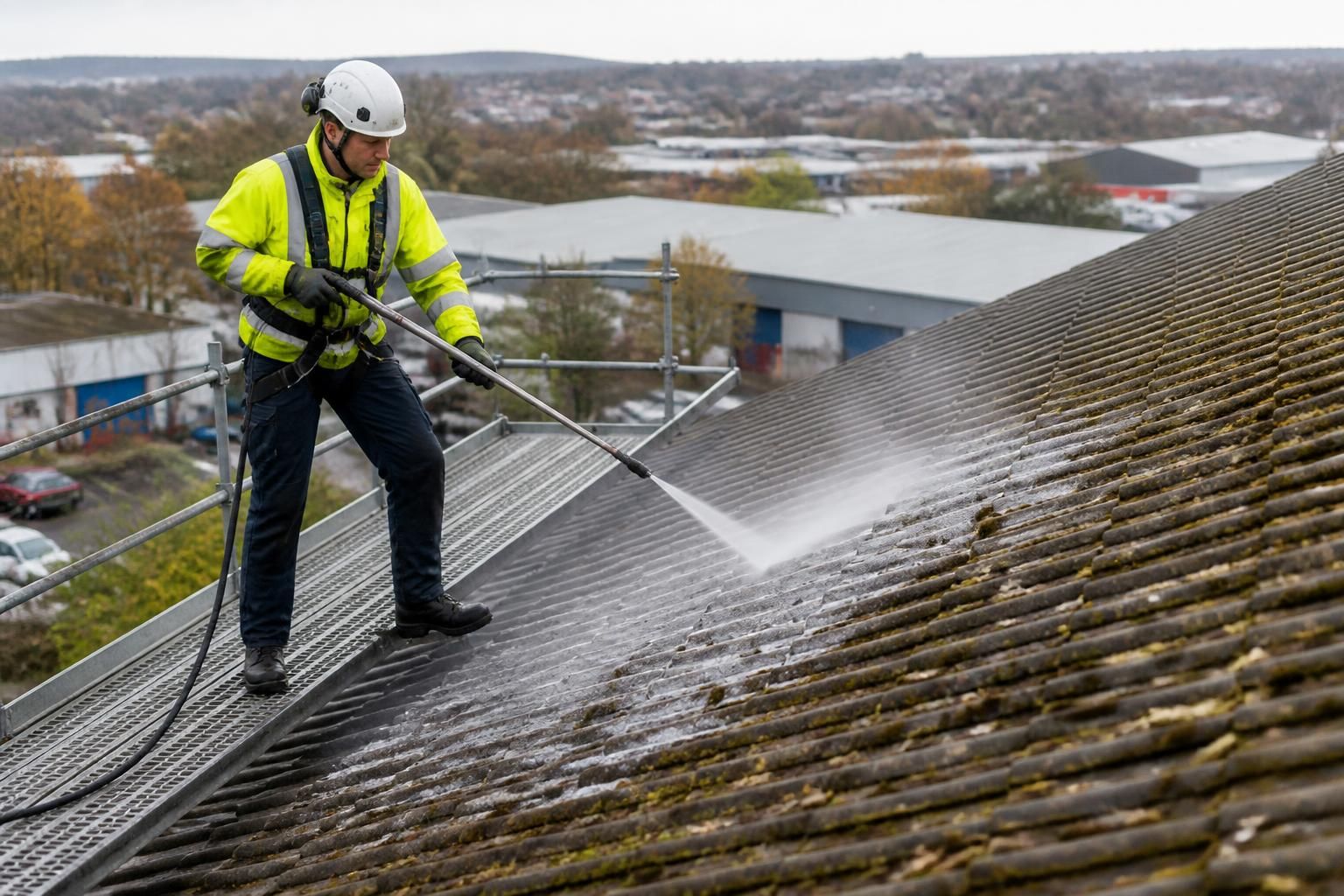
Summer is suitable for follow-up checks, but not for damaging cleaning methods. Dry conditions may make visual inspection easier and can provide a practical window for planned maintenance. However, a dry roof is not automatically safe to clean, and hot surfaces can affect the performance of some chemical treatments. Roof work should be carried out by trained personnel using appropriate access equipment and fall protection. Aggressive pressure washing can loosen tiles, drive water beneath laps, remove surface finishes and worsen existing defects, particularly on older or fragile roofs.
Autumn maintenance should focus on leaves and drainage. Clear gutters and roof valleys after significant leaf fall, and inspect them again if trees are close to the property. Leaf litter retains moisture and can create a growing medium for moss, while blocked outlets increase the risk of overflowing water and damp-related damage. Do not scrape moss into gutters without removing the resulting debris, as this can simply transfer the problem into the drainage system. Where routine access is difficult, arrange planned professional cleaning rather than waiting for visible overflow or staining.
Winter checks should follow storms and prolonged wet weather. Look for slipped or broken tiles, damaged ridge systems, overflowing gutters, loose flashing and branches resting on the roof. Do not walk on a wet, icy or moss-covered roof, and do not attempt to remove growth from areas that cannot be reached safely from suitable access equipment. Temporary measures may be needed to prevent water ingress, followed by a proper inspection and repair. Winter is generally a period for monitoring and protection rather than extensive roof cleaning, particularly during freezing conditions.
The most suitable preventative routine depends on the roof covering. Clay and concrete tiles, slate, metal roofs, coated systems and flat roofs have different tolerances for cleaning, moisture, chemicals and mechanical contact. Flat roofs need particular attention to outlets, standing water, edge details and the compatibility of any treatment with the membrane. A product or cleaning method suitable for one roof should not automatically be used on another, and treatment must not obstruct outlets or compromise protective coatings.
After moss has been removed, monitor the roof rather than assuming the work is permanent. Inspect it after heavy rainfall, autumn leaf fall and winter storms, and record recurring problem areas such as shaded elevations, valleys and sections beneath trees. Keep maintenance records showing inspection dates, defects identified, treatments used and any repairs completed. This helps establish a sensible maintenance interval and makes it easier to identify whether moss is returning because of new growth, retained debris, defective drainage or an underlying moisture problem.
Professional roof moss prevention should include a condition assessment, safe access arrangements, protection for surrounding surfaces, controlled removal of waste and clear advice on aftercare. Where treatments are used, they should be selected for the roof material and applied in line with the manufacturer’s instructions and relevant environmental precautions. Regular, low-impact maintenance is normally safer for the roof and more effective for long-term prevention than infrequent aggressive cleaning.
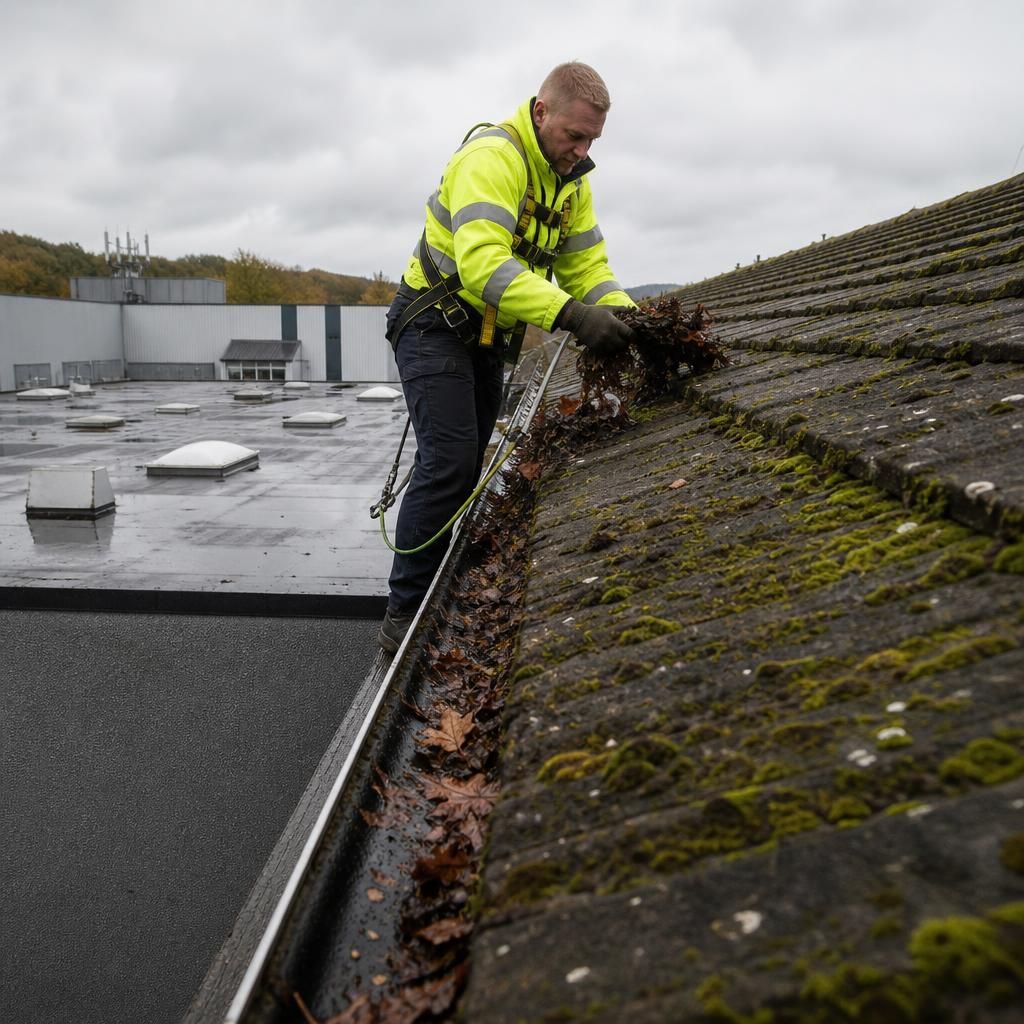
The most effective seasonal roof moss prevention routine is to control moisture and organic debris before they create suitable conditions for growth. Inspect the roof and drainage system after winter storms, spring rainfall, autumn leaf fall and periods of prolonged wet weather, using a roof-safe method suited to the covering.
- Clear gutters, valleys, outlets and downpipes so water and moss debris cannot remain against the roof.
- Remove leaves, twigs and loose organic matter without scraping aggressively across tiles, slates or protective coatings.
- Check shaded areas, roof edges and sections beneath overhanging trees, where dampness and debris often persist.
- Arrange professional treatment or repairs if moss returns quickly, water ponds, tiles are damaged or drainage remains obstructed.
Do not walk on a wet, icy or moss-covered roof. Planned inspections and low-impact maintenance are safer and more effective than infrequent aggressive cleaning.