
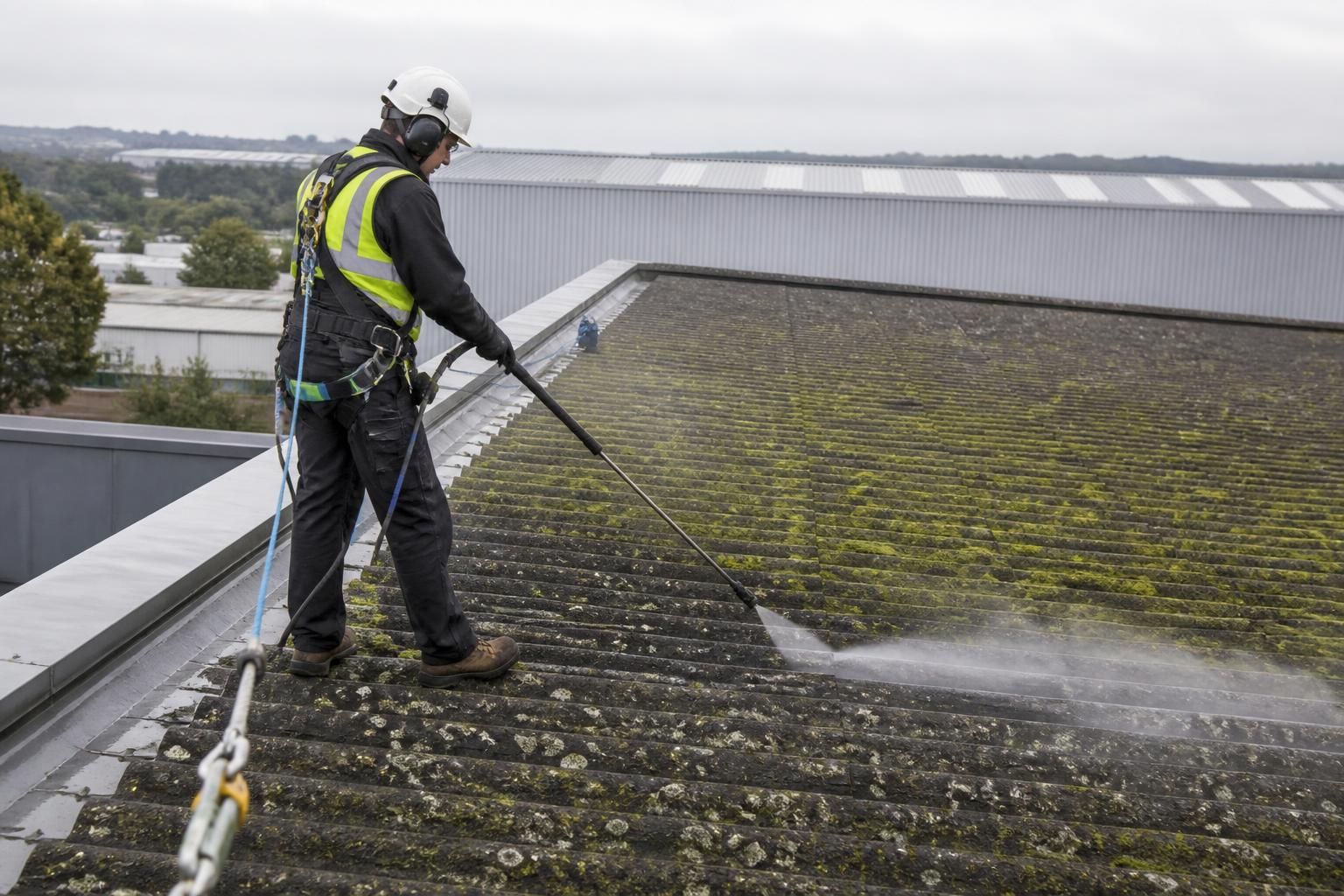
What safety precautions should be taken during moss removal from roof tiles?
Safe moss removal from roof tiles requires a site-specific risk assessment, suitable roof access and fall protection, trained operatives, and appropriate PPE, including non-slip footwear and eye protection. Work should be postponed in unsafe weather, tiles must not be damaged by excessive pressure or foot traffic, and the area below should be isolated while debris, tools and cleaning runoff are controlled.
Safe moss removal from roof tiles depends on controlling falls, fragile or damaged roof coverings, falling debris, cleaning products and runoff before work begins. A competent contractor should complete a site-specific risk assessment and method statement, select suitable access and fall-protection equipment, inspect the roof and weather conditions, and protect people, property and the surrounding environment throughout the work.
Carry out a site and roof assessment
- Inspect the roof from ground level and, where safe, from an appropriate access platform before deciding how it will be cleaned. Identify fragile, cracked, loose, slipped or missing tiles, weak roof edges, skylights, rooflights, valleys, gutters and areas that may not support a person.
- Check the building for overhead electrical cables, nearby structures, fragile canopies, conservatories, air-conditioning equipment and other obstructions that could affect access or the use of equipment.
- Consider the roof pitch, height, age, construction and condition. Moss can conceal defects, while wet tiles and accumulated organic growth can make surfaces particularly slippery.
- Record any pre-existing damage with photographs or inspection notes so that it is not confused with damage arising during the work.
Use proper access and fall protection
Roof moss removal should not rely on an unsecured domestic ladder or on operatives walking directly across tiles without a suitable control system. Depending on the building, safer access may include scaffold, a properly positioned access tower, a roof ladder, a mobile elevating work platform or another engineered platform. The chosen arrangement must suit the site and be installed, inspected and used by trained personnel.
- Provide edge protection or an appropriate personal fall-arrest or restraint system where a fall risk remains. Harnesses must be connected only to suitable, inspected anchor points and used with a planned rescue procedure.
- Keep ladders on stable, level ground and use them for access rather than as a working platform for prolonged or forceful cleaning. They must be secured against slipping.
- Do not place access equipment on fragile rooflights, gutters, loose tiles or surfaces that have not been assessed for loading.
- Maintain three points of contact where appropriate and keep tools secured so that operatives do not have to overreach or carry loose equipment while climbing.
Fall protection is not complete unless there is a rescue plan. Someone on site should know what to do if an operative falls, becomes suspended in a harness or is injured, and emergency access must remain clear.
Inspect and use suitable personal protective equipment
Personal protective equipment supports, but does not replace, safe access and work methods. Typical requirements include non-slip safety footwear suitable for wet roof surfaces, gloves that provide grip and protect against cleaning products, eye protection, and suitable workwear. A safety helmet may be necessary where there is a risk of falling materials, particularly when people are working below or near the roof.
- Use respiratory protection only where the risk assessment identifies airborne dust, spores, chemical mist or other contaminants, and ensure it is suitable, correctly fitted and maintained.
- Select chemical-resistant gloves and eye or face protection when applying biocides, detergents or other treatments. Follow the product label and the relevant COSHH assessment.
- Clean, inspect and replace damaged PPE. Wet, contaminated or worn footwear may no longer provide adequate grip.
Control weather and working conditions
Work should be postponed when conditions make access or footing unsafe. Rain, frost, ice, high winds and poor visibility increase the likelihood of slips, falls and loss of control of tools or equipment. Strong sunlight can also cause treated surfaces and water to dry unevenly, while changing weather may affect chemical application and runoff control. The responsible person should monitor conditions during the work and stop the operation if the risk changes.
Never assume that a roof is safe simply because it appears dry from ground level. Moss, algae and lichen can retain moisture, and shaded areas may remain slippery after the surrounding roof has dried.
Prevent damage to tiles and the roof structure
Use the least aggressive effective method for the roof type and condition. Excessive pressure, a concentrated jet or careless scraping can remove the tile surface, force water beneath laps, dislodge pointing or damage flashings and underlay. Operatives should follow the agreed method rather than increasing pressure to compensate for poor preparation.
- Avoid standing directly on fragile, cracked or heavily moss-covered tiles. Use load-distributing access equipment where access over the roof is unavoidable.
- Do not lever moss out with tools that can chip tile edges or disturb overlapping tiles.
- Keep pressure-washing equipment away from vulnerable junctions, vents, flashing, ridge details and areas where water could enter the building.
- Check tiles and roof details after cleaning, and report defects rather than concealing them with treatment or debris.
Isolate the area below
Moss, tile fragments, tools and dirty water can fall from the roof. Establish a clearly defined exclusion zone beneath and around the work area, using barriers and warning signs where appropriate. Keep occupants, visitors, vehicles and members of the public outside this zone, and coordinate the work with building users and other contractors.
- Do not work above entrances, walkways or occupied areas without suitable protection and coordination.
- Use tool lanyards or secured containers where they can be used safely without creating a snagging hazard.
- Protect windows, walls, vehicles, plants, external equipment and vulnerable surfaces from falling debris and splashing.
- Clear moss and fragments progressively rather than allowing material to accumulate on the roof or in gutters.
Manage water, chemicals and biological material
Before cleaning begins, confirm where water and treatment products will travel. Blocked or poorly controlled runoff can stain façades, enter buildings, damage landscaping or reach surface-water drains. Use sheeting, drain protection, collection methods or temporary diversion where suitable, while avoiding arrangements that create trip hazards or unsafe ponding.
- Read the safety data sheet and product instructions for any biocide or detergent. Store, dilute and apply products as specified.
- Do not mix cleaning chemicals unless the manufacturer expressly permits it. In particular, avoid creating hazardous fumes through incompatible products.
- Prevent spray drift and keep people, pets and unprotected workers away from treated areas until the required re-entry conditions have been met.
- Do not allow contaminated wash water or chemical residues to enter watercourses or surface-water drainage systems. Dispose of collected waste in accordance with local requirements.
- Use suitable hygiene controls after handling moss, bird fouling or other organic material, including washing hands and cleaning contaminated equipment.
Control equipment and site hazards
Pressure washers, steam equipment, hoses and extension leads must be inspected before use and operated by people who understand their hazards. Route hoses and cables away from ladders, access routes and roof edges, and protect connections from water. Electrical equipment should be suitable for the conditions, with appropriate residual-current protection where required.
- Keep hoses from becoming trapped under access equipment or creating a trip hazard at ground level.
- Release pressure before changing attachments, clearing blockages or carrying out maintenance.
- Use lifting aids or team handling for heavy equipment and avoid carrying machinery up ladders.
- Maintain communication between roof-level and ground-level workers, particularly when equipment is started, moved or repositioned.
Use trained, competent operatives
Moss removal involves work at height, roof inspection, equipment control and, where applicable, chemical handling. Operatives should be trained and competent for the tasks they perform, with adequate supervision for the site conditions. The method statement should identify who is responsible for access checks, exclusion zones, weather monitoring, emergency arrangements and final inspection.
Before leaving, inspect the roof, gutters, walls and ground-level area for remaining debris, displaced tiles, blocked outlets, chemical residue or water ingress. Any damage or defect should be recorded and reported promptly. These precautions make moss removal safer while also reducing the risk of avoidable damage to the roof, building and surrounding property.
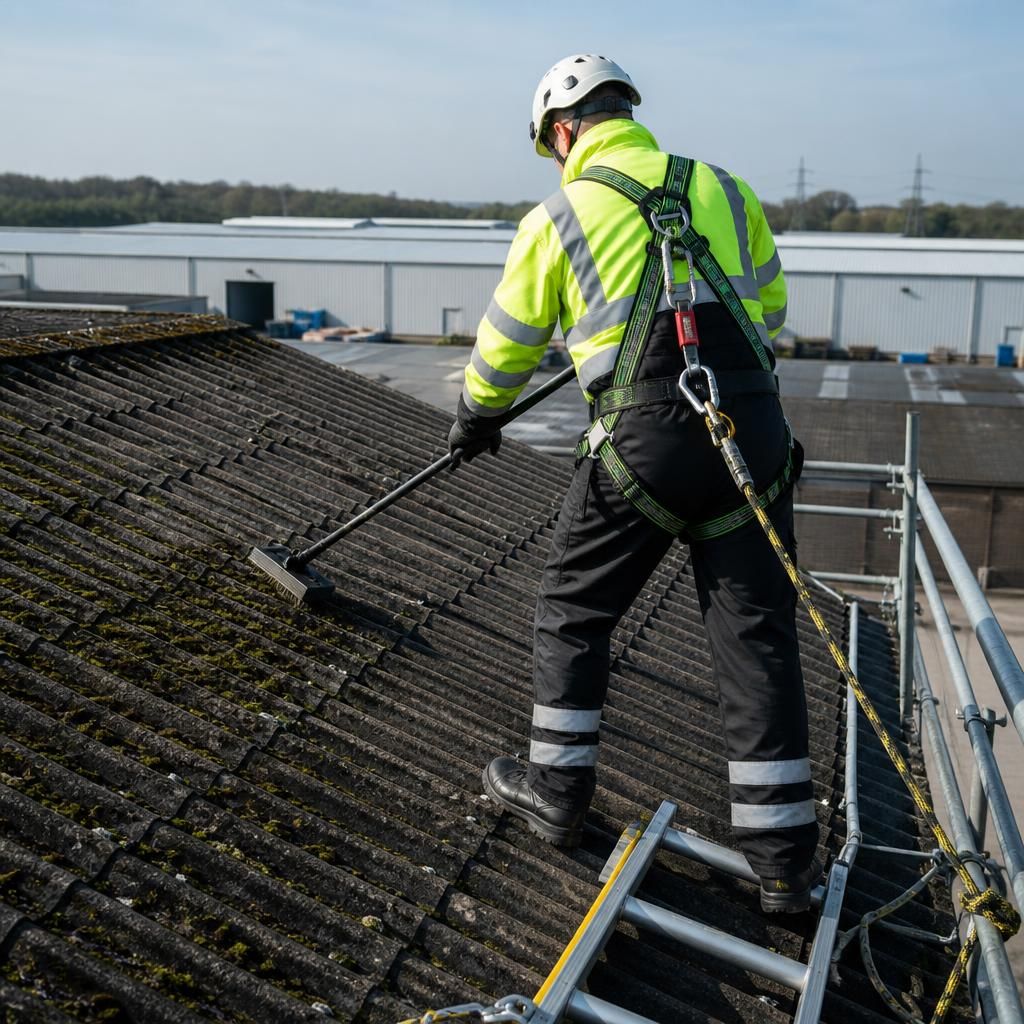
The primary safety precaution during moss removal from roof tiles is to prevent falls by using suitable, inspected access and fall-protection equipment. A secured roof ladder, scaffold, access tower or mobile elevating work platform should be selected according to the roof’s height, pitch, condition and surrounding obstacles. Operatives should not rely on an unsecured ladder or walk directly across wet, moss-covered or fragile tiles.
Before work starts, the roof should be assessed for cracked tiles, rooflights, weak edges and other fragile areas. Where a harness is required, it must be attached to a suitable anchor system and supported by a rescue plan. The area below should also be isolated to protect people, vehicles and property from falling moss, tools and tile fragments.