
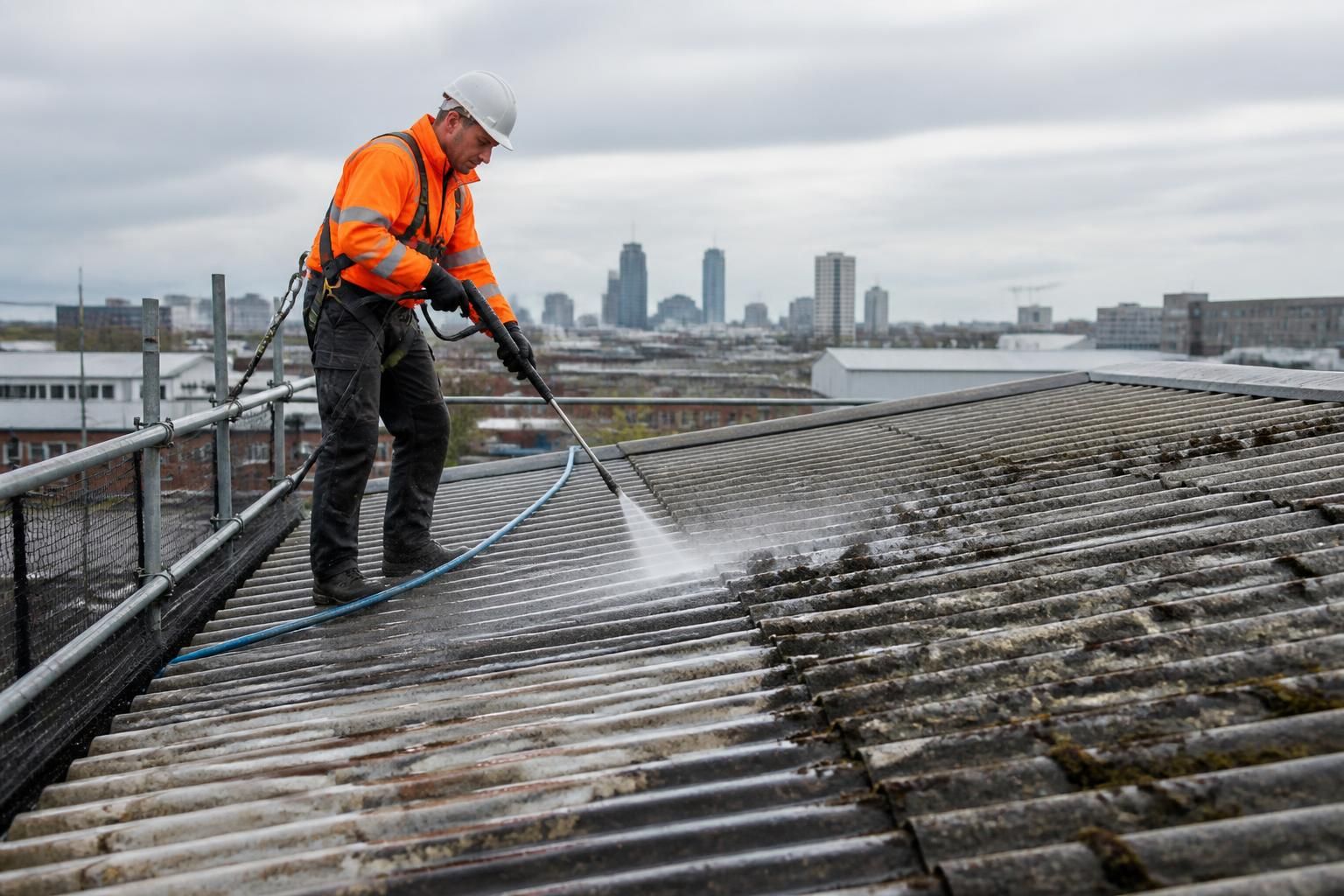
What safety measures should be in place to protect my property and surrounding environment during moss removal?
Safe moss removal requires a planned assessment of the roof, controlled access equipment, suitable low-impact methods and protection for tiles, gutters, walls, plants and drainage areas. Moss and contaminated rinse water should be contained and disposed of responsibly, while operatives use appropriate personal protective equipment and avoid work during unsafe weather conditions.
Protecting your property and the surrounding environment during moss removal requires a planned risk assessment, controlled access, a roof-safe cleaning method and effective management of moss, rinse water and treatment products. The work should prevent damage to roof tiles, gutters, walls, windows, paving, planting, drainage systems and nearby property, while protecting operatives and anyone close to the work area.
Assess the roof and site before work starts. The contractor should inspect the roof covering, tile condition, roof pitch, access points, fragile areas, gutters, rooflights, solar panels and any signs of existing damage. The surrounding ground should also be checked for vulnerable surfaces, planted areas, watercourses, drainage channels, vehicles and pedestrian routes. This assessment determines whether manual removal, soft washing, steam cleaning or another low-impact method is suitable. It should also identify asbestos-containing materials, unstable structures, overhead cables and other hazards that require specialist controls.
Use suitable access and fall protection. Roof work should not rely on unsafe ladders, improvised platforms or walking directly across fragile tiles. Depending on the building and roof design, suitable controls may include scaffold, edge protection, a mobile elevated work platform, roof ladders, crawling boards, fall-arrest equipment and secured access routes. Equipment must be selected for the site, installed or operated by competent people and checked before use. The area below should be segregated with barriers and clear signage so that falling moss, tools, water and equipment cannot injure people or damage vehicles.
Choose a method that does not unnecessarily damage the roof. Moss should be removed with controlled pressure appropriate to the tile material and condition. Excessive pressure can lift tiles, drive water beneath laps, remove protective finishes and damage pointing or flashing. Aggressive scraping can chip older tiles or disturb brittle surfaces. A competent contractor will normally use the least abrasive method that can achieve the required result and will avoid directing water at vulnerable joints, vents, ridge details and roof penetrations.
Protect adjacent property before cleaning. Windows, doors, rendered walls, cladding, painted surfaces, air-conditioning equipment and other sensitive items should be covered or shielded where necessary. Downpipes and outlets may need temporary protection or controlled disconnection so that moss and sediment do not block the drainage system. Sheeting should be secured without trapping water against the building or allowing runoff to reach unprotected surfaces. Vehicles, outdoor furniture and other movable items should be relocated from the work zone.
Control moss, sludge and debris. Removed moss should be collected rather than allowed to fall into gutters, onto paths or into planted areas. Gutters and outlets should be cleared as part of the work, then checked to confirm that water can flow freely. Debris should be bagged or placed in suitable containers and removed in accordance with applicable waste requirements. Leaving wet moss on paving can create a slip hazard and may stain porous surfaces.
Prevent contaminated runoff from entering drains or watercourses. Rinse water can contain moss fragments, sediment, organic matter and cleaning products. It should be directed, collected or filtered so that it does not enter surface-water drains, ponds, streams or neighbouring land without appropriate controls. Drain covers, bunding, temporary channels, wet vacuums or collection systems may be appropriate, depending on the site. Foul and surface-water drainage arrangements should not be assumed; the contractor should understand where water will flow before cleaning begins.
Use treatments carefully. Biocidal or fungicidal products should only be used when appropriate for the roof material and the level of growth. The product label, application instructions and required control measures must be followed. Chemicals should be measured and applied by trained operatives, with overspray prevented from reaching windows, walls, vehicles, plants, soil, ponds and drainage systems. Unused solution and containers should be stored and disposed of responsibly rather than poured into drains or onto the ground. Where a non-chemical method can provide the required result, it may reduce the risk to surrounding surfaces and habitats.
Protect plants and soil. Shrubs, lawns, flowerbeds and trees close to the building should be covered or temporarily shielded where they could receive debris, chemical spray or concentrated runoff. Covers should be removed promptly after the work to avoid heat or moisture damage. The team should prevent treated water from pooling in planting beds and should use clean water to rinse affected surfaces where the product instructions permit it. Particular care is needed around ponds, vegetable beds, animal areas and sensitive landscaping.
Check weather and environmental conditions. Work should be postponed during high winds, heavy rain, frost, lightning or other conditions that make access, equipment or runoff control unsafe. Rain soon after a treatment can dilute and carry the product beyond the intended area, while strong sunlight or rapid drying can affect application. The forecast, roof temperature, wind direction and expected drying conditions should be considered before materials are applied. Work should also be scheduled to minimise disruption to occupants, pedestrians and neighbouring premises.
Require appropriate personal protective equipment and hygiene controls. Operatives may need slip-resistant footwear, gloves, eye protection, protective clothing, hard hats, hearing protection and respiratory protection, depending on the method and risk assessment. Harnesses and other fall-protection equipment must be compatible with the access system and used correctly. Workers should avoid carrying contaminated debris into occupied areas, wash their hands before eating and keep chemicals in labelled containers. PPE protects the team, but it does not replace safe access, runoff control or proper training.
Inspect the property after cleaning. The completed work should include checks of tiles, ridges, flashing, pointing, roof penetrations, gutters, downpipes, walls, windows, paths and planted areas. Any pre-existing defects or damage identified before work should be distinguished from issues found afterwards and recorded clearly. The contractor should confirm that barriers have been removed only when the area is safe, that no debris remains and that drainage is functioning. If a follow-up treatment is recommended, its purpose, timing and environmental precautions should be explained before it is applied.
For a commercial or industrial property, ask for the proposed method, site-specific risk assessment, access plan, chemical controls, waste arrangements and runoff plan before work starts. These documents help confirm that the cleaning method is appropriate for the roof and that protection extends beyond the tiles to the whole building and site. Encanto Exterior Cleaning can assess the roof, access requirements and surrounding areas before recommending a controlled moss removal approach for the property.
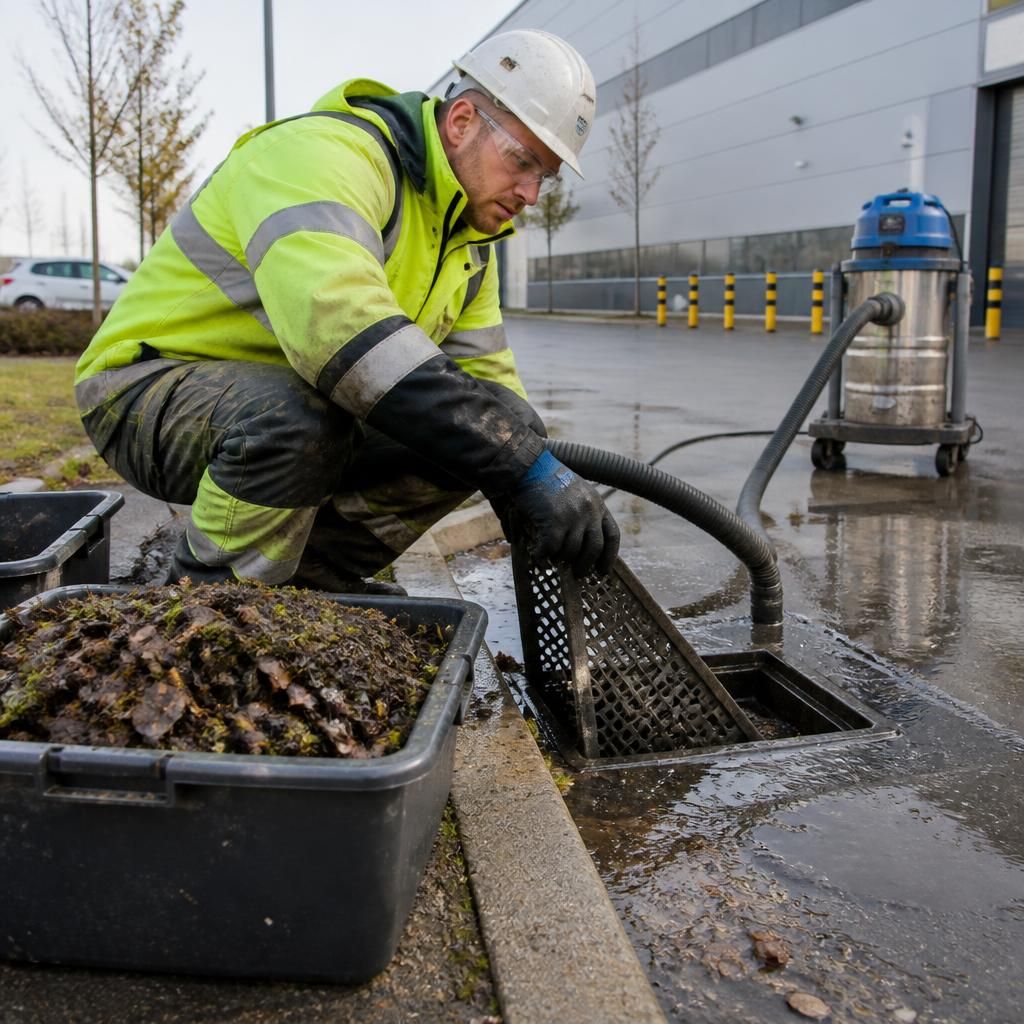
Containing moss debris and rinse water is one of the most important safety measures during roof moss removal. Without suitable controls, wet moss, sediment and cleaning products can block gutters, stain paving, damage planting or enter surface-water drains and nearby watercourses.
Before cleaning starts, the work area should be assessed to identify drainage routes, vulnerable surfaces and planted areas. Gutters and downpipes may need temporary protection, while drain covers, collection equipment, temporary channels or wet vacuums can help control runoff. Removed moss should be collected rather than left on the roof or ground, then disposed of responsibly. Afterward, the contractor should check that gutters and drainage points are clear and that no contaminated water or debris remains around the property.