
What are the potential environmental impacts of different moss removal methods on my roof and surrounding areas?
The environmental impact of roof moss removal depends on the method used: chemical treatments can affect plants, soil and water if they run off, while pressure washing may dislodge moss and debris into gutters or surrounding areas and can damage roof surfaces. Manual removal, controlled steam cleaning and careful collection of waste are generally lower-impact options when carried out by trained professionals with suitable runoff and disposal measures.
The environmental impact of roof moss removal depends mainly on the treatment used, how runoff is controlled and how dislodged moss is collected. Manual removal and carefully controlled steam cleaning generally produce less chemical pollution, while biocidal treatments can affect plants, soil and water if they are over-applied or allowed to enter drains. Pressure washing avoids chemical runoff but can use substantial water, spread contaminated debris and damage roof surfaces or drainage systems.
Manual moss removal has a relatively low environmental impact when the moss is gently scraped or brushed from the tiles and collected rather than washed into gutters. It uses little water and no treatment chemicals. However, careless scraping can break tiles, remove protective surface material or disturb pointing, creating a need for repairs and replacement materials. Moss and silt should be gathered from the roof, gutters and adjacent ground and disposed of appropriately rather than left to wash into watercourses.
Steam cleaning can be a lower-chemical option because heat and controlled water pressure may remove moss, algae and some organic staining without relying on broad application of biocides. Its impact still depends on the equipment and technique. Steam systems use energy and water, and the resulting runoff can contain moss fragments, soil, organic matter and existing roof contaminants. Water must not be directed towards neighbouring property, planted areas, surface-water drains or open water. Steam can also damage fragile, aged or poorly bonded tiles if the operator uses excessive heat or pressure.
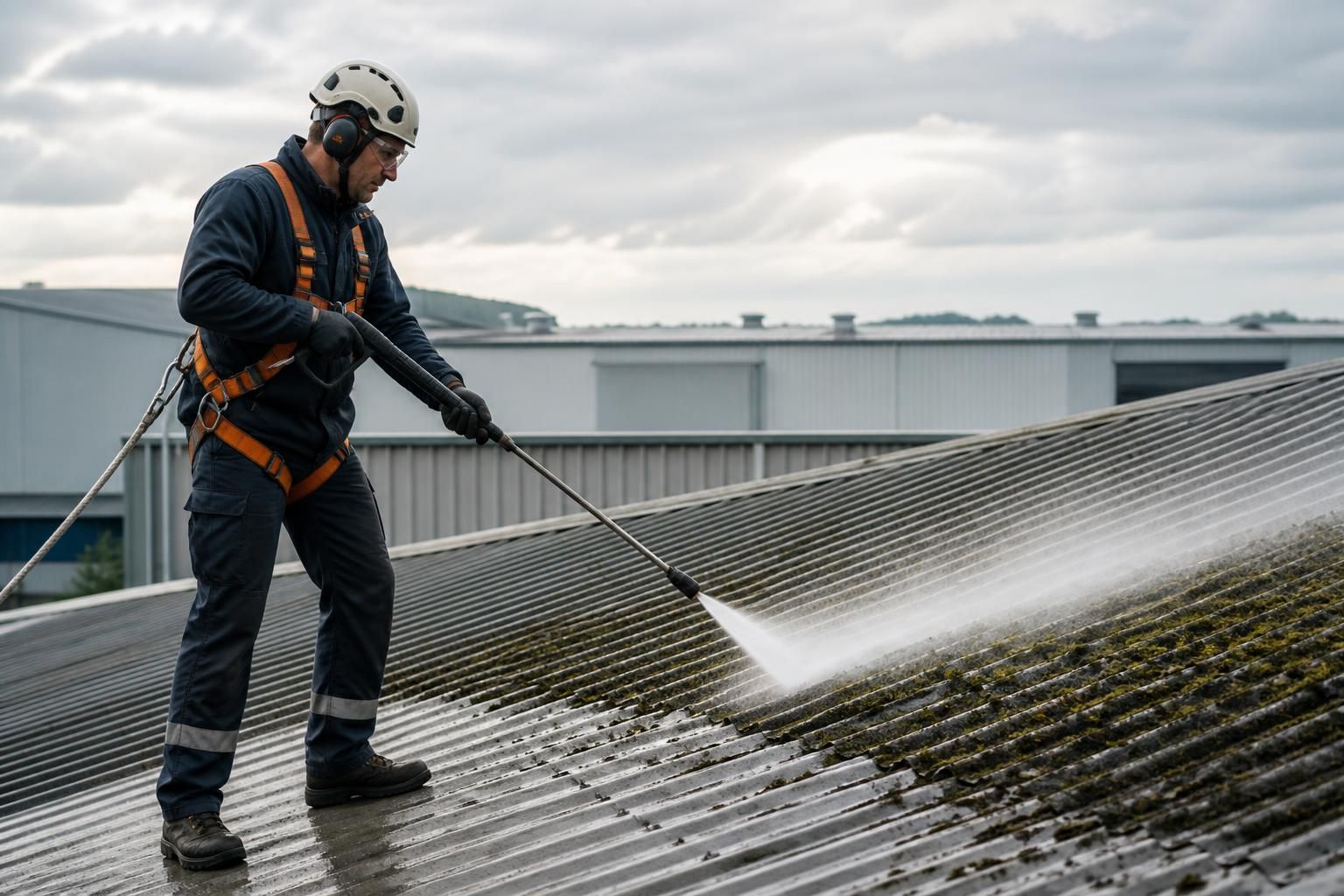
Pressure washing can remove heavy growth quickly, but it has several potential environmental and property-related drawbacks:
- Large volumes of water may be required, particularly where moss is thick or embedded.
- High-pressure water can carry moss, silt, fragments of mortar and roof coatings into gutters, drains, soil and planted areas.
- Runoff may block gutters or drainage channels and can transport pollutants into surface-water systems.
- Excessive pressure can damage tiles, force water beneath overlapping roof coverings or remove granules and weathered surface material, shortening the roof’s serviceable life.
- Noise, spray and airborne droplets can affect occupants, neighbours, wildlife and nearby electrical equipment.
Pressure washing is therefore not automatically an environmentally responsible choice simply because it does not use chemicals. A controlled method, suitable pressure, water recovery where practicable and effective debris collection are essential.
Chemical and biocidal treatments can suppress remaining moss and slow regrowth, but their environmental effects depend on the active ingredient, concentration, application rate and disposal arrangements. Runoff can harm lawns, ornamental plants, soil organisms and aquatic life. Even products described as biodegradable or suitable for exterior cleaning should not be allowed to enter ponds, streams, drainage ditches or surface-water drains. Some treatments may also stain paving, affect painted surfaces or corrode nearby metals if they are misapplied.
Chemical treatment should be targeted rather than applied routinely across areas that do not require it. The operator should follow the product label and relevant safety data, protect vulnerable vegetation, prevent spray drift and keep treatment away from water. Where chemicals are used professionally, the work should be planned in line with COSHH requirements and applicable environmental controls. Product residues and contaminated materials should be handled according to the manufacturer’s instructions and local waste requirements.
Soft washing usually combines low-pressure application with a cleaning solution. It can reduce the physical risk to tiles compared with aggressive pressure washing, but it does not remove the need for environmental controls. The solution may create more chemical runoff, and overspray can affect plants, soil, windows, painted surfaces and neighbouring property. Its environmental suitability should be judged by the product used, the quantity applied and the contractor’s ability to contain and manage the runoff.
The surrounding areas most likely to be affected are roof gutters, rainwater goods, planted borders, lawns, paving, soil and drainage systems. Roof runoff that enters a rainwater harvesting system should be isolated during treatment and not reused until the system has been flushed and the water is known to be suitable. Surface-water drains should not be used as a convenient disposal route for dirty wash water, because they may discharge directly to a watercourse rather than a sewage treatment plant.
A lower-impact roof moss removal plan should include the following controls:
- Inspect the roof first and select the least aggressive effective method for its tile material, age, condition and level of growth.
- Remove loose moss and debris carefully, using collection sheets, gutter protection or other suitable measures where necessary.
- Protect or temporarily cover vulnerable plants, ponds, water butts, outdoor furniture, vehicles and sensitive surfaces.
- Keep chemical solutions and dirty water away from surface-water drains, open water and neighbouring land.
- Use only the amount of cleaning product and water required, following the product instructions rather than increasing the concentration to speed up the work.
- Prevent debris from entering gutters and check that downpipes and gullies remain clear after cleaning.
- Collect solid waste and dispose of it responsibly rather than spreading it across the garden or allowing it to wash away.
- Inspect the roof after cleaning so that cracked tiles, displaced coverings and damaged flashing are identified before they allow further water ingress.
Weather conditions also affect environmental risk. Dry, calm conditions help limit chemical drift and make collection easier, while heavy rain can rapidly carry treatment or debris from the roof into surrounding drainage. Work should be postponed where rain is likely to overwhelm containment measures, where wind could cause spray drift or where freezing conditions could make access and runoff control unsafe.
For most roofs, the best environmental choice is not a single universal method but a proportionate approach: remove as much growth as possible mechanically, use steam or a carefully selected treatment only where it is necessary, and control all debris and runoff. Before work begins, confirm which products will be used, how plants and drains will be protected, how wash water will be managed and how the removed moss will be disposed of. These precautions reduce the risk to the roof, surrounding property, soil, vegetation and local water environment without compromising the effectiveness of the cleaning.
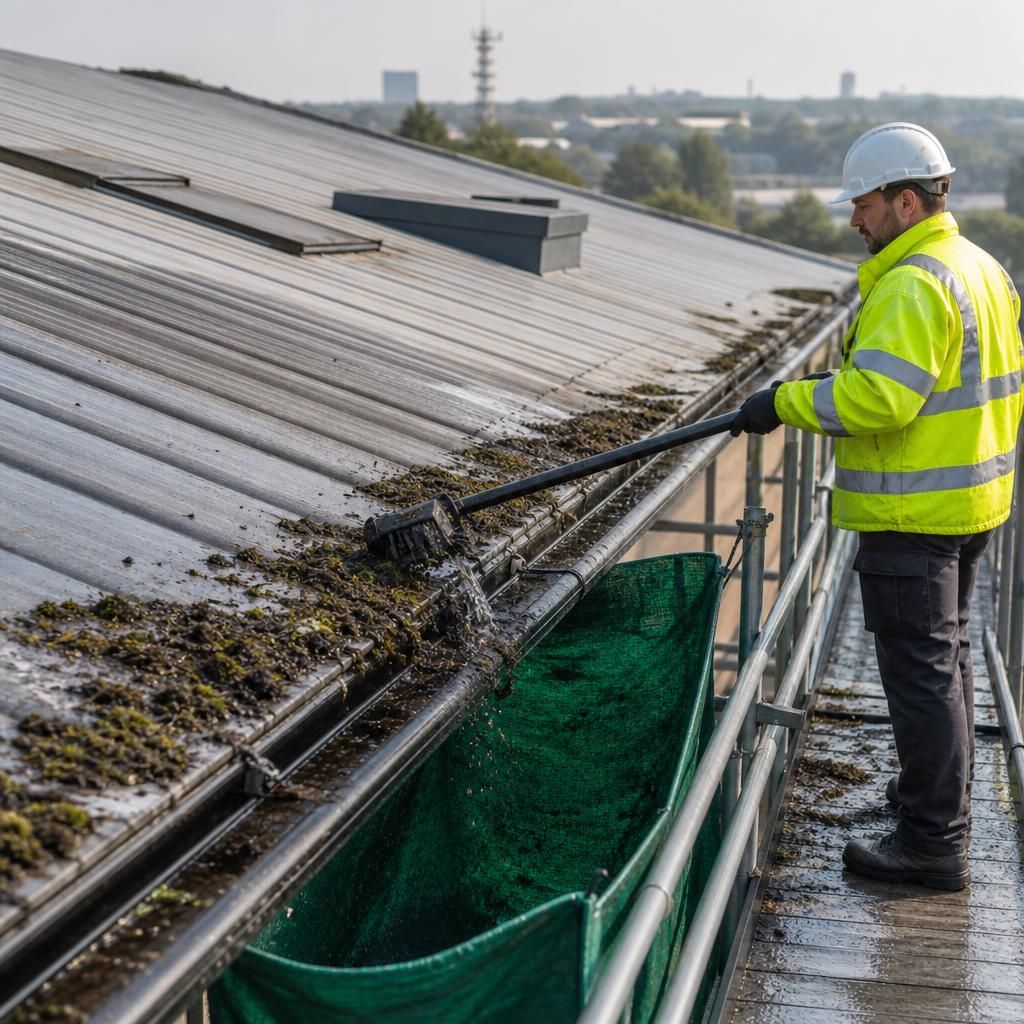
Controlling runoff and collecting dislodged moss are essential to reducing the environmental impact of roof cleaning. Dirty water can carry moss fragments, soil, treatment residues and roof debris into planted areas, gutters or surface-water drains, where it may affect vegetation and local water quality.
Before cleaning begins, protect vulnerable plants, ponds, water butts and drainage points. Use suitable collection measures, keep downpipes clear and gather solid waste rather than allowing it to wash away. If a chemical treatment or wash water is used, it should be kept away from open water and managed in accordance with the product instructions and applicable waste requirements.
Plan Your Environmentally Responsible Roof Moss Removal
Contact Encanto Exterior Cleaning to discuss a roof moss removal plan that suits your roof, protects surrounding areas and controls debris and runoff. We can assess the roof and explain the most appropriate lower-impact cleaning method for the work required.