
What are the most effective methods to remove moss from roof tiles?
The most effective method is usually a controlled combination of gentle moss removal, low-pressure cleaning and an appropriate biocidal treatment to remove remaining spores and slow regrowth. The technique should be matched to the roof’s tile type and condition, as aggressive pressure washing can dislodge tiles, damage surfaces and force water beneath the coverings.
The most effective method for removing moss from roof tiles is usually a controlled combination of manual removal, low-pressure rinsing and a suitable biocidal treatment. This approach removes established growth without applying the force that can crack tiles, strip surface finishes, disturb mortar or drive water beneath the roof covering. The correct method must be matched to the tile material, roof condition, pitch, access requirements and surrounding environment.
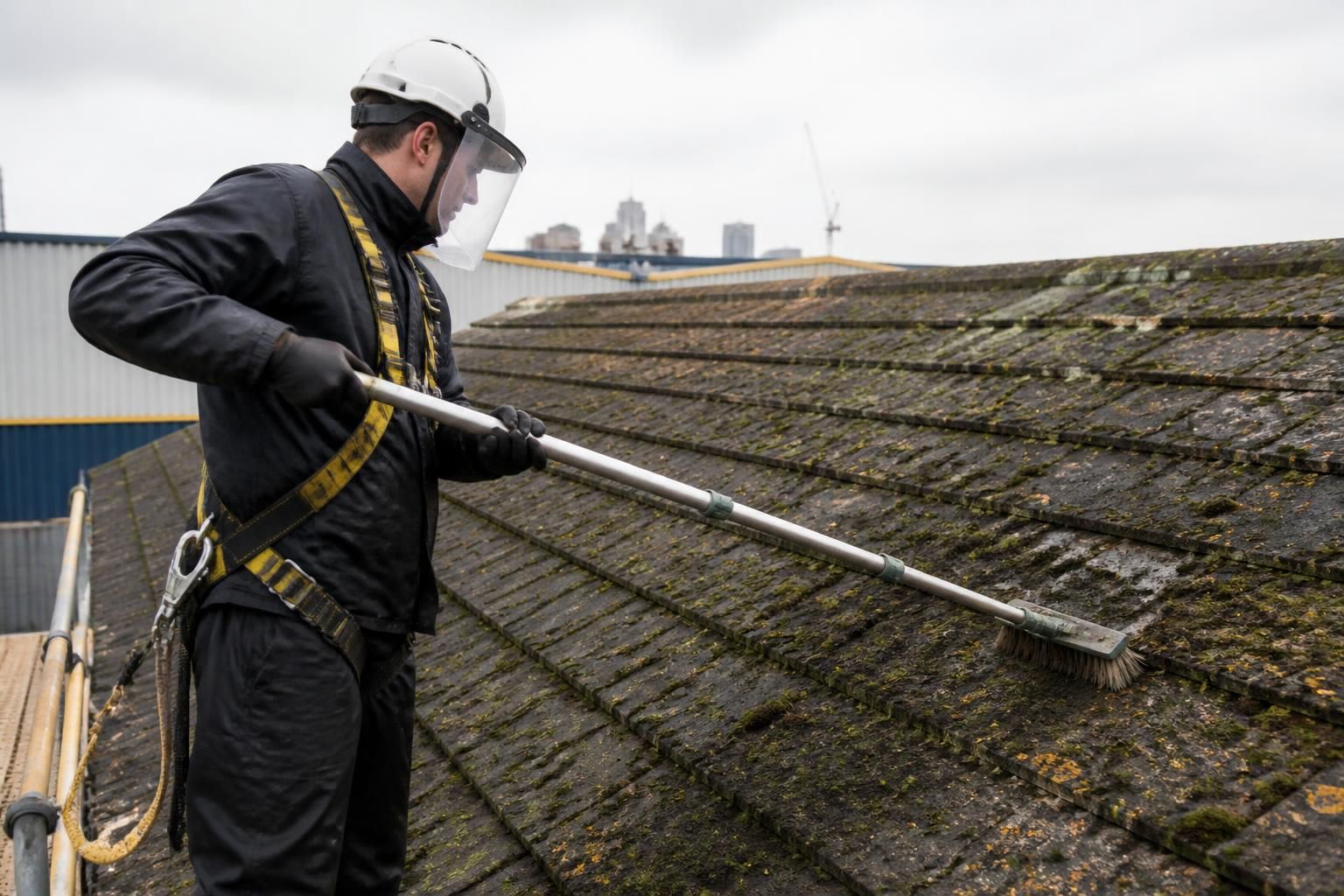
Manual moss removal is normally the first stage. Loose moss is carefully lifted or scraped from the tiles using hand tools designed to minimise abrasion. This is particularly important where tiles are aged, brittle, weathered or coated, as aggressive equipment can damage the surface and expose the tile to faster water absorption and frost-related deterioration. Moss should be removed progressively rather than pulled across large areas, which helps prevent tiles from moving or breaking.
Manual work also allows the cleaner to identify defects that may be hidden beneath the growth. These can include cracked or slipped tiles, deteriorated pointing, damaged ridge details, blocked valleys and failing flashing. Cleaning should not be treated as a substitute for roof repairs. Defects should be recorded and referred to a competent roofing professional where necessary.
Low-pressure cleaning can be used after the heavier growth has been removed. A controlled water application helps clear remaining fragments, soil and organic residue from the tile surface. The pressure should be sufficient for the material being removed, but not excessive. Water should generally be directed in a manner that avoids forcing it beneath laps, around flashing or into vulnerable roof details.
High-pressure washing is often unsuitable for roof tiles. It can remove the protective surface of concrete tiles, erode older clay tiles, dislodge slates and force contaminated water into the roof structure. It can also spread moss debris over façades, paths, gutters and neighbouring areas. Where a pressure washer is considered appropriate, it should only be used by an experienced operator with the equipment, pressure and nozzle selected for the specific roof. In many cases, a softer cleaning method is the safer option.
Steam cleaning provides another effective option, particularly where the roof requires thorough cleaning but the use of strong mechanical pressure is undesirable. Heated water can loosen organic deposits and help clean the surface with less abrasive action. Steam cleaning still requires careful control around tile laps, seals, flashing, roof windows and other vulnerable points. It is not automatically suitable for every roof, especially where tiles are already damaged or where water ingress is suspected.
Biocidal treatment is used to deal with residual moss, algae and lichen spores after the visible growth has been removed. It is applied according to the product instructions and the requirements of the roof and site. A treatment may continue working after cleaning, so the surface may not appear completely clear immediately. The result and application method depend on the product, weather conditions, type of growth and severity of contamination.
Biocides must be handled responsibly. Gutters, downpipes, planted areas, ponds, watercourses, vehicles and pedestrian routes should be protected from contaminated runoff. Any chemical used should be suitable for the intended surface and applied at the correct concentration. Products should never be mixed unless the manufacturer expressly permits it. Rain, strong wind and very cold or hot conditions can affect application, run-off control and treatment performance, so weather should be assessed before work begins.
The most reliable process commonly follows these stages:
- Inspect the roof, tiles, ridges, valleys, flashings, gutters and nearby surfaces.
- Identify the tile type, coating, age, condition and any areas that are unsafe or unsuitable for cleaning.
- Protect access routes, walls, windows, plants, drainage systems and other property below the roof.
- Remove the bulk of the moss manually using controlled techniques.
- Apply low-pressure rinsing or steam cleaning where appropriate to remove remaining deposits.
- Use a suitable biocidal treatment to address residual organic growth and slow regrowth.
- Collect moss and contaminated debris rather than allowing it to enter gullies or surface-water drains.
- Inspect the finished roof and report defects that require separate repair work.
Roof material is a key consideration. Concrete tiles may tolerate carefully controlled cleaning, but worn coatings can be damaged by excessive pressure or abrasion. Clay tiles can be more vulnerable to cracking, surface wear and movement. Slate requires particular care because individual pieces can split or become dislodged, and the fixings may be difficult to assess from above. Coated, interlocking or heritage tiles should be cleaned using a method that preserves their surface and does not interfere with the designed weather seal.
The age and condition of the roof should influence the decision as much as the amount of moss present. A relatively clean but fragile roof may require a gentler method than a heavily contaminated roof in good condition. If tiles are porous, loose or already failing, cleaning can reveal weaknesses that need attention before any treatment is applied. Roofs with known leaks, damaged underlay or deteriorated mortar should be assessed before cleaning proceeds.
Prevention is best approached as ongoing maintenance rather than a one-off chemical solution. Keeping gutters and valleys clear reduces retained moisture and helps prevent moss fragments from obstructing drainage. Overhanging branches can be trimmed where appropriate to improve light and air movement, although tree work may require separate permissions. Roof repairs, improved drainage and regular inspections can also reduce the damp conditions that support regrowth.
Copper or zinc strips are sometimes used near roof ridges to release small amounts of metal during rainfall and discourage organic growth lower down the roof. Their effectiveness varies with roof design, exposure and the amount of rain reaching the strip. Runoff should be considered carefully because metals can affect plants, rainwater-harvesting systems and aquatic environments. These products should not be regarded as a replacement for removing established moss or repairing underlying moisture problems.
Access and safety are also central to method selection. Roof work involves fall hazards, fragile surfaces and the risk of tools or debris falling onto people and property. Operatives should use suitable access equipment, edge protection and personal protective equipment, and should not rely on ladders as a working platform for extensive cleaning. Weather, roof pitch, overhead cables, skylights and nearby public areas must be assessed before work starts.
For a small, easily accessible roof in sound condition, limited manual removal may be manageable by a suitably equipped property owner. Professional assistance is normally the safer and more effective choice for steep, high, fragile or extensively moss-covered roofs, as well as commercial premises where public protection, runoff control and documented work methods are required. The aim is not simply to make the tiles look clean; it is to remove the growth while preserving the roof’s weathering performance and surrounding property.
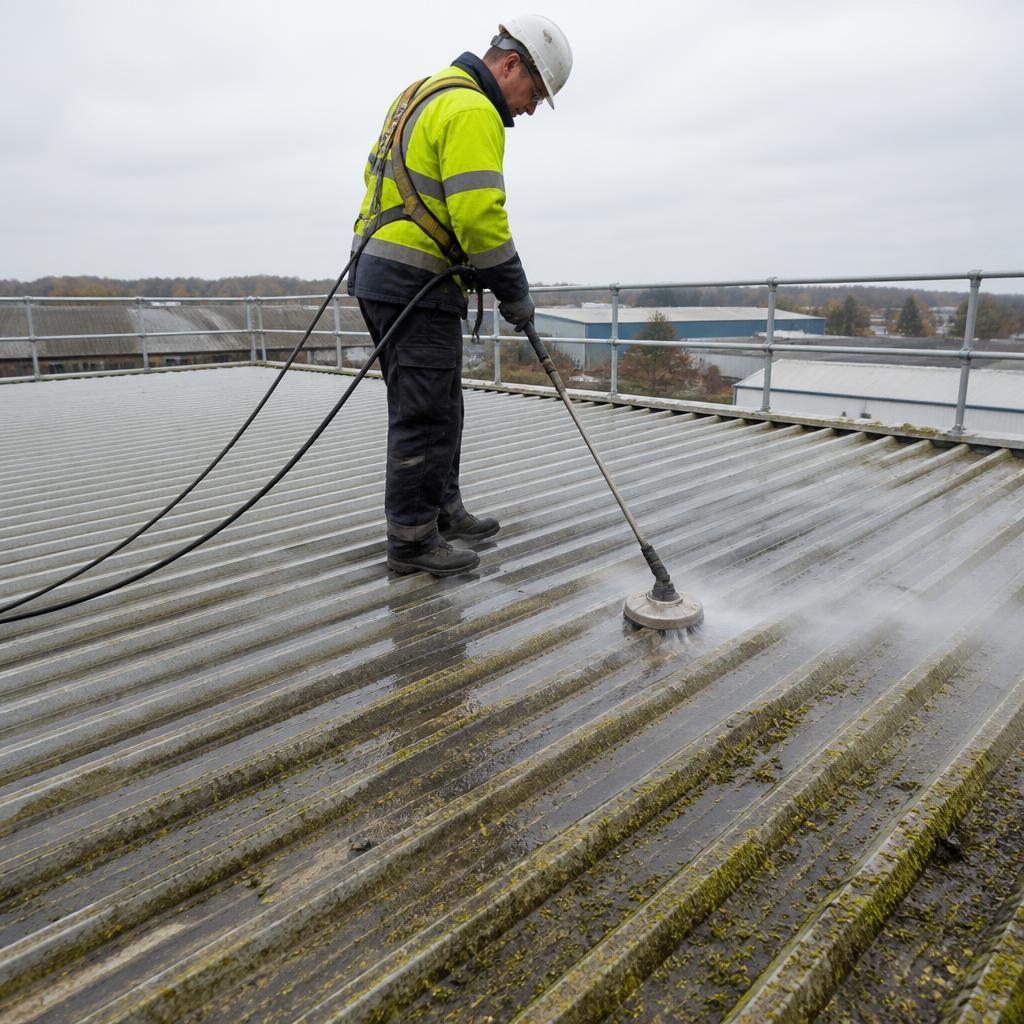
The safest effective approach is usually to remove moss manually, then use controlled low-pressure rinsing and a suitable biocidal treatment. This combination clears established growth while reducing the risk of cracking tiles, disturbing laps or forcing water beneath the roof covering.
High-pressure washing is often unsuitable, particularly for aged clay tiles, slate, coated concrete tiles and fragile roof surfaces. Excessive pressure can strip protective finishes, dislodge tiles and spread contaminated runoff onto walls, paths and planting. The cleaning method should therefore be selected after checking the tile material, roof condition, pitch and drainage arrangements.